
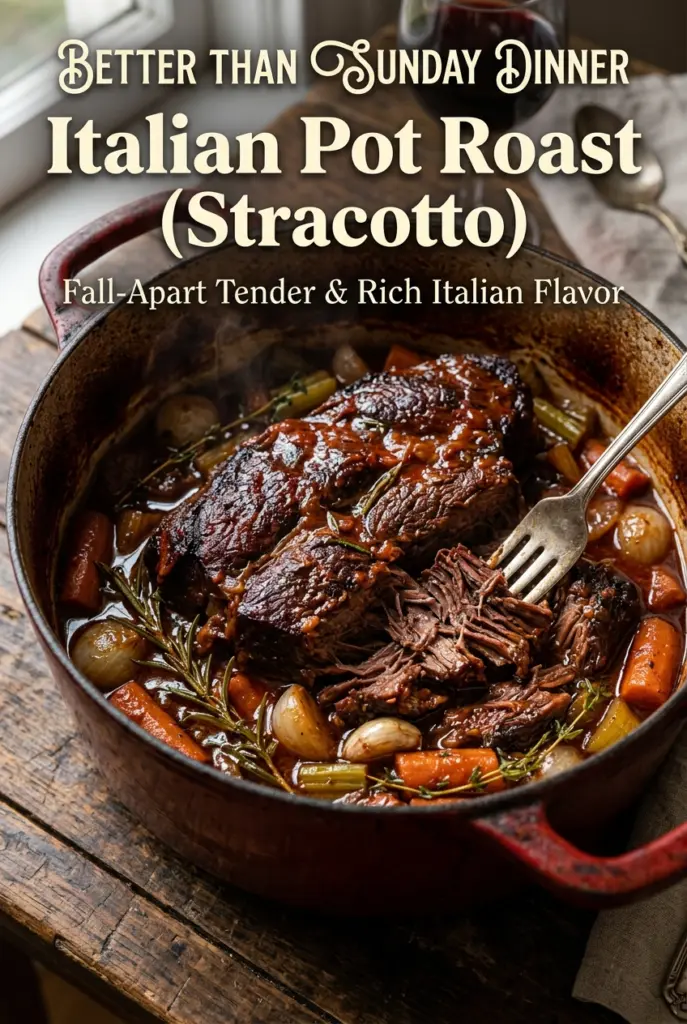
Italian Pot Roast, or stracotto, turns an ordinary chuck roast into something deeply savory and spoon-tender. The beef slowly braises in a red wine and tomato sauce until the meat yields without a fight, and the sauce finishes with that old-world balance of sweet onions, garlic, herbs, and a little acidity that keeps each bite awake. It’s the kind of dinner that tastes like it took all day because, honestly, it did — but the work is front-loaded, and the oven does the heavy lifting.
What makes this version work is the layering. First comes a hard sear for a dark crust and the browned bits that anchor the sauce. Then the tomato paste cooks down before the liquid goes in, which keeps the sauce from tasting flat. The wine has a chance to reduce slightly, the herbs perfume the braise, and the long covered bake breaks the chuck roast down into soft strands and rich slices instead of dry, stringy meat.
Below, I’ve included the details that matter most: how to keep the sauce from tasting thin, which substitutions won’t wreck the braise, and what to do if you want to make this a day ahead. Once you’ve made stracotto this way, you’ll understand why it earns a place at the table when you want dinner to feel like an occasion.
The sauce got glossy and thick in the oven, and the beef was fall-apart tender without turning mushy. I served it over polenta and the whole pan was scraped clean.
Love the deep red wine sauce and fork-tender texture of this Italian Pot Roast? Save it to Pinterest for your next slow Sunday dinner.
The Sear and Braise That Keep Stracotto Rich Instead of Watery
The biggest mistake people make with pot roast is treating the braise like soup. Stracotto needs enough liquid to come partway up the meat, not drown it. That way the top edge of the roast gets exposed to steam and heat, while the lower portion braises in the sauce. The result is a pot roast with better texture and a sauce that tastes concentrated instead of thin.
The second thing that matters is the sear. A deep brown crust on the beef gives the finished sauce a roasted, meaty backbone that you cannot get from simmering alone. If the pan looks pale after searing, keep going. Those dark browned bits on the bottom are exactly what the wine is there to lift into the sauce.
Tomato paste also needs that minute in the hot pan. Raw tomato paste can taste sharp and metallic, but once it darkens slightly it turns sweeter and rounder. That small step is part of what gives stracotto its depth.
What Each Ingredient Is Actually Doing in This Dish
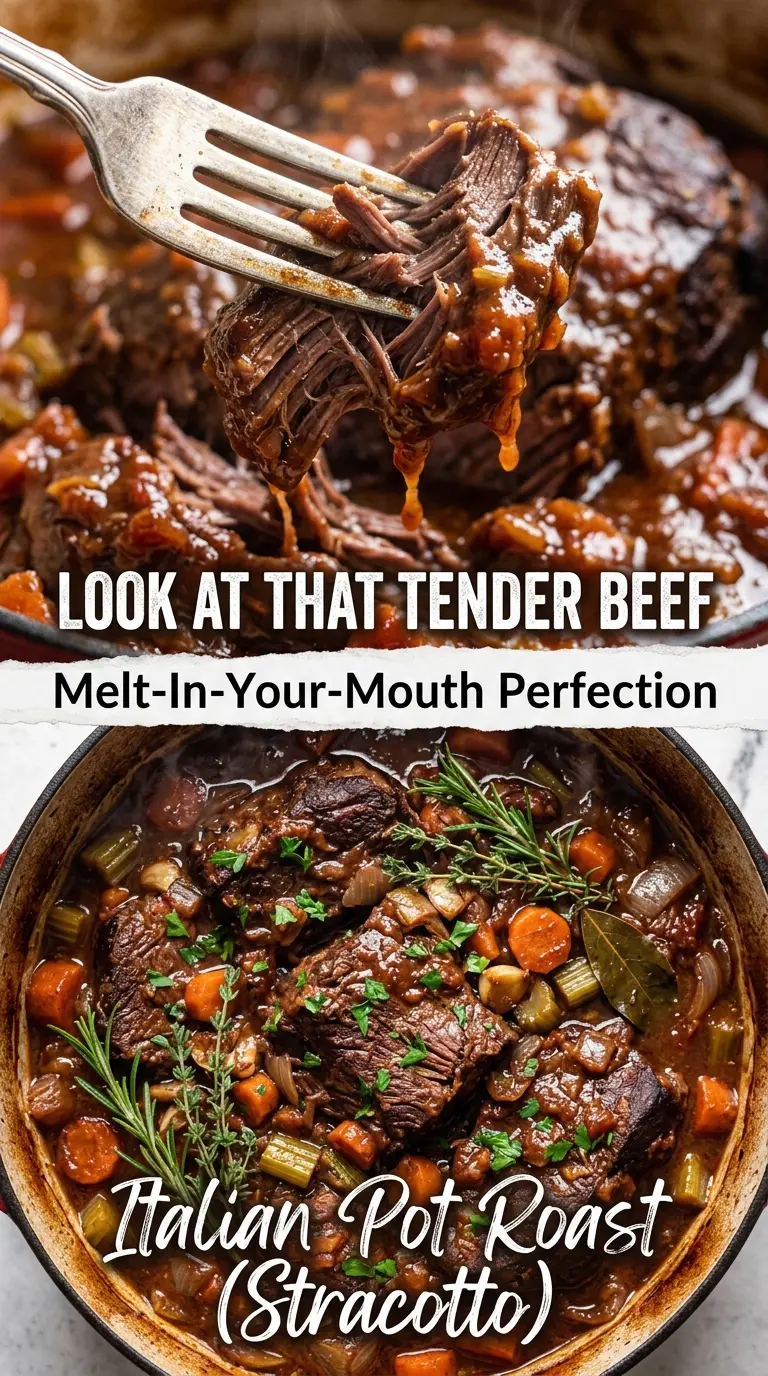
- Chuck roast — This is the right cut because it has enough connective tissue to turn silky over a long braise. A lean roast won’t give you the same spoon-tender result, and it’s more likely to dry out.
- Dry red wine — The wine gives the sauce structure and a little edge. Use something you’d drink, not cooking wine. If you need a swap, use extra beef broth with a teaspoon of red wine vinegar stirred in at the end, but the sauce will be softer and less layered.
- Tomato paste and crushed tomatoes — The paste builds intensity; the crushed tomatoes give the braise body. Don’t replace both with tomato sauce or the finished gravy can taste flat and overly smooth.
- Onion, carrot, and celery — This is the flavor base. Dice them evenly so they break down at the same pace and disappear into the sauce instead of staying crunchy.
- Fresh rosemary and thyme — Fresh herbs hold up better during a long oven braise and give the sauce a cleaner finish. Dried herbs will work in a pinch, but use less, and expect a flatter aroma.
- Butter — Stirred in at the end, it rounds out the sauce and gives it a glossy finish. It’s not there for richness alone; it smooths the acidity from the tomatoes and wine.
Building the Braise So the Beef Falls Apart, Not Dry Out
Season and sear the roast first
Pat the chuck roast dry, then season it well on all sides before it hits the pan. The surface should hiss immediately when it goes into the hot oil. Leave it alone long enough for a dark crust to form before turning it. If the beef sticks at first, that’s normal; it will release once the browning is done.
Cook the vegetables until they lose their raw edge
Once the roast is out, cook the onion, carrot, and celery in the same pot until the onion turns translucent and the carrots start to soften at the edges. This step sweats out moisture and starts building sweetness. If you rush it, the sauce can taste thin and the vegetables can stay sharp in the finished braise.
Reduce the wine before the oven
Add the wine and let it simmer for a few minutes while scraping the pan clean. You want the sharp alcohol smell to fade and the liquid to take on a deeper, more concentrated smell. That reduction keeps the braise from tasting boozy after hours in the oven.
Bake low and covered until the meat yields
Cover the Dutch oven tightly and bake until the beef pulls apart with a fork. A 3½-pound chuck roast usually needs the full time, sometimes a little more depending on the shape of the roast. If the meat is still firm, it needs more time, not more heat. Tough pot roast is usually undercooked pot roast.
Make It Gluten-Free Without Losing the Braise
This recipe is naturally gluten-free as written, as long as your Worcestershire sauce and broth are certified gluten-free. The texture and flavor stay the same, which is exactly why this dish is such a good fit for a gluten-free dinner. Serve it with polenta, mashed potatoes, or gluten-free pasta.
How to Make It Dairy-Free
Leave out the butter at the end and use an extra splash of olive oil if you want a little sheen on the sauce. You’ll lose a touch of roundness, but the braise still tastes full and rich because the wine, beef, and tomatoes do most of the work. Skip the Parmesan garnish, or use a dairy-free alternative if you like a salty finish.
How to Stretch It for a Bigger Crowd
Add another pound of chuck roast and increase the vegetables and broth slightly, but keep the tomato paste and herbs in balance so the sauce doesn’t get bulky. Use a larger Dutch oven and check that the liquid still comes partway up the meat. The cooking time may run a little longer, but the texture should still end at fork-tender, not shredded mush.
The Best Make-Ahead Move for Better Flavor
Stracotto tastes even better the next day. Cool it, refrigerate it overnight, then reheat it gently on the stove or in a low oven. The sauce settles, the beef soaks up more flavor, and you get cleaner slices if you plan to serve it instead of shredding it.
Storage and Reheating
- Refrigerator: Store in an airtight container for up to 4 days. The sauce thickens as it chills, which is normal.
- Freezer: It freezes well for up to 3 months. Cool completely, portion into freezer-safe containers, and thaw overnight in the refrigerator before reheating.
- Reheating: Warm gently over low heat on the stove or covered in a 300°F oven until hot. High heat can dry out the beef and make the sauce split, especially if it was already reduced a lot.
Answers to the Questions Worth Asking
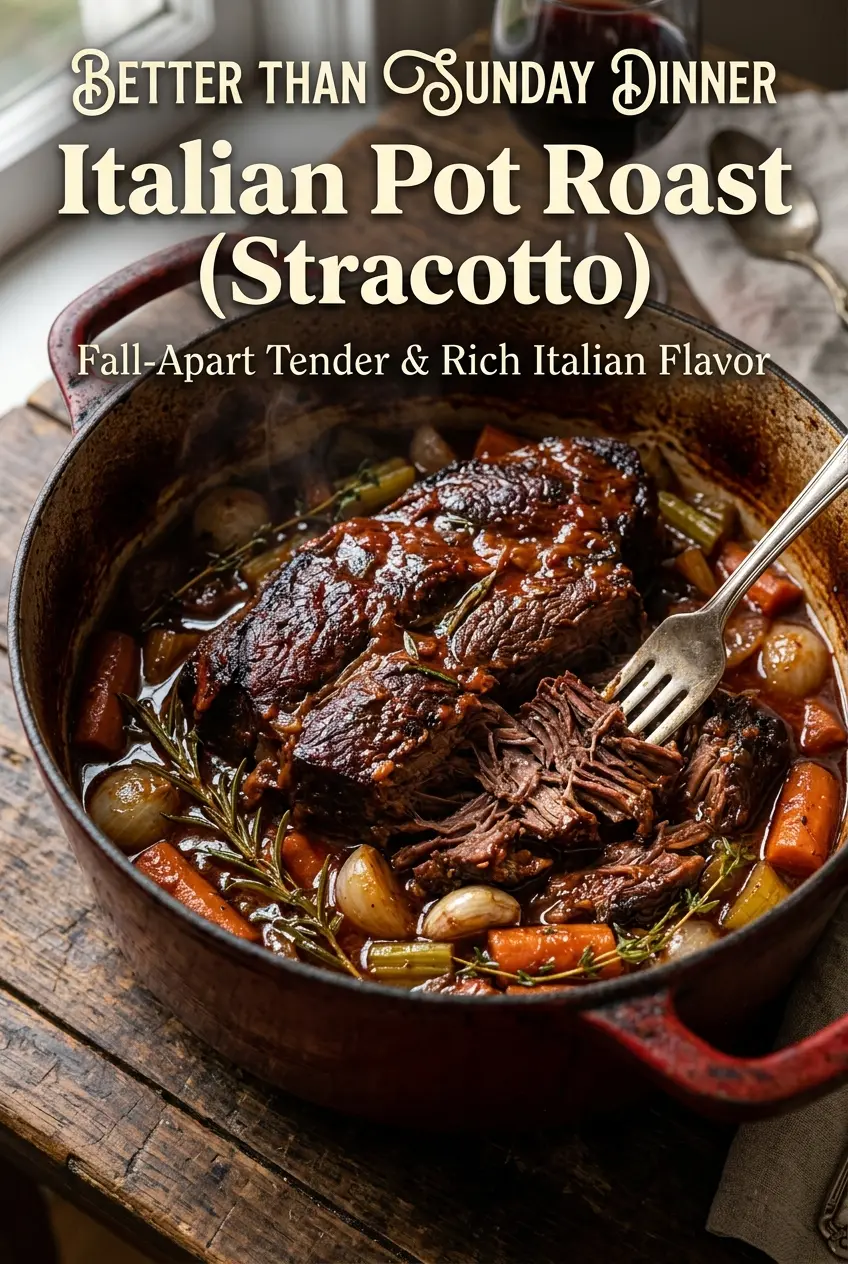
Italian Pot Roast (Stracotto)
Ingredients
Equipment
Method
- Preheat the oven to 325°F (165°C).
- Season the chuck roast with kosher salt, black pepper, and garlic powder.
- Heat olive oil in a Dutch oven over medium-high heat.
- Sear the roast for 3–4 minutes per side until deeply browned.
- Remove the roast and set aside.
- Sauté the large onion, carrots, and celery for 6 minutes.
- Add the garlic and tomato paste and cook for 1 minute.
- Pour in the dry red wine and simmer for 3 minutes, scraping up the browned bits.
- Stir in the beef broth, crushed tomatoes, Worcestershire sauce, Italian seasoning, rosemary, thyme, and bay leaves.
- Return the roast to the Dutch oven and cover tightly.
- Bake for 3½–4 hours at 325°F (165°C) until the beef is fall-apart tender.
- Remove the herbs, shred or slice the roast, and spoon the rich tomato gravy over the meat.
- Stir in the butter until melted and glossy.
- Garnish with fresh parsley and Parmesan before serving.
- Serve warm with mashed potatoes, creamy polenta, or buttered pasta.