
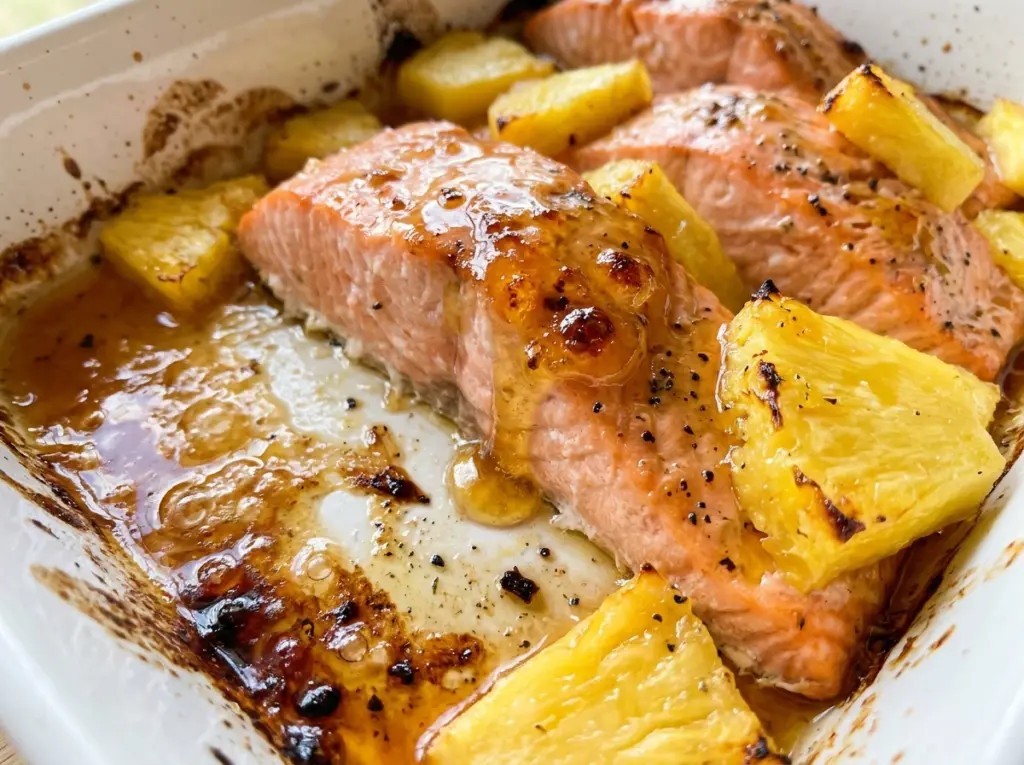
The glaze bubbles thick and shiny in the saucepan, but the first time I brushed it on before baking, the honey darkened faster than the salmon cooked. Now I let the fillets bake on their own first, then add the pineapple glaze for the final stretch. That small timing change gives this honey pineapple glazed salmon a glossy finish without leaving the sweet edges to overcook.
The sauce balances pineapple juice and honey with soy sauce, rice vinegar, garlic, and fresh ginger, so it tastes bright and savory rather than candy-sweet. Cornstarch gives it enough body to cling to the fish, and a portion set aside in a clean bowl stays ready for serving. The salmon is done when each fillet reaches the right temperature at its thickest point, then a short rest keeps it moist under that sticky glaze.
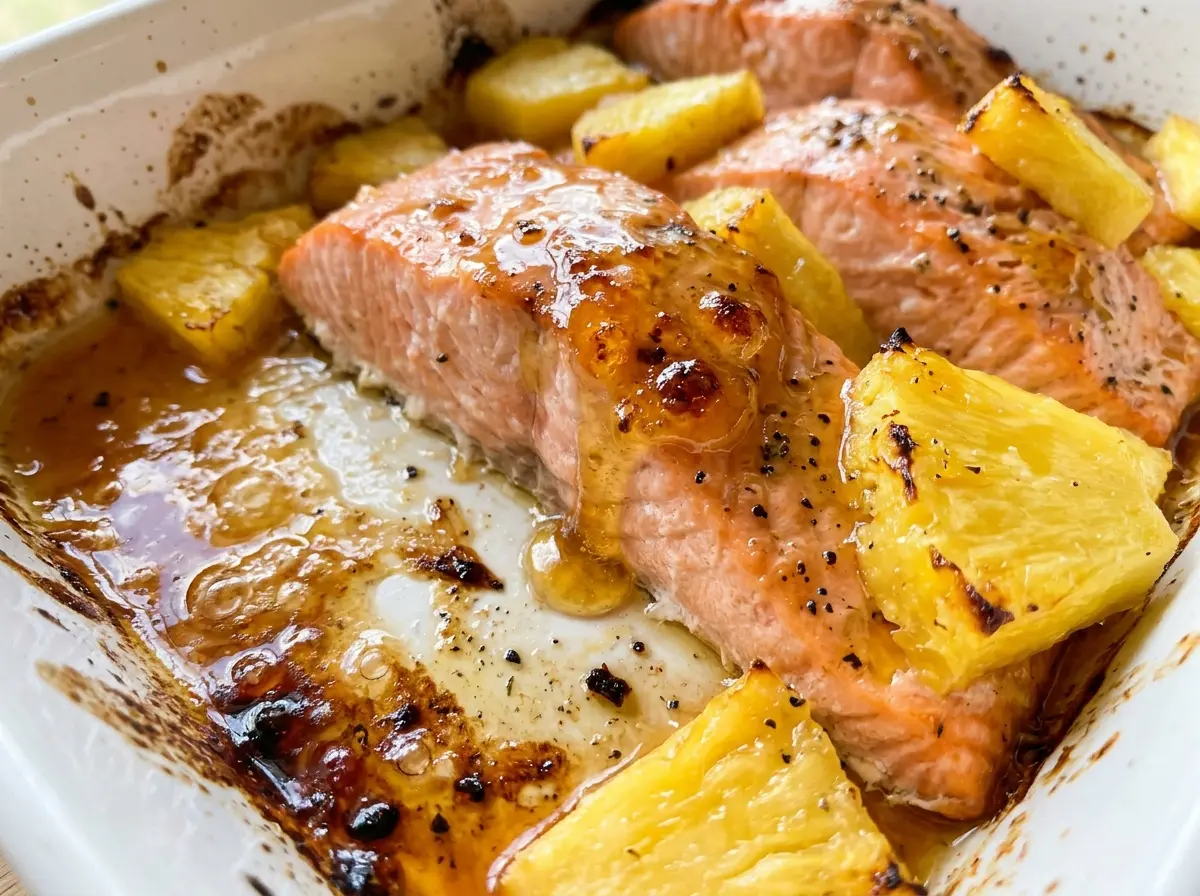
Kitchen Note
I set the serving portion of glaze aside in a clean bowl before brushing anything onto the salmon. That way, the sauce on the table never touches the raw fish or the brush used on it.
Save this honey pineapple glazed salmon for an easy dinner with a sticky-sweet finish and bright ginger in every bite.
Why the Pineapple Glaze Goes on After the First Bake
Honey gives this glaze its glossy, sticky finish, but its sugars also brown quickly in a hot oven. If the salmon went into the oven already coated, the glaze would spend the full baking time against the heat. The fish needs that time to cook through, while the glaze needs only a short turn in the oven to cling and shine. Brushing it on after the first bake lets those two jobs happen on separate clocks.
The glaze is also cooked on the stovetop before it ever reaches the sheet pan. Pineapple juice, honey, soy sauce, vinegar, garlic, and ginger simmer together first; a cornstarch slurry then thickens the mixture enough to coat a spoon. That texture matters. A watery sauce would run off the fillets and collect on the parchment, while a properly thickened one stays put for the last few minutes of baking. It’s a small bit of sequencing, but it’s what gives the fish a lacquered coating instead of a puddle of sweet sauce.
What Gives This Glaze Its Sweet-Savory Balance

- Pineapple juice — It brings the fruit flavor and a gentle tang that keeps the honey from tasting flat. Plain juice works well; juice sold in a can or carton is fine, while syrup from canned fruit would make the glaze much sweeter. Orange juice can stand in at the same volume, though the result will taste less distinctly tropical.
- Honey — Honey helps the glaze cling and gives it its glossy finish. A mild, inexpensive honey is plenty here; a strongly flavored one will come through more. Maple syrup can replace it at the same volume for a less floral, more woodsy sweetness.
- Low-sodium soy sauce — This supplies the savory depth that keeps the fruit and honey in balance. Low-sodium soy sauce is useful because the salmon is seasoned separately. For a gluten-free version, use gluten-free tamari in its place; the sauce will taste a little deeper and saltier.
- Rice vinegar — Its mild acidity brightens the glaze without taking over. Apple cider vinegar works as a substitute at the same volume, with a fruitier edge.
- Fresh garlic and ginger — Freshly minced garlic and grated ginger give the simmering sauce a lively aroma. Choose firm ginger without shriveled skin; jarred minced garlic is convenient, but fresh ginger is worth keeping for this glaze’s clean, peppery note.
- Cornstarch — This is what turns the thin liquid into a sauce that coats a spoon. Stir it with water before it goes into the saucepan rather than sprinkling the dry starch straight into the hot glaze, where it can clump.
Building the Glaze and Baking the Salmon Without Guesswork
Simmer the Pineapple Base
Set the oven to 400°F and line an 18×13-inch rimmed sheet pan with parchment. Combine the pineapple juice, honey, low-sodium soy sauce, rice vinegar, garlic, and ginger in a small saucepan. Bring the mixture to a simmer over medium heat and cook it for 5–7 minutes, stirring as needed. Keep it at a gentle simmer rather than a hard boil so the liquid reduces steadily without splashing up the sides.
Thicken It Until It Coats a Spoon
Stir the cornstarch and water together in a small bowl until smooth, then whisk that slurry into the simmering sauce. Cook for 1 minute, whisking, until the glaze thickens enough to coat a spoon. If it still runs off like juice, give it the full minute over the simmer; the change happens quickly once the cornstarch heats through. Transfer 1/4 cup to a clean bowl for serving.
Dry and Season the Fillets
Pat the salmon dry before it goes onto the pan; a damp surface can keep the seasoning from sitting evenly against the fish. Season both sides with kosher salt and black pepper, then arrange the fillets on the parchment-lined sheet pan. Leave space between the portions so hot air can circulate around them. Use fillets of similar thickness when possible, since they’ll finish closer together.
Glaze, Finish, and Rest
Bake the salmon for 8 minutes, then brush the fillets with the remaining glaze. Return the pan to the oven for another 4–8 minutes, until the thickest part of each fillet reaches 145°F. Start checking at the shorter end of that range, since thickness affects how quickly salmon cooks. Rest the fillets for 3 minutes before serving them with the reserved glaze.
Two Easy Swaps for a Different Table
Make the glaze gluten-free with tamari
Replace the soy sauce with the same volume of gluten-free tamari. The sauce keeps its savory backbone, with a slightly fuller, saltier taste; keep the salmon seasoning as listed so the finished dish stays balanced.
Use maple syrup for a less floral sweetness
Swap the honey for the same volume of maple syrup. The glaze will have a more woodsy sweetness and a slightly different aroma, while the cornstarch slurry still gives it the body it needs to coat the salmon.
Storage and Reheating
- Refrigerator: Store the salmon and reserved glaze in separate airtight containers for 3–4 days. The fish will be less glossy after chilling, but the extra glaze brings back some shine at serving.
- Freezer: Freeze the cooked fillets tightly wrapped or in an airtight freezer container for up to 2 months. Freeze the reserved glaze separately; thaw both in the refrigerator for best texture.
- Reheating: Warm portions covered in the microwave at reduced power in short bursts, until leftovers reach 165°F. Stop as soon as they’re hot; prolonged reheating is the quickest way to dry salmon out.
Questions That Come Up When Baking Glazed Salmon
Honey Pineapple Glazed Salmon
Ingredients
Equipment
Method
- Preheat the oven to 400°F.
- Line an 18x13-inch rimmed sheet pan with parchment paper.
- Combine the pineapple juice, honey, soy sauce, rice vinegar, garlic, and ginger in a small saucepan.
- Bring the sauce to a simmer over medium heat and cook for 5–7 minutes.
- Stir together the cornstarch and water in a small bowl.
- Whisk the cornstarch mixture into the simmering sauce and cook for 1 minute, until the glaze thickens enough to coat a spoon.
- Transfer 1/4 cup of the glaze to a clean bowl for serving.
- Pat the salmon dry.
- Season both sides of the salmon with the salt and pepper.
- Arrange the fillets on the prepared pan.
- Bake for 8 minutes.
- Brush the salmon with the remaining glaze.
- Bake for 4–8 minutes more, until the thickest part of each fillet reaches 145°F.
- Rest the salmon for 3 minutes.
- Serve with the reserved glaze.