
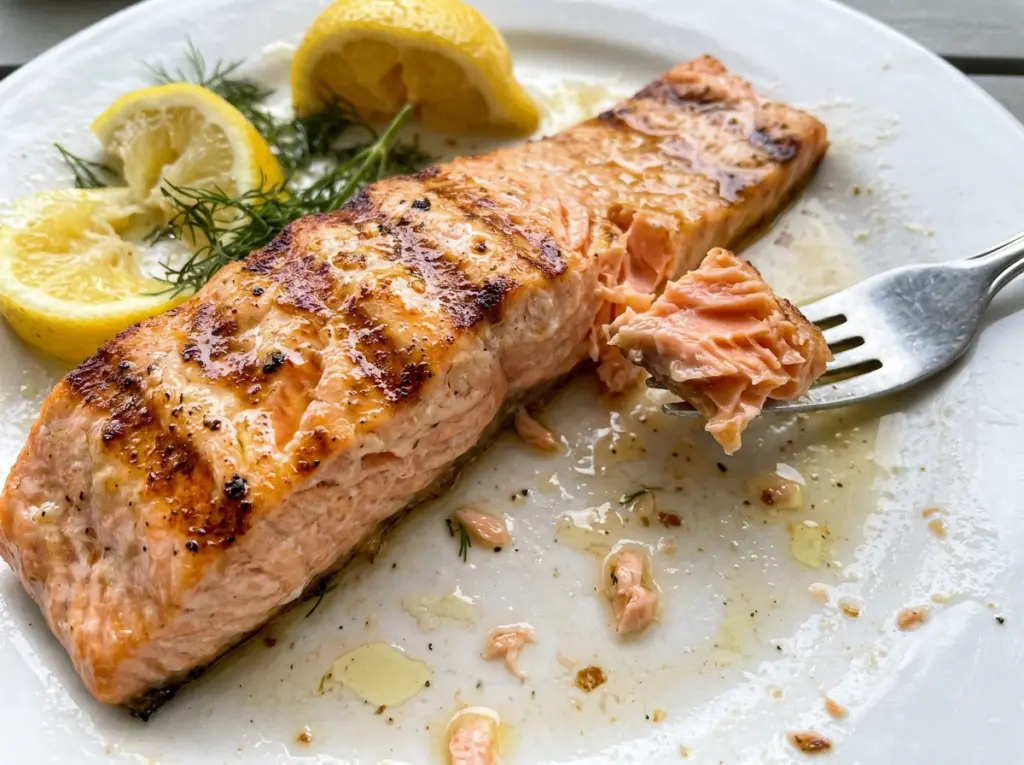
The first few minutes on the grill are where salmon either releases cleanly or clings to the grates. I get the best results when the grill is fully heated, the grates are clean, and the fish goes down skin-side first. That simple setup gives these grilled salmon fillets a browned exterior while keeping the flesh tender.
Each fillet is about an inch thick, which makes the timing a helpful guide, but not a substitute for checking the center. I brush the grates and fish with olive oil, season with kosher salt and black pepper, then use an instant-read thermometer to catch the moment the thickest part reaches 145°F. After a short rest, lemon wedges bring a fresh, bright finish to the plate.
Kitchen Note
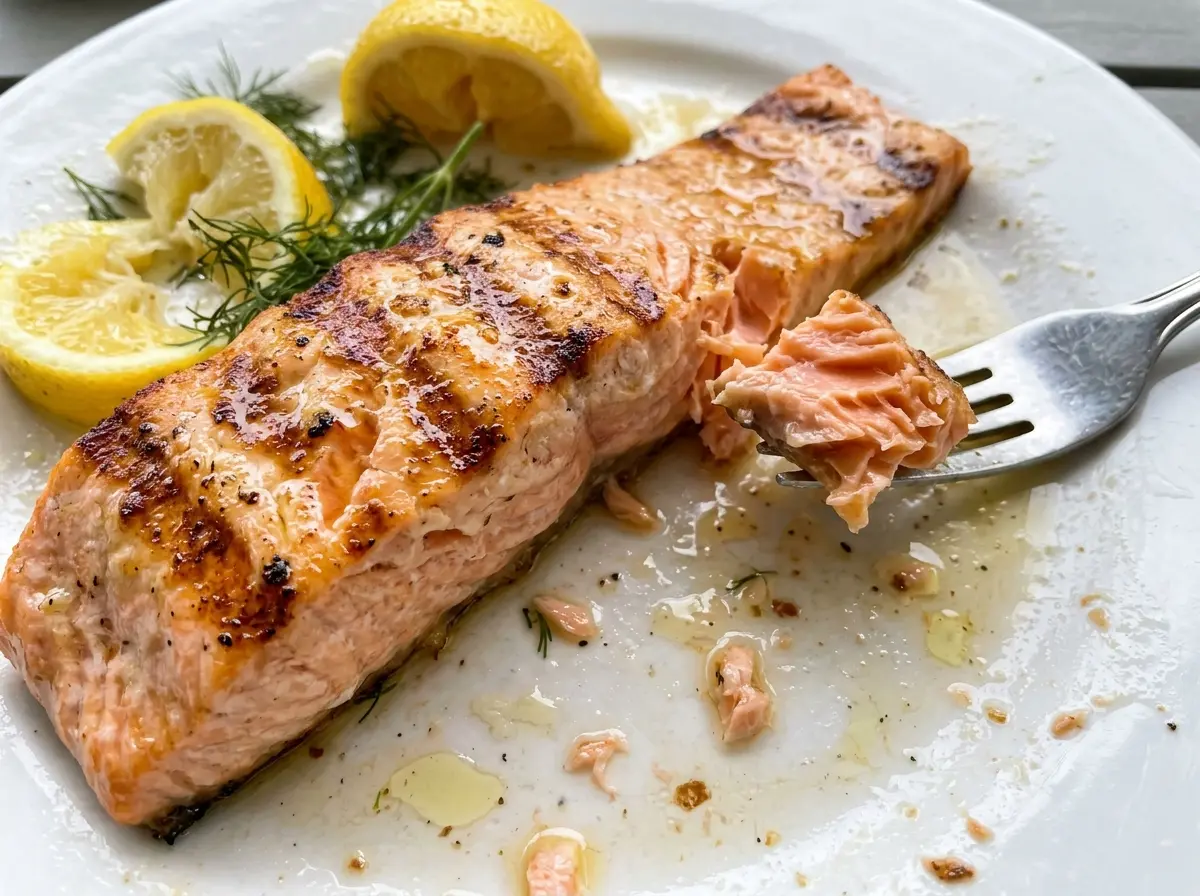
I serve the lemon wedges alongside the salmon rather than squeezing them all over before serving. That way, each person can add just the amount of fresh lemon they want.
Save this grilled salmon for a no-fuss dinner with crisp-edged fish, a tender center, and lemon wedges ready at the table.
Why the Thermometer Matters More Than the Clock on a One-Inch Fillet
Grill timing gets salmon close, but thickness, starting temperature, and the heat of your grill all affect how quickly the center cooks. Two fillets can look nearly identical on the plate and still finish at different moments. That’s why I treat the 6-to-8-minute first side and 2-to-4-minute second side as a window, not a promise.
Check the thickest part with an instant-read thermometer rather than judging the center by color alone. It should reach 145°F before the fish comes off the grill. Insert the thermometer from the side toward the middle of the thickest area so the reading reflects the center, not the hotter surface. If one fillet reaches the target before another, take that piece off and let the others continue. Keeping an eye on each portion is more reliable than waiting for every fillet to look exactly alike.
This approach also helps prevent the common mistake of leaving salmon on the grill until it seems thoroughly firm throughout. The center can still look moist when it reaches the proper temperature; a dry, rigid fillet has gone past the point you want. Use the thermometer as your decision-maker, and let the brief rest finish the transition from grill to plate.
What the Skin, Olive Oil, and Lemon Each Bring to Grilled Salmon
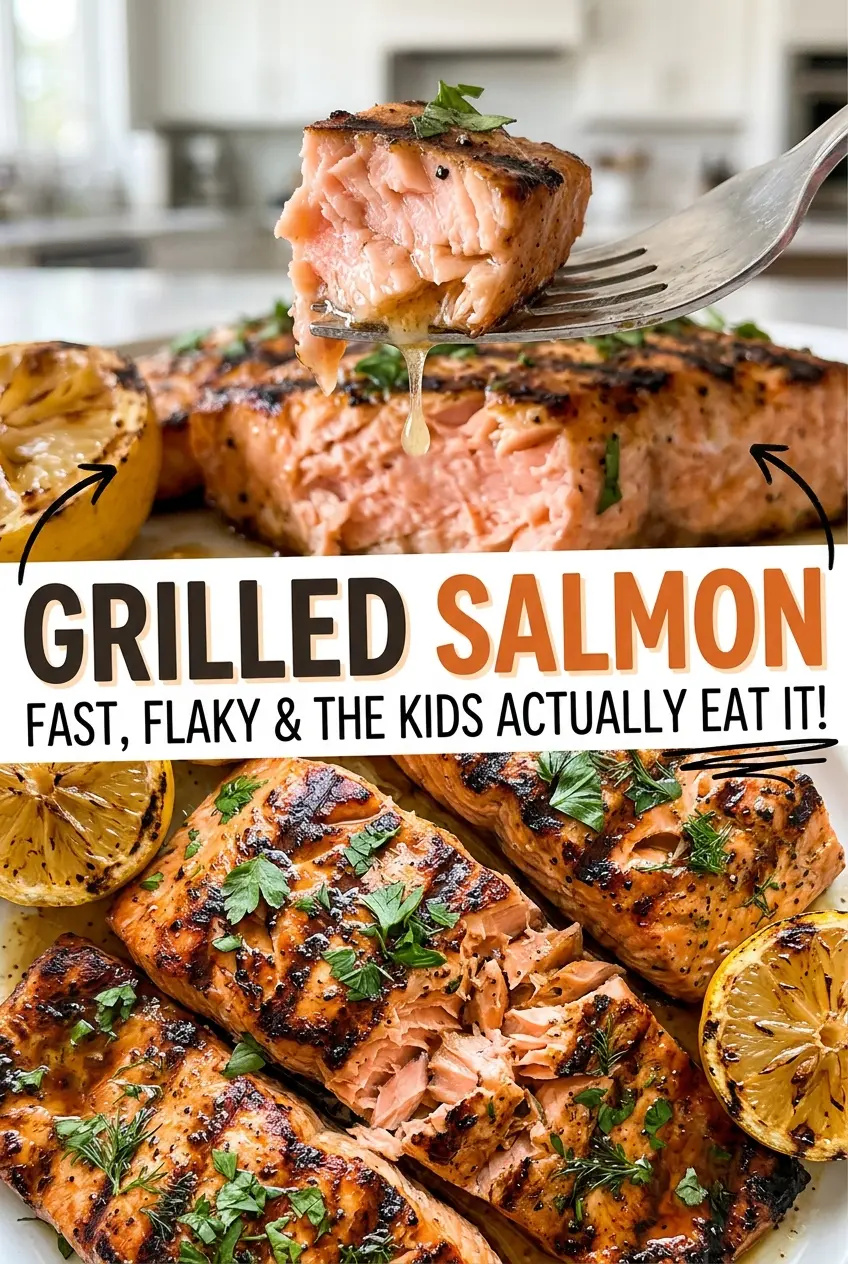
- Skin-on salmon — The skin stays between the flesh and the hot grates during the first stretch of cooking, and it gives you a sturdier side to start on. Choose fillets that are close to the same thickness so they cook at a similar pace. A skinless piece is more delicate on the grill and isn’t a like-for-like swap for this method.
- Olive oil — The oil coats both the grates and the fish, helping the salmon release more easily and keeping the surface from looking dry. A basic olive oil works here; there’s no need to reach for a specialty bottle. Keep the oil allocation in mind: some is for the grates and the rest goes on the fish.
- Kosher salt — Its clean seasoning brings out the salmon’s natural savoriness without adding another flavor to compete with the lemon. Salt brands vary in crystal size, so stick with kosher salt for the measured seasoning rather than swapping in a different-grain salt at the same volume.
- Black pepper — Freshly ground pepper gives the simple seasoning a little warmth. If you prefer a milder finish, it’s the easiest seasoning to leave out; the salmon will still have salt and lemon for balance.
- Lemon wedges — Fresh wedges provide bright acidity right at serving, and the amount can be adjusted at the table. Cut the lemon into wedges before you start grilling so they’re ready when the fish has rested.
From Clean Grates to a Clean Release: The Grilling Sequence
Heat the Grill and Clean the Grates
Bring a gas or charcoal grill to medium-high heat, about 400°F to 450°F. Clean the grates before adding any oil; old residue is one reason fish catches and tears. Give the grill time to reach the target range instead of putting the salmon on while it’s still warming. A properly heated, clean surface gives the fish a better chance of releasing when it’s ready to turn.
Oil the Grates, Then Season the Fish
Brush the grates with 1 teaspoon of olive oil, then brush the salmon with the remaining 2 teaspoons. Season the fillets with kosher salt and black pepper. Keeping the two applications separate matters: oiling the grates prepares the cooking surface, while oiling the fish coats the flesh. Move carefully around the hot grill as you brush the grates.
Let the Skin Side Cook Undisturbed
Set the salmon skin-side down and close the lid. Grill for 6 to 8 minutes without repeatedly lifting the lid or trying to move the fillets. The skin needs that uninterrupted contact with the grate before you flip; if a fillet resists, don’t yank it loose. Give it a little longer, then use a thin spatula to turn it carefully.
Flip, Check the Center, and Rest
Turn the fillets and grill the second side for 2 to 4 minutes. Check the thickest part with an instant-read thermometer, and take the fish off once it reaches 145°F. Rest the salmon for 3 minutes, then serve it with the lemon wedges. The resting time is short, so have your serving plates ready before the fish comes off the grill.
Two Simple Ways to Adjust the Seasoning Without Changing the Grill Method
A Lower-Sodium Plate
Leave out the kosher salt and keep the black pepper and lemon wedges. The salmon will taste less seasoned, but the lemon still adds a bright finish. This is a simple way to reduce the added salt without changing the grilling sequence.
Pepper-Free Salmon
Omit the black pepper for a gentler seasoning or when pepper doesn’t work for your table. Keep the kosher salt and finish with lemon wedges as usual; the result stays clean and straightforward, with less warmth from the seasoning.
Storage and Reheating
- Refrigerator: Refrigerate leftovers in a covered container within 2 hours and use them within 3 to 4 days. The chilled fish will be firmer than it was just off the grill.
- Freezer: Cooked salmon freezes well for about 2 to 3 months when wrapped tightly or sealed in an airtight freezer container. Thaw it in the refrigerator before reheating; the texture may be a little softer afterward.
- Reheating: Warm the salmon gently, covered, in a 275°F oven until it reaches 165°F. High heat can dry the fish before the center warms through, so avoid reheating it uncovered at a high temperature.
Questions That Come Up When Grilling Salmon
Grilled Salmon
Ingredients
Equipment
Method
- Heat a gas or charcoal grill to medium-high, about 400°F to 450°F.
- Clean the grates.
- Brush the grates with 1 teaspoon of the olive oil.
- Brush the salmon with the remaining 2 teaspoons of olive oil.
- Season the salmon with the salt and pepper.
- Grill the salmon skin-side down with the lid closed for 6 to 8 minutes.
- Carefully flip the salmon and grill for 2 to 4 minutes, until the thickest part reaches 145°F on an instant-read thermometer.
- Rest the salmon for 3 minutes.
- Serve with the lemon wedges.