
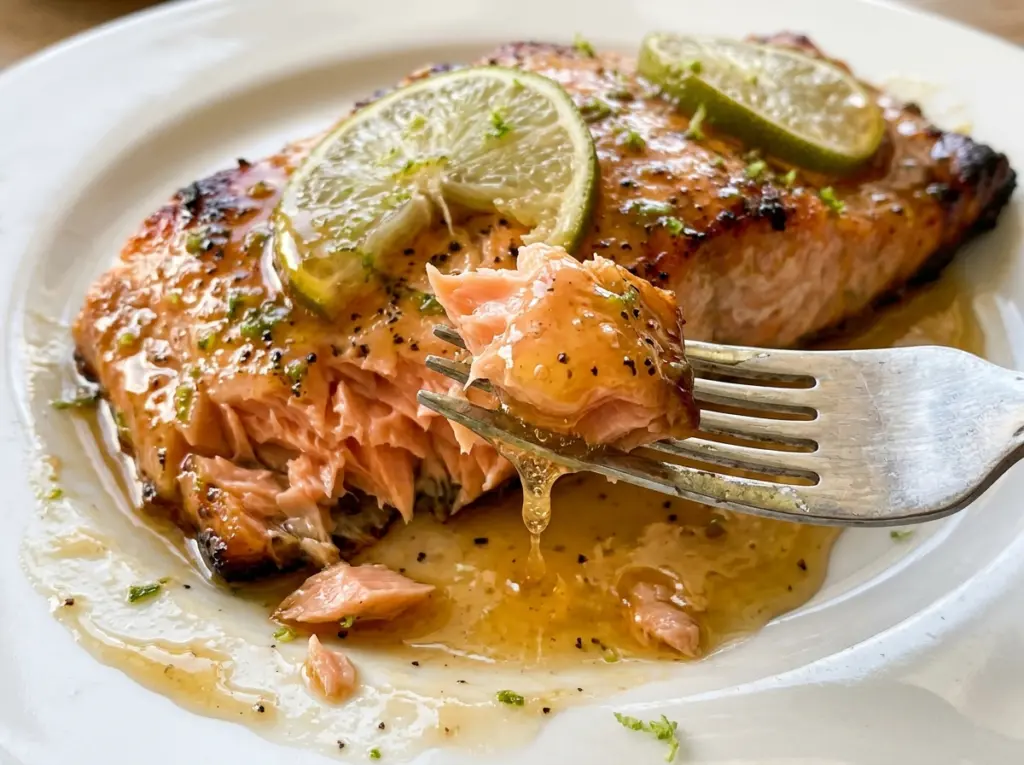
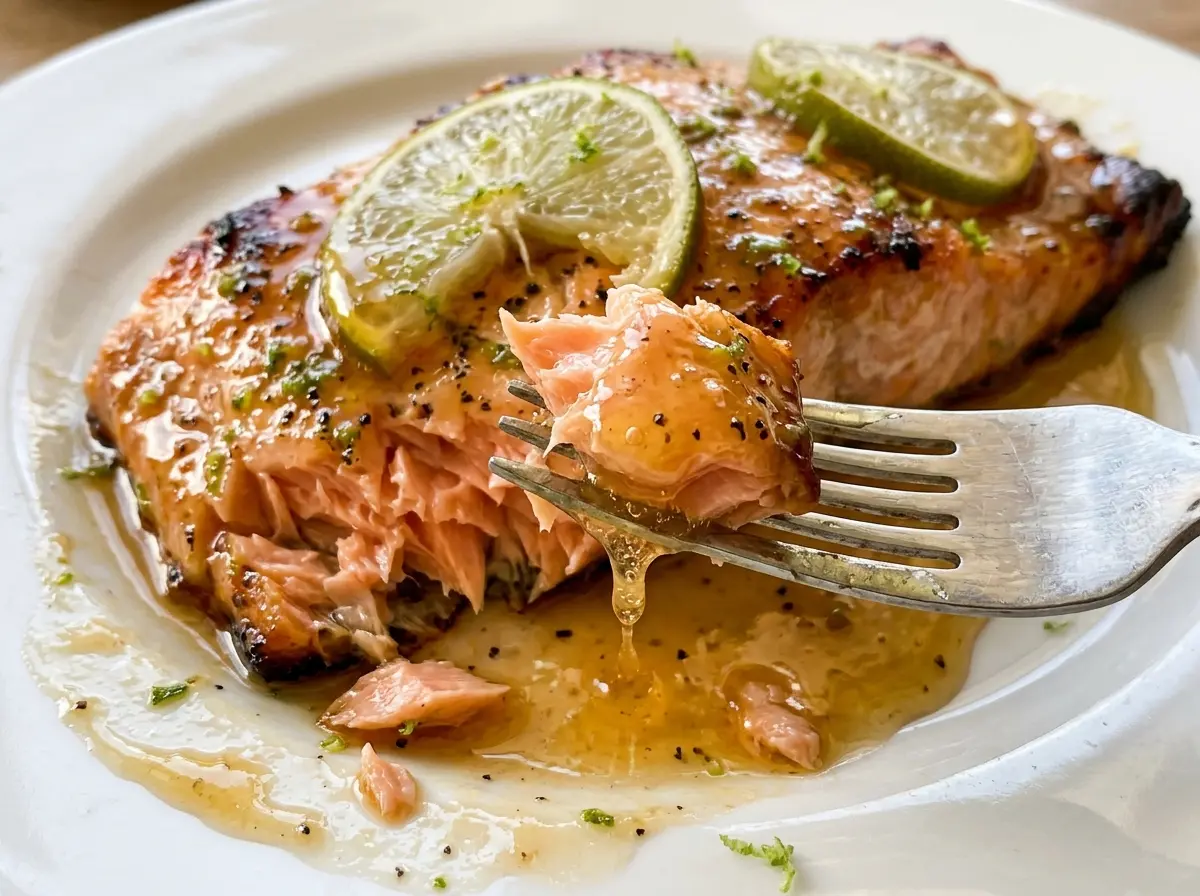
A good honey-lime glaze should cling to the salmon without hiding the fish beneath a heavy layer of sweetness. Fresh lime juice keeps the honey bright, and the finely grated zest brings a sharper citrus note that you can smell as soon as you stir the glaze together. I brush it over the fillets before they go into the oven, so the garlic and lime season the surface while the salmon bakes. Honey Lime Salmon is a straightforward dinner, but that sweet-tart balance is what keeps each bite lively.
Skin-on portions bake skin-side down on a foil-lined sheet, which means there’s no flipping or fussing with a pan of hot oil. I pat the salmon dry first, then coat the tops with olive oil before seasoning and glazing. That gives the glaze a clean surface to cling to and keeps the prep simple. The result is tender salmon with a glossy, citrusy top and just enough garlic to round out the honey.
Kitchen Note
Grate the lime zest before you cut and juice the lime. The whole fruit is easier to hold, and fine zest disperses through the honey instead of landing in a few concentrated bites.
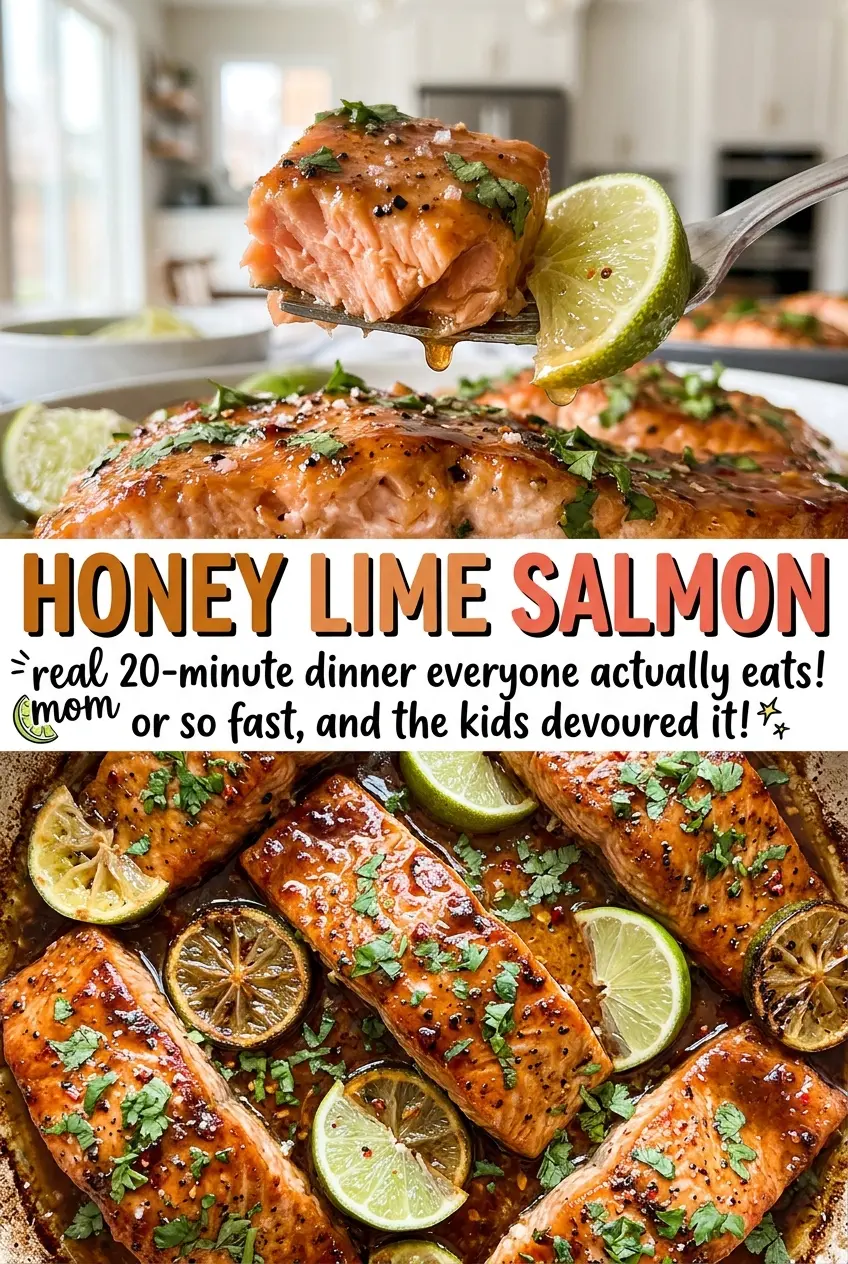
Save this Honey Lime Salmon for a quick dinner with a glossy honey glaze and fresh lime in every bite.
Why the Salmon Stays Skin-Side Down
Turning salmon halfway through cooking can tear the flesh, especially once the surface has been brushed with glaze. Here, each portion sits skin-side down for the full bake. The skin acts as a sturdy base between the tender fish and the foil, so you can lift and serve the fillets without trying to flip a sticky, delicate piece halfway through.
That position also gives the glaze an uninterrupted stretch of time on top, where you can see it change as the fish cooks. You don’t need to chase crisp skin in this oven method; the goal is salmon that flakes easily while the honey-lime coating stays glossy and fragrant. If you usually cook salmon in a skillet, think of the skin as a built-in support rather than something that needs to be turned over. Leave the portions in place and let the oven do the work.
What the Honey, Lime, and Garlic Each Bring
- Salmon — Skin-on fillets hold together well as you handle and serve them, and four portions make it easier to check doneness piece by piece. Look for salmon that smells clean and has moist-looking flesh; very thin pieces may finish sooner than thicker ones.
- Olive oil — A light coating helps the salt and pepper cling to the fish and gives the glaze a surface to settle on. A mild avocado oil works in the same amount if you’re out of olive oil; a strongly flavored oil would compete with the lime.
- Honey — Honey gives the glaze its sweetness and helps it coat the salmon. If you want a less sweet finish, reduce the honey as described in the variation below; the coating will be thinner and less sticky.
- Fresh lime — Juice brings the tartness, while zest adds aromatic citrus oils that juice alone can’t provide. Bottled lime juice can stand in for the fresh juice in the same quantity, but it won’t replace the zest; leave the zest out if you don’t have a fresh lime.
- Garlic — A minced fresh clove brings a savory edge that keeps the glaze from tasting like straight honey and citrus. If fresh garlic isn’t available, use 1/8 teaspoon garlic powder in its place; it gives a softer, less sharp garlic note.
From Dry Fillets to a Glossy Honey-Lime Finish
Set Up the Oven and Sheet
Heat the oven to 400°F and line a rimmed baking sheet with foil. The rim keeps the glaze from running off the edge, and the foil makes cleanup easier once the honey has baked onto the surface. Set the pan where you can reach it before you start seasoning the fish. A lined sheet also gives the skin a flat place to rest.
Dry and Season the Salmon
Pat the fillets dry, then arrange them skin-side down on the baking sheet. Rub olive oil over the tops and season with kosher salt and black pepper. Drying removes surface moisture that would otherwise thin the coating, so take a moment to blot the tops rather than brushing over damp fish. Keep the portions in a single layer so each one is easy to glaze.
Stir the Glaze and Brush It On
Stir the honey, fresh lime juice, finely grated lime zest, and minced garlic together in a small bowl. Brush the mixture over the tops of the salmon so each portion gets an even coating. If the honey settles while you’re working, give the glaze another stir before brushing the next fillet. The garlic should be finely minced so it spreads through the coating instead of sitting in one large piece.
Bake Until the Center Flakes
Bake for 12 to 16 minutes, until the thickest part of the salmon reaches 145°F and flakes easily with a fork. Start checking at the shorter end of the range, since thinner portions cook faster than thick ones. Insert a thermometer into the thickest part of a fillet rather than touching the foil. The flesh should separate into moist flakes without looking dry or chalky.
Simple Ways to Adapt the Glaze and Fillets
A Less-Sweet, Lower-Carb Glaze
Use 1 1/2 tablespoons of honey instead of the full amount. The lime and garlic still season the salmon, but the glaze will be less sweet and won’t coat quite as thickly; brush it carefully over the tops rather than expecting a sticky layer.
Use Lemon for a Softer Citrus Edge
Replace the lime juice and zest with the same amounts of lemon juice and finely grated lemon zest. Lemon tastes gentler and less sharp here, while the honey and garlic still make a balanced glaze.
Keep It Gluten-Free and Dairy-Free
The salmon and glaze use no wheat or dairy, so the dish itself needs no replacement ingredients for a gluten-free or dairy-free meal. Keep the salmon, olive oil, honey, lime, and garlic together as written; the sweet-citrus finish stays the same.
Storage and Reheating
- Refrigerator: Refrigerate leftovers within 2 hours and use them within 3 to 4 days. The salmon will be less tender after chilling, but the glaze keeps its citrus flavor.
- Freezer: Freeze cooked portions in an airtight container for up to 2 to 3 months for best quality. Thaw them overnight in the refrigerator; the texture will be softer than freshly baked salmon.
- Reheating: Cover and microwave at medium power in short intervals until the center reaches 165°F. High heat or reheating uncovered can dry the fish and make the honey coating tacky.
Questions I Get Asked About Honey Lime Salmon
Honey Lime Salmon
Ingredients
Equipment
Method
- Preheat the oven to 400°F.
- Line a rimmed baking sheet with foil.
- Pat the salmon dry and place it skin-side down on the baking sheet.
- Rub the tops with olive oil, then season with the salt and pepper.
- In a small bowl, stir together the honey, lime juice, lime zest, and garlic.
- Brush the glaze over the salmon.
- Bake for 12 to 16 minutes, until the thickest part of the salmon reaches 145°F and flakes easily with a fork.