
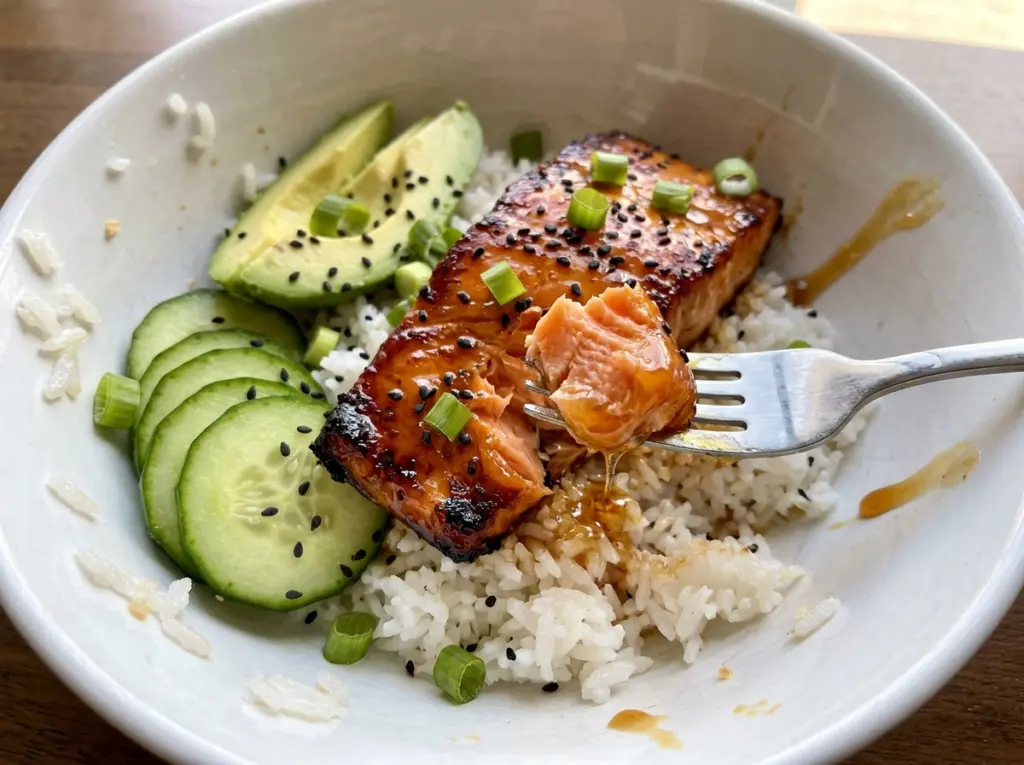
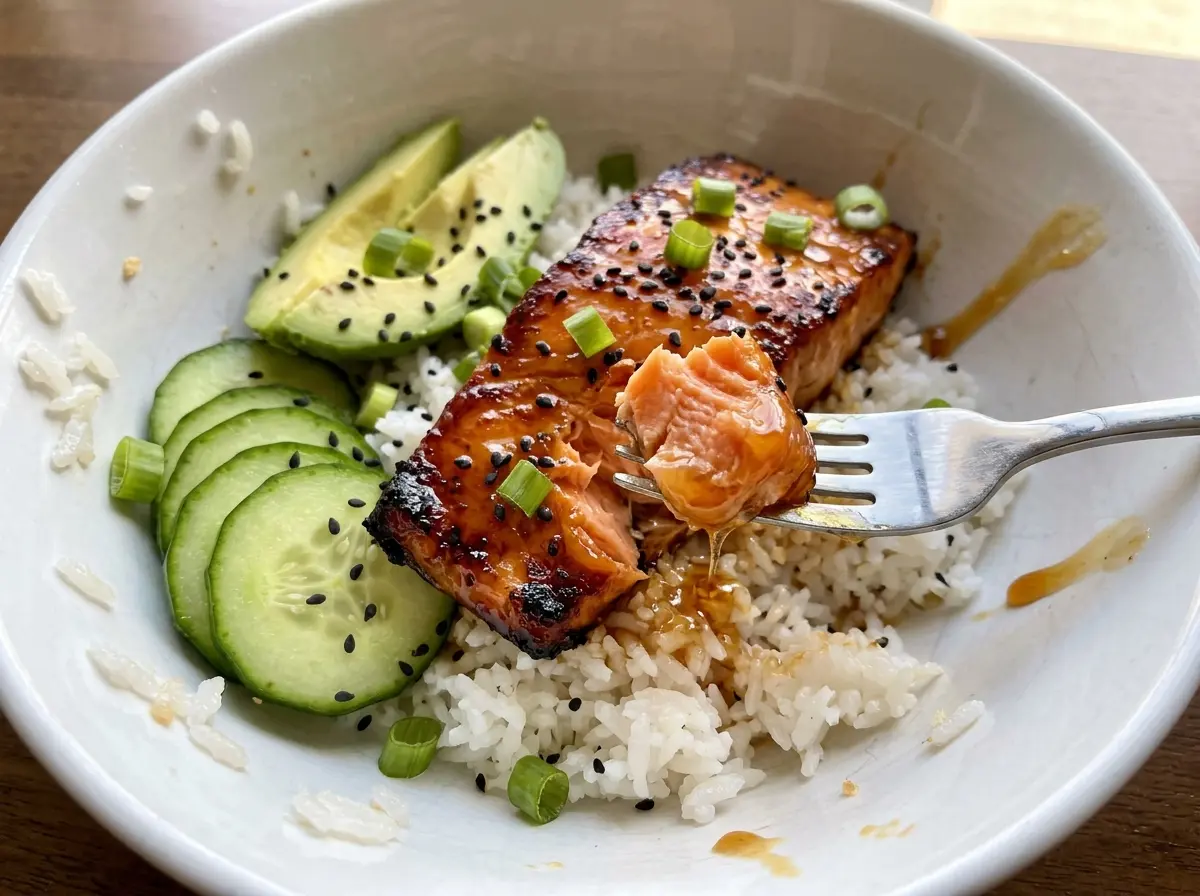
When the salmon comes out of the oven, the glaze should cling in a shiny layer instead of running straight off the fish. Brushing it on partway through baking gives the fillets time to cook before the honey hits the heat. That timing is what makes these honey glazed salmon bowls feel polished without adding a fussy step.
I keep the rice, glaze, and fresh toppings moving alongside one another, so the bowls come together while everything is ready to eat. The rice rests covered after cooking, the glaze gets its gloss from a quick cornstarch slurry, and the cucumber and avocado bring a cool, fresh contrast to the warm salmon. Each bowl has tender rice, a savory-sweet glaze, and a little crunch from scallions and sesame seeds.
Kitchen Note
Let the rice rest off the heat with the lid on for the full 10 minutes. That covered pause helps the moisture settle through the grains, so they fluff up tender instead of turning into a damp layer at the bottom of the pan.
Save these honey glazed salmon bowls for a weeknight when you want tender salmon, glossy honey-soy glaze, and fresh toppings in one satisfying bowl.
Why the Honey Glaze Goes on After the Salmon Starts Baking
Honey browns quickly in a hot oven. If it coats the salmon from the beginning, the sugars have more time to darken while the center is still cooking. Giving the fillets a head start means the glaze spends less time under direct oven heat, so it stays glossy and sweet rather than turning too dark.
Brushing on only half the glaze at the midpoint also keeps the finish in your hands. The first portion clings to the salmon as it completes baking; the rest stays aside for drizzling over the assembled bowls. That second layer brings the honey, soy, garlic, and ginger together with the cool cucumber and avocado instead of leaving all the sauce baked onto the fish. The result is a glaze you can see and taste in every bite.
What Each Ingredient Brings to These Salmon Bowls

- Long-grain white rice — Its separate, fluffy grains give the glaze somewhere to settle without making the bowl feel heavy. Rinsing away loose surface starch is worth the minute it takes; the rice is less likely to clump.
- Honey, soy sauce, and rice vinegar — Honey supplies the glaze’s sweetness and shine, low-sodium soy sauce gives it a savory base, and rice vinegar cuts through that sweetness. The low-sodium version keeps the sauce balanced; regular soy sauce works, but the finished glaze will taste saltier.
- Fresh garlic and ginger — Minced garlic and finely grated fresh ginger disperse through the glaze and give it a fresher, sharper aroma than dried versions. Peel the ginger before grating so the glaze stays smooth.
- Cornstarch — This is what turns the simmering liquid into a glaze that clings. Stir it with cold water first; adding the dry starch straight to the saucepan can leave little lumps.
- Skinless salmon fillets — Even-sized fillets make it easier for the four portions to finish at a similar pace. If you’re buying fish, look for fillets that are similar in thickness; the thickest part determines when they’re ready.
- Cucumber, avocado, scallions, and sesame seeds — These toppings add coolness, creaminess, a mild onion bite, and a nutty finish. Choose a ripe avocado that still holds its shape when sliced, and cut the cucumber thinly so it fits neatly into each bowl.
Building the Rice, Glaze, and Salmon in the Right Order
Get the rice fluffy, not gummy
Rinse the rice in a fine-mesh strainer under cold water until the water runs mostly clear. Bring the water and kosher salt to a boil in a 2-quart saucepan, stir in the rice, then cover and reduce the heat to low. Cook for 15–18 minutes, until the water is absorbed; keep the lid on rather than checking repeatedly. Take the pan off the heat and leave it covered before fluffing with a fork.
Thicken the glaze until it turns glossy
Whisk the honey, low-sodium soy sauce, rice vinegar, minced garlic, and grated ginger in a small saucepan. Bring the mixture to a simmer over medium heat. In a small bowl, stir the cornstarch with cold water until smooth, then whisk that slurry into the saucepan. Simmer for 30–60 seconds, until the glaze looks glossy and lightly thickened, and remove it from the heat.
Brush the salmon partway through baking
Heat the oven to 400°F and line a rimmed baking sheet with parchment paper. Pat the skinless salmon fillets dry, arrange them on the sheet, and season with kosher salt and black pepper. Bake for 8 minutes, then brush the tops with half of the glaze and return them to the oven for 4–8 minutes. Check the thickest part of a fillet; it should reach 145°F.
Assemble while the toppings are fresh
Divide the rice among four bowls and set one salmon fillet on each portion. Add the thinly sliced cucumber, avocado, and scallions around the fish. Drizzle the remaining glaze over the bowls so it reaches both the salmon and rice. Finish with sesame seeds just before serving.
Simple Ways to Change the Bowl Without Losing Its Balance
Make it rice-free
Leave out the rice and arrange the salmon over the cucumber and avocado instead. You’ll have a lighter, more produce-forward bowl, though it won’t be as filling as the rice version.
Turn up the ginger
Use 2 teaspoons of finely grated fresh ginger in the glaze instead of 1 teaspoon. The sauce will have a warmer, more pronounced ginger bite that stands up nicely to the honey.
Leave off the sesame
For a sesame-free bowl, omit the sesame seeds. The glaze and toppings still bring plenty of contrast, though you’ll miss the seeds’ nutty finish.
Storage and Reheating
- Refrigerator: Refrigerate leftovers within 2 hours in airtight containers and use within 3 days. Keep the fresh toppings separate when possible; cucumber softens and avocado can brown.
- Freezer: Freeze the cooked salmon and rice separately for up to 2 months. Cucumber and avocado don’t freeze well, so add fresh toppings when you serve the thawed portions.
- Reheating: Reheat salmon and rice gently in the microwave, covered, with a small splash of water on the rice. Heat leftovers to 165°F, using short bursts so the salmon doesn’t dry out.
Questions That Come Up While Making Honey Glazed Salmon Bowls
Honey Glazed Salmon Bowl
Ingredients
Equipment
Method
- Rinse the rice in a fine-mesh strainer under cold water until the water runs mostly clear.
- Bring the water and salt to a boil in a 2-quart saucepan.
- Stir in the rice, cover, and reduce the heat to low.
- Cook for 15–18 minutes, until the water is absorbed.
- Remove the saucepan from the heat and let the rice rest, covered, for 10 minutes.
- Fluff the rice with a fork.
- Whisk the honey, soy sauce, rice vinegar, garlic, and ginger together in a small saucepan.
- Bring the mixture to a simmer over medium heat.
- Stir the cornstarch and cold water together in a small bowl.
- Whisk the slurry into the saucepan.
- Simmer for 30–60 seconds, until the glaze is glossy and lightly thickened.
- Remove the glaze from the heat.
- Heat the oven to 400°F.
- Line a rimmed baking sheet with parchment paper.
- Pat the salmon dry and arrange it on the baking sheet.
- Season the salmon with the salt and pepper.
- Bake for 8 minutes.
- Brush the salmon with half of the glaze.
- Bake for 4–8 minutes more, until it reaches 145°F in the thickest part.
- Divide the rice among four bowls.
- Top each bowl with a salmon fillet, cucumber, avocado, and scallions.
- Drizzle the bowls with the remaining glaze.
- Sprinkle with sesame seeds.