
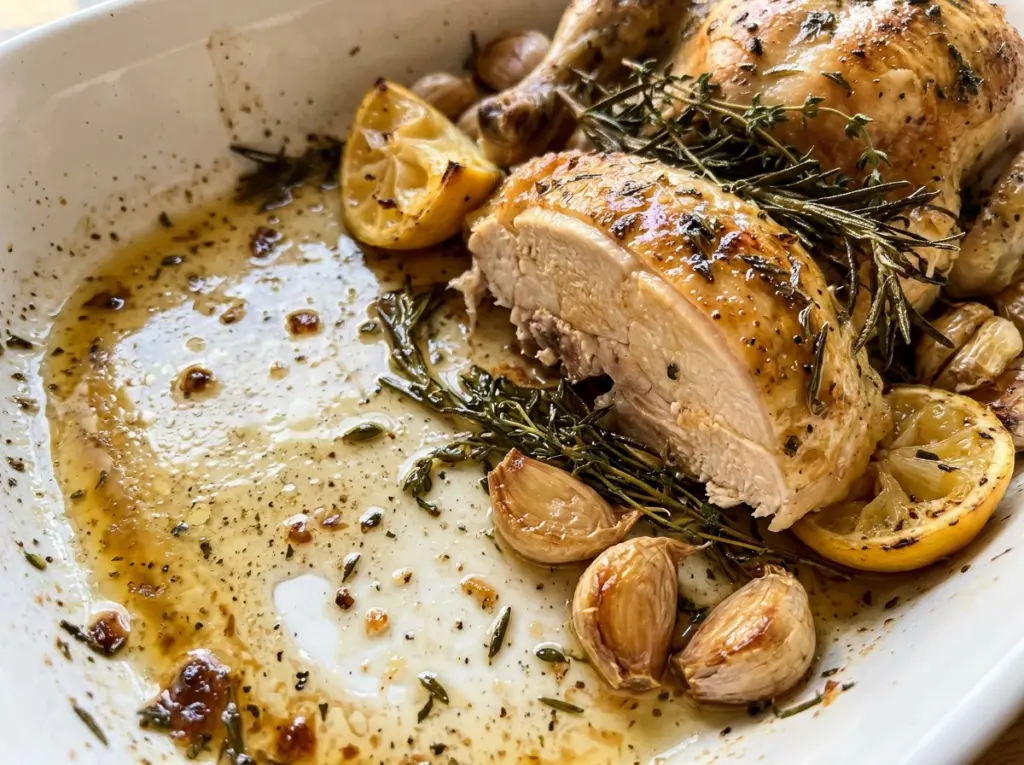
The first thing I notice is how quickly the butter and herbs turn fragrant once the chicken goes into the oven. I used to rely on the roasting time alone, then found the breast could be ready before the thigh. For this Holiday Roast Chicken with Lemon and Herbs, I check both places with an instant-read thermometer so the meat finishes juicy instead of becoming a guessing game.
The herb butter does double duty: some goes beneath the breast skin, where it can season the meat directly, and the rest coats the outside. Lemon quarters tucked into the cavity lend a fresh aroma as the chicken roasts. It’s a straightforward centerpiece for six, with rosemary, thyme, parsley, and garlic in every bite.
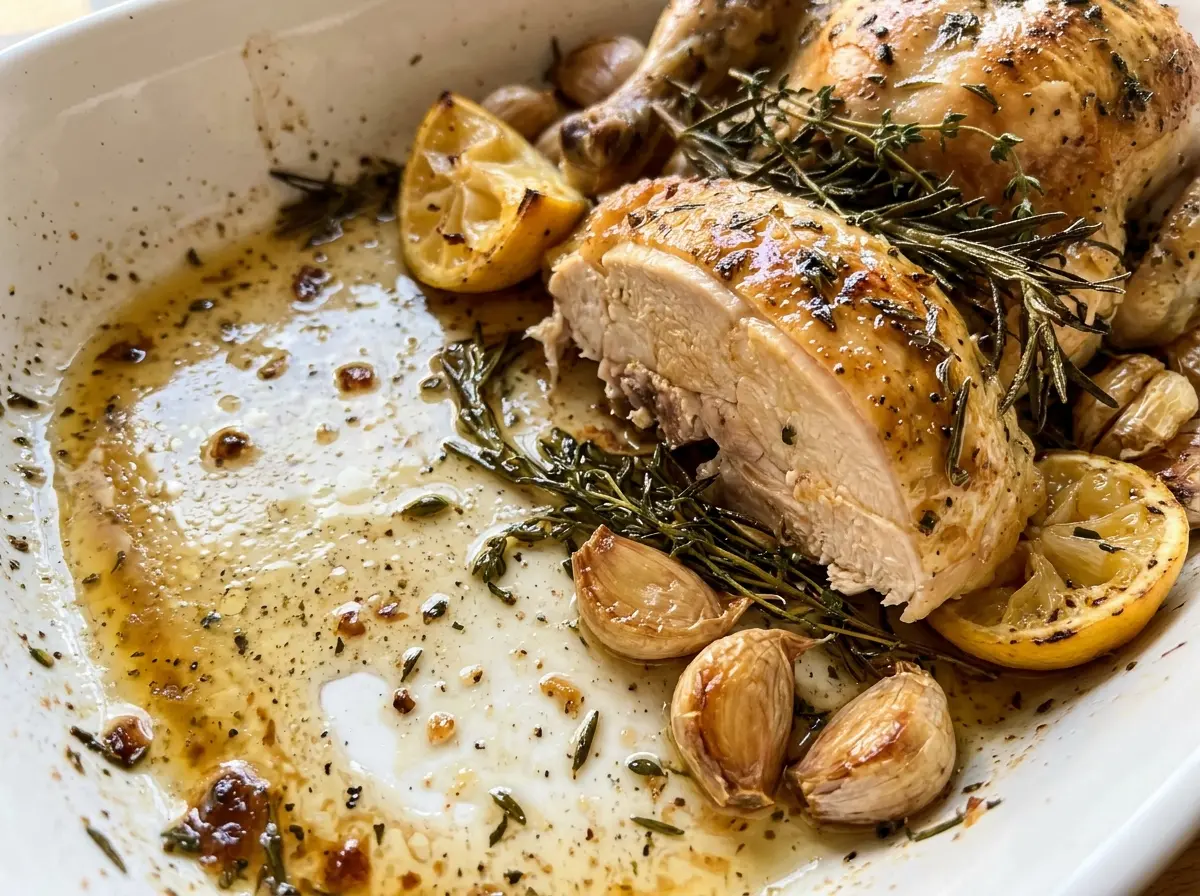
Give the chicken a full 15 minutes to rest before carving. That pause makes the bird easier to handle and gives the juices time to settle, while the browned skin stays right where you want it: crisp, fragrant, and ready to carve.
Kitchen Note
Softened butter should yield easily when you stir it, but it shouldn’t be melted. When it holds its shape, it’s much easier to work beneath the skin and spread over the chicken.
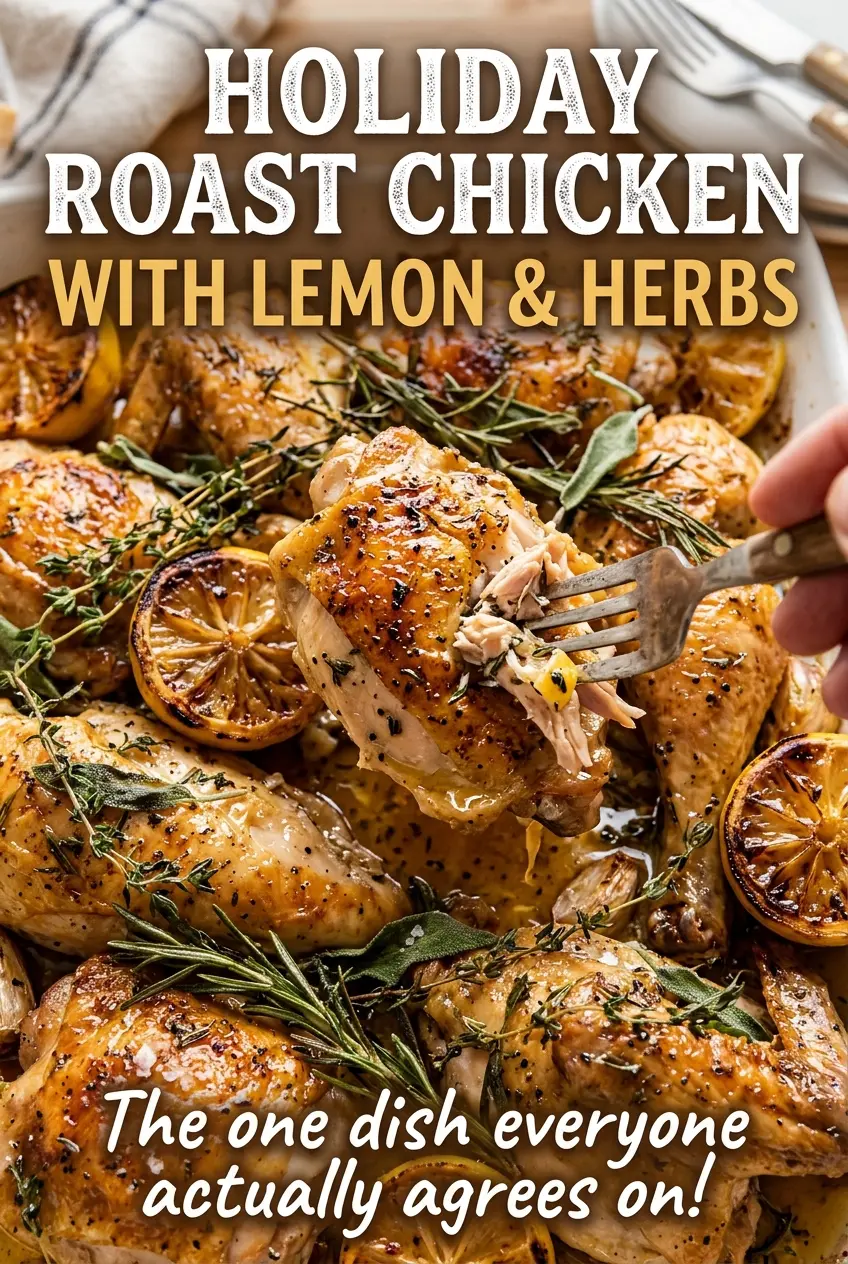
Save this Holiday Roast Chicken with Lemon and Herbs for a centerpiece with fragrant herb butter, browned skin, and an easy lemon-filled cavity.
Why One Roasting Time Can’t Tell You When the Whole Chicken Is Ready
A whole chicken doesn’t cook at one perfectly even pace. The breast is broad and exposed, while the innermost part of the thigh sits deeper in the bird. A roasting time gives you a useful window, but the chicken’s exact size and shape affect where it lands in that window.
That’s why I check the thickest part of the breast and the innermost part of the thigh separately. Insert the instant-read thermometer without touching bone, since bone can distort the reading. This approach lets you judge the meat itself rather than the clock, and it’s especially useful when the bird is closer to 4 pounds or closer to 5.
Keep the chicken breast-side up on the roasting rack, with the oven rack set in the center. The rack gives hot air room to move around the bird, and the 9×13-inch pan catches the drippings. Once both readings reach the safe mark, the chicken is ready to come out; extra roasting won’t improve the parts that are already cooked.
What the Herb Butter and Cavity Lemon Each Bring
- Unsalted butter — It carries the chopped herbs and garlic and spreads easily over the bird. Unsalted butter also lets the kosher salt in the mixture do the seasoning without adding a second, less predictable source of salt. The softened texture matters: cold butter is difficult to stir and work beneath the skin.
- Fresh rosemary, thyme, and parsley — These herbs give the butter its green, savory character. Freshly chopped herbs mix evenly into softened butter; woody rosemary especially benefits from a fine chop so you don’t get a large, tough leaf in a bite. Use the listed combination together for the balance this roast is built around.
- Garlic — Minced garlic disperses through the butter more evenly than a whole clove would, so its flavor reaches both the skin and the meat beneath it. Mince it finely and stir it through well; a large piece can clump in one spot.
- Lemon — Quartered lemon goes in the cavity, where it perfumes the chicken as it roasts. It isn’t a substitute for the salt and pepper in the herb butter, and it won’t make the meat taste sharply lemony. Choose a firm lemon that’s easy to quarter and fit inside the cavity.
- Whole chicken — A bird between 4 and 5 pounds suits the six servings here. Check that the giblets have been removed before seasoning, then pat the chicken dry inside and out. Dry skin browns more readily than damp skin.
From Herb Butter to a Rested, Carvable Roast
Set Up the Pan and Dry the Chicken
Heat the oven to 425°F with a rack in the center, then place a roasting rack in a 9×13-inch roasting pan. Pat the chicken dry inside and out with paper towels, including around the cavity opening. A wet surface can leave the skin pale rather than browned, so take a moment to blot it well. Set the dried chicken aside while you mix the butter.
Mix and Apply the Herb Butter
Stir the softened butter with the minced garlic, rosemary, thyme, parsley, kosher salt, and black pepper. The finished mixture should look evenly speckled with herbs rather than streaked with unmixed butter. Gently loosen the skin over the breasts and rub some of the herb butter underneath. Spread the remainder over the outside, taking care not to tear the skin as you work.
Fill the Cavity and Tie the Legs
Put the lemon quarters inside the cavity, then tuck the wing tips behind the chicken. Tie the legs together with kitchen twine so they stay close to the body during roasting. Set the chicken breast-side up on the rack in the pan. Keep it centered on the rack rather than letting a wing or leg hang over the edge.
Roast, Check, and Rest Before Carving
Roast for 75 to 95 minutes. Check the thickest part of the breast and the innermost part of the thigh with an instant-read thermometer, avoiding the bone; both spots need to reach at least 165°F. If one area needs more time, return the chicken to the oven and check again rather than relying on skin color alone. Transfer it to a cutting board and let it rest for 15 minutes before carving.
Small Changes to the Herb Butter and Lemon Finish
A stronger herb presence under the skin
Keep the same herb butter, but work a larger share of it beneath the breast skin and leave a thinner layer over the outside. The meat gets more direct contact with the garlic and herbs, while the exterior has less butter coating it as it browns.
A brighter lemon finish at the table
After roasting, remove the lemon quarters from the cavity and squeeze them over the carved chicken if you want a more noticeable citrus note. It shifts the lemon from a gentle aroma during roasting to a sharper finish on the meat, without changing the herb butter.
A finer-textured herb butter
Chop the rosemary and thyme especially finely before stirring them into the butter. The herbs will spread more evenly beneath the skin, so the finished slices have a subtler, more consistent herb texture instead of distinct flecks.
Storage and Reheating
- Refrigerator: Store carved chicken in an airtight container for 3 to 4 days. The skin softens in the refrigerator, but the meat stays tender when covered.
- Freezer: Freeze carved portions in an airtight, freezer-safe container for up to 4 months for best quality. Thaw overnight in the refrigerator before reheating.
- Reheating: Put portions in a baking dish, cover with foil, and warm in a 325°F oven until hot throughout. Reheat only what you’ll eat; repeated warming dries the meat and further softens the skin.
Questions That Come Up While Roasting This Chicken
Holiday Roast Chicken with Lemon and Herbs
Ingredients
Equipment
Method
- Heat the oven to 425°F.
- Set a rack in the center and place a roasting rack in a 9x13-inch roasting pan.
- Pat the chicken dry inside and out with paper towels.
- Stir together the butter, garlic, rosemary, thyme, parsley, salt, and pepper.
- Gently loosen the breast skin.
- Rub some of the herb butter underneath the breast skin.
- Spread the rest of the herb butter over the chicken.
- Put the lemon quarters in the cavity.
- Tuck the wing tips behind the chicken.
- Tie the legs together with kitchen twine.
- Set the chicken breast-side up on the rack.
- Roast for 75 to 95 minutes, until the thickest part of the breast and the innermost part of the thigh reach at least 165°F on an instant-read thermometer, avoiding the bone.
- Transfer the chicken to a cutting board.
- Rest for 15 minutes before carving.