
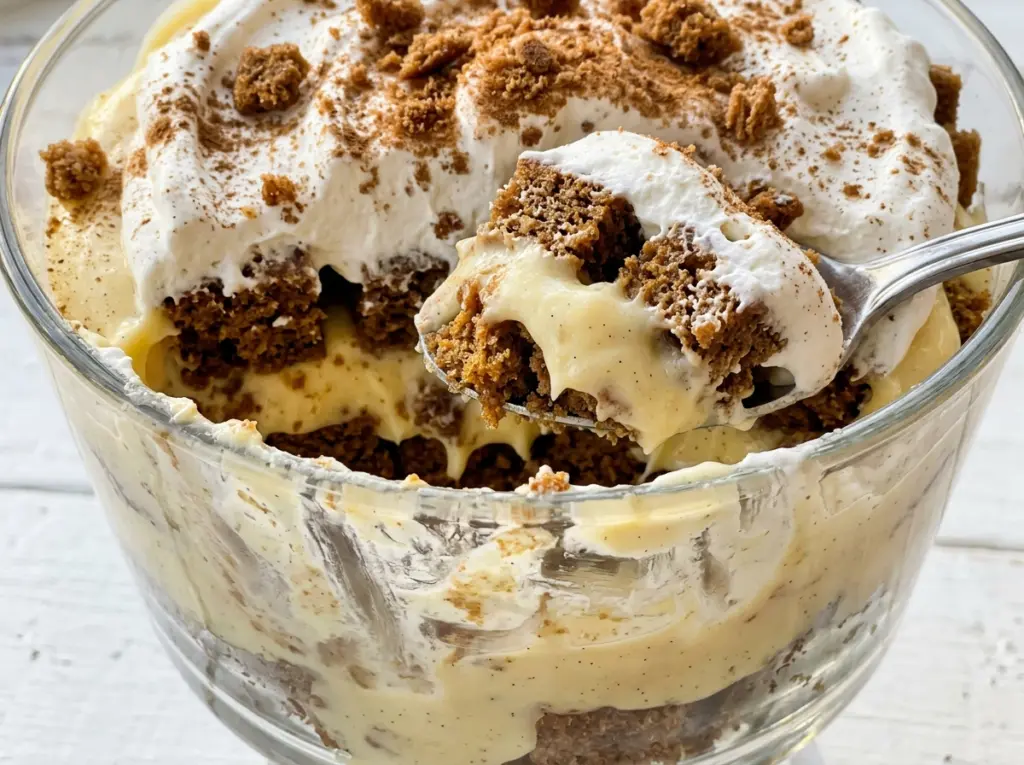
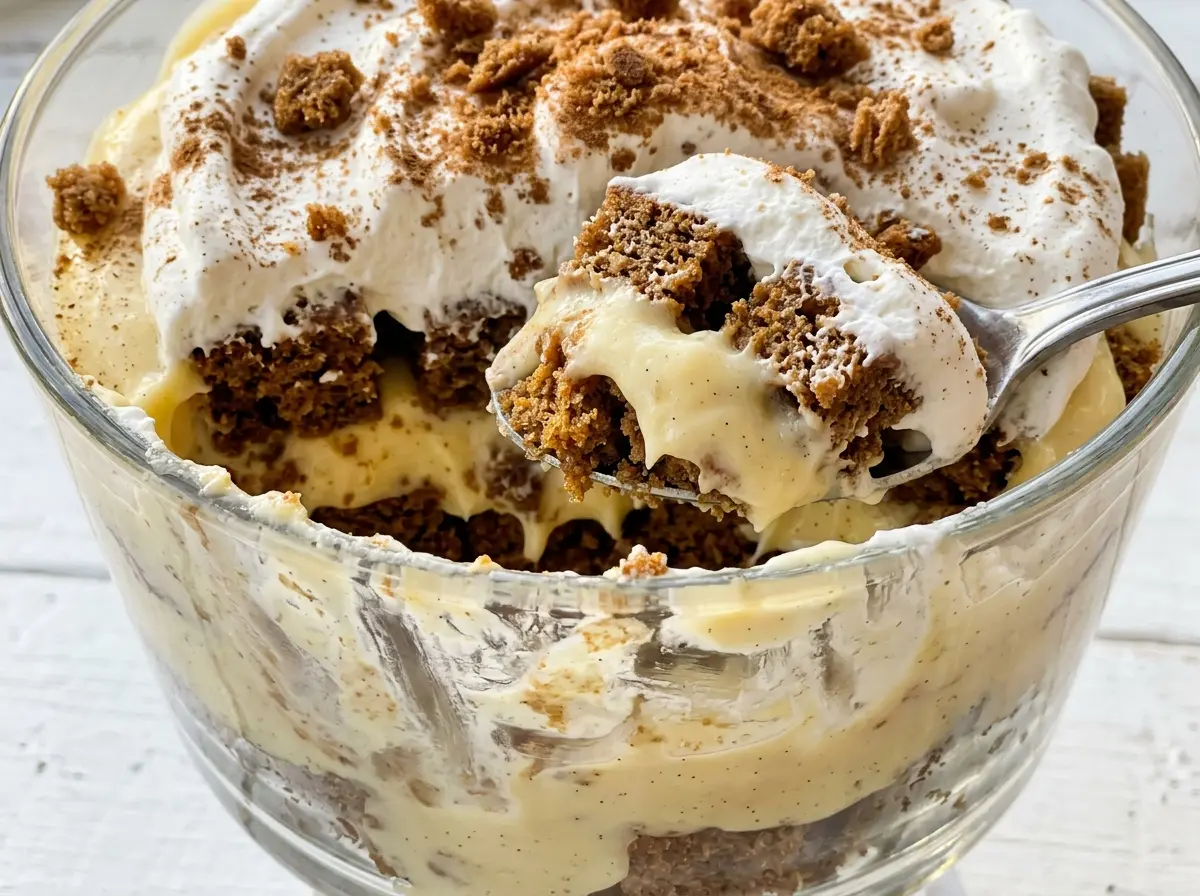
The first spoonful tells me whether the layers are doing their job: gingerbread brings a deep molasses warmth, while the vanilla pudding cools it down without making the dessert taste heavy. A soft layer of whipped cream gives the top a light finish, and that contrast makes this trifle more interesting than a stack of cake and frosting. I like that the cake bakes in a standard 9-by-13-inch pan, then becomes a dessert that looks right at home in a clear serving bowl. This gingerbread trifle with vanilla pudding feels generous without relying on elaborate decoration.
The cake and pudding both need time to cool before assembly, but the hands-on work is straightforward. I make the pudding on the stovetop, where egg yolks and cornstarch give it a smooth, spoonable body. Once the layers are assembled and chilled, the gingerbread keeps its character beneath the cool vanilla cream, and each scoop brings a little spice to the table.
Kitchen Note
Whisk the hot milk mixture into the yolks gradually, not all at once. That slow tempering warms the yolks without scrambling them, so they blend back into a smooth pudding.
Save this gingerbread trifle with vanilla pudding for a make-ahead dessert with tender spice cake, cool custard, and a pillowy cream topping.
Why Gingerbread Holds Its Shape in a Layered Trifle
A trifle needs cake that can take on some moisture without disappearing into the pudding. Gingerbread has a close, tender crumb, so cutting it into one-inch cubes gives each piece enough surface to meet the custard while leaving a soft center. Smaller pieces can lose their definition as they sit; much larger chunks make it harder to get cake and pudding together in each spoonful.
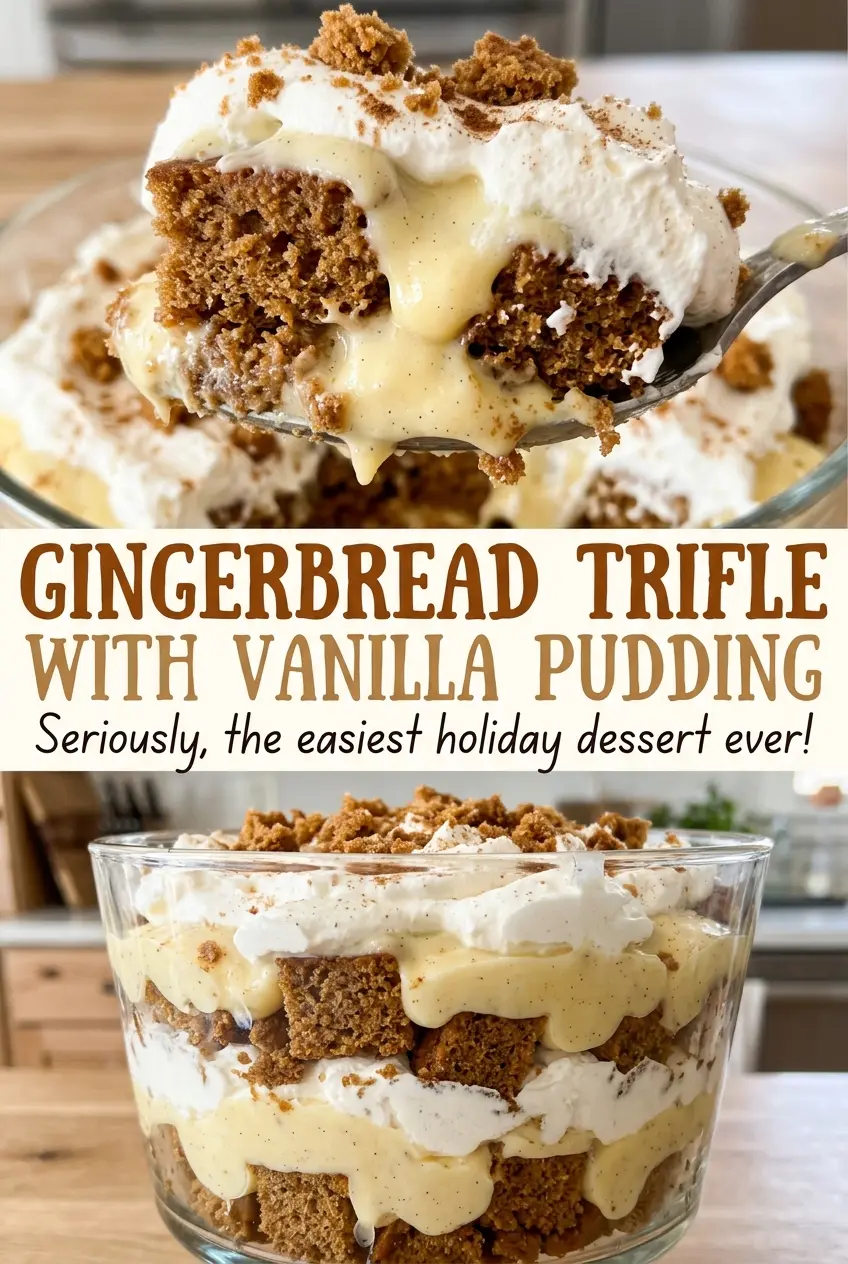
The order of the layers also matters. Start with half the cake, then spread half the pudding and half the cream over it before repeating. That gives the pudding room to settle around the cake instead of pooling at the bottom, and it keeps the cream from being buried under every layer. Spread each topping gently so the layer beneath stays in place. After the covered trifle chills, the cake softens slightly but remains distinct, making a scoop that feels creamy rather than mushy.
What Molasses, Cornstarch, and Egg Yolks Bring to This Trifle
- Unsulphured molasses — It gives the cake its deep, rounded sweetness and helps keep the crumb moist. Use a regular unsulphured molasses rather than blackstrap, which can taste sharply bitter in this dessert. A fresh bottle matters more than choosing a premium brand.
- Ground ginger and the supporting spices — Ginger gives the cake its defining warmth, while cinnamon and cloves round it out. If your jars have been open for years, the spices may taste flat; fresh, fragrant spices make a noticeable difference. The ginger should lead rather than getting lost under the other seasonings.
- Whole milk, cornstarch, and egg yolks — Together they make a custard that sets firmly enough to layer but stays smooth on the spoon. Two-percent milk works in the same amount if that is what you have, though the pudding will be less rich. Keep the cornstarch in the mix; it gives the pudding its dependable body.
- Unsalted butter and brown sugar — Softened butter creams with the sugar to make the cake batter fluffy before the wet ingredients go in. Brown sugar adds a gentle caramel note that suits the molasses. Dark brown sugar can replace regular brown sugar for a deeper taste, though it nudges the cake toward a stronger molasses flavor.
- Heavy cream and powdered sugar — Heavy cream whips into the soft topping that balances the denser cake and pudding. Powdered sugar dissolves smoothly as the cream beats. Half-and-half won’t whip into the same peaks, so stick with heavy cream for this layer.
Bake, Chill, and Layer Without Losing the Definition
Mix and bake the gingerbread
Heat the oven to 350°F and grease a 9-by-13-inch baking pan. Whisk the flour, baking soda, spices, and salt in a medium bowl, then beat the softened butter and brown sugar until fluffy before adding the egg and molasses. Add the dry mixture in three additions, alternating with the boiling water in two additions; start and finish with the dry mixture, and stop mixing as soon as the batter comes together. Spread it in the pan and bake for 35 to 40 minutes, until the center springs back when lightly pressed and a toothpick comes out clean.
Cook the pudding until it bubbles
Whisk the sugar and cornstarch in a medium saucepan, then gradually whisk in the milk until the mixture is smooth. Cook over medium heat, whisking constantly, until it thickens and begins to bubble. Whisk the yolks in a bowl, slowly whisk about a cup of the hot milk mixture into them, then return the yolk mixture to the saucepan. Cook at a gentle bubble for one minute while whisking constantly, then take the pan off the heat and whisk in the vanilla. Press plastic wrap directly onto the pudding’s surface and refrigerate it until cold, at least three hours.
Whip the cream to medium peaks
Beat the heavy cream with the powdered sugar in a large bowl until medium peaks form. Lift the beaters to check: the cream should hold a peak, with the tip bending over rather than standing stiff. Stop at that point; cream beaten past medium peaks can become grainy and harder to spread smoothly over the pudding.
Build and chill the layers
Let the gingerbread cool completely in the pan, then cut it into one-inch cubes. Arrange half the cubes in a 5-quart trifle dish and spread half the pudding over them, followed by half the whipped cream. Repeat with the remaining cake, pudding, and cream, keeping the topping layers even without pressing down on the cake. Cover the dish and refrigerate it for at least two hours before serving.
Three Practical Ways to Adapt This Gingerbread Trifle
Make the cake gluten-free
Replace the all-purpose flour with a cup-for-cup gluten-free baking blend that contains xanthan gum. Use the same amount and follow the same mixing and baking cues; the cake may have a slightly more tender crumb, so let it cool completely before cutting it into cubes.
Use dark brown sugar for a deeper cake
Swap dark brown sugar for the brown sugar in the cake. It brings a stronger caramel-molasses note that stands up to the pudding, though the gingerbread tastes a little bolder and less delicate.
Serve it in individual glasses
Layer the cake cubes, pudding, and whipped cream in small serving glasses instead of one large dish, dividing each component evenly among the portions. The individual servings look tidy on a dessert table and make it easy to serve without scooping from a shared bowl.
Storage and Serving
- Refrigerator: Keep the assembled trifle covered and chilled for up to 2 days. The cake softens as it sits, though the layers remain easy to spoon.
- Freezer: Freezing isn’t a good fit for this dessert. The custard can turn watery and the whipped cream can lose its smooth texture after thawing.
- Serving: Serve it cold from the refrigerator. Don’t leave the dairy-based trifle at room temperature for more than 2 hours.
Questions That Come Up Before the First Layer
Gingerbread Trifle with Vanilla Pudding
Ingredients
Equipment
Method
- Heat the oven to 350°F and grease a 9x13-inch baking pan.
- Whisk the flour, baking soda, ginger, cinnamon, cloves, and salt in a medium bowl.
- Beat the butter and brown sugar in a large bowl until fluffy.
- Beat in the egg and molasses until smooth.
- Add the flour mixture in three additions, alternating with the boiling water in two additions; begin and end with the flour mixture, mixing just until combined.
- Spread the batter in the prepared pan.
- Bake for 35–40 minutes, until the center springs back when lightly pressed and a toothpick comes out clean.
- Cool completely in the pan.
- Whisk the granulated sugar and cornstarch in a medium saucepan.
- Gradually whisk in the milk until smooth.
- Cook over medium heat, whisking constantly, until the mixture thickens and begins to bubble.
- Whisk the egg yolks in a medium bowl.
- Gradually whisk about 1 cup of the hot milk mixture into the yolks.
- Whisk the yolk mixture back into the saucepan.
- Cook at a gentle bubble for 1 minute, whisking constantly.
- Remove the pudding from the heat and whisk in the vanilla.
- Press plastic wrap directly onto the surface and refrigerate until cold, at least 3 hours.
- Beat the heavy cream and powdered sugar in a large bowl until medium peaks form.
- Cut the cooled gingerbread into 1-inch cubes.
- Arrange half of the cubes in a 5-quart trifle dish.
- Spread half the pudding over the cake.
- Spread half the whipped cream over the pudding.
- Repeat the layers with the remaining cake, pudding, and whipped cream.
- Cover and refrigerate for at least 2 hours before serving.