
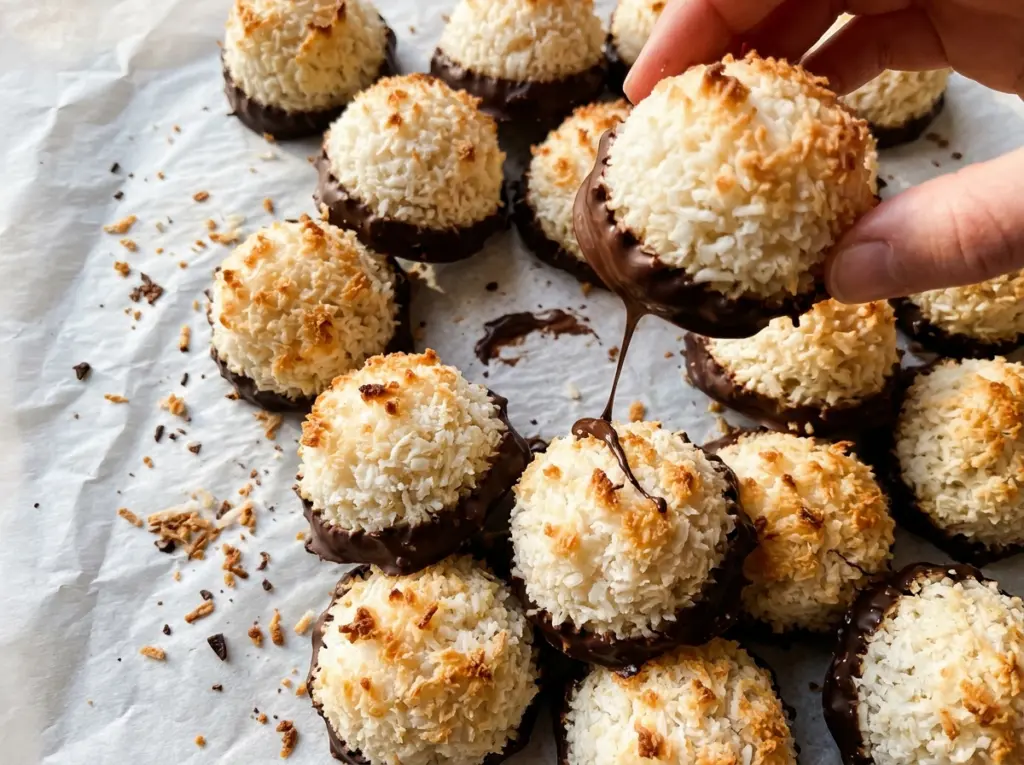
The coconut tips turn golden before the centers look firm, and the first time I made macaroons I nearly left them in the oven too long. They keep setting on the hot baking sheet, so a little softness in the middle is a good sign. These chocolate dipped coconut macaroons bake into compact, chewy mounds with semisweet chocolate underneath rather than a thick coating all around.
I beat the egg whites until they’re glossy and stiff before folding in the coconut. That foam gives the flakes enough structure to hold together without making the centers dry or dense. The mixture should look evenly coated, not whipped into a fluffy cloud.
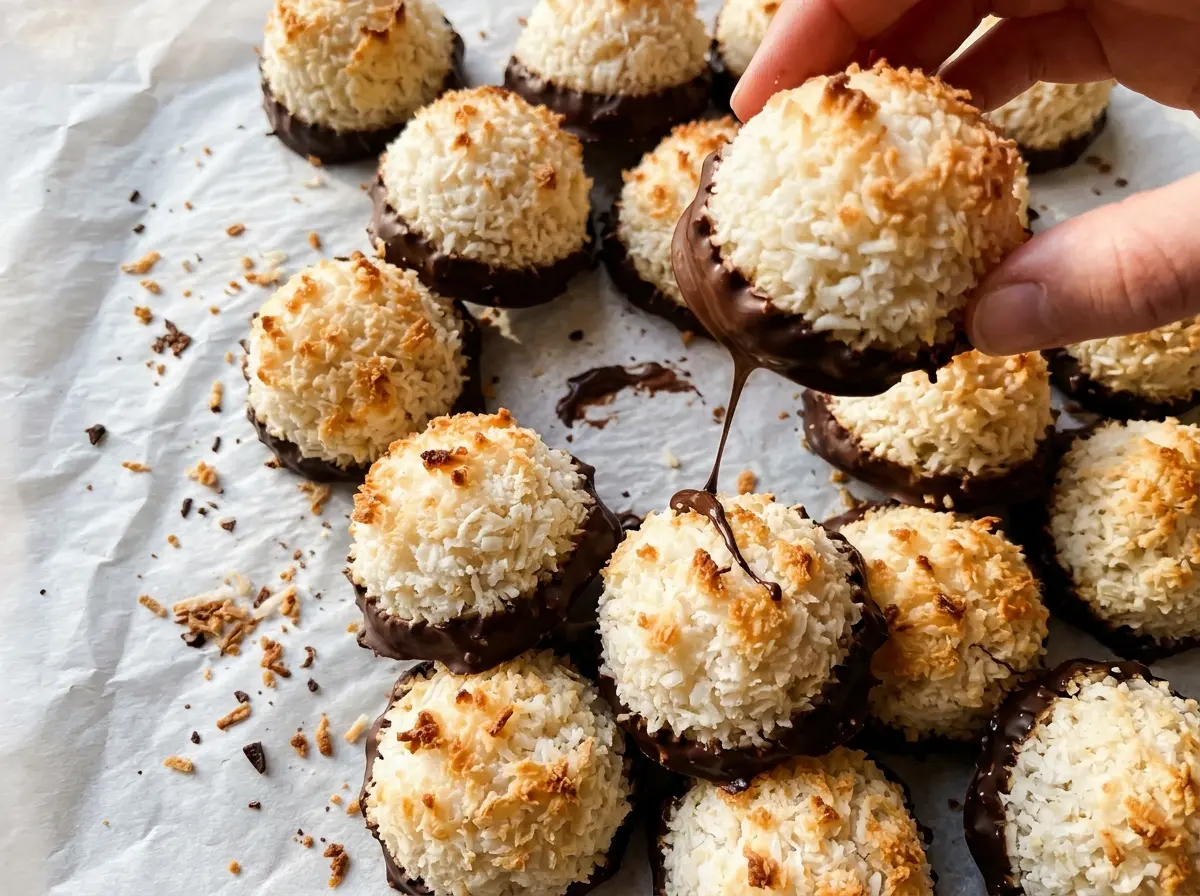
Once the macaroons cool, dipping just the bottoms gives each one a clean chocolate base that sets into a neat little snap. You get toasted coconut on top, a tender center, and chocolate right where it belongs.
Kitchen Note
Leave the macaroons on the baking sheets for the full 10 minutes before moving them. They’re delicate while hot, and that short rest lets the bottoms firm up so the mounds don’t break on the way to the rack.
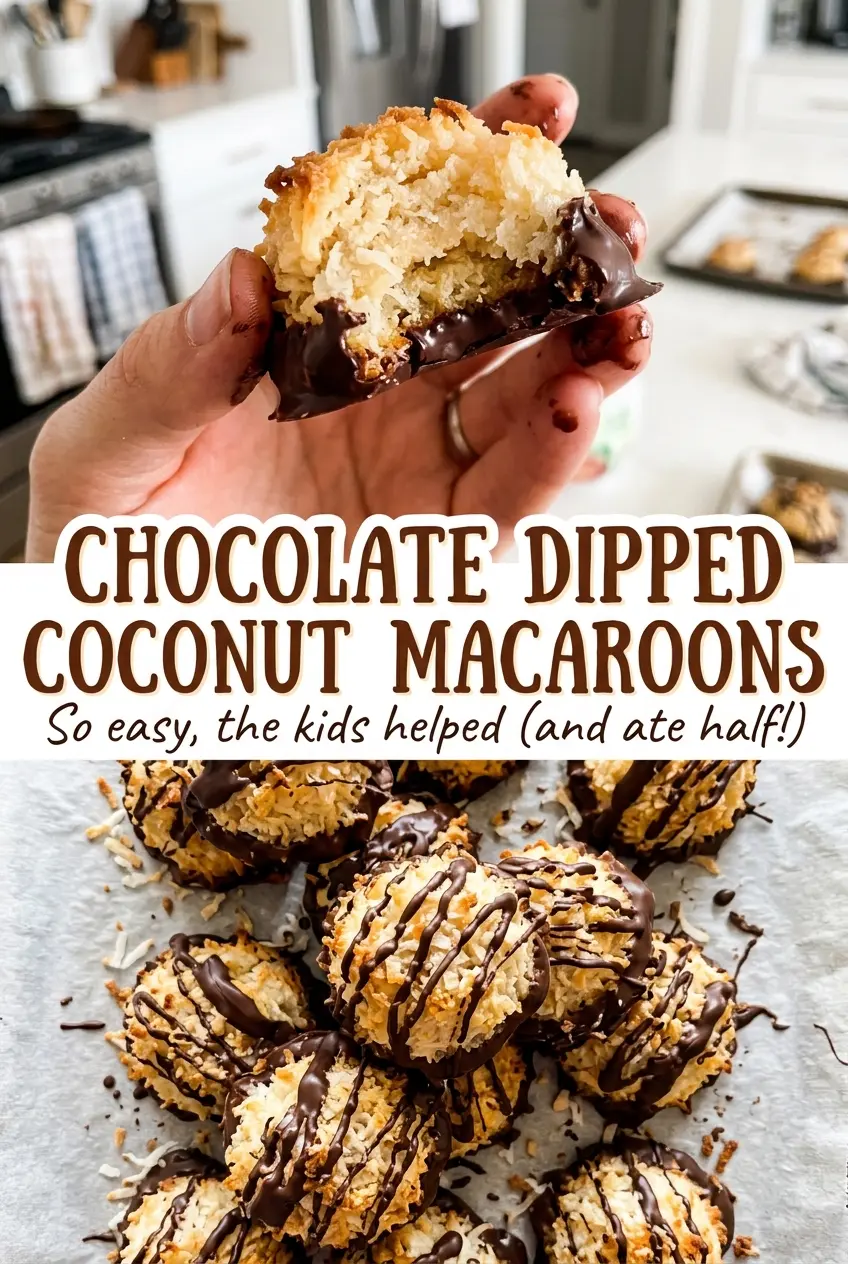
Save these chocolate dipped coconut macaroons for a bake-ahead treat with chewy coconut and a crisp semisweet chocolate base.
Why the Coconut Needs Stiff Peaks, Not Just Foamy Whites
Egg whites start out light and loose, but the coconut is heavy enough to collapse a weak foam. Beating the whites all the way to stiff, glossy peaks gives the flakes a sturdy base to cling to. That structure is what keeps the mounds compact instead of spreading into thin, sugary puddles on the baking sheet.
There’s a balance here: the whites need enough volume to bind the coconut, but the finished cookie isn’t supposed to be airy like a meringue. The sweetened flakes stay chewy inside as their exposed tips toast in the oven. Folding, rather than beating the coconut in, helps preserve the foam you just built. When the flakes are evenly coated, each mound has enough binder to hold its shape and enough coconut to keep its familiar chewy bite.
What Each Ingredient Brings to These Coconut Macaroons
- Egg whites — They bind the coconut and give the mounds their lift. Room-temperature whites whip more readily than cold ones, so take them out ahead of mixing. For the most dependable foam, use fresh large eggs rather than assuming every carton of whites will behave the same way.
- Sweetened flaked coconut — This is the bulk of each macaroon, bringing the chewy texture and sweetness. A fresh, soft bag is all you need; there’s no benefit to buying a specialty brand. Unsweetened coconut isn’t a direct swap because its sweetness and moisture are different.
- Granulated sugar — Beating it gradually into the whites helps create a glossy foam and gives the coconut mixture its sweetness. Add it steadily rather than dumping it in all at once.
- Vanilla extract — Vanilla rounds out the sweet coconut without competing with the chocolate. A regular pure or imitation vanilla both work here; use the one you keep for baking.
- Semisweet chocolate — Its bittersweet edge balances the sweet coconut. Finely chopped chocolate melts more evenly in the microwave, so take a moment to chop it small rather than leaving large chunks.
- Salt — A small amount sharpens the sweetness and keeps the coconut from tasting flat. Fine table salt dissolves quickly into the egg whites.
Building the Mounds and Dipping a Clean Chocolate Base
Whip the Egg Whites to Glossy Peaks
Heat the oven to 325°F and line two large rimmed baking sheets with parchment paper. In a clean bowl, beat the room-temperature egg whites and salt with an electric mixer on medium-high until foamy. Add the sugar gradually, then keep beating until the whites are stiff and glossy; soft, drooping peaks won’t hold the coconut as well.
Fold and Shape the Coconut
Beat in the vanilla, then fold in the coconut until the flakes are evenly coated. Use a gentle folding motion so you don’t knock all the air out of the whites. Drop 2-tablespoon mounds onto the lined sheets, spacing them about 1 inch apart, and shape each into a compact mound.
Bake Until the Tips Turn Golden
Bake for 20 to 25 minutes, rotating the sheets from top to bottom and front to back halfway through. Look for golden tips and edges; the centers should still look moist rather than browned all over. Cool the macaroons on the sheets for 10 minutes, then transfer them to a wire rack and let them cool completely.
Melt, Dip, and Let the Chocolate Set
Put the finely chopped chocolate in a microwave-safe bowl and melt it at 50% power, stirring every 20 seconds until smooth. Dip the bottom of each completely cooled macaroon into the chocolate, let the excess drip back into the bowl, then set it chocolate-side down on parchment paper. Refrigerate for 10 to 15 minutes, until the chocolate is set.
Two Chocolate Swaps That Change the Finish
Choose bittersweet for a less-sweet base
Replace the semisweet chocolate with the same amount of bittersweet chocolate. The dipped base will taste darker and less sweet against the coconut, while keeping the same thin chocolate layer.
Use milk chocolate for a sweeter bite
Swap in milk chocolate for the semisweet chocolate if you want a sweeter, creamier-tasting base. The coconut will stand out less, so this version suits anyone who prefers the chocolate to taste just as sweet as the macaroon.
Storage and Reheating
- Refrigerator: Store in an airtight container for up to 1 week. The coconut may feel a little firmer when chilled.
- Freezer: Freeze in an airtight container with parchment between layers for up to 2 months. Thaw in the container so condensation doesn’t settle on the chocolate.
- Reheating: These are best served without reheating. Let refrigerated macaroons sit at room temperature until the chocolate and coconut soften; microwaving can make the chocolate messy and the centers chewy in the wrong way.
Questions That Come Up When Making Coconut Macaroons
Chocolate Dipped Coconut Macaroons
Ingredients
Equipment
Method
- Heat the oven to 325°F.
- Line two large rimmed baking sheets with parchment paper.
- Beat the egg whites and salt in a clean bowl with an electric mixer on medium-high until foamy.
- Gradually beat in the sugar and continue until stiff, glossy peaks form.
- Beat in the vanilla.
- Fold in the coconut until evenly coated.
- Drop 2-tablespoon mounds onto the prepared baking sheets, spacing them about 1 inch apart.
- Shape each mound into a compact mound.
- Bake for 20 to 25 minutes, rotating the sheets from top to bottom and front to back halfway through, until the tips and edges are golden.
- Cool the macaroons on the baking sheets for 10 minutes.
- Transfer the macaroons to a wire rack and cool completely.
- Melt the chocolate in a microwave-safe bowl at 50% power, stirring every 20 seconds, until smooth.
- Dip the bottoms of the cooled macaroons in the chocolate and let excess chocolate drip off.
- Place the macaroons chocolate-side down on parchment paper.
- Refrigerate for 10 to 15 minutes, until the chocolate is set.