
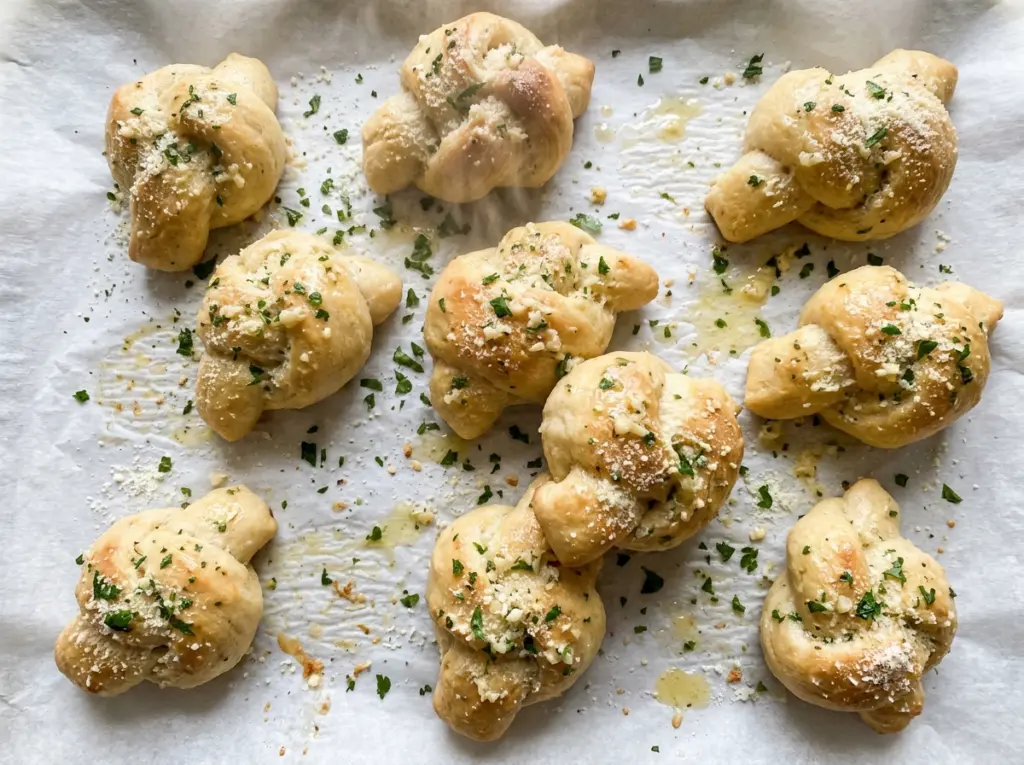
The yeast, water, and sugar should turn foamy before flour ever goes into the bowl. When that little cap of bubbles doesn’t appear, the dough won’t get the lift these garlic knots need, so I give the mixture the full 5–10 minutes and look for a clear change before moving on. Once baked, the knots are golden outside, soft in the middle, and ready for a generous brush of garlic butter.
I knead the dough until it feels smooth and elastic, then let it rise until it has doubled rather than trying to rush it by the clock. The shaped knots get a shorter second rise, which gives them a puffy look before they go into the oven. This batch makes 12 knots, enough for six servings, and the warm butter with fresh garlic and parsley coats every twist.
Kitchen Note
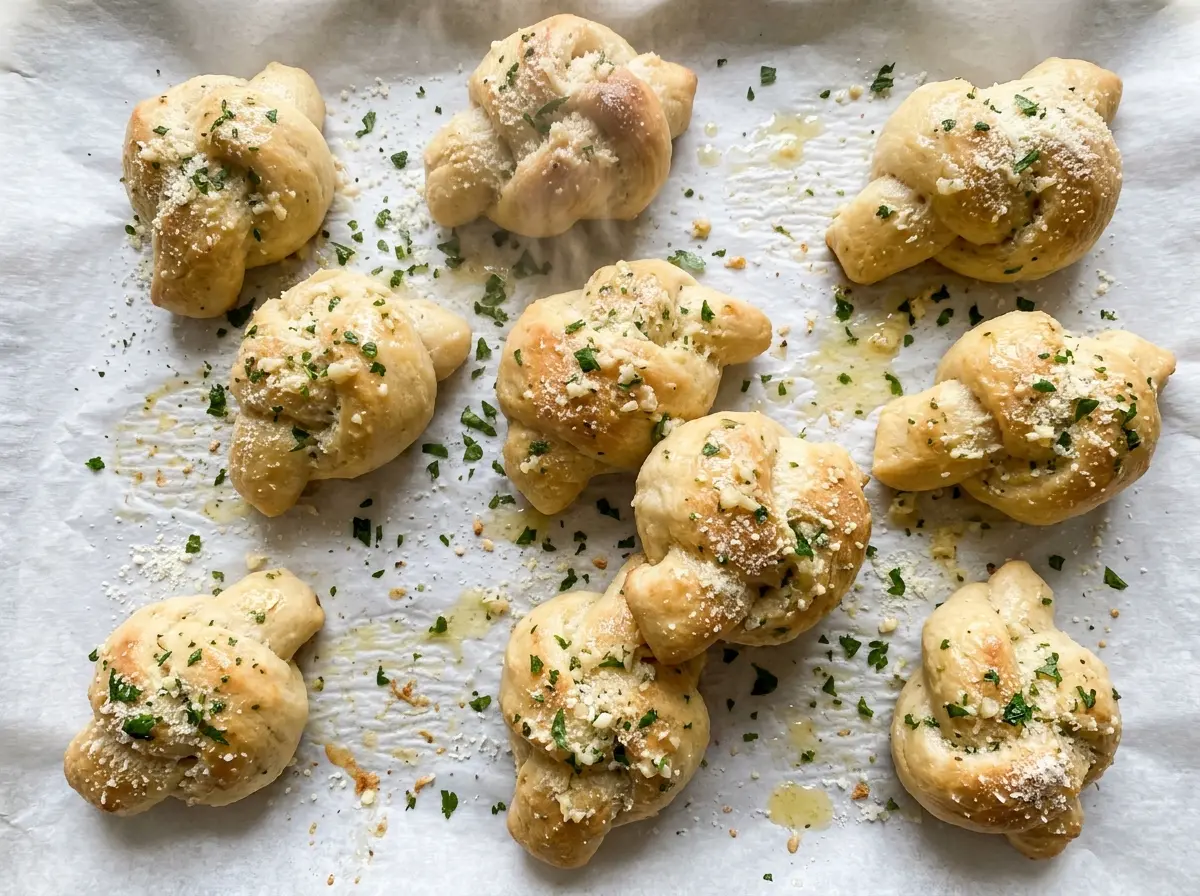
Tie each rope into a loose knot, not a tight one. A relaxed knot keeps its soft, open shape as the dough puffs in the oven.
Save these garlic knots for a bread basket with soft centers and a warm garlic-butter finish.
Why These Knots Need Two Rises, Not One Long Wait
The first rise gives the dough time to expand as a whole. After kneading, it should sit in a warm place until doubled in size; that visible change matters more than trying to make the clock do the work. If the dough hasn’t grown yet, it isn’t ready to shape. A cool room can slow the rise, so judge the dough by its size and give it the time it needs.
Shaping changes the dough, so the second rise has a different job. The 12 knots need 20–30 minutes under cover to become puffy again before baking. Skip that pause and the dough may go into the oven looking tight rather than airy. Give both rises their own space: one before dividing, one after tying. That small distinction is what helps the finished knots feel tender instead of dense.
What the Dough and Garlic Butter Each Need to Work

- Active dry yeast — It provides the lift, and the warm water and sugar give it a chance to show that it’s active before the flour goes in. Look for the foamy surface rather than relying on the package date alone.
- All-purpose flour — Spoon it into the measuring cup and level it off. Scooping straight from the bag packs in more flour and can leave the dough firm before it has had a chance to rise. This flour gives the knots a tender, familiar bread texture.
- Kosher salt and granulated sugar — Salt seasons the dough, while the sugar is stirred into the yeast mixture. Keep both in their listed roles; changing the balance can affect the dough’s taste and rise.
- Olive oil — Part goes into the dough and the rest coats the rising bowl. That thin coating helps keep the dough from sticking as it expands. Use an olive oil you like, but there’s no need to reach for a specialty bottle here.
- Unsalted butter and minced garlic — Unsalted butter lets the garlic finish taste rich without adding extra saltiness. Mince the cloves finely so their flavor spreads through the melted butter instead of leaving large, sharp pieces.
- Fresh parsley — Finely chopped parsley gives the butter a fresh, green finish. Its flavor is brightest when chopped shortly before stirring it into the melted butter.
From Foamy Yeast to Butter-Brushed Knots
Wake Up the Yeast and Knead the Dough
Stir the warm water, active dry yeast, and sugar together in a large bowl, then leave the mixture for 5–10 minutes until foamy. If you see no foam, pause before adding the flour; the yeast hasn’t shown the activity you want. Add the flour, kosher salt, and 2 teaspoons of the olive oil, stirring until a shaggy dough forms. Knead on a clean work surface for 8–10 minutes, until the dough feels smooth and elastic.
Let the Dough Double
Coat a large bowl with the remaining 1 teaspoon olive oil, add the dough, and turn it so the surface is lightly coated. Cover the bowl and leave it in a warm place for 1–1 1/2 hours, until the dough has doubled in size. Look for a noticeably fuller dough rather than a small change at the edges. The bowl’s cover keeps the surface from drying while it rises.
Shape the Knots and Give Them a Second Rise
Heat the oven to 400°F and line an 18×13-inch rimmed baking sheet with parchment paper. Divide the dough into 12 equal pieces, roll each piece into an 8-inch rope, and tie it into a loose knot. Set the knots on the prepared sheet, cover them, and let them rise for 20–30 minutes until puffy. If a rope resists rolling, handle it gently rather than stretching it hard and unevenly.
Bake Until Golden and Brush While Warm
Bake the knots for 15–18 minutes, until their tops are golden brown. While they bake, melt the butter in a small saucepan over low heat, then add the minced garlic and cook for about 30 seconds, until fragrant. Take the pan off the heat and stir in the parsley. Brush the warm knots generously with the garlic butter and serve.
Two Simple Ways to Change the Garlic-Knot Finish
Leave Out the Parsley
Skip the parsley in the garlic butter and keep the butter and garlic as written. The finish will taste more direct and garlicky, without the fresh herbal note. This is an easy adjustment if you want the knots to stay focused on the garlic.
Make a Milder Butter Finish
For a gentler finish, leave the garlic out of the melted butter and brush the warm knots with the butter and parsley. You’ll keep the buttery, fresh-herb coating while taking away the sharp garlic flavor. The dough and shaping stay the same.
Storage and Reheating
- Refrigerator: Store cooled knots in an airtight container for up to 3 days. The crumb will be firmer once chilled.
- Freezer: Freeze cooled knots in a sealed freezer-safe bag for up to 2 months. Thaw them before reheating so the centers warm evenly.
- Reheating: Warm briefly in a low oven or microwave until heated through. Avoid heating them for too long, which can dry the bread and make the garlic-butter coating greasy.
Questions That Come Up While Making Garlic Knots
Garlic Knots
Ingredients
Equipment
Method
- Stir the warm water, yeast, and sugar together in a large bowl.
- Let the mixture stand for 5–10 minutes, until foamy.
- Add the flour, salt, and 2 teaspoons of the olive oil, then stir until a shaggy dough forms.
- Knead the dough on a clean work surface for 8–10 minutes, until smooth and elastic.
- Coat a large bowl with the remaining 1 teaspoon olive oil.
- Add the dough to the bowl and turn it to coat.
- Cover and let rise in a warm place for 1–1 1/2 hours, until doubled in size.
- Melt the butter in a small saucepan over low heat.
- Add the garlic and cook for about 30 seconds, until fragrant.
- Remove the saucepan from the heat and stir in the parsley.
- Heat the oven to 400°F.
- Line an 18x13-inch rimmed baking sheet with parchment paper.
- Divide the dough into 12 equal pieces.
- Roll each piece into an 8-inch rope.
- Tie each rope into a loose knot.
- Place the knots on the baking sheet and cover them.
- Let the knots rise for 20–30 minutes, until puffy.
- Bake for 15–18 minutes, until golden brown.
- Brush the warm knots generously with the garlic butter.
- Serve the knots.