
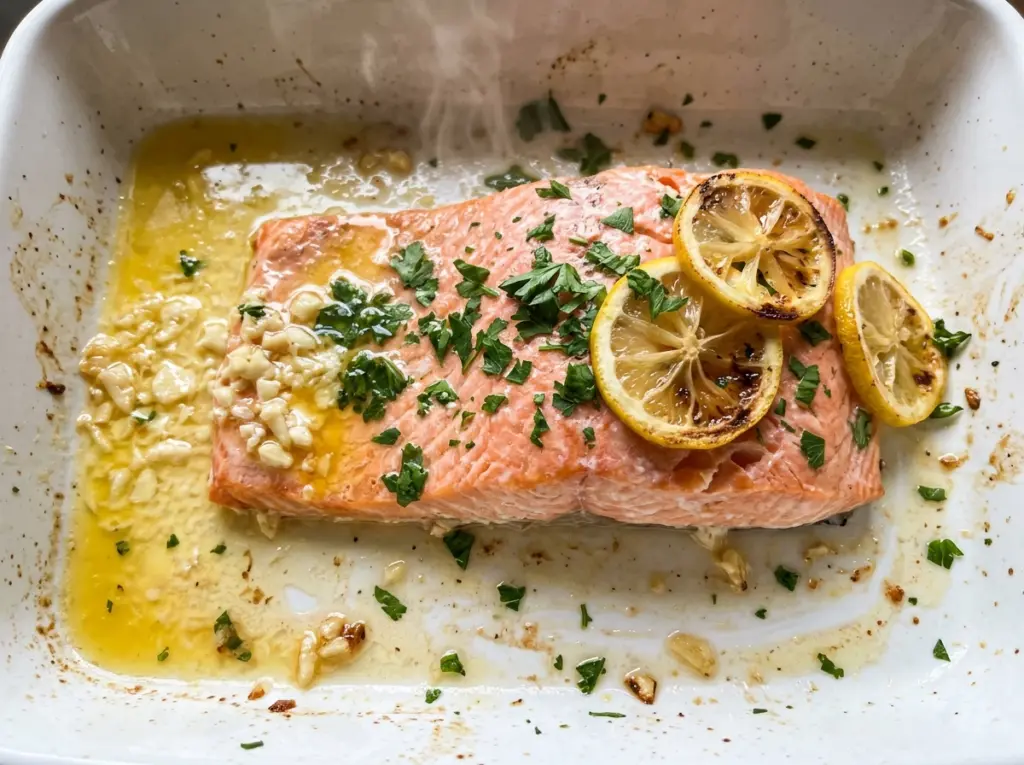
When the baking dish comes out of the oven, the butter is bubbling around the salmon and the garlic smells mellow instead of sharp. That’s the kind of payoff I want from a weeknight fish dinner: a few minutes of prep, one pan, and no skillet splatter to clean up afterward. These garlic butter baked salmon portions get their flavor from a simple mix of melted butter, minced garlic, lemon juice, and paprika.
I’ve found that the best results come from treating the topping as an even coating, not a pool of sauce in the middle of the dish. Pat the salmon dry first, season each portion, then spoon the garlic butter over the fish so every piece gets some. The oven does the rest. After a short rest, fresh parsley gives the rich butter and bright lemon a clean finish, and each portion flakes easily while staying moist inside.
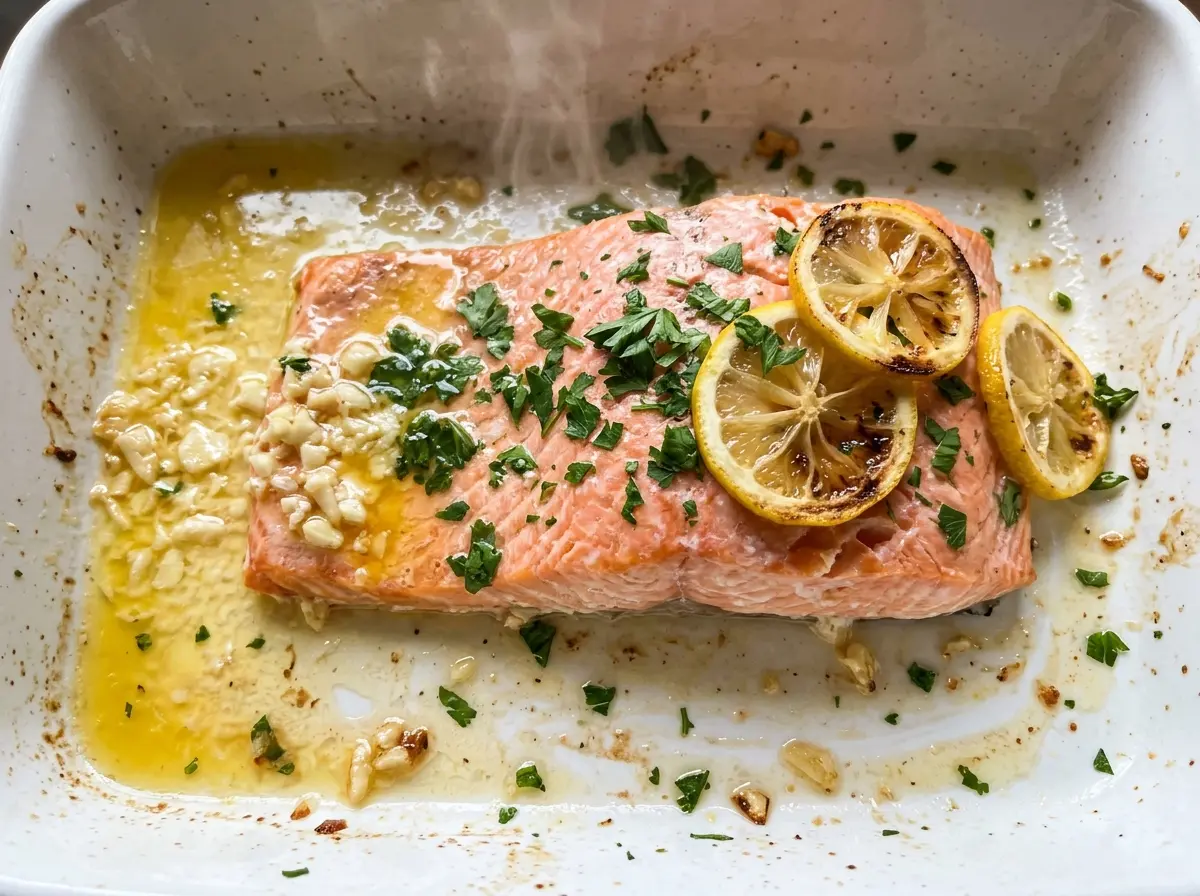
Kitchen Note
Let the salmon rest for the full three minutes before adding the parsley. The fish settles, and the parsley stays bright and fresh instead of wilting on the hot surface.
Save this garlic butter baked salmon for a simple dinner with tender fish, mellow garlic, and a bright lemon finish.
Why the Garlic Butter Goes on Before the Salmon Bakes
This isn’t a seared salmon recipe with a browned crust. The portions bake in the dish with their seasoning and garlic butter already on top, so the flavor builds right where you want it: around the surface of the fish. The butter carries the minced garlic across each portion, while lemon juice brings a tart edge to balance the richness.
That also makes even coverage more useful than adding extra sauce at the end. If one portion gets most of the garlic and another gets mostly plain butter, the flavor won’t be as balanced from piece to piece. Spoon the mixture over all four portions before baking, and keep the pieces in a single layer in the dish. The result is salmon with a gently seasoned top and buttery juices underneath, not a crisp crust or a thick, separate sauce.
Because the fish is divided into portions, thickness matters more than the number on the clock. Two pieces cut from the same fillet can finish at different moments if one is noticeably thicker. Use the thickest part as your doneness check; the stated baking window is a guide, while the internal temperature and the way the fish flakes tell you when to pull the dish.
What the Salmon, Butter, and Lemon Each Bring to the Pan
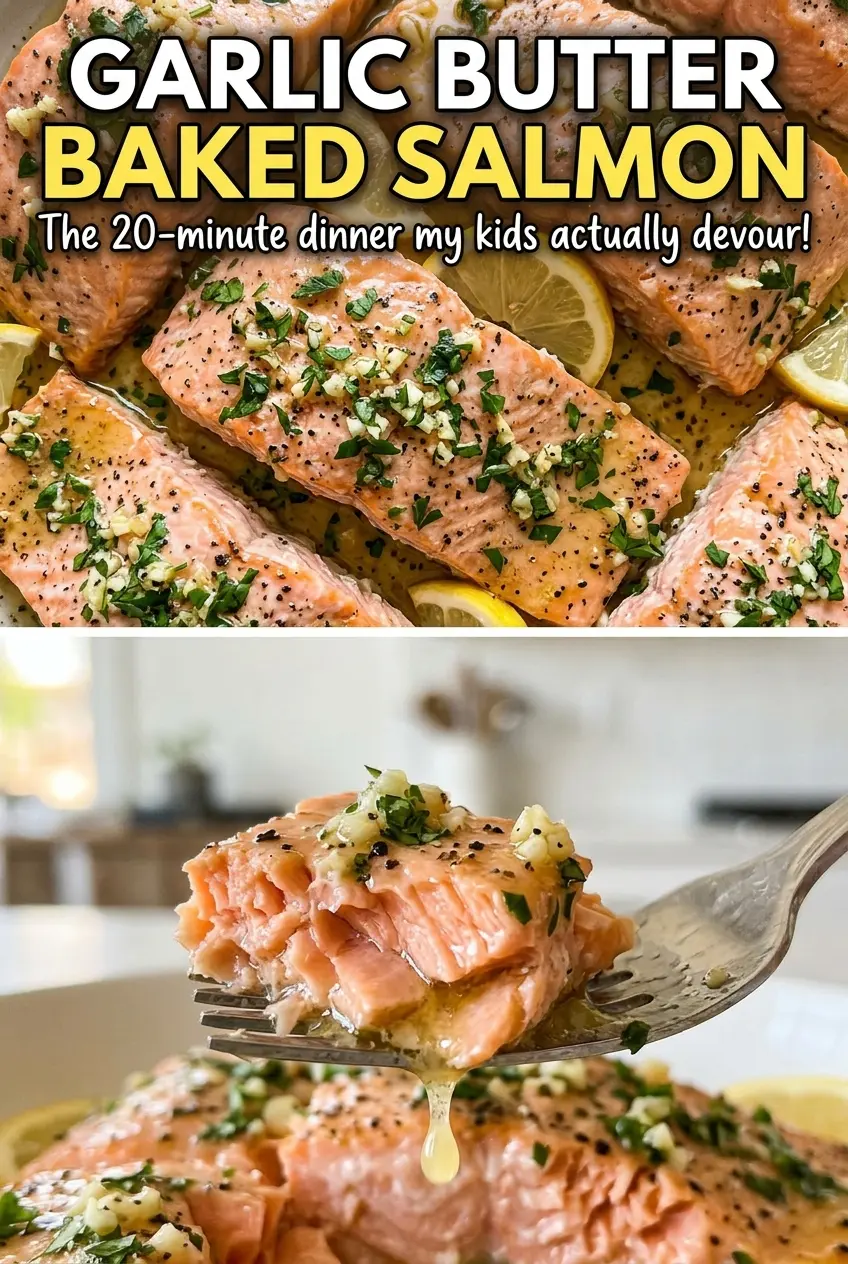
- Salmon — A center-cut fillet gives you portions with more even thickness, while tail-end pieces tend to be thinner and may cook sooner. Fresh or previously frozen salmon both work; choose pieces that look moist and smell clean rather than strongly fishy. Skin-on portions are fine, too, though skin won’t be a crisp feature in this baked preparation.
- Unsalted butter — Butter gives the topping its richness and helps carry the garlic and paprika over the fish. Unsalted butter lets the measured kosher salt stay in control. For a dairy-free adaptation, an unsalted dairy-free butter alternative is the closest swap; the taste and richness can vary by brand.
- Fresh garlic — Minced cloves bring a fresher, more rounded aroma than dried garlic. Chop it finely so it spreads through the butter instead of landing in a few large, pungent pieces. Garlic powder can stand in if fresh cloves aren’t available, but it won’t give the topping the same texture or fresh garlic flavor.
- Lemon juice — Lemon cuts through the butter and keeps the topping tasting bright. Freshly squeezed juice has a livelier flavor, though bottled lemon juice works in a pinch. Keep the amount consistent so the butter mixture stays balanced rather than overly tart.
- Paprika and parsley — Paprika gives the salmon a mild, savory warmth and a little color; standard paprika is all you need. Fresh parsley is best as a finishing touch because it keeps its clean, green flavor. Dried parsley won’t offer the same fresh contrast.
From Dry Portions to Flaky Salmon: The Three Stages That Matter
Dry and Season Each Portion
Heat the oven to 400°F and lightly grease a 9×13-inch baking dish. Pat the salmon dry, then arrange the four portions in the dish and season them evenly with kosher salt, black pepper, and paprika. Dry surfaces help the seasoning sit on the fish instead of mixing with moisture in the pan. Keep the portions in one layer so the topping can reach each piece.
Stir Together the Garlic Butter
In a small bowl, stir the melted unsalted butter with the minced garlic and lemon juice. The mixture should look glossy, with the garlic distributed throughout rather than clumped at the bottom. Spoon it evenly over the salmon, giving each portion some garlic and butter. If the garlic settles while you work, give the bowl another stir before finishing the last pieces.
Bake Until the Thickest Portion Is Ready
Bake the salmon for 12–15 minutes, checking the thickest part of a portion. It’s ready when that spot reaches 145°F and the fish flakes easily with a fork. The exact point within the baking window depends on the thickness of your portions, so don’t rely on color alone. Once it’s done, let the salmon rest for 3 minutes, sprinkle with chopped fresh parsley, and serve.
Simple Ways to Adapt the Garlic Butter Salmon
Make It Dairy-Free With a Butter Alternative
Replace the unsalted butter with an unsalted dairy-free butter alternative, melted, and use it in the same garlic and lemon mixture. The topping will still coat the salmon, though it may taste less rich or slightly different depending on the product. Choose an unsalted version so the seasoning doesn’t become too salty.
Leave Out the Paprika for a Cleaner Lemon-Garlic Finish
Skip the paprika and keep the salt and black pepper. The salmon will lose some color and mild warmth, leaving the garlic, butter, and lemon to lead. This is a good option when you want a more direct, bright flavor without changing the rest of the method.
Storage and Reheating
- Refrigerator: Store leftover salmon in an airtight container for up to 3–4 days. The fish will firm up as it chills, and the butter will solidify.
- Freezer: Cooked salmon freezes, though it may be drier after thawing. Wrap portions tightly or place them in a freezer-safe airtight container for up to 2–3 months, then thaw in the refrigerator.
- Reheating: Warm a portion gently in the microwave at reduced power in short bursts, or cover it in a low oven until heated through. High heat and long reheating are the quickest ways to dry salmon out.
Questions That Come Up When Baking Salmon
Garlic Butter Baked Salmon
Ingredients
Equipment
Method
- Preheat the oven to 400°F.
- Lightly grease a 9x13-inch baking dish.
- Pat the salmon dry.
- Arrange the salmon in the dish.
- Season evenly with the salt, pepper, and paprika.
- Stir the melted butter, garlic, and lemon juice together in a small bowl.
- Spoon the mixture evenly over the salmon.
- Bake for 12–15 minutes, until the thickest part of the salmon reaches 145°F and flakes easily with a fork.
- Rest the salmon for 3 minutes.
- Sprinkle with the parsley.
- Serve.