
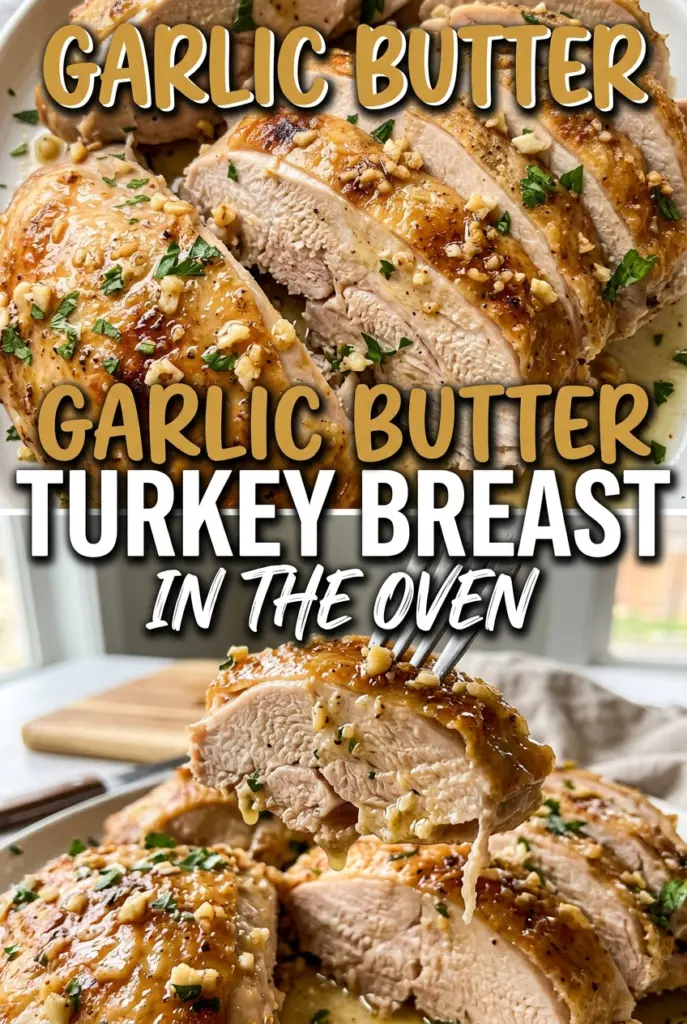
The skin can turn golden while the thickest part of a turkey breast is still catching up. That’s why I don’t judge doneness by color alone. For this garlic butter turkey breast, I use a thermometer in the thickest part of the meat, then let the skin and the temperature tell me when it’s ready.
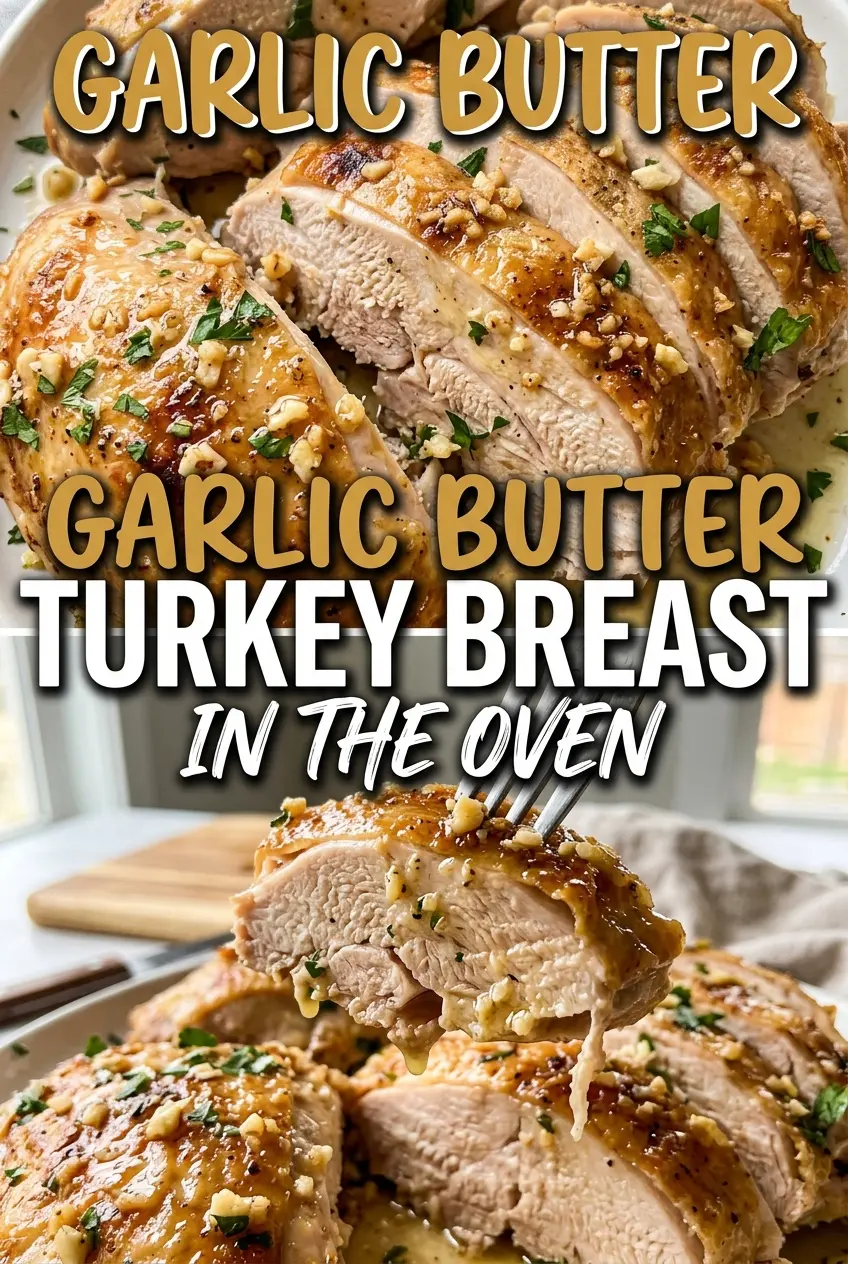
Softened butter makes the garlic and herbs easy to mix and spread, and tucking most of it beneath the skin puts that mixture right against the breast meat. I keep the turkey skin-side up on a rack so it roasts uncovered, and I have foil nearby in case the skin browns before the center reaches its target. The result is a golden, herb-scented turkey breast that’s ready to carve into generous slices.
Kitchen Note
Grate the garlic finely so it blends into the softened butter instead of leaving big pieces to catch on the skin. The finished mixture should spread easily in a thin layer.
Save this garlic butter turkey breast for a golden, herb-scented centerpiece with a simple thermometer check.
Why Most of the Garlic Butter Goes Under the Skin
Butter spread only over the outside mostly seasons the skin. Here, I loosen the skin gently and spread about two-thirds of the garlic-herb butter directly over the breast meat, then use the rest on top. That gives the meat and the skin their own share of the mixture rather than asking the outside layer to do all the work.
The skin is delicate, so take your time lifting it with your fingers. Work gradually over the breast instead of pulling hard in one spot; if you tear it, don’t keep tugging and make the opening larger. A small tear doesn’t mean the roast is ruined, but a careful touch makes it easier to distribute the butter where it belongs. The outside portion still matters: it carries the garlic, rosemary, and thyme across the skin as the turkey roasts uncovered.
Using more butter beneath the skin also gives you a useful visual distinction while preparing the breast: most of the mixture goes under, and the smaller remainder is smoothed over the top. You don’t need a thick coating. Spread it as evenly as you can, then keep the breast skin-side up on the rack.
Fresh Herbs, Softened Butter, and the Garlic That Binds Them
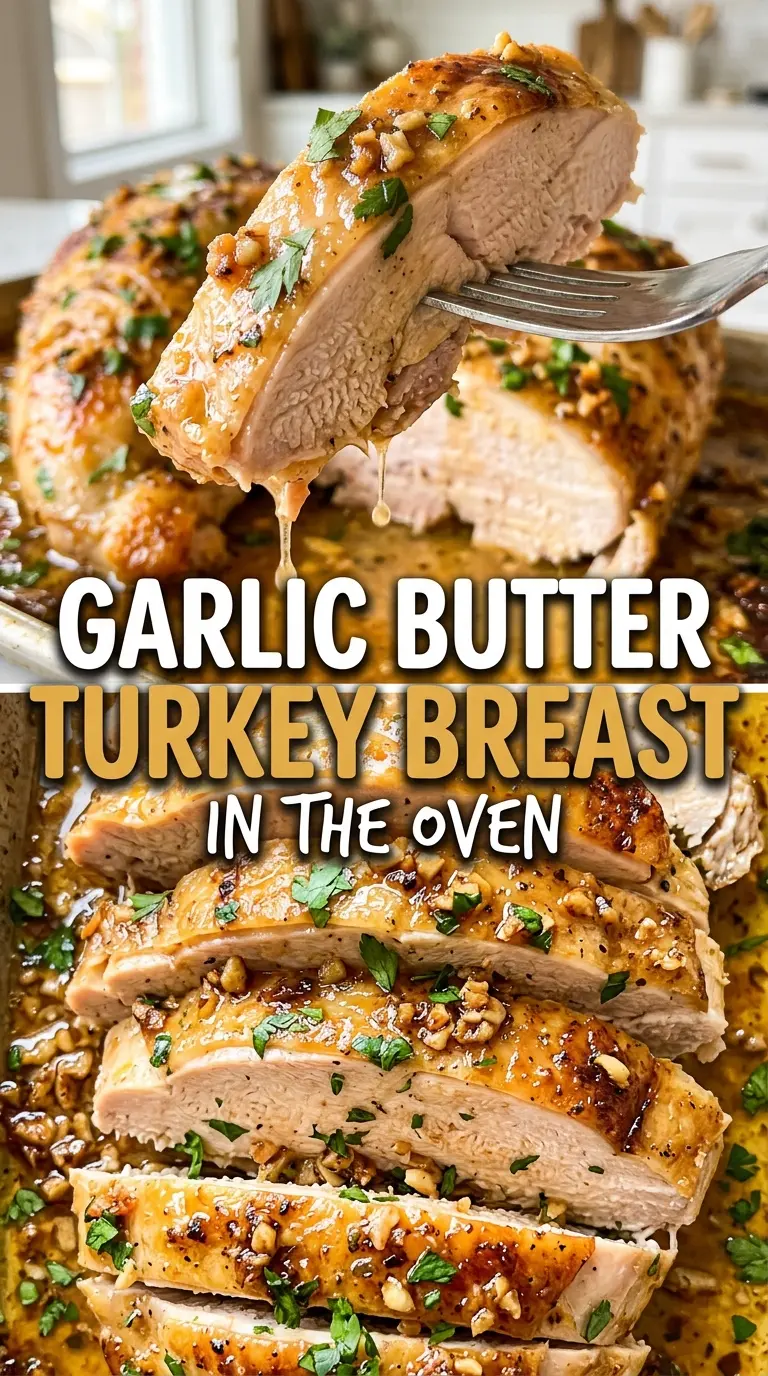
- Unsalted butter — Its mild dairy richness carries the garlic and herbs without adding extra salt beyond the measured kosher salt. Use it softened so the mixture stirs together smoothly and spreads under the skin without clumping.
- Fresh garlic — Finely grated cloves disperse through the butter more evenly than larger pieces. Fresh garlic is worth using here because its sharp, savory aroma is a defining part of the butter.
- Rosemary and thyme — Fresh herbs bring a fragrant, woodsy note that complements turkey without overpowering it. Finely chop them so they’re distributed through the butter rather than gathered in a few spots.
- Kosher salt and black pepper — These season both the butter mixture and the breast as it roasts. Keeping the butter unsalted lets the measured kosher salt stay in control; different salts don’t always measure the same by volume.
- Bone-in, skin-on turkey breast — The skin gives the butter a place to spread on the outside, while the breast stays on the bone during roasting. Start with it thawed so the center cooks evenly alongside the exterior.
How to Roast the Breast Without Guessing at Doneness
Set Up the Turkey for Even Roasting
Heat the oven to 350°F with a rack in the center, and fit a roasting rack inside a 12×16-inch roasting pan. Pat the thawed turkey breast dry with paper towels; a dry surface helps the skin brown instead of carrying excess surface moisture into the oven. Set it skin-side up on the rack. Keep the breast centered and stable rather than letting it lean against the side of the pan.
Mix and Spread the Garlic Herb Butter
Stir the softened butter with the finely grated garlic, chopped rosemary and thyme, kosher salt, and black pepper in a small bowl. Gently loosen the skin over the breast meat with your fingers, moving slowly so you don’t tear it. Spread about two-thirds of the butter under the skin, then smooth the remainder over the outside. If the butter gathers in one spot, use your fingers to spread it before putting the pan in the oven.
Roast Until the Thickest Part Reaches 165°F
Roast uncovered for 1 1/2 to 2 1/4 hours. Look for golden skin, but use a thermometer to judge the breast: insert it into the thickest part without touching bone, and take the turkey out when it reads 165°F. A probe touching bone can give you a misleading reading, so reposition it if you aren’t sure. If the skin browns before the turkey is done, loosely tent the breast with foil and continue roasting.
Rest Before You Carve
Transfer the turkey breast to a cutting board and tent it loosely with foil. Let it rest for 15 minutes before carving; cutting right away makes the juices run across the board instead of staying with the slices. To carve, work alongside the breastbone and follow the shape of the bone as you remove the meat. Slice the breast meat into portions once it’s off the bone.
Two Simple Ways to Adapt This Turkey Breast
Keep it gluten-free without changing the recipe
The ingredients here don’t include flour, breading, or another gluten-containing component, so no replacement is needed for a gluten-free version. Keep the same turkey, butter, garlic, herbs, salt, and pepper; the dish stays a roast turkey breast rather than taking on a different coating or texture.
Choose a breast at either end of the size range
A 4-pound breast and a 5-pound breast both fit this recipe’s stated size range, but the smaller one will generally reach the target sooner. Use the thermometer reading—not the clock alone—to decide when it’s done, and keep the same butter mixture and roasting setup.
Storage and Reheating
- Refrigerator: Refrigerate leftover turkey within 2 hours and keep it covered for 3 to 4 days. Sliced breast meat may firm up as it chills.
- Freezer: Freeze carved portions in an airtight container or freezer bag for up to 2 to 3 months for best quality. Thaw in the refrigerator before reheating.
- Reheating: Warm slices covered in the microwave in short intervals, stopping when they’re hot throughout. Long, uncovered reheating dries out lean breast meat.
Questions About Roasting Garlic Butter Turkey Breast
Garlic Butter Turkey Breast in the Oven
Ingredients
Equipment
Method
- Heat the oven to 350°F.
- Set a rack in the center and place a roasting rack in a 12x16-inch roasting pan.
- Pat the turkey breast dry with paper towels.
- Place the turkey breast skin-side up on the rack.
- Stir together the softened butter, garlic, rosemary, thyme, salt, and pepper in a small bowl.
- Gently loosen the skin over the breast meat with your fingers, taking care not to tear it.
- Spread about two-thirds of the garlic butter under the skin and the rest over the skin.
- Roast uncovered for 1 1/2 to 2 1/4 hours, until the skin is golden and a thermometer inserted into the thickest part of the breast without touching bone reads 165°F.
- Loosely tent with foil if the skin browns before the turkey is done.
- Transfer the turkey to a cutting board and tent loosely with foil.
- Rest for 15 minutes before carving.
- Carve the turkey.