
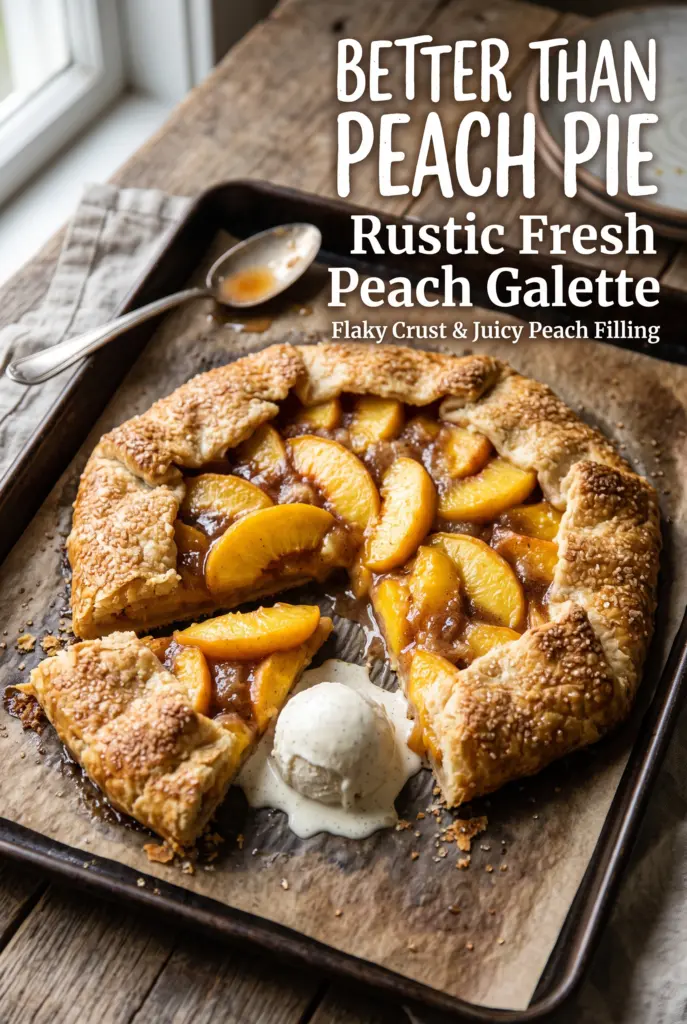
Flaky pastry and juicy peaches are a hard combination to beat, and this rustic fresh peach galette keeps the balance just right: crisp, buttery edges, soft fruit in the center, and enough cinnamon to deepen the peaches without hiding them. It looks impressive on the table, but the free-form shape takes the pressure off. There’s no crimping, no blind baking, and no worrying about a perfect pie plate finish.
The trick is keeping the dough cold and not overloading the filling. Cold butter creates those thin layers that bake up shatteringly crisp, while a little cornstarch keeps the peach juices from running all over the parchment. A light hand with the sugar matters too — peaches can be sweet on their own, and you want the filling glossy and concentrated, not syrupy.
Below, I’ve included the small details that keep the crust from turning soggy, plus a few ways to adapt the galette if your peaches are extra ripe or a little firm.
The crust baked up crisp on the bottom even with all those peaches in the middle, and the filling set just enough that it didn’t run everywhere when I sliced it. I added vanilla ice cream on top and my dad asked for a second piece before he finished the first.
Save this peach galette for the days when you want a buttery, fruit-filled dessert that looks bakery-made without the pie-pan fuss.
The Real Trick to a Galette That Bakes Crisp, Not Watery
A peach galette fails for one of two reasons: the crust warms up before it hits the oven, or the fruit dumps too much juice into the center. Both problems show up the same way — a pale bottom crust and a filling that slides when you cut it. The fix starts before you assemble anything. Cold dough, cold butter, and a hot oven work together here, and that contrast is what gives the pastry its layers.
The second part is treating the peaches like fruit that needs support, not restraint. Cornstarch thickens the juices as they bake, and the sugar pulls out enough moisture to create a glossy filling without flooding the crust. If your peaches are especially ripe, slice them a little thicker so they hold their shape instead of collapsing into jam.
- Cold butter — Those small butter pieces are what create the flaky pockets. If the butter softens before baking, the crust turns dense instead of layered.
- Cornstarch — This is what turns peach juice into a loose, spoonable filling instead of a puddle. Tapioca starch works too, but use a little less because it thickens more aggressively.
- Brown sugar — It adds depth and a little caramel note that plain white sugar doesn’t bring. If your peaches are very sweet, cut it back slightly rather than skipping it entirely.
- Lemon juice — This keeps the peaches tasting bright and keeps the filling from going flat. Fresh lemon matters more than bottled here because the flavor is so simple.
What Each Ingredient Is Doing in This Peach Galette
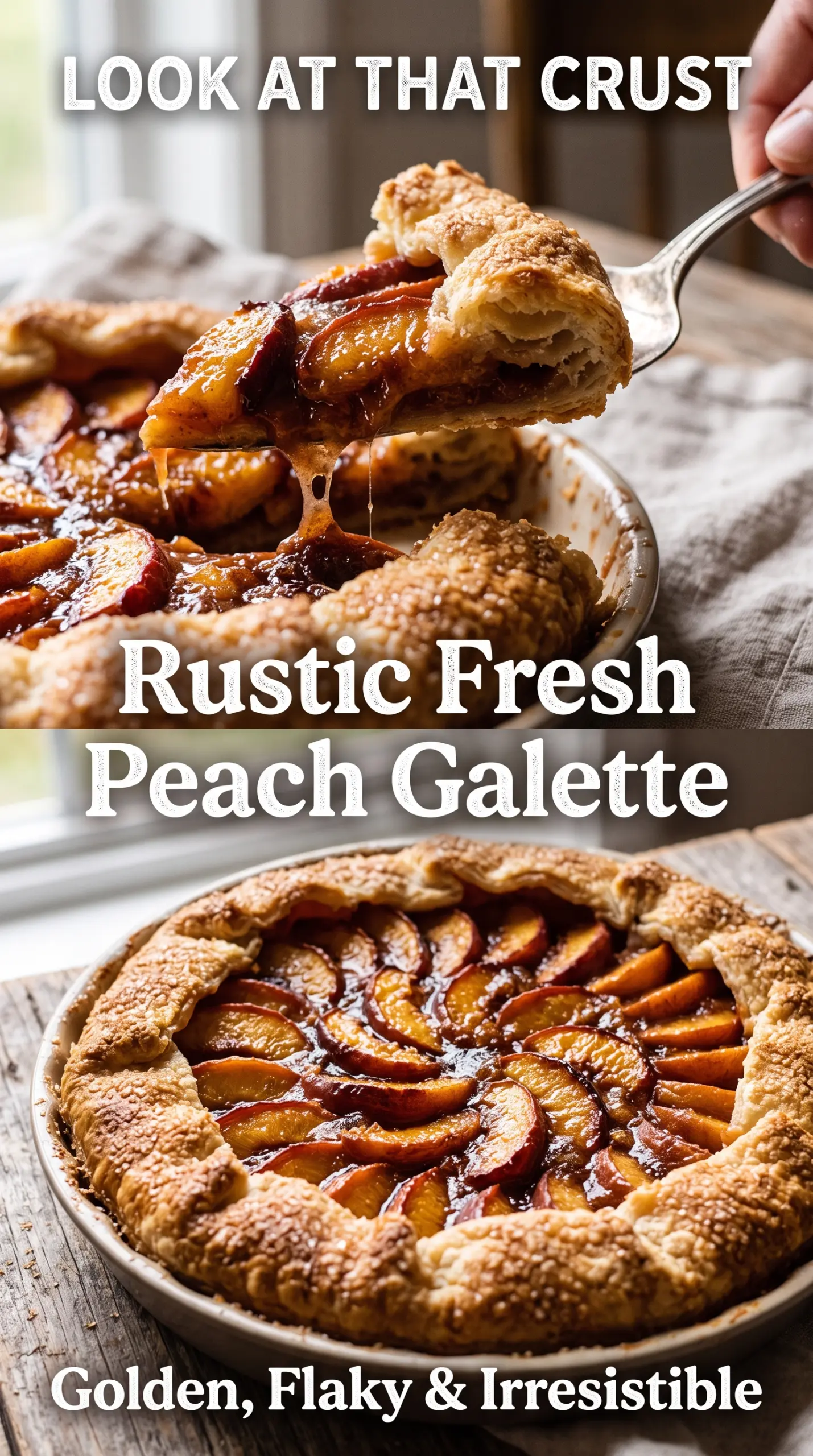
The flour, sugar, and salt build a crust that’s sturdy enough to hold fruit but still tender enough to break apart with a fork. All-purpose flour is the right choice here; pastry flour makes the dough a touch more delicate, but it’s not necessary. The sugar in the dough doesn’t sweeten the galette in a noticeable way — it just helps the crust brown.
Fresh peaches are the center of the whole thing, and this is one dessert where ripe fruit matters. If your peaches are hard, let them sit on the counter until they give slightly at the stem end. The filling tastes flatter if you use underripe peaches, and no amount of cinnamon can fully cover that.
The egg wash gives the folded crust its deep color, and coarse sugar adds crunch on top. Skip the mint if you want, but don’t skip the coarse sugar if you like a little crackle on the edges. It gives the galette that finished, bakery-style look and a better bite.
Building the Galette So the Bottom Crust Stays Crisp
Mixing the Dough Without Warming the Butter
Pulse the flour, sugar, and salt just until combined, then add the cold butter and stop as soon as you have rough, pea-sized pieces. Those visible bits of butter are not a problem; they’re the point. If the dough starts to look paste-like, the butter has warmed too much and the crust will bake up tough instead of flaky.
Adding Just Enough Water
Drizzle in the ice water slowly and stop the moment the dough clumps when you press it together. Dry, shaggy dough is fine because it hydrates in the fridge. Wet dough spreads during baking and can make the crust shrink, so add the last tablespoon only if the flour still looks dusty.
Filling and Folding the Fruit
Toss the sliced peaches with the sugar, cornstarch, vanilla, cinnamon, nutmeg, and lemon juice until everything looks evenly coated. Pile the fruit in the center of the dough and leave a wide border so the juices stay contained. Fold the edges up over the peaches in loose pleats; if you pull the dough too tightly, it can tear as it bakes and leaks will follow.
Baking Until the Juice Bubbles
Slide the galette into a fully heated 400°F oven and bake until the crust is a deep golden brown and the filling is visibly bubbling in the center. That bubbling matters — it tells you the cornstarch has cooked through and thickened the juices. If you pull it too early, the filling can stay loose after cooling.
Use nectarines instead of peaches
Nectarines work one-for-one here and give you the same juicy filling with a slightly firmer bite. The peel is thinner, so you don’t need to fuss with blanching, and the galette still bakes up with the same rustic look.
Make it gluten-free with a 1:1 baking flour
A good cup-for-cup gluten-free flour blend will replace the all-purpose flour without changing the method. The dough may be a little more delicate when you roll it out, so work between parchment sheets and chill it well before folding.
Add berries for a brighter filling
A handful of blueberries or raspberries turns the filling a little juicier and more tart, so add an extra teaspoon of cornstarch if you go that route. The peaches still carry the dessert, but the berries make the flavor pop.
Storage and Reheating
- Refrigerator: Store leftovers covered for up to 3 days. The crust softens a little as it sits, but the flavor stays good.
- Freezer: Freeze baked slices tightly wrapped for up to 1 month. The crust won’t be quite as crisp after thawing, but it still works well for a quick dessert.
- Reheating: Warm slices in a 350°F oven for 10 to 12 minutes. The oven restores the crust far better than the microwave, which turns the pastry limp and the fruit overly soft.
Questions I Get Asked About This Peach Galette
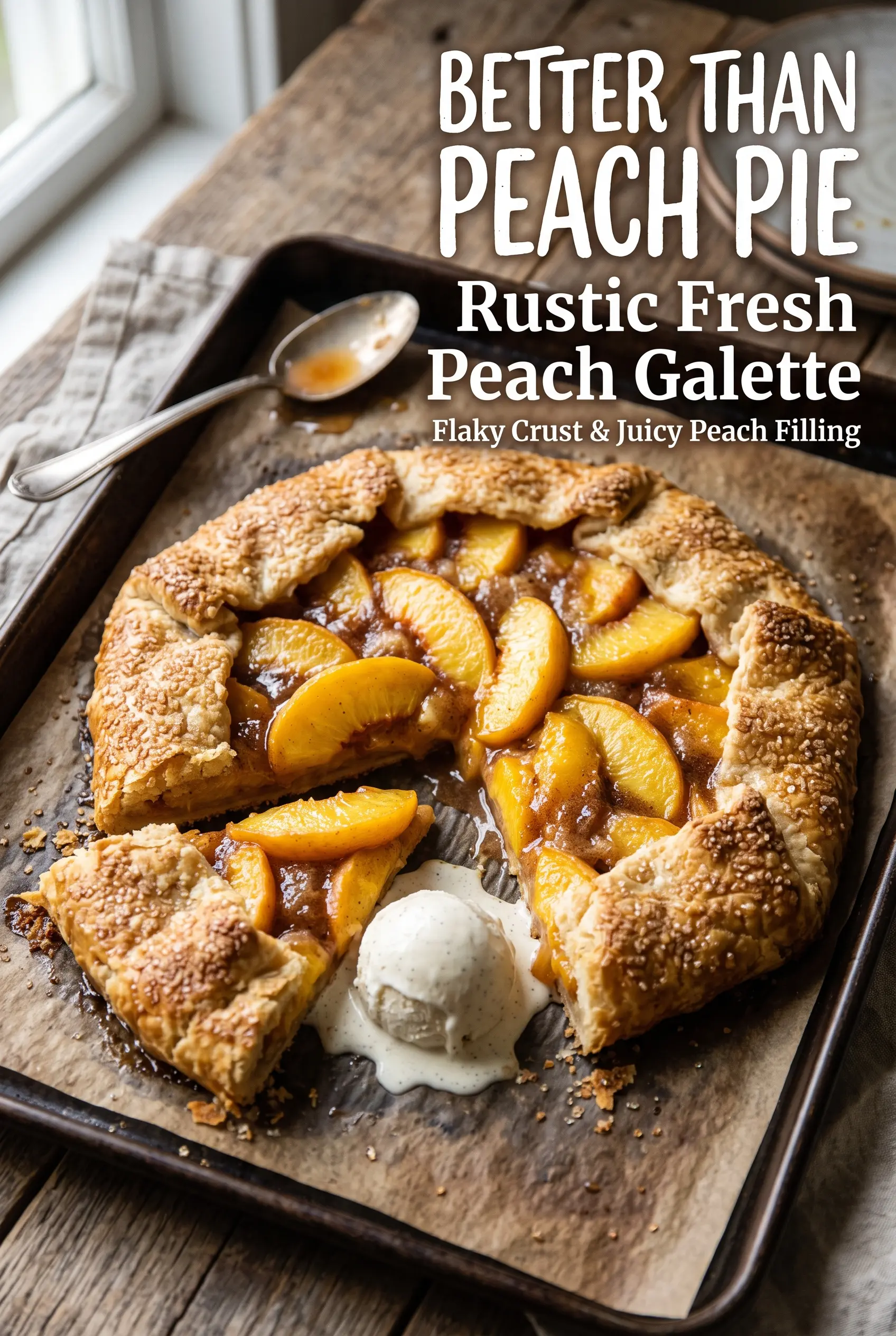
Rustic Fresh Peach Galette
Ingredients
Equipment
Method
- In a food processor, combine all-purpose flour, granulated sugar, and salt until evenly mixed.
- Add the cold butter and pulse until the mixture resembles coarse crumbs.
- Gradually add ice water and pulse just until the dough comes together.
- Form the dough into a disc, wrap it, and refrigerate for at least 30 minutes.
- Toss fresh peaches with light brown sugar, cornstarch, vanilla extract, ground cinnamon, ground nutmeg, and lemon juice until coated.
- Preheat the oven to 400°F (200°C).
- Roll the dough into a 12-inch circle on parchment paper.
- Arrange the peaches in the center, leaving a 2-inch border.
- Fold the edges of the dough over the filling to form a rustic border.
- Brush the crust with egg wash made from egg and milk, then sprinkle coarse sugar over the top.
- Bake at 400°F (200°C) for 35–40 minutes, until the crust is deep golden and the peaches are bubbling.
- Cool the galette for 15 minutes before serving.
- Serve with vanilla ice cream (optional) and fresh mint leaves.