
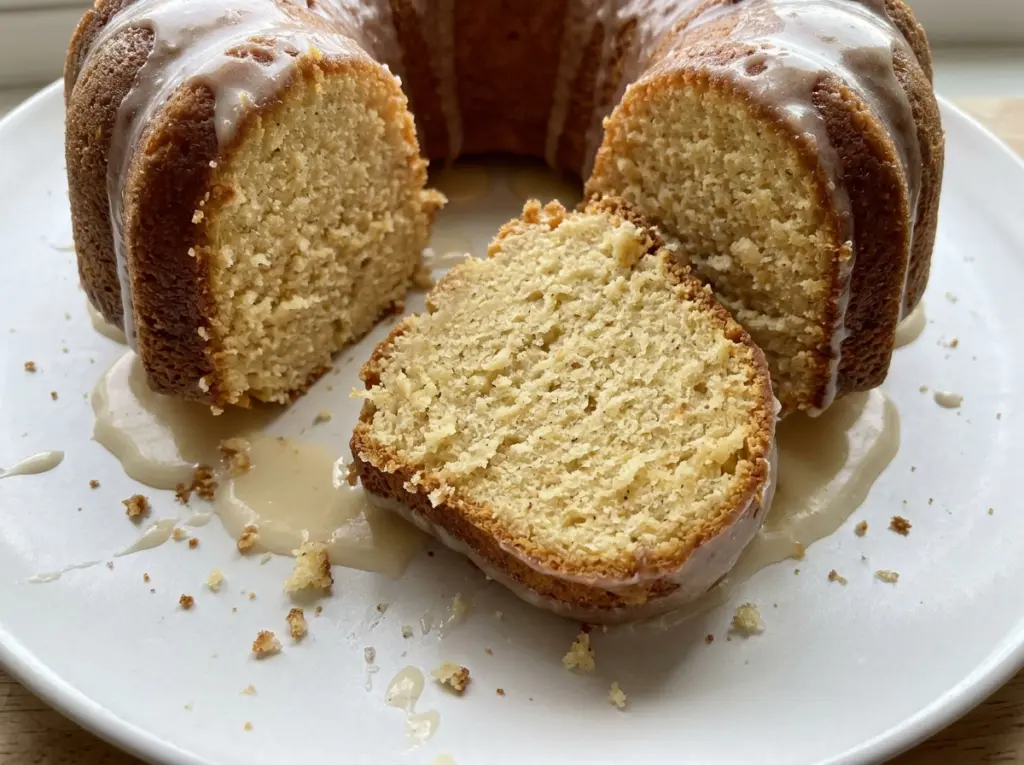
The butter and sugar start pale and fluffy, and the kitchen picks up a warm nutmeg scent as the eggnog cake bakes. I like this pound cake when I want a Bundt that feels special but doesn’t need a complicated finish: the crumb is rich, the shape does the work, and a smooth rum glaze adds a little shine.
Eggnog brings more than its familiar flavor. It also adds moisture and richness, so I work it into the batter in stages with the flour instead of pouring it all in at once. That keeps the batter cohesive without beating it longer than necessary. Once the cake has cooled completely, the glaze drapes over the ridges and settles into a thin, sweet layer around each slice.
Kitchen Note
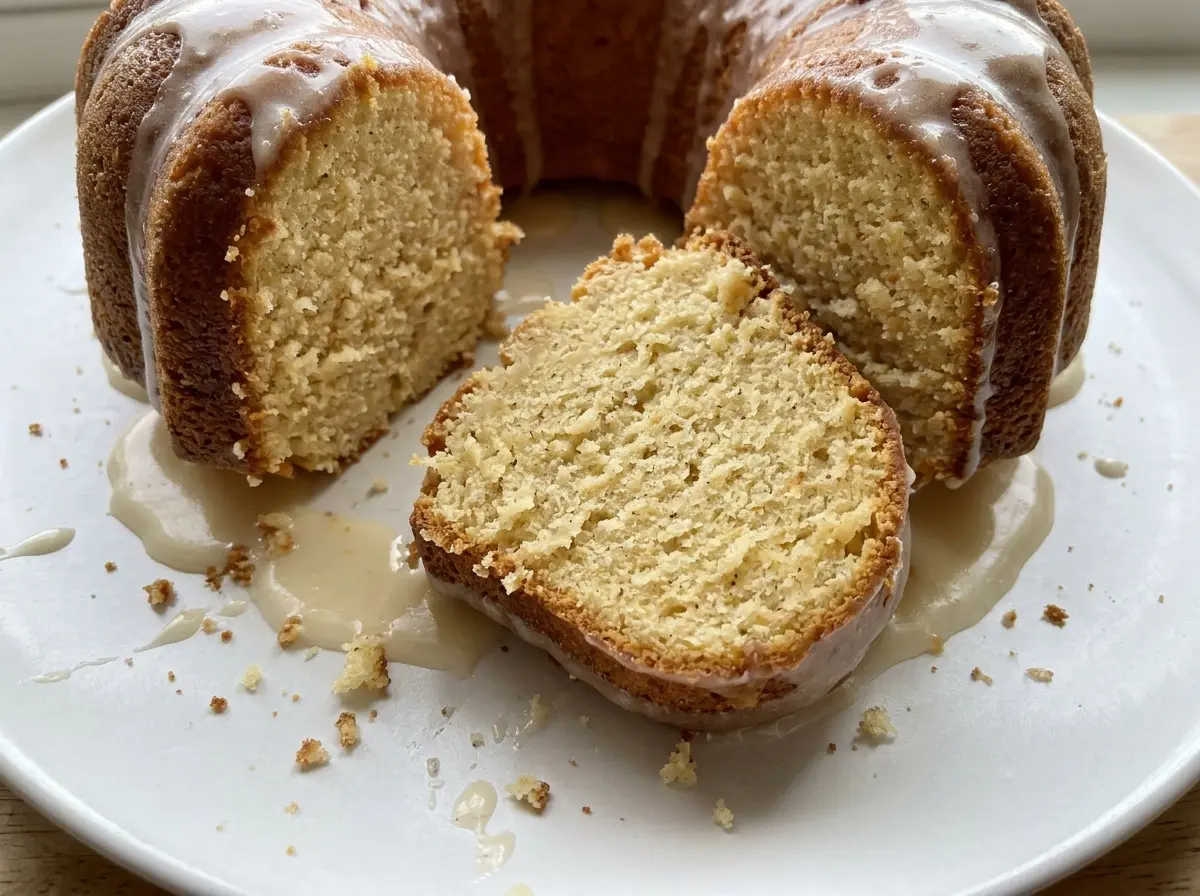
Give the cake the full 15 minutes in the pan before turning it out. That brief rest lets the cake settle enough to release while it’s still warm and able to come away from the pan cleanly.
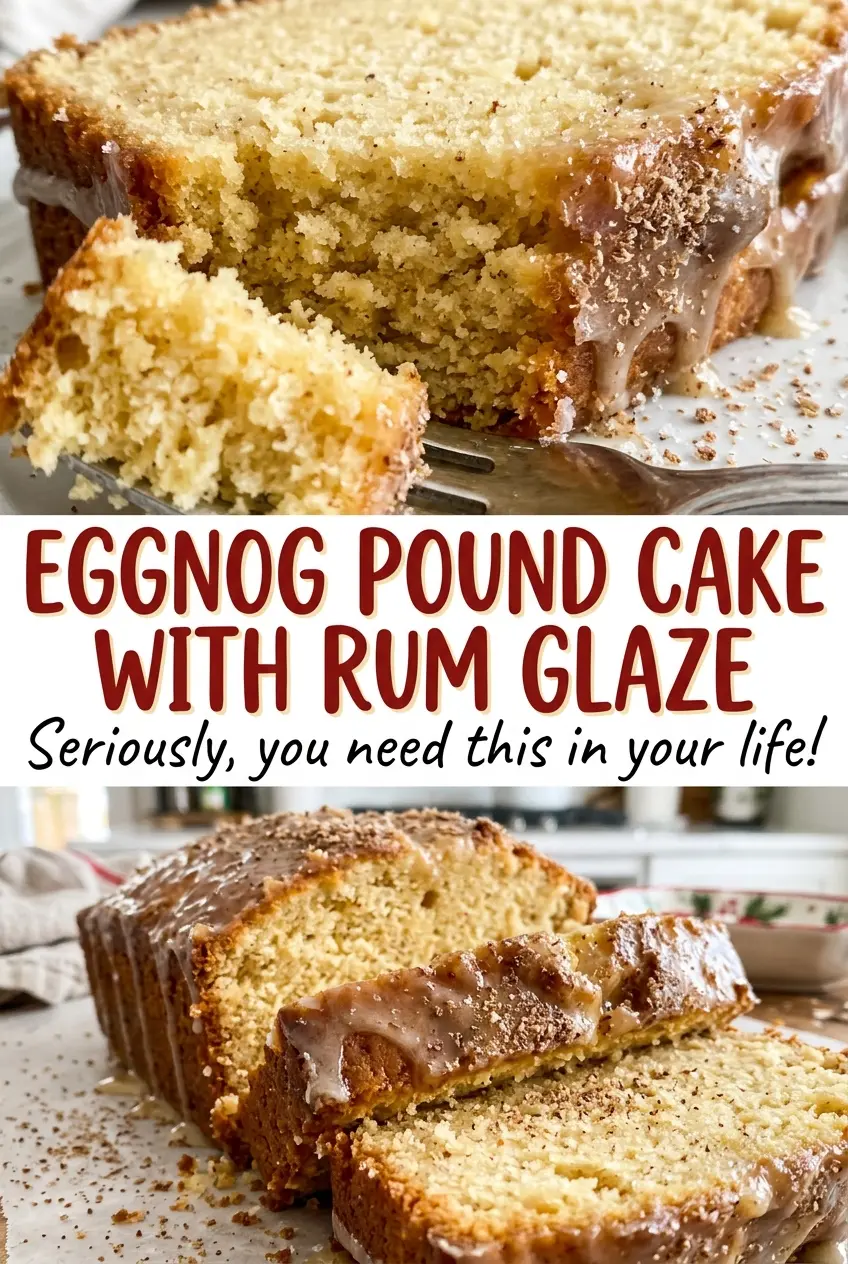
Save this eggnog pound cake with rum glaze for a tender, nutmeg-scented Bundt with a smooth, glossy finish.
Why Adding All the Eggnog at Once Can Weigh Down This Pound Cake
Butter cake batter has to hold both fat and liquid in a stable mixture. If the eggnog goes in all at once, it’s harder to blend it evenly with the creamed butter, sugar, and eggs. A batter that looks uneven or separated can bake up with a heavier, less consistent crumb.
Alternating the flour mixture with the eggnog mixture gives each addition a chance to incorporate before the next one goes in. Starting and ending with flour also means the batter isn’t left with a large splash of liquid to absorb at the end. Keep the mixer on low for these additions, and stop as soon as the last streaks of flour disappear. The goal is an even batter, not extra air from prolonged mixing.
This order matters especially in a cake with a full cup of eggnog. The liquid adds richness, but it needs to be distributed through the batter rather than sitting in one wet pocket. A few deliberate additions are easier to control than trying to correct a loose, overmixed batter afterward.
How Eggnog, Butter, and Nutmeg Shape This Cake
- Eggnog — It gives the cake its defining flavor and adds richness to the batter. Use it at room temperature so it blends more evenly with the butter mixture. Plain milk won’t bring the same eggnog flavor or richness, so I don’t recommend swapping it in.
- Unsalted butter — Butter gives pound cake its rich crumb, and softened butter creams properly with the sugar. Let it soften until it yields when pressed but still holds its shape; melted butter won’t create the same starting texture. Unsalted butter also lets the measured salt stay in control.
- Eggs — Room-temperature eggs incorporate more smoothly into the creamed mixture than cold eggs. Add them one at a time and let each blend in before adding the next. There isn’t a simple replacement that keeps this cake’s structure and texture intact.
- All-purpose flour — This gives the cake enough structure to hold its Bundt shape while still slicing cleanly. Measure it carefully rather than packing it into the cup, which can make the batter too flour-heavy. A different flour isn’t a dependable one-for-one swap here.
- Ground nutmeg and vanilla — Nutmeg gives the cake its warm, familiar eggnog note, while vanilla rounds it out. Fresh, fragrant ground nutmeg makes a noticeable difference; if yours has been sitting open for a long time, its aroma may be faint. Use vanilla extract for the flavor the cake is built around.
- Dark rum — In the glaze, rum adds a deeper note that balances the confectioners’ sugar. The amount is small but noticeable. For an alcohol-free finish, replace it with eggnog as described below.
From a Thoroughly Sprayed Bundt Pan to a Set Rum Glaze
Coat the Pan and Whisk the Dry Ingredients
Heat the oven to 325°F and coat a 10-cup Bundt pan with baking spray that contains flour. Cover the center tube and work the spray into every crevice; missed spots are where a cake can catch as it releases. Whisk the flour, baking powder, salt, and nutmeg together in a medium bowl so the leavening and spice are spread through the flour. Set the bowl aside while you make the batter.
Cream the Butter and Add the Eggs Gradually
Beat the softened butter and sugar with a mixer on medium speed for about 3 minutes, until the mixture looks pale and fluffy. This gives the batter a light, aerated base, so don’t stop while the butter still looks dense. Beat in the eggs one at a time, mixing until each is incorporated before adding another. If the mixture looks slightly uneven, keep the next addition gradual rather than tipping in all the eggs together.
Alternate the Flour and Eggnog Mixtures
Stir the eggnog and vanilla together in a small bowl. With the mixer on low, add the flour mixture in three additions and the eggnog mixture in two, beginning and ending with flour. Scrape the bowl as needed so no thick layer of batter is left on the sides. Stop mixing as soon as the batter is combined; continued beating after the flour goes in can make the finished cake tougher.
Bake, Cool, and Finish with Glaze
Scrape the batter into the prepared pan and bake for 65 to 75 minutes. Check the center with a wooden pick; it should come out clean or with a few moist crumbs, not wet batter. Cool the cake in the pan for 15 minutes, then turn it onto a wire rack and let it cool completely. Whisk the confectioners’ sugar, dark rum, and eggnog until smooth, drizzle it over the cool cake, and wait for the glaze to set before slicing.
Two Ways to Adapt the Eggnog Cake Without Losing Its Character
Make the Glaze Alcohol-Free
Replace the dark rum in the glaze with the same amount of eggnog. The finish will taste more directly of eggnog and won’t have the deeper rum note, while still giving you a smooth glaze to drizzle over the cooled cake.
Turn Up the Nutmeg
For a more pronounced spice note, increase the ground nutmeg in the cake batter by 1/4 teaspoon. The crumb will taste warmer and more aromatic without changing the mixing method or the glaze.
Storage and Reheating
- Room temperature: Keep the covered cake at room temperature for up to 3 days.
- Refrigerator: It will keep, tightly covered, for up to 5 days; the butter-rich crumb will feel firmer when cold.
- Freezer: Freeze the cooled cake without glaze, tightly wrapped, for up to 2 months. Thaw it while still wrapped, then glaze once it has returned to room temperature.
- Reheating: This cake is best at room temperature. If you prefer a warm slice, microwave it briefly and stop as soon as it softens; extended heating dries out the crumb.
Questions That Come Up While Baking This Bundt Cake
Eggnog Pound Cake with Rum Glaze
Ingredients
Equipment
Method
- Preheat the oven to 325°F.
- Coat a 10-cup Bundt pan with the baking spray, covering the center tube and all crevices.
- Whisk the flour, baking powder, salt, and nutmeg together in a medium bowl.
- Beat the butter and sugar with a mixer on medium speed until pale and fluffy, about 3 minutes.
- Beat in the eggs one at a time, mixing until each is incorporated before adding the next.
- Stir the eggnog and vanilla together.
- Add the flour mixture to the butter mixture in three additions, alternating with the eggnog mixture in two additions; mix on low just until combined, beginning and ending with the flour mixture.
- Scrape the batter into the prepared pan.
- Bake for 65 to 75 minutes, until a wooden pick inserted in the center comes out clean or with a few moist crumbs.
- Cool the cake in the pan for 15 minutes.
- Turn it out onto a wire rack and cool completely.
- Whisk the confectioners’ sugar, rum, and eggnog in a small bowl until smooth.
- Drizzle the glaze over the completely cooled cake.
- Let the glaze set before serving.