
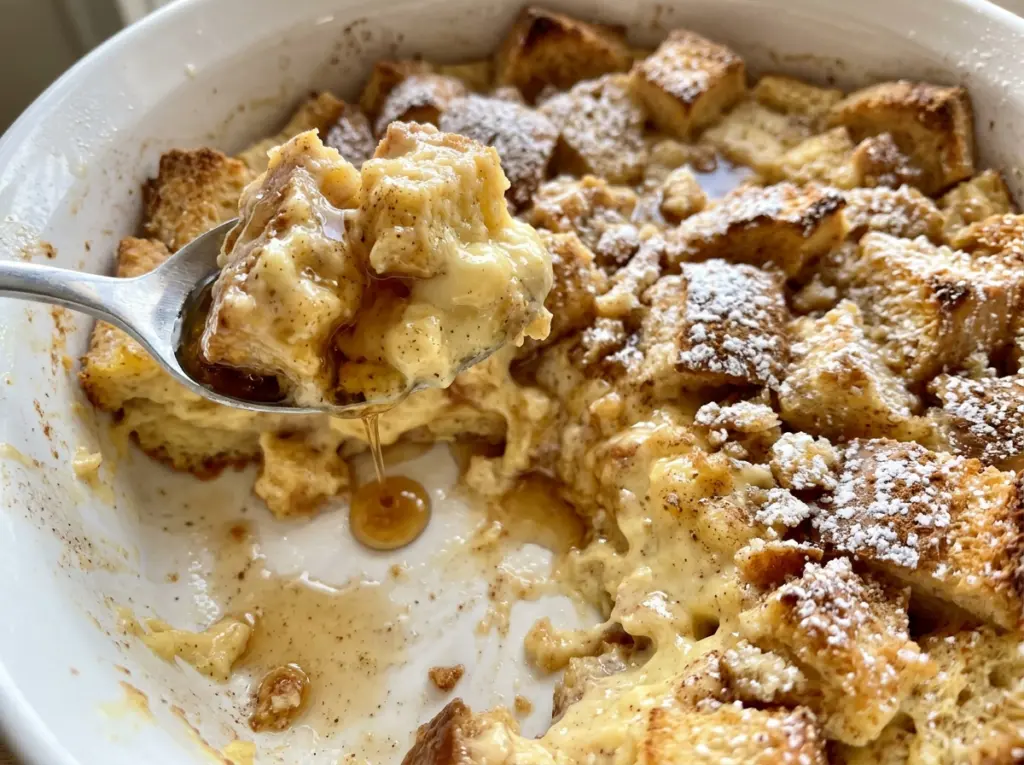
The custard starts disappearing between the bread cubes as soon as I pour it in, and that’s exactly what I want. Each piece needs a chance to soak up the eggnog mixture before the dish goes into the oven. This Eggnog French Toast Casserole is built for that pause: assemble it the night before, then bake it in the morning with a buttery brown-sugar streusel on top.
I keep the bread in even 1-inch cubes so the casserole cooks at a steady pace, and I press the cubes gently into the custard rather than packing them down. The topping goes on just before baking, which keeps its crumbs distinct while the center sets. After a short rest, the 9×13-inch casserole cuts into 8 generous servings, with a golden top and a soft, custardy middle.
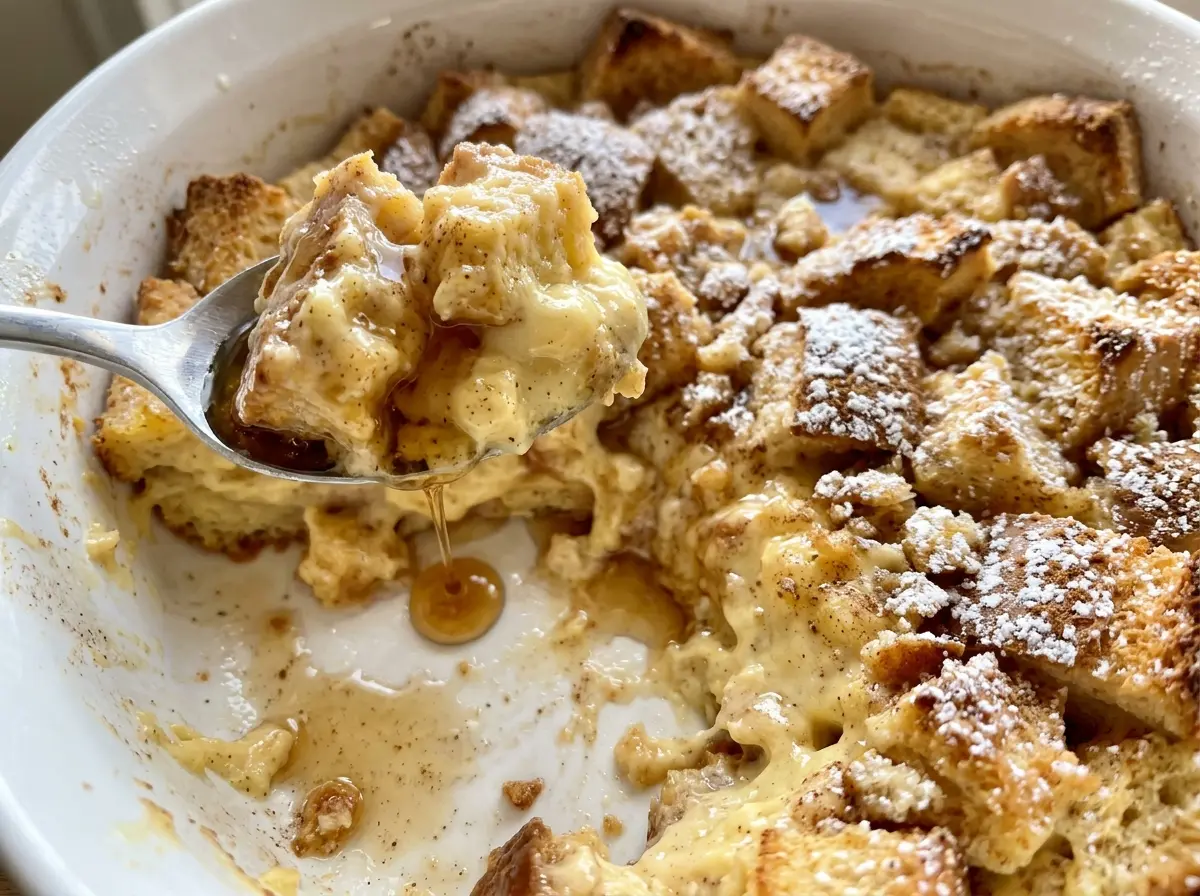
Kitchen Note
Give the casserole its full 10-minute rest before cutting. The center settles during that pause, so the first serving holds together instead of sliding apart on the plate.
Save this Eggnog French Toast Casserole for an easy-ahead breakfast with a soft eggnog custard and a crisp, buttery streusel top.
Why This Casserole Needs More Than a Quick Bread Dip
French toast made in a skillet gets a brief dip because the bread cooks right away. In a casserole, the cubes sit beneath a poured custard, so the middle pieces need time to absorb it before baking. A quick soak can leave you with a wet surface and a less evenly hydrated center; chilling gives the custard time to move through the bread.
That longer soak is also what makes this a useful make-ahead breakfast. The bread and custard are assembled in the baking dish, covered, and refrigerated for at least 8 hours or overnight. When you uncover it in the morning, the cubes should look moistened rather than dry on top. Pressing them gently after pouring helps any pieces that sit higher in the dish meet the custard without crushing the bread into a dense layer.
There’s no need to stir the casserole again after it chills. Leave the soaked cubes in place and add the streusel evenly across the top just before baking. That keeps the topping where you want it and gives the casserole its contrast: a tender center under a golden, crumbly finish.
How the Bread, Eggnog, and Streusel Each Shape the Casserole

- French bread — A 1-inch cube gives the custard plenty of surface to soak into while keeping the pieces recognizable after baking. Cut the loaf into even pieces so they absorb and cook at a similar rate. The crust stays on.
- Eggs, eggnog, and whole milk — The eggs set the custard, while eggnog brings its own sweetness and spiced richness. Whole milk loosens the mixture so it can be whisked and poured over the bread. Store-brand eggnog is fine; choose one whose taste you enjoy because it is the main flavor in the casserole. For a richer, sweeter variation, replace the whole milk with the same amount of eggnog.
- Vanilla, cinnamon, and nutmeg — These season the custard without needing extra sweetener in the base. Ground spices are convenient here; whisk them thoroughly with the eggs and liquids so they don’t sit in a concentrated patch.
- Flour, brown sugar, cinnamon, and cold butter — These make the streusel’s crumbly top. Cold butter is important: cut it into the dry ingredients until you see coarse crumbs, rather than melting it into a paste. Unsalted butter keeps the topping’s sweetness clear.
Soak, Crumb, and Bake: The Stages That Make the Texture
Arrange the Bread and Pour the Custard
Lightly grease a 9×13-inch baking dish with the vegetable oil, then arrange the 1-inch bread cubes in an even layer. In a large bowl, whisk the eggs, eggnog, milk, vanilla, cinnamon, nutmeg, and fine salt until combined. Pour the mixture evenly over the bread, then gently press the cubes down so they’re moistened. Cover the dish and refrigerate it for at least 8 hours or overnight.
Cut the Butter Into Coarse Crumbs
When you’re ready to bake, take the casserole out of the refrigerator and preheat the oven to 350°F. Stir the flour, brown sugar, and cinnamon together in a medium bowl. Cut in the cold butter with a pastry blender or your fingertips until coarse crumbs form. If the mixture looks smooth or greasy, the butter has warmed too much; keep it cold and work it just until the crumbs come together.
Cover First, Then Let the Top Brown
Sprinkle the streusel evenly over the soaked bread and cover the dish tightly with foil. Bake it covered for 30 minutes, then remove the foil and continue baking for 20 to 30 minutes. The uncovered top should turn golden, and the center should reach 160°F. Keep the full bake in view: color on top alone doesn’t tell you whether the middle has finished cooking.
Rest Before Serving
Take the casserole out of the oven once the top is golden and the center has reached its target temperature. Let it rest for 10 minutes before serving. The streusel stays on top, while the custard has a moment to settle into a sliceable texture. Cut into 8 portions and serve warm.
Easy Ways to Change the Spice, Topping, or Dairy
Leave Out the Nutmeg for a Milder Spice
Omit the nutmeg from the custard and keep the cinnamon. The eggnog and vanilla still give the casserole its familiar warm flavor, but the spice tastes less pronounced.
Skip the Streusel for a Softer Top
Leave off the flour, brown sugar, cinnamon, and butter topping and bake the soaked casserole covered, then uncovered for the same stages. You’ll lose the crisp, sweet crumbs and get a more uniformly soft surface instead.
Make a Dairy-Free Adaptation
Use dairy-free eggnog and unsweetened plant milk in place of the eggnog and whole milk, and use cold dairy-free butter for the streusel. The custard’s flavor and the topping’s crumb may vary by brand, but the same soak-and-bake method works.
Storage and Reheating
- Refrigerator: Cover leftovers and refrigerate for 3 to 4 days. The streusel softens as it sits.
- Freezer: Freeze fully cooled portions in an airtight container for up to 2 months for best quality. Thaw overnight in the refrigerator.
- Reheating: Warm portions covered with foil in a 350°F oven until heated through to 165°F. Leaving the dish uncovered the whole time can dry the edges before the center warms.
Questions That Come Up Before the Casserole Goes in the Oven
Eggnog French Toast Casserole
Ingredients
Equipment
Method
- Lightly grease a 9x13-inch baking dish with the vegetable oil.
- Arrange the bread cubes in an even layer in the dish.
- Whisk the eggs, eggnog, milk, vanilla, cinnamon, nutmeg, and salt in a large bowl until combined.
- Pour the egg mixture evenly over the bread and gently press the cubes down so they are moistened.
- Cover and refrigerate for at least 8 hours or overnight.
- When ready to bake, remove the casserole from the refrigerator.
- Preheat the oven to 350°F.
- Stir the flour, brown sugar, and cinnamon in a medium bowl.
- Cut in the butter with a pastry blender or your fingertips until coarse crumbs form.
- Sprinkle the topping evenly over the casserole.
- Cover the dish tightly with foil.
- Bake for 30 minutes.
- Uncover and bake for 20 to 30 minutes more, until the top is golden and the center reaches 160°F.
- Let the casserole rest for 10 minutes before serving.