
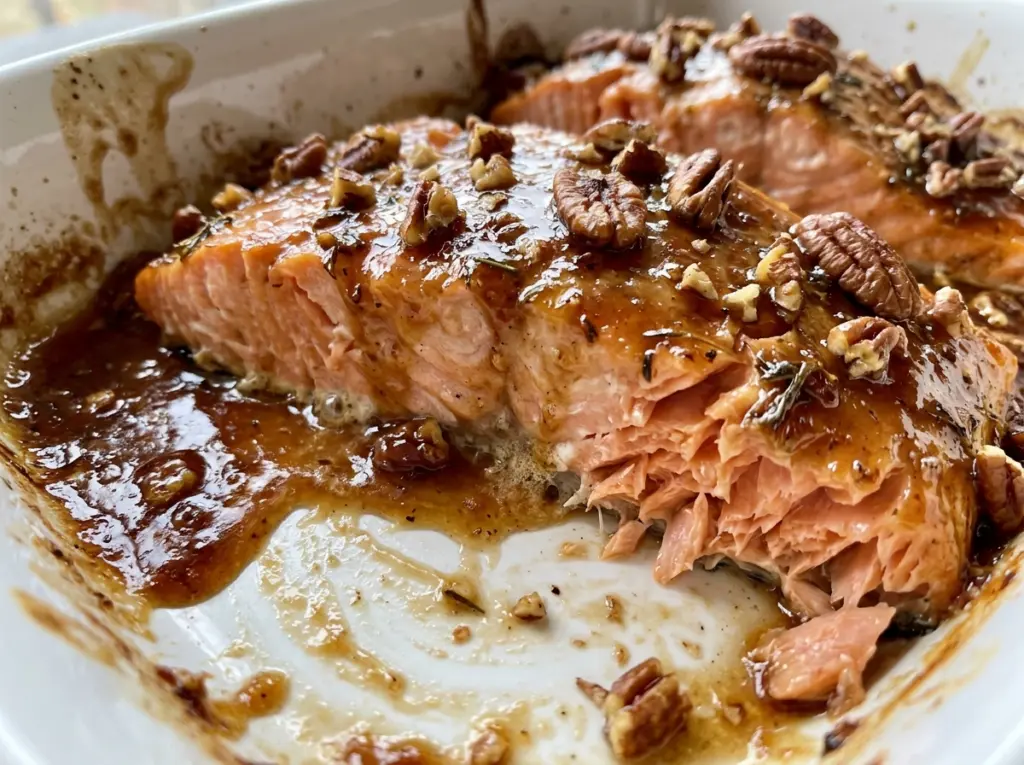
The glaze bubbles softly in a small saucepan, and the Dijon’s sharp aroma mellows as the butter melts into the maple syrup. A few minutes later, finely chopped pecans turn that glossy mixture into a topping with a little crunch. That’s the moment this easy baked salmon with maple pecan glaze starts to feel like more than a quick fish dinner.
I like this method because the salmon and glaze finish together without needing a separate pan or a long list of ingredients. Skin-on fillets bake on a lined sheet, so there’s little cleanup, and the maple-Dijon glaze gives each portion a sweet-savory finish without covering up the salmon.
The pecans bring texture, the mustard keeps the glaze from tasting one-note, and a short rest gives the hot fillets a chance to settle before serving. The result is tender salmon under a sticky, nutty topping that’s especially good while the edges are still warm.
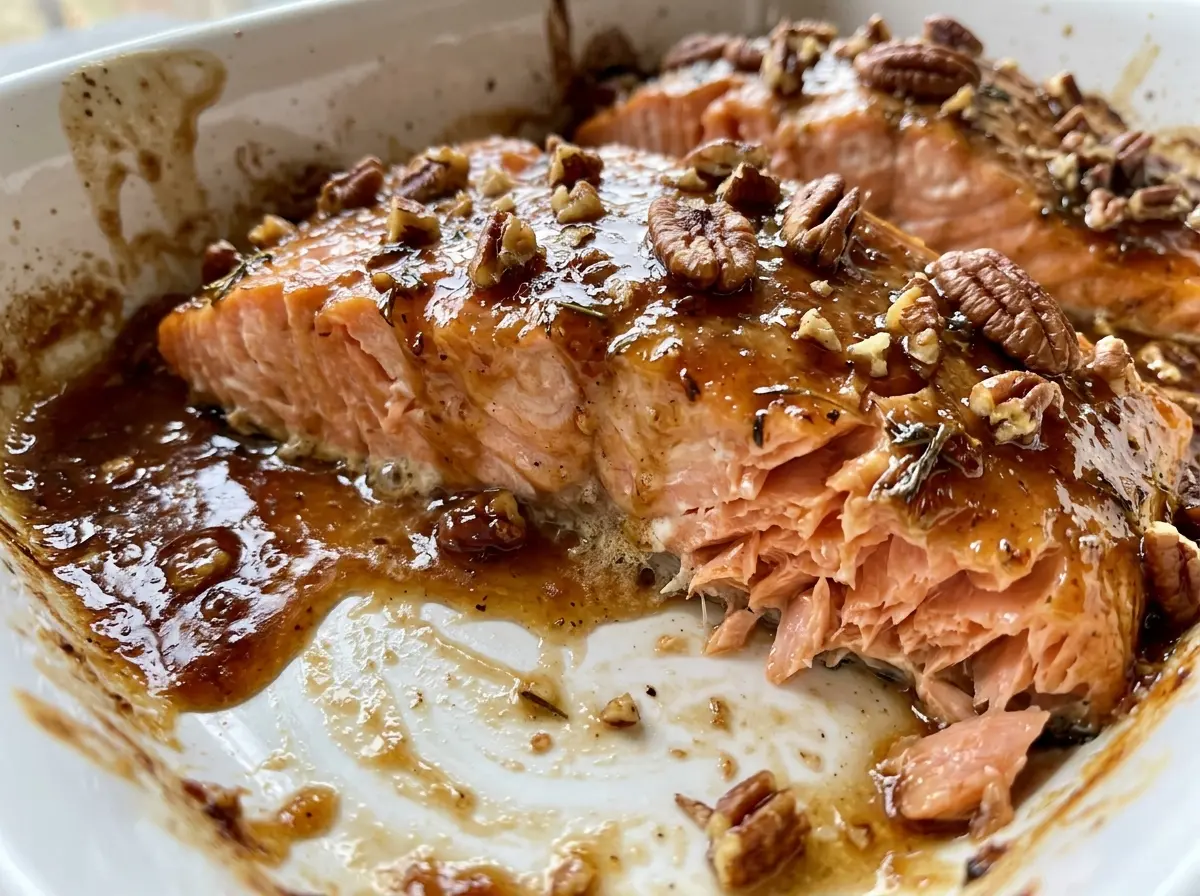
Kitchen Note
Once the pecans go into the glaze, take the saucepan off the heat. It keeps the mixture from bubbling away while you get the salmon ready, and the glaze stays easy to spoon.
Save this maple pecan salmon for a night when you want tender baked fish with a sweet-savory glaze and a crunchy pecan finish.
Why the Maple-Pecan Topping Goes on Partway Through Baking
Maple syrup tastes mellow and buttery in this glaze, but its natural sugars can darken quickly under oven heat. The chopped pecans need only a short stint in the oven to warm through and pick up a toasted edge; they don’t need to bake for the entire time the salmon does. Putting the topping on after the first bake gives the fish a head start while keeping the pecans from sitting in the oven too long.
That timing also gives you a useful visual checkpoint. Before the glaze goes on, the salmon has already begun to turn opaque around the edges, but it still needs time in the oven. Spoon the glaze over the tops rather than pouring it around the fillets, where the maple mixture can spread across the hot pan instead of staying with the fish. The glaze will settle over the surface as the salmon finishes cooking, and the pecans remain distinct instead of disappearing into a thin layer of syrup.
This is a small timing choice, not a fussy technique. It lets the fish cook gently before the sweet topping is exposed to the oven, and it means the pecans stay part of every bite.
Why Pure Maple Syrup and Dijon Belong in This Glaze
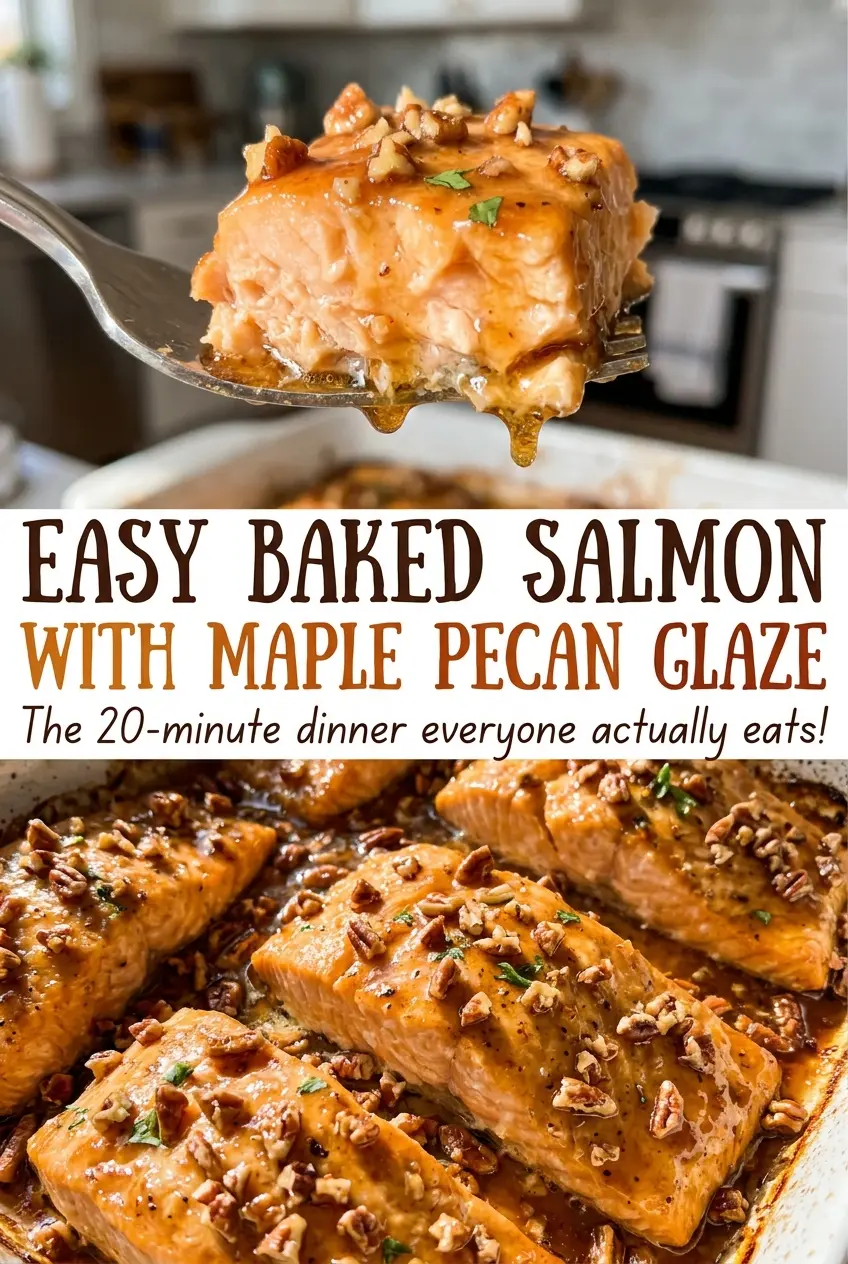
- Pure maple syrup — It brings a clean maple sweetness and gives the glaze its syrupy body. Pancake syrup is usually made with different sweeteners and flavorings, so it won’t give the same result; use pure maple syrup here.
- Dijon mustard — Dijon adds a little sharpness that keeps the maple from tasting flat, and it blends smoothly into the butter and syrup. Its flavor is more balanced here than a strongly sweet or coarse mustard would be.
- Unsalted butter — Butter rounds out the mustard and maple and gives the glaze a richer texture. If you need a dairy-free version, the olive oil already used for the salmon can stand in, though the glaze won’t be quite as creamy.
- Finely chopped pecans — Small pieces spread across the fillets and give the topping a crisp, nutty bite. A fine chop helps the pecans cling to the glaze; large pieces are more likely to tumble off when you serve the salmon.
- Skin-on salmon fillets — The skin gives each fillet a sturdy underside as it bakes on the sheet pan. Choose pieces that look moist and smell mild, and keep them skin-side down so the topping stays on the exposed flesh.
- Olive oil — Brushing the tops gives the seasoning something to adhere to and helps keep the exposed salmon from looking dry. A basic olive oil works well; there’s no need to use a specialty finishing oil.
From Gentle Simmer to Glazed, Tender Salmon
Simmer the Maple, Butter, and Dijon
Combine the maple syrup, butter, and Dijon in a small saucepan over medium heat. Stir as the butter melts, then bring the mixture to a gentle simmer rather than a hard boil. Keep stirring often for 2 minutes; the glaze should look slightly thicker than it did at the start, not reduced to a sticky candy. If it starts bubbling vigorously, lower the heat so the maple doesn’t scorch on the bottom of the pan.
Stir in the Pecans Off the Heat
Once the glaze has simmered for 2 minutes, stir in the finely chopped pecans and remove the saucepan from the heat. The mixture will be loose enough to spoon, with pecan pieces suspended throughout rather than sitting in a dry pile. Stir well so the nuts are coated evenly. Keep the glaze in the saucepan while you prepare the baking sheet and salmon.
Season the Skin-On Fillets
Heat the oven to 400°F and line a rimmed baking sheet with parchment paper or foil. Set the salmon skin-side down with space between the fillets, then brush the tops with olive oil and sprinkle on the kosher salt and black pepper. A rimmed sheet keeps the fish and any glaze drips contained. Try to keep the seasoning on the salmon rather than scattering it onto the liner.
Glaze and Finish the Bake
Bake the salmon for 8 minutes, then spoon the maple pecan glaze evenly over the tops. Return the sheet to the oven for 4 to 7 minutes, until the thickest part of the salmon reaches 145°F. Fillets don’t all have identical thickness, so check the thickest portion rather than judging only by the color at the edge. Rest the salmon on the baking sheet for 3 minutes before serving.
Two Simple Ways to Adapt the Maple Pecan Salmon
Make the Glaze Dairy-Free
Replace the butter with olive oil for a dairy-free glaze. It will be a little less creamy, but the maple and Dijon still make a spoonable coating for the salmon. Stir the glaze as it simmers so the ingredients stay well combined.
Leave Out the Pecans
For a pecan-free version, leave the nuts out and spoon the maple-Dijon glaze over the salmon as usual. You’ll lose the crunchy topping, but the fish still gets the sweet, tangy glaze. This is the simplest option if you’re cooking for someone who avoids tree nuts.
Storage and Reheating
- Refrigerator: Refrigerate cooked salmon in a covered container within 2 hours and use it within 3 to 4 days. The pecans soften in storage, and the salmon won’t have quite the same tender texture as it does fresh from the oven.
- Freezer: Freeze portions in an airtight freezer-safe container for up to 2 to 3 months for best quality. The cooked fish will still be safe longer if kept continuously frozen, but the glaze and salmon texture can decline.
- Reheating: Cover the salmon and warm it in a 275°F oven until it reaches 165°F in the center. Gentle, covered reheating helps limit drying; avoid a hot oven or a long uncovered reheat, which can make the fish tough.
Questions That Come Up While Making Maple Pecan Salmon
Easy Baked Salmon With Maple Pecan Glaze – Cozy Dinner Recipe
Ingredients
Equipment
Method
- In a small saucepan over medium heat, bring the maple syrup, butter, and Dijon mustard to a gentle simmer, stirring until the butter melts.
- Simmer for 2 minutes, stirring often, until the glaze thickens slightly.
- Stir in the pecans and remove the pan from the heat.
- Heat the oven to 400°F.
- Line a rimmed baking sheet with parchment paper or foil.
- Place the salmon skin side down on the baking sheet.
- Brush the tops with olive oil.
- Sprinkle with the salt and pepper.
- Bake for 8 minutes, then spoon the maple pecan glaze evenly over the fillets.
- Return the salmon to the oven and bake for 4 to 7 minutes, until the thickest part reaches 145°F.
- Rest the salmon on the baking sheet for 3 minutes before serving.