
The chicken starts to sizzle as soon as it hits the Dutch oven, and those little browned edges are a good sign: the pieces are getting color before they go into the creamy filling. I cut the breasts into even 1-inch pieces so they cook at the same pace, then pull them out as soon as the largest piece reaches 165°F. That keeps the chicken from spending the whole time in the pot while the vegetables and sauce come together.
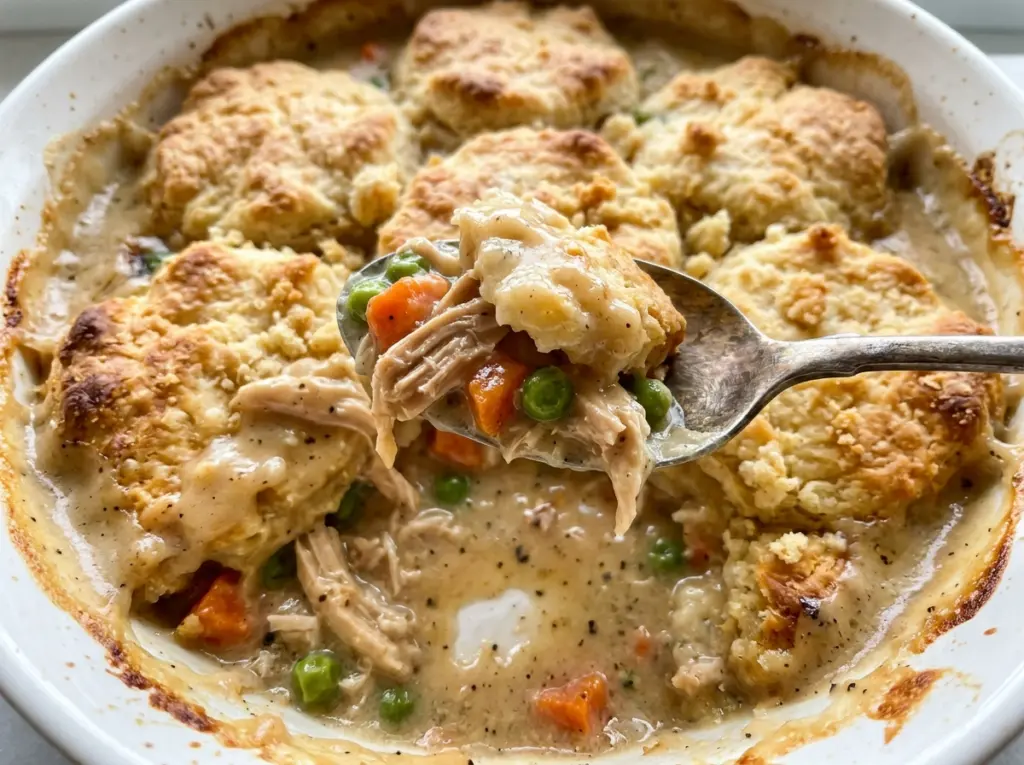
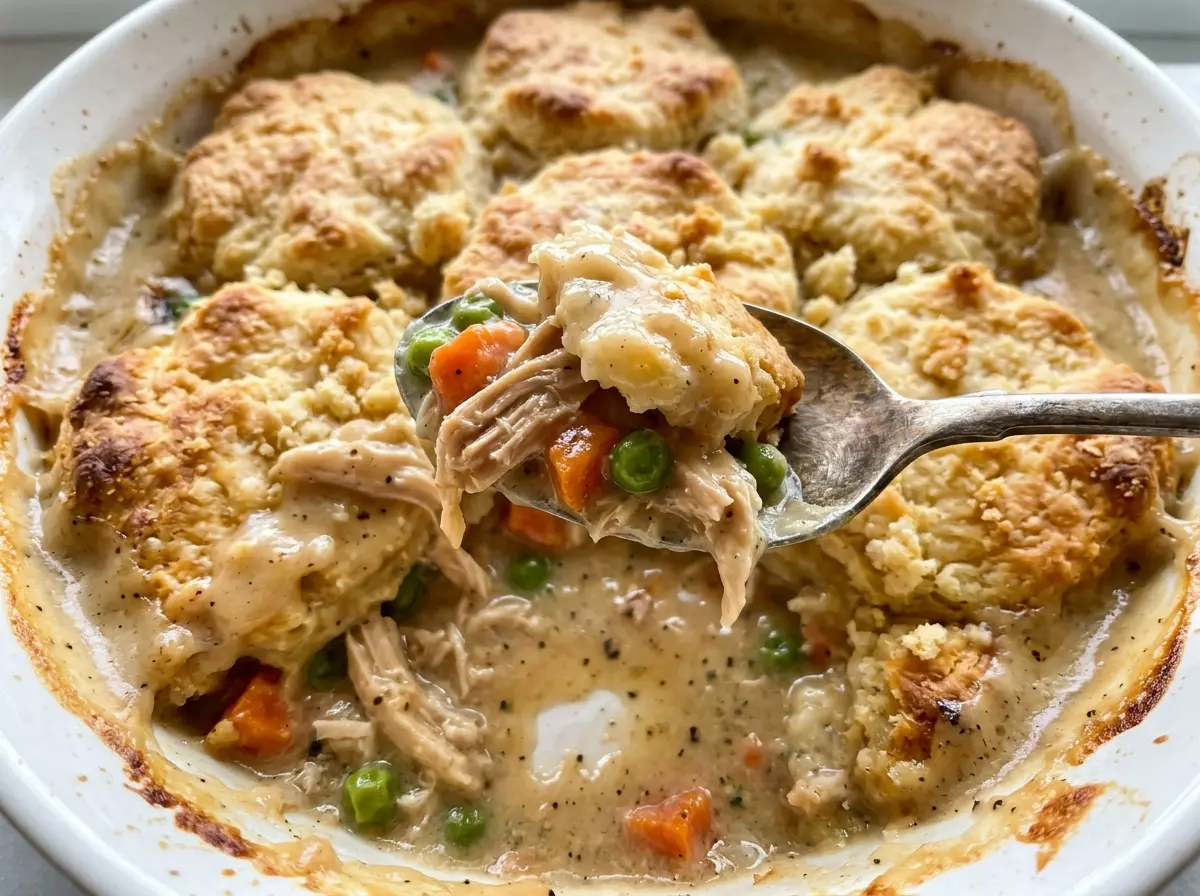
For this chicken pot pie casserole with biscuits, the filling gets thickened on the stovetop before it goes into the baking dish. That matters because the biscuit topping covers much of the surface, so the sauce has less room to reduce in the oven. The topping is made with cold butter cut into the flour and buttermilk stirred in just until shaggy. Once baked, you get a bubbling chicken-and-vegetable filling under tender biscuits with golden tops.
Kitchen Note
Stop stirring the biscuit dough as soon as it looks shaggy and you don’t see dry flour at the bottom of the bowl. The pea-size butter pieces should still be visible; they help keep the biscuits tender.
Save this chicken pot pie casserole with biscuits for a cozy dinner with creamy filling and a golden, tender biscuit topping.
Why This Filling Has to Thicken Before the Biscuits Go On
A pot pie filling can look creamy in the Dutch oven and still turn runny in the baking dish if the sauce hasn’t had time to thicken. Here, the flour is stirred into the softened vegetables and butter before the broth and milk go in. Cooking that mixture for a minute helps the flour coat the vegetables, and whisking in the liquids gradually keeps the sauce smooth instead of leaving little floury clumps.
Give the sauce its full simmer on the stovetop, stirring as it thickens. The goal isn’t a stiff paste; it should look like a creamy gravy that clings to the chicken and vegetables. The oven will bring it back to a bubble, but the biscuit layer limits how much moisture can escape once the dish is covered. Starting with a properly thickened filling gives the casserole a creamy spoonful rather than a puddle under the biscuits.
The sequence also keeps the chicken from being treated as a long-braising ingredient. It cooks first, then returns to the sauce before everything goes into the oven. That way, the vegetables can soften and the gravy can develop without leaving the chicken in the pot for the entire stovetop cooking time.
The Ingredients That Keep the Gravy Creamy and the Biscuits Tender

- Chicken breasts — Cutting the meat into even pieces matters more than choosing an especially expensive package. Uniform pieces cook at a similar rate, so the smaller ones are less likely to dry out while the largest finish cooking.
- All-purpose flour — It does two different jobs here: thickening the filling and forming the biscuit dough. Keep the portions separate as you measure so the filling gets its share and the biscuits retain the amount they need for structure.
- Unsalted butter — The butter in the filling builds richness, while the cold butter in the biscuit mixture needs to stay in small pieces. Cold butter is important for the topping; melted butter won’t give you the same crumbly mixture to work into the flour.
- Low-sodium chicken broth and whole milk — Together they make a savory, creamy sauce without relying on a canned soup base. Low-sodium broth leaves room for the divided kosher salt to season the chicken, filling, and biscuits without making the sauce overly salty.
- Buttermilk — It brings moisture and a slight tang to the biscuit dough. Pour it in after cutting the butter into the flour, then stir only until the dough comes together; extra mixing can make the biscuits firm.
- Frozen peas — They add small, sweet bites of color to the filling. Stir them into the sauce straight from the freezer; there’s no need to thaw them first.
From 165°F Chicken to a Golden Biscuit Lid
Cook the Chicken in Even Pieces
Heat the oven to 400°F and grease a 9×13-inch baking dish before starting the filling. Season the 1-inch chicken pieces with 1 teaspoon of the kosher salt and the black pepper, then heat the neutral oil in a 5-quart Dutch oven over medium-high heat. Cook the chicken for 6–8 minutes, stirring occasionally, until the largest pieces reach 165°F. Transfer it to a plate so you can use the same pot for the vegetables and sauce.
Soften the Onion, Carrots, and Celery
Melt 4 tablespoons of butter in the Dutch oven over medium heat. Add the diced onion, carrots, and celery, and cook for 5–7 minutes, until the vegetables have softened. Stir them now and then so they cook evenly without sticking to the bottom. The carrots should begin to lose their firm, raw edge before you add the flour.
Whisk the Gravy Until It Thickens
Stir in the flour for the filling and the dried thyme, then cook for 1 minute. Gradually whisk in the chicken broth and whole milk, taking a moment to smooth out each addition before pouring in more. Bring the sauce to a simmer and cook for 3–5 minutes, until it thickens. Stir the chicken and frozen peas into the sauce, then transfer the filling to the prepared baking dish.
Make the Biscuit Dough Without Overworking It
In a medium bowl, whisk together the remaining flour, baking powder, and remaining kosher salt. Cut in the cold butter until the mixture looks like coarse crumbs with pea-size pieces. Pour in the buttermilk and stir just until a shaggy dough forms. Drop the dough in 8 evenly spaced mounds over the filling, leaving some space for the topping to spread as it bakes.
Bake Until the Top Is Golden
Bake the casserole for 22–27 minutes, until the biscuits are golden brown and the filling is bubbling. Check the center as well as the edges; the visible bubbling is a helpful cue that the filling is hot beneath the topping. Let the casserole rest for 10 minutes before serving so the filling can settle and the first scoop holds together better.
Two Small Changes That Shift the Filling’s Flavor
Leave out the peas for a simpler filling
Skip the frozen peas if you prefer a filling focused on chicken, carrots, celery, and onion. The sauce will be less sweet and the finished casserole will have fewer green bites, but the other steps and the biscuit topping stay the same.
Skip the thyme for a milder gravy
Leave out the dried thyme if you want the chicken and vegetables to be the main flavors in the filling. You’ll lose the gentle herbal note, but you don’t need to change how the flour is cooked or how the sauce is thickened.
Storage and Reheating
- Refrigerator: Store leftovers in a covered container for 3–4 days. The biscuit topping will soften as it sits against the filling.
- Freezer: Freeze cooled portions in airtight freezer-safe containers for up to 2–3 months. The filling freezes well, though the biscuits may be softer after thawing.
- Reheating: Warm portions in a 350°F oven until heated through, or microwave a single portion. The oven does a better job of bringing back some firmness to the biscuit tops; avoid reheating until the topping becomes dry.
Questions That Come Up While This Casserole Bakes
Chicken Pot Pie Casserole with Biscuits
Ingredients
Equipment
Method
- Heat the oven to 400°F.
- Grease a 9x13-inch baking dish.
- Season the chicken with 1 tsp salt and the black pepper.
- Heat the oil in a 5-quart Dutch oven over medium-high heat.
- Add the chicken and cook for 6–8 minutes, stirring occasionally, until the largest pieces reach 165°F.
- Transfer the chicken to a plate.
- Melt 4 tbsp butter in the pot over medium heat.
- Add the onion, carrots, and celery, and cook for 5–7 minutes until softened.
- Stir in 1/3 cup flour and the thyme and cook for 1 minute.
- Gradually whisk in the broth and milk.
- Bring the mixture to a simmer and cook for 3–5 minutes until the sauce thickens.
- Stir the chicken and peas into the sauce.
- Transfer the filling to the prepared baking dish.
- In a medium bowl, whisk together the remaining 2 cups flour, the baking powder, and the remaining 1/2 tsp salt.
- Cut the 6 tbsp cold butter into the flour mixture until it resembles coarse crumbs with pea-size pieces.
- Pour in the buttermilk and stir just until a shaggy dough forms.
- Drop the dough in 8 evenly spaced mounds over the filling.
- Bake for 22–27 minutes, until the biscuits are golden brown and the filling is bubbling.
- Let the casserole rest for 10 minutes before serving.