
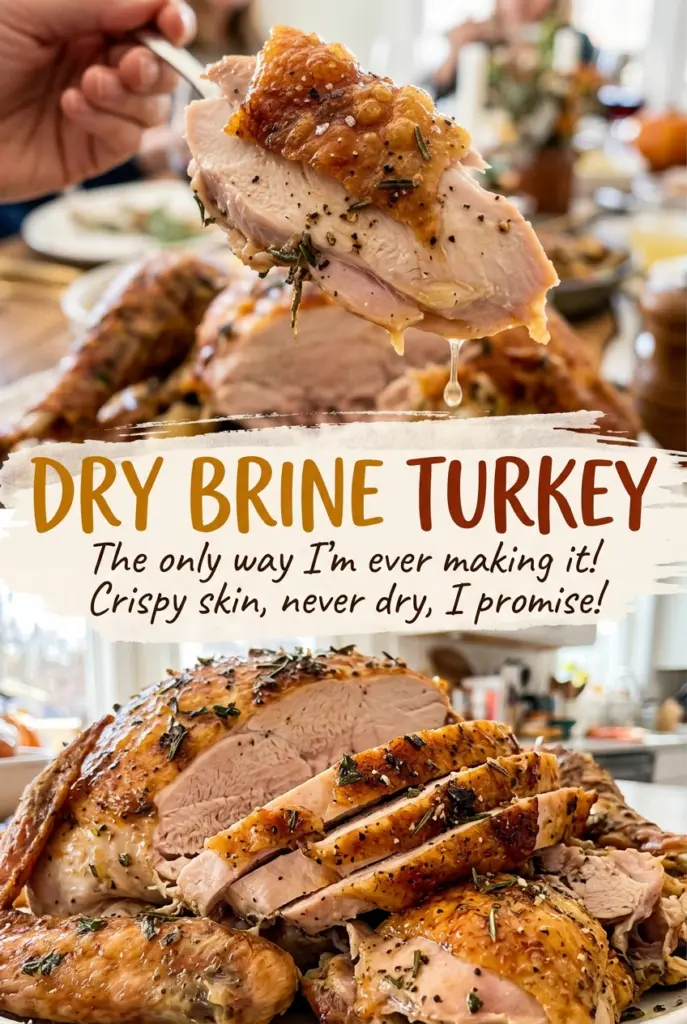
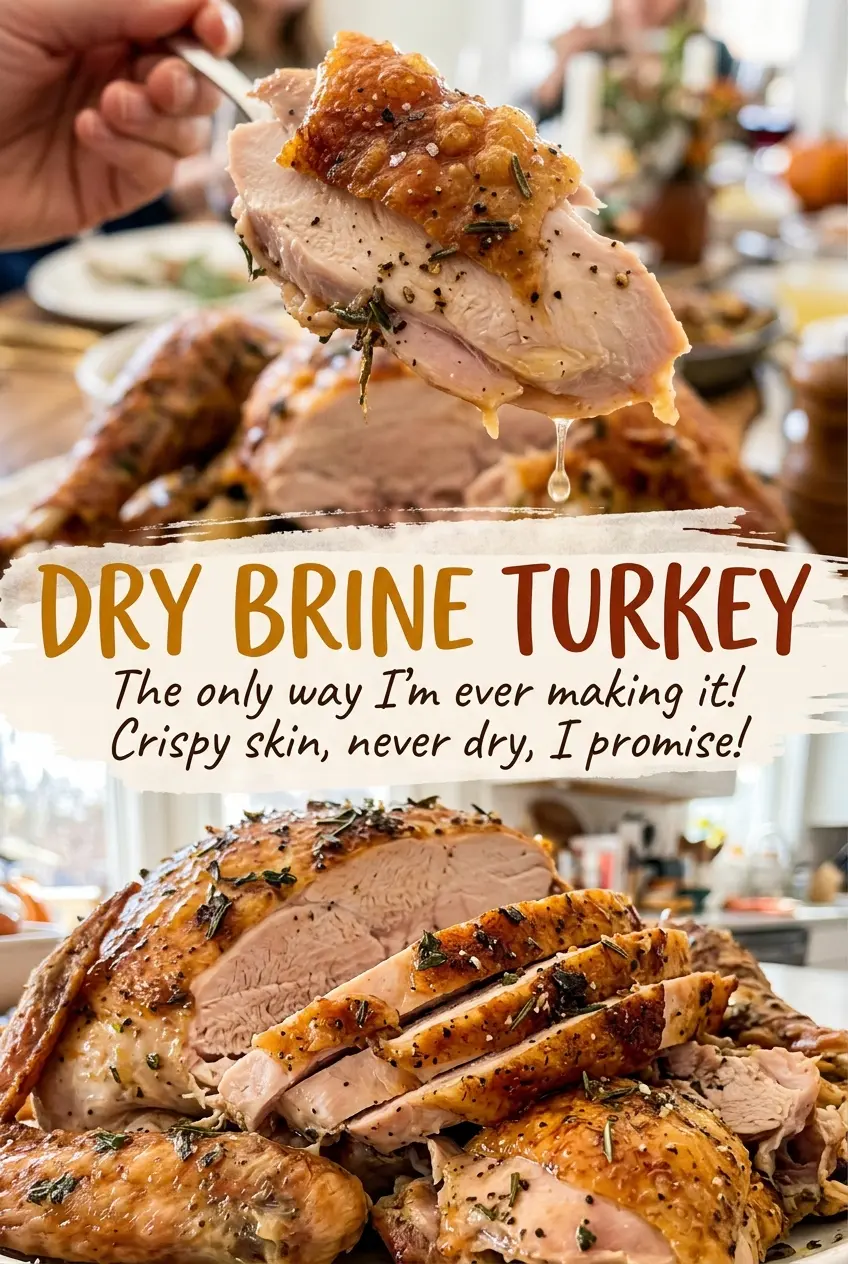
When the roasting pan goes into the oven, the turkey is still cool from the refrigerator and the skin has a dry, matte look. That’s the point of a dry brine: it seasons the meat without dunking the bird in a bucket of liquid. I use this method for a 12- to 14-pound turkey when I want the prep to stay simple and the skin to have a chance to brown in the oven.
The salt goes beneath the breast skin as well as over the outside, so the breast doesn’t rely on seasoning that only touches the surface. After that, there’s very little hands-on work: a coating of neutral oil, black pepper, and time in the oven. The hardest part is leaving the turkey alone long enough to rest before carving, while the kitchen smells like roasted turkey.
Kitchen Note
Loosen the breast skin a little at a time with your fingers instead of tugging hard. A small tear makes it harder to spread the salt beneath the skin evenly.
Save this dry brine turkey for a roast with well-seasoned meat and beautifully browned skin.
Why the Turkey Goes Into the Fridge Uncovered
The uncovered rest does more than give the salt time to season the meat. Air moving around the turkey helps the surface skin dry, which is useful once the bird reaches the oven. Damp skin has to lose that surface moisture before it can brown; a drier surface can start browning sooner. The refrigerator is doing two jobs while the brine works.
Set the bird breast-side up on a rack so air can reach the underside, too. Keep the roasting pan uncovered and leave room around it rather than wrapping the turkey or covering it with foil during the brining period. This is different from covering the breast later in the oven: foil during roasting is only there if the breast is getting too brown before the turkey is done. The distinction matters because covering the bird in the refrigerator traps moisture right where you want the skin to dry.
Use the full brining window rather than trying to compensate with extra salt. The time gives the salt a chance to move beyond the surface, while the open refrigerator air helps prepare the skin for roasting. Those are separate jobs, and this method gives each one room to work.
Why Diamond Crystal Salt and a Neutral Oil Fit This Turkey

- Whole turkey — Start with a fully thawed bird in the 12- to 14-pound range. A whole turkey gives you both the breast and thighs to roast together, so use the thermometer readings in both areas rather than judging doneness by the breast alone.
- Diamond Crystal kosher salt — This is the salt the measured amounts are calibrated for. Kosher salt brands have different crystal sizes and can pack differently into a spoon, so don’t assume another brand is an equal tablespoon-for-tablespoon swap. If you’re changing brands, use a reliable conversion for that specific salt.
- Neutral oil — Oil coats the skin before roasting and helps it brown. The inexpensive neutral oil you already keep in the pantry is fine; a strongly flavored oil would bring a flavor this simple seasoning doesn’t need.
- Black pepper — Pepper adds a warm, savory edge to the skin. Use the black pepper you have; the main thing is to distribute it over the outside after oiling rather than leaving it in one concentrated patch.
From Dry Brine to Carving Board: The Stages That Matter
Dry and Season the Bird
Remove the neck and giblets, then pat the turkey dry with paper towels. Don’t rinse it; rinsing can spread raw poultry juices around the sink and counter. Loosen the skin over the breast with your fingers, rub the salt underneath, then season all over, including inside the cavity. Use 3 tablespoons of salt for a 12-pound turkey and 3 1/2 tablespoons for a 14-pound turkey.
Give the Salt Its Refrigerator Time
Set the turkey breast-side up on the rack in a 16-by-13-inch roasting pan and refrigerate it uncovered for 24 to 48 hours. Keep the refrigerator at 40°F or below. The skin should stay uncovered throughout this rest; don’t wrap the pan or cover the turkey during the brining period.
Set Up the Oven and Season the Skin
Move an oven rack to the lower third of the oven and preheat to 325°F. Rub the neutral oil over the turkey skin, then sprinkle on the black pepper. Check that the turkey is sitting breast-side up on its rack before it goes into the oven, so the pan and rack support it evenly.
Roast Until Both Readings Are Ready
Roast for 3 to 3 3/4 hours. If the breast is browning too quickly, loosely cover it with foil; don’t wrap the whole turkey tightly. Check the thickest part of the breast and the innermost part of the thigh with a food thermometer, taking care not to touch bone. Both spots need to read 165°F before you take the turkey out.
Rest Before You Carve
Transfer the turkey to a carving board and let it rest for 30 minutes. Cutting right away lets more of the juices run onto the board instead of staying in the meat. Use the rest to get your carving tools ready, then carve once the turkey has had its full pause.
Two Small Changes for a Different Finish
Leave Out the Black Pepper
For a milder, pepper-free turkey, omit the black pepper and keep the rest of the method the same. The roast will still get its seasoning from the dry brine, but the skin won’t have pepper’s sharp, savory bite.
Use Just Enough Oil to Coat
If you prefer a less glossy skin, rub on only enough neutral oil to coat the surface instead of using the full amount. The turkey will still roast, though the skin may brown a little less evenly and won’t have quite the same sheen.
Storage and Reheating
- Refrigerator: Carve leftover meat into shallow containers and refrigerate within 2 hours. Use it within 3 to 4 days.
- Freezer: Wrap or pack portions airtight and freeze for 3 to 4 months for best quality. Thaw frozen leftovers in the refrigerator.
- Reheating: Warm slices covered in the microwave or in a covered baking dish until hot throughout. Heat only what you plan to eat; repeated reheating can dry out the breast.
Questions That Come Up While Dry-Brining a Turkey
Dry Brine Turkey
Ingredients
Equipment
Method
- Remove the neck and giblets from the turkey and pat it dry with paper towels; do not rinse it.
- Loosen the skin over the breast with your fingers and rub the salt under the skin and all over the turkey, including the cavity.
- Set the turkey breast-side up on the rack in a 16x13-inch roasting pan and refrigerate uncovered at 40°F or below for 24 to 48 hours, using 3 tablespoons salt for a 12-pound turkey and 3 1/2 tablespoons for a 14-pound turkey.
- Place an oven rack in the lower third of the oven and preheat the oven to 325°F.
- Rub the oil over the turkey skin and sprinkle with the black pepper.
- Roast for 3 to 3 3/4 hours, loosely covering the breast with foil if it browns too quickly, until a food thermometer reads 165°F in the thickest part of the breast and the innermost part of the thigh without touching bone.
- Transfer the turkey to a carving board and rest for 30 minutes before carving.