
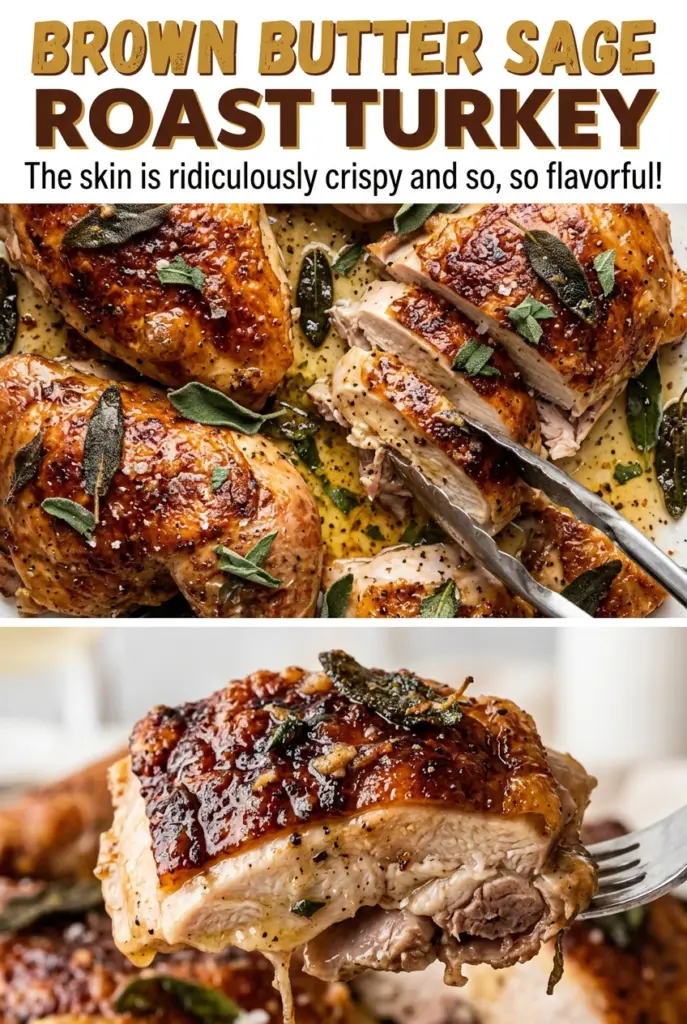
The butter shifts from pale yellow to amber in a few minutes, and the smell turns nutty just before it’s ready to come off the heat. That quick change is what gives this Brown Butter Sage Roast Turkey its deep, toasted aroma without adding another step to the roasting.
I cool the sage butter until it’s thick enough to stay where I spread it, then work half underneath the skin and the rest over the outside. That way, the breast and thighs get seasoned close to the meat, while the skin picks up the browned butter as it roasts.
With onion, lemon, and sage tucked into the cavity, the turkey roasts breast-side up until the thermometer gives a clear reading. After its rest, the skin is burnished and fragrant, and the meat is ready to carve.
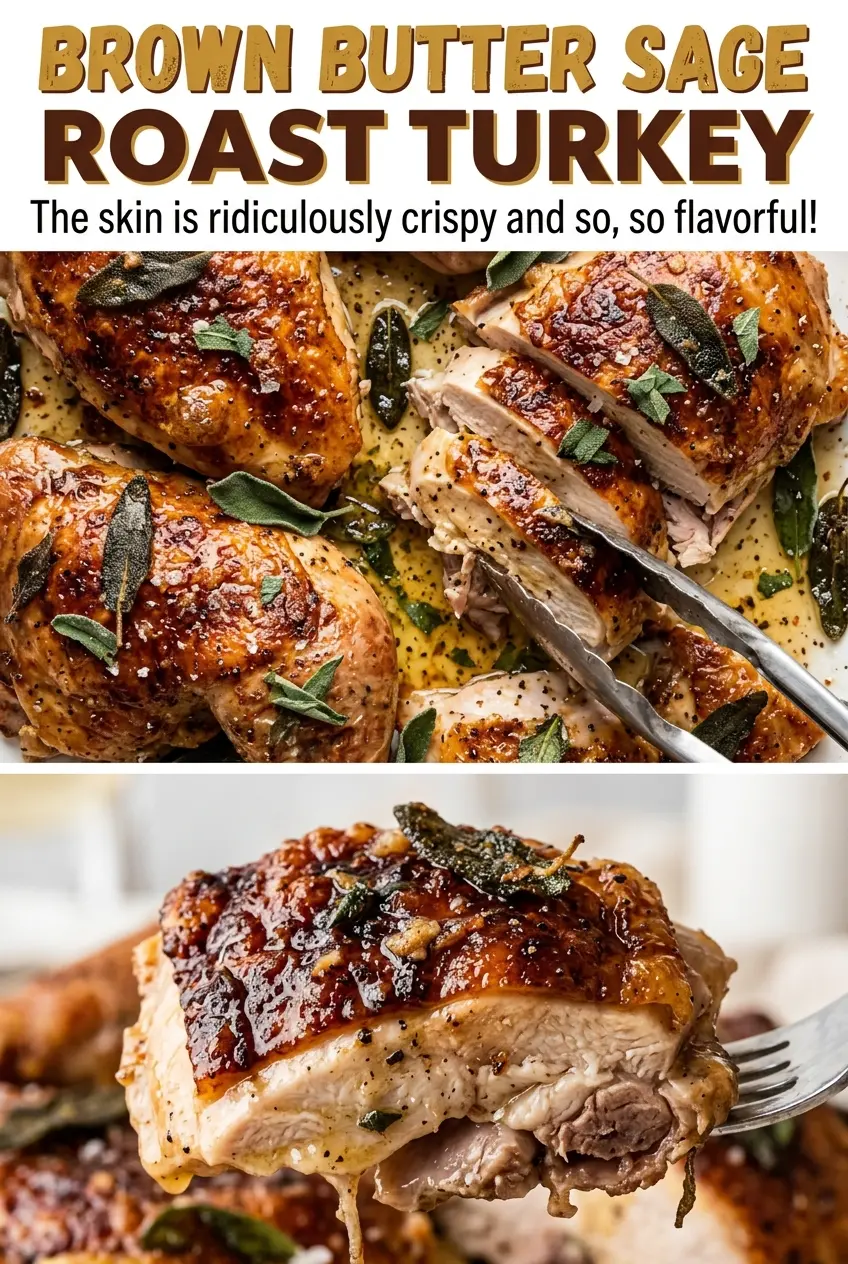
Kitchen Note
Don’t spread the sage butter while it’s still runny. After about 15 minutes, it should be thickened but spreadable, so it clings under the skin instead of sliding away.
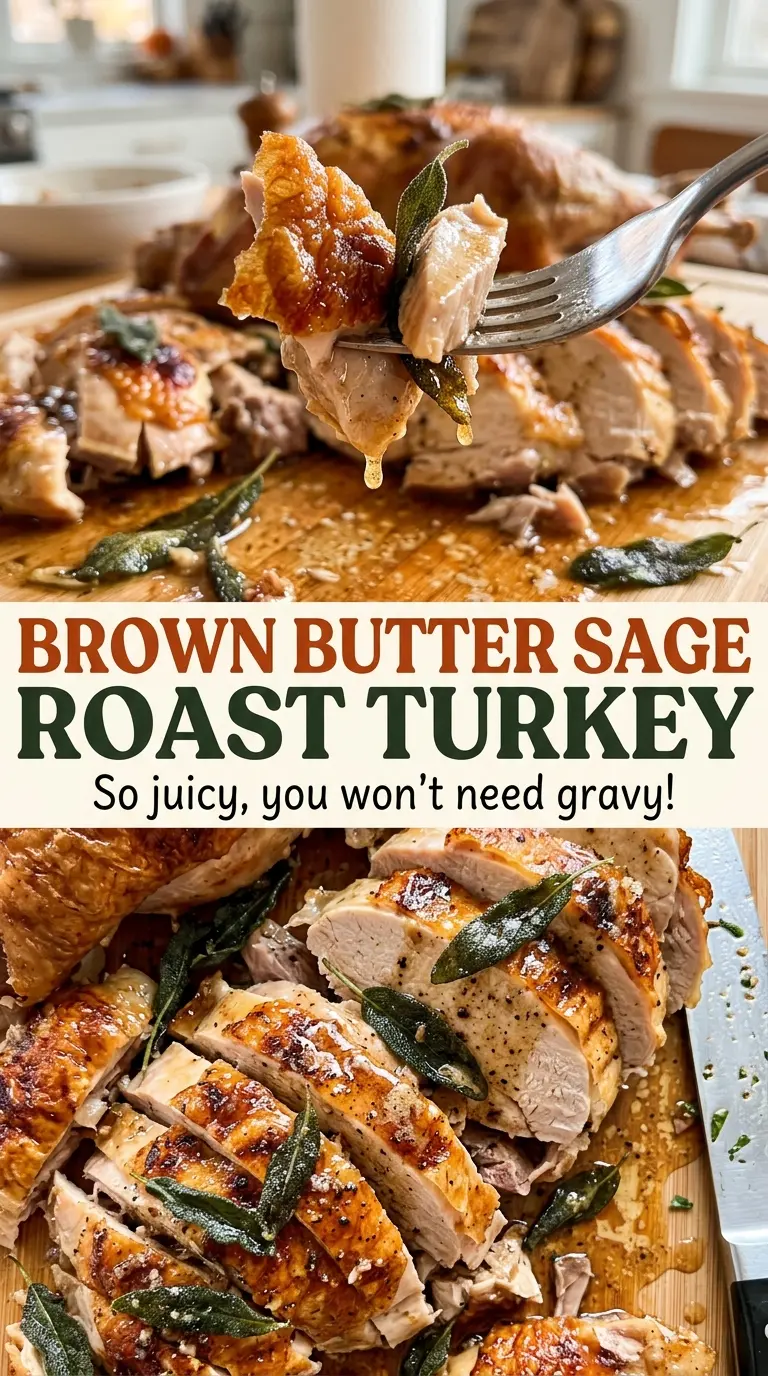
Save this Brown Butter Sage Roast Turkey for a centerpiece with nutty browned butter, fresh sage, and crisp, fragrant skin.
Why the Unbrined Turkey Matters to the Sage Butter
This turkey is unbrined, so its seasoning starts with the butter rather than with salt already added inside the meat. That gives the kosher salt in the sage butter a predictable job. A pre-brined or self-basting turkey has already been treated with salt, and layering the full seasoning over that can leave the finished bird too salty.
The butter goes in two places for a reason. Under the loosened skin, it sits close to the breast and thigh meat; on the outside, it browns against the skin. I don’t rely on the outside coating alone to season the bird, because a thick layer of butter on the skin can’t do the same job as getting some underneath.
Drying the turkey before adding the butter also keeps the coating from mixing with water on the surface. A damp bird makes the butter harder to spread evenly, and the skin won’t start with the same dry surface it needs for roasting. Those small choices—an unbrined bird, dry skin, and butter in both places—make the sage and browned-butter flavor come through clearly.
Fresh Sage and Unsalted Butter Carry the Roast
- Unsalted butter — This is the base for the browned, nutty coating, and unsalted butter keeps the salt level under your control. A standard store-brand unsalted butter works well; there’s no need for a specialty brand. Salted butter isn’t a direct swap because brands vary in salt content.
- Fresh sage — Finely chopped leaves flavor the butter, while the whole sprigs perfume the turkey cavity. Fresh leaves are worth choosing here: dried sage won’t give the butter the same fresh, leafy aroma or texture. Strip the leaves from the bunch and chop them finely so they’re distributed through the butter.
- Unbrined whole turkey — The seasoning is calibrated for a thawed bird without added salt, in the 12- to 14-pound range. Look for that unbrined description on the label; a pre-seasoned bird changes the salt balance. There isn’t a different cut that can be substituted and still use the same roasting time.
- Yellow onion and lemon — Quartering both gives them room to sit in the cavity with the sage sprigs, where they add their aroma as the bird roasts. Choose a fresh lemon with an intact peel and a firm onion. They’re cavity aromatics, not a replacement for the sage butter that seasons the turkey.
Brown the Butter, Coat the Bird, and Roast by Temperature
Watch for Amber Butter and a Nutty Smell
Set the oven to 325°F with a rack in the lower third. Melt the butter in a small saucepan over medium heat, swirling the pan occasionally for 3 to 5 minutes. It’s ready when it turns amber-brown and smells nutty; don’t wait for it to become dark brown, which can push the flavor toward bitter. Take it off the heat, stir in the chopped sage, kosher salt, and black pepper, then let it cool until thickened but spreadable, about 15 minutes.
Get the Butter Beneath the Skin
Pat the thawed turkey dry with paper towels before you add the butter. Gently loosen the skin over the breast and thighs with your fingers, taking care not to tear it. Rub half of the sage butter underneath the skin, then spread the rest over the outside of the bird. If the skin is still wet, the butter won’t coat it as evenly, so take the time to pat the surface dry first.
Set Up the Bird Breast-Side Up
Put the quartered onion and lemon, along with the sage sprigs, inside the cavity. Set a rack in a 16×13-inch roasting pan, place the turkey breast-side up on the rack, and tuck the wing tips under the body. Keeping the bird on the rack gives it a stable place to roast in the pan. Check that it’s sitting securely before the pan goes into the oven.
Roast Until the Thermometer Reaches 165°F
Roast for 3 to 3 3/4 hours, checking the thickest part of the breast and the innermost thigh with a thermometer without touching bone. The target is 165°F in both spots; the clock gives you a window, but the thermometer tells you when this bird is ready. If the skin browns too quickly before the meat reaches temperature, tent the turkey loosely with foil. Transfer it to a cutting board, tent it loosely with foil, and let it rest for 30 minutes before carving.
Two Simple Ways to Shift the Sage and Citrus
Put More Sage Under the Skin
For a more pronounced sage aroma in the meat and a gentler sage coating on the skin, stir the chopped sage into half of the browned butter and leave the other half plain. Spread the sage butter under the skin and the plain butter over the outside, keeping the salt and pepper in the same overall amounts. The turkey keeps its browned-butter finish, but the fresh sage is concentrated closer to the meat.
Make the Cavity More Lemon-Forward
Leave out the onion and put the quartered lemon and sage sprigs in the cavity. The aroma leans brighter and less sweet, while the sage-butter coating stays the same. This is a flavor change, not a reason to alter the roasting temperature or thermometer check.
Storage and Reheating
- Refrigerator: Store carved turkey in shallow, airtight containers within 2 hours; use it within 3 to 4 days. The skin softens in the refrigerator.
- Freezer: Freeze carved portions in airtight freezer-safe packaging for 2 to 6 months for best quality. The texture is best when the turkey is protected from air.
- Reheating: Reheat slices covered in a 325°F oven until they reach 165°F. Leaving them uncovered for the whole reheating time dries the lean breast meat.
Questions That Come Up Before This Turkey Goes in the Oven
Brown Butter Sage Roast Turkey
Ingredients
Equipment
Method
- Preheat the oven to 325°F with a rack in the lower third.
- Melt the butter in a small saucepan over medium heat, swirling occasionally, for 3 to 5 minutes until amber-brown and nutty-smelling.
- Remove the butter from the heat and stir in the chopped sage, salt, and pepper.
- Cool the sage butter until thickened but spreadable, about 15 minutes.
- Pat the turkey dry with paper towels.
- Gently loosen the skin over the breast and thighs with your fingers.
- Rub half of the sage butter under the skin.
- Spread the remaining butter over the outside of the turkey.
- Put the onion, lemon, and sage sprigs in the cavity.
- Set the turkey breast-side up on a rack in a 16x13-inch roasting pan and tuck the wing tips under the body.
- Roast for 3 to 3 3/4 hours, tenting loosely with foil if the skin browns too quickly, until a thermometer inserted into the thickest part of the breast and the innermost thigh without touching bone reads 165°F.
- Transfer the turkey to a cutting board and tent loosely with foil.
- Rest for 30 minutes before carving.