
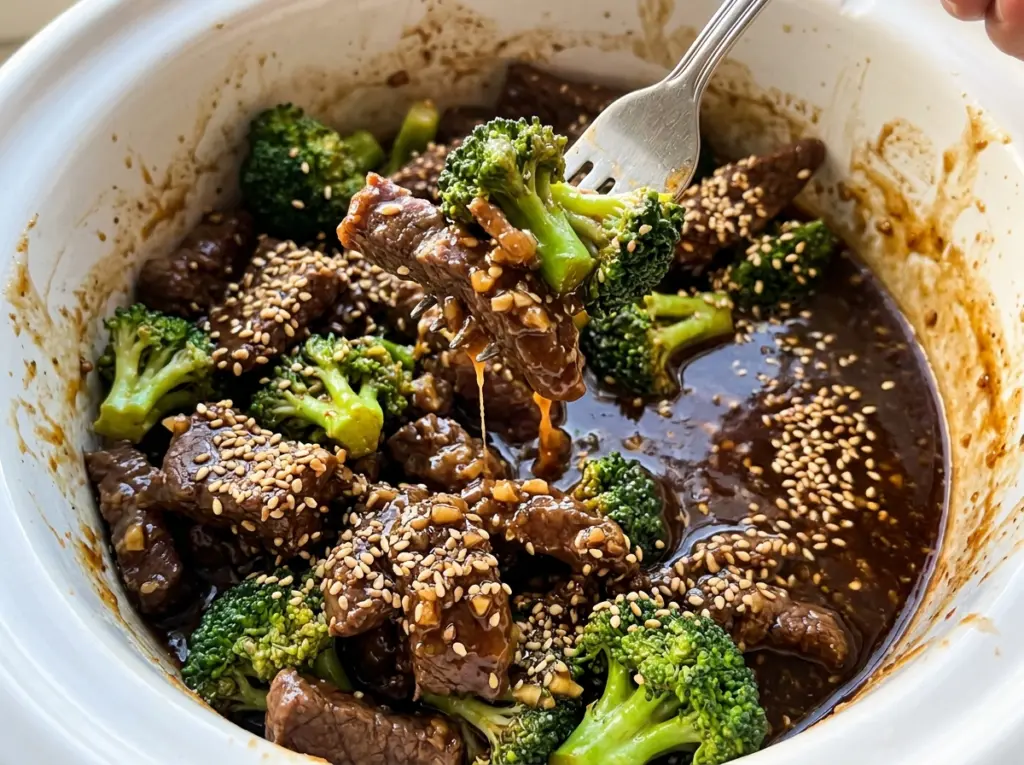
When the slow cooker has been going for a few hours, the beef broth, soy sauce, garlic, and ginger turn into a savory-sweet sauce that smells like it’s already doing its job. But the beef still needs to become tender, and broccoli left in that pot for the whole cook would lose its fresh bite. I make this Crockpot Beef and Broccoli in two stages so the chuck has time to soften while the broccoli stays crisp-tender.
The strips are cut to a consistent half-inch thickness, which helps them cook evenly in the slow cooker. Near the end, cornstarch mixed with cold water thickens the sauce as the broccoli cooks on HIGH. That means there’s no separate pan to clean and no need to guess when to add the vegetables. You’ll get six servings of tender beef, bright green broccoli, and a glossy sauce that clings instead of pooling thinly at the bottom.
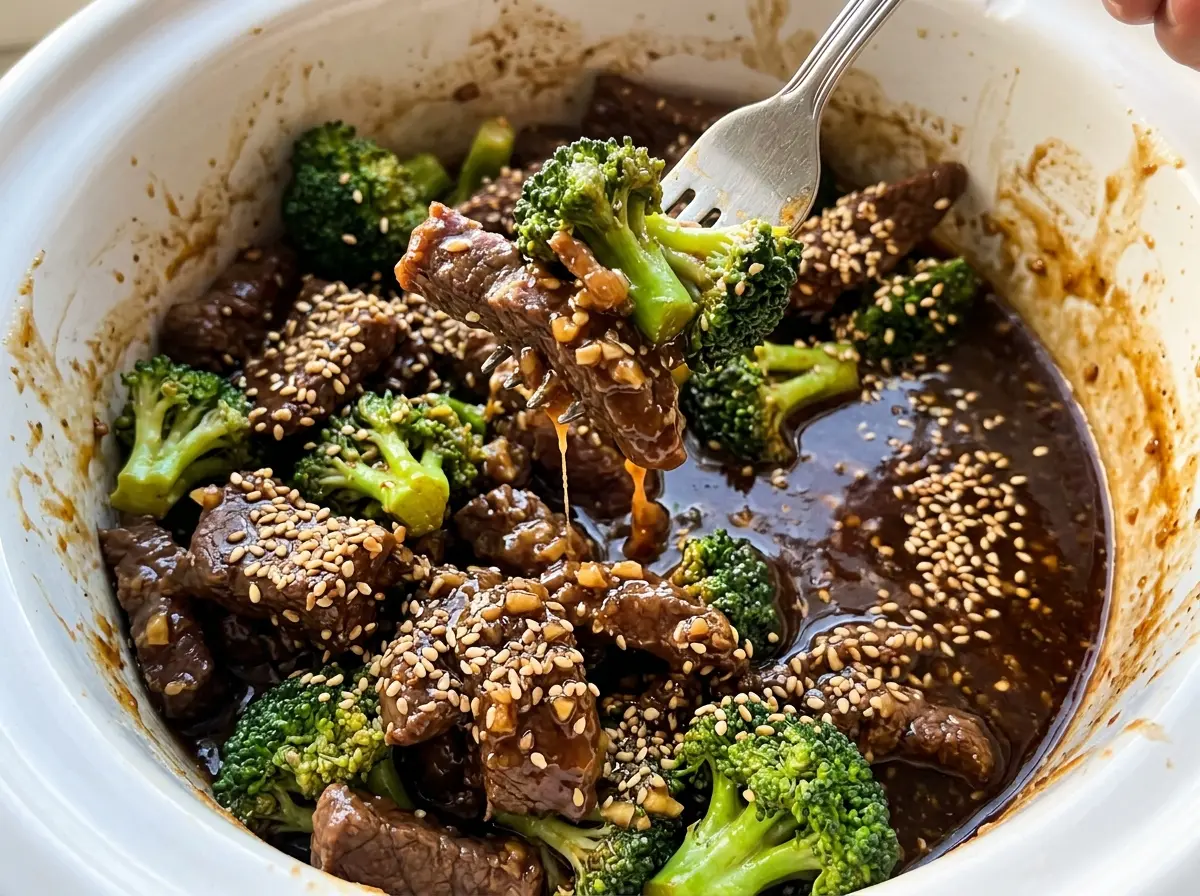
Kitchen Note
Whisk the cornstarch into cold water until the mixture is completely smooth before it goes into the cooker. Dry pockets turn into little lumps in the sauce, so take a few extra seconds to scrape the bottom and sides of the bowl.
Save this Crockpot Beef and Broccoli for a hands-off dinner with tender chuck, crisp-tender broccoli, and a thick, ginger-scented sauce.
Why the Broccoli Goes In After the Beef, Not at the Start
Broccoli needs a very different amount of time in the slow cooker than chuck roast does. The beef needs hours in the sauce to turn tender; florets left in for that full stretch would become overly soft and lose their fresh green color. Adding them at the finish gives them just enough time to cook through while keeping some bite.
The timing also lets the sauce thicken at the same time the vegetables cook. After the beef is tender, the cornstarch slurry and broccoli go into the cooker together, then everything cooks covered on HIGH for 20 to 30 minutes. The sauce has time to turn glossy, and the broccoli is ready when it’s crisp-tender rather than collapsing when you stir it. If you prefer softer broccoli, keep in mind that more time in the cooker changes its texture quickly; this timing is aimed at florets that still hold their shape.
That separate finish is what makes this feel more like beef and broccoli than a pot of beef stew with vegetables. The beef gets its slow, steady cook, while the broccoli and sauce come together at the end.
What the Beef, Soy, and Sesame Bring to the Sauce

- Beef chuck — Chuck has enough connective tissue to become tender during a slow cook, and trimming it before slicing keeps excess fat from collecting in the sauce. Cut the strips evenly so they cook at a similar pace; a lean steak won’t give the same slow-cooked texture.
- Low-sodium beef broth and soy sauce — These make the savory base, with the broth keeping the sauce from tasting too concentrated and the soy adding its fermented depth. Low-sodium versions matter here because the sauce reduces and concentrates as it cooks. If beef broth isn’t available, water works as a replacement, though the finished sauce will taste less beefy.
- Light brown sugar — The sugar softens the salty edge of the soy sauce and rounds out the ginger and garlic. Dark brown sugar can stand in at the same amount for a deeper molasses note; the sauce will taste a little richer.
- Toasted sesame oil — Its roasted aroma is much more noticeable than the flavor of plain oil, so use toasted sesame oil for the intended nutty finish. It’s worth checking the bottle; regular sesame oil won’t bring the same aroma.
- Garlic and fresh ginger — Freshly minced garlic and grated ginger give the sauce a brighter, more fragrant lift than dried seasonings. Grate the ginger finely so it disperses instead of leaving fibrous pieces in the finished sauce.
- Broccoli florets — Use florets that are close in size so they finish together. Fresh broccoli is the best fit for the crisp-tender finish; very large pieces take longer to cook through than small ones.
- Cornstarch — This gives the sauce a smooth, glossy thickness without needing a separate stovetop step. Keep the water cold when making the slurry; adding dry cornstarch directly to the cooker makes lumps more likely.
Getting Tender Beef and Thick Sauce in the Slow Cooker
Cut the Chuck Into Even Strips
Trim the boneless chuck roast, then cut it into half-inch strips. Keeping the pieces similar in thickness helps them cook more evenly rather than leaving thin strips dry while thicker ones are still firm. Put the beef in a 6-quart slow cooker, spreading it out rather than piling it into one tight mound. A little space between pieces lets the sauce move around the beef.
Whisk Together the Savory-Sweet Sauce
In a bowl, whisk the beef broth, soy sauce, packed light brown sugar, toasted sesame oil, minced garlic, and grated ginger until the sugar is incorporated. Scrape the bottom of the bowl if any sugar settles there. Pour the mixture evenly over the beef so the strips are coated. The sauce will look thin at this stage; that’s expected before the cornstarch goes in.
Let the Chuck Cook Until Tender
Cover the slow cooker and cook on LOW for 4 to 5 hours or on HIGH for 2 to 3 hours, until the beef is tender. Slow cookers can run a little differently, so use tenderness as your cue within the time range rather than expecting every piece to change at the exact same minute. If the strips still feel firm when pressed with a fork, they need more time. Don’t add the broccoli during this long cook.
Thicken the Sauce as the Broccoli Finishes
Whisk the cornstarch and cold water in a small bowl until smooth, then stir the slurry and broccoli florets into the slow cooker. Cover and cook on HIGH for 20 to 30 minutes. The sauce should look thicker and cling to the beef, while the broccoli should be crisp-tender. If the florets are still too firm at the end of that window, give them a little more time and check again rather than stirring hard and breaking them apart.
When Soy Sauce or Broccoli Needs a Swap
Make It Gluten-Free With Tamari
Replace the soy sauce with the same amount of gluten-free tamari, checking that the bottle is labeled gluten-free. Tamari keeps the savory, fermented character of the sauce, though the exact saltiness varies by brand. The beef and broccoli method stays the same.
Trade Broccoli for Cauliflower
Use cauliflower florets in place of the broccoli, cutting them into small, even pieces so they cook through during the final covered cook. They’ll be milder and less green-tasting, with a slightly denser bite. Check for tenderness near the end of the 20-to-30-minute finish, since larger florets take longer.
Storage and Reheating
- Refrigerator: Store leftovers in an airtight container for 3 to 4 days. The broccoli will soften as it sits in the sauce.
- Freezer: Freeze cooled portions in airtight, freezer-safe containers for up to 2 to 3 months. The beef and sauce freeze well, but the broccoli will be softer after thawing.
- Reheating: Reheat gently in a covered saucepan over low heat or in the microwave, stirring partway through, until the leftovers reach 165°F. Avoid prolonged high heat, which can make the beef tough and the broccoli mushy.
Questions I Get Asked About Crockpot Beef and Broccoli
Crockpot Beef and Broccoli
Ingredients
Equipment
Method
- Put the beef strips in a 6-quart slow cooker.
- Whisk together the beef broth, soy sauce, brown sugar, sesame oil, garlic, and ginger.
- Pour the mixture over the beef.
- Cover and cook on LOW for 4 to 5 hours or HIGH for 2 to 3 hours, until the beef is tender.
- Whisk the cornstarch and cold water in a small bowl until smooth.
- Stir the slurry and broccoli florets into the slow cooker.
- Cover and cook on HIGH for 20 to 30 minutes, until the broccoli is crisp-tender and the sauce has thickened.