
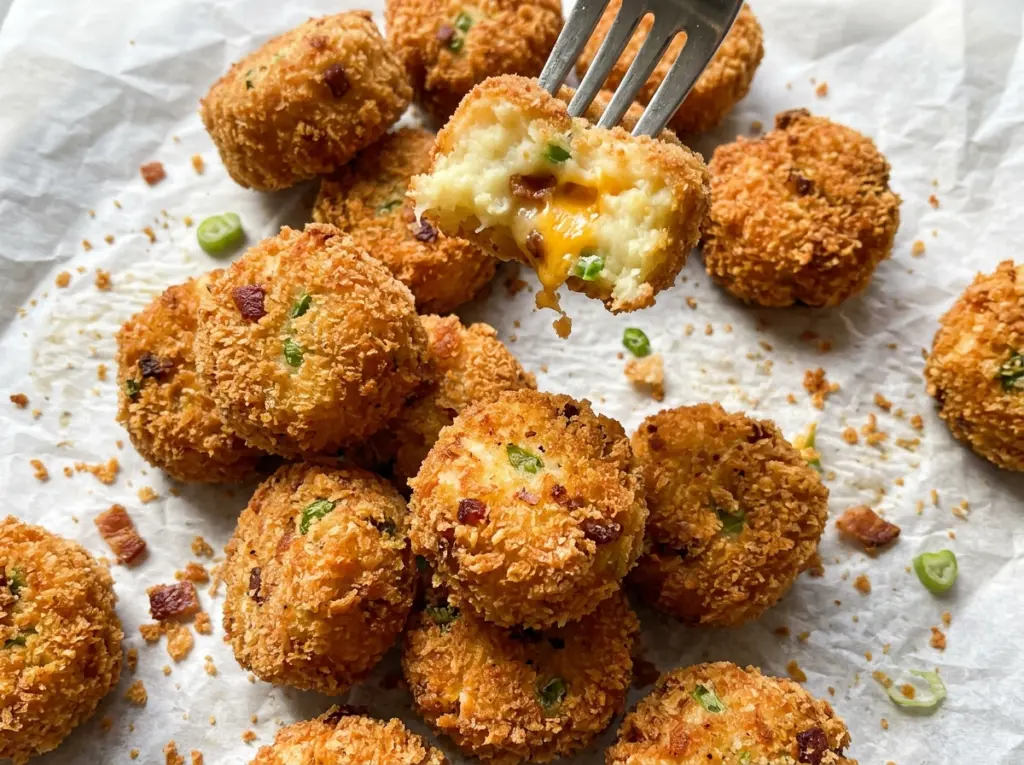
The panko turns deep gold before the potato center has a chance to dry out, so these bites come out with a crisp shell and a soft middle. I make these crispy fried mashed potato bites when I want mashed potatoes to feel like a snack you can pick up, not another scoop on the plate. Sharp cheddar melts into the potato, and thinly sliced scallions keep each bite from tasting too rich.
The texture depends on getting extra moisture out of the potatoes before they’re mashed, then giving the mixture time to cool and firm up. I spread the mash out to cool rather than leaving it in a hot pile; once it’s no longer warm, the cheese and egg fold in without turning the mixture loose. A short rest in the refrigerator makes the balls easier to shape and bread. Each one gets flour, egg, then panko before it goes into hot oil.
Kitchen Note
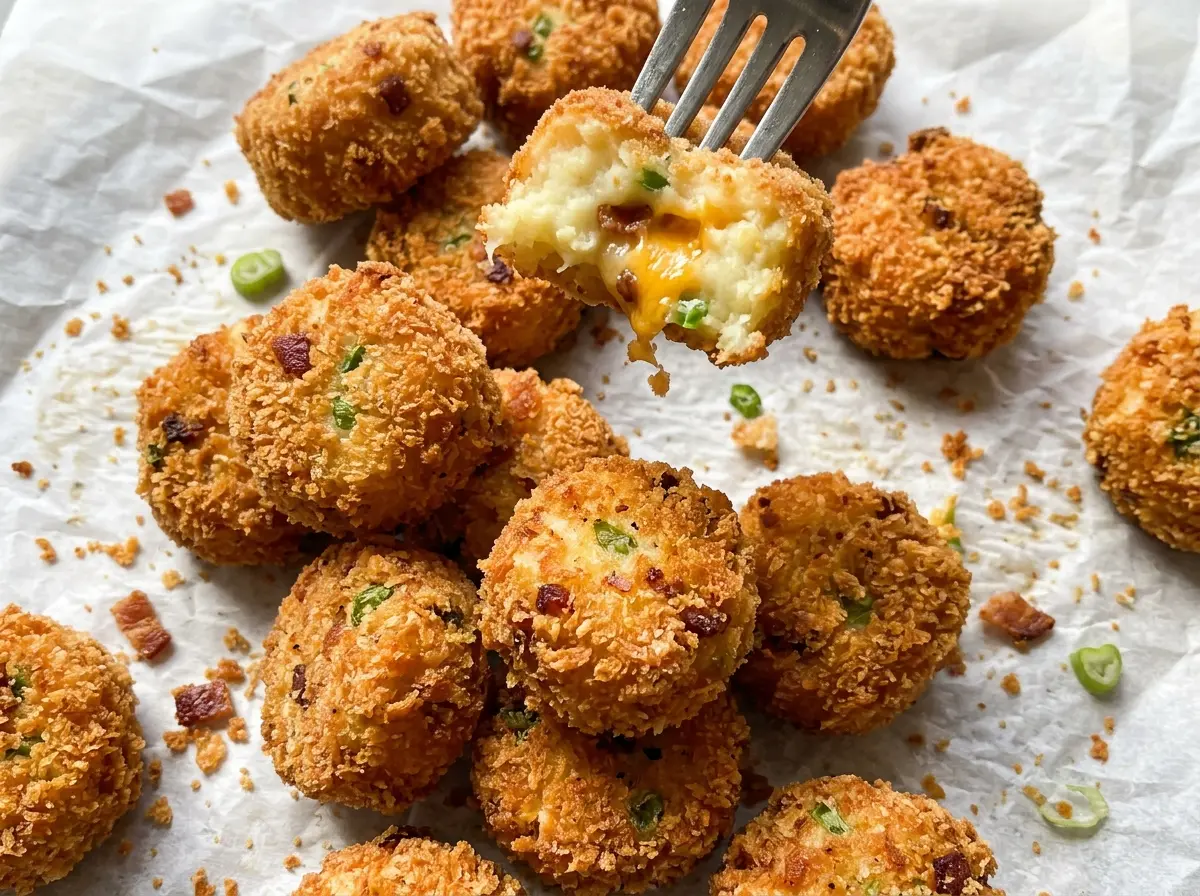
Let the fried bites rest on a wire rack for five minutes before serving. The rack lets air circulate around the crust, so the bottoms stay crisp instead of softening against a flat surface.
Save these crispy fried mashed potato bites for their crunchy panko crust and cheddar-filled centers.
Why These Potato Bites Fall Apart Before the Crust Sets
A potato mixture that’s too wet is hard to shape into neat balls, and it can make the coating slip instead of clinging. Russets absorb water as they cook, but the surface moisture left after boiling still matters. Draining well and returning the potatoes to the saucepan over low heat for a minute drives off that excess. The goal isn’t to brown or scorch them; it’s to get rid of the wet sheen before mashing.
Cooling does a different job. Warm mash softens the cheddar and makes the egg harder to incorporate evenly, leaving you with a softer mixture that’s awkward to handle. Spreading the mash in a shallow dish gives it room to lose heat, and the refrigerator firms it after the cheese, scallions, flour, and egg are folded in. If the mixture feels sticky when you shape it, give it more time to chill rather than adding extra flour; extra flour can make the centers dense.
What the Russets, Cheddar, and Panko Each Bring

- Russet potatoes — Their starchy texture makes a mash that holds together once chilled. Waxy potatoes tend to make a denser, less fluffy center, so stick with russets here. Peel them and cut the pieces evenly so they cook at the same pace.
- Warm milk and unsalted butter — Butter adds richness, while warm milk loosens the mash without cooling it abruptly. Standard grocery-store butter and whole milk work well; the milk needs to be warm, not hot. A lower-fat milk will make the mash less rich.
- Sharp cheddar and scallions — Sharp cheddar brings a distinct savory note that stands up to the potato, while scallions add a mild onion flavor. A regular supermarket sharp cheddar is fine; there’s no need for specialty cheese. Slice the scallions thinly so they distribute through the mixture instead of making large weak spots in the bites.
- All-purpose flour and eggs — A little flour and one beaten egg help the potato mixture hold together, while the separate flour and egg bowls build the outside coating. Keep those jobs distinct: flour first, then the egg mixture, so the panko has a surface to cling to.
- Panko — Its larger, airy flakes give the bites their rough, crisp shell. Fine breadcrumbs make a tighter, less craggy coating, so they won’t give quite the same crunch. Use a plain panko; the recipe’s cheddar and scallions already season the center.
- Vegetable oil — Use a neutral oil for frying so the potato, cheddar, and scallion flavors come through. A deep-fry thermometer is more dependable than guessing from the burner setting, since oil temperature changes as each batch goes in.
From Smooth Mash to a Deep-Golden Crust
Boil the potatoes, then dry them in the pan
Put the peeled, 1-inch potato pieces in a 3-quart saucepan, cover them with cold water by 1 inch, and add the cooking-water salt. Bring the water to a boil, reduce it to a simmer, and cook for 12 to 15 minutes, until a fork slides into the potatoes easily. Drain them well, return them to the pan, and cook over low heat for 1 minute while shaking the pan. Don’t skip that brief drying step; visible water left on the potatoes works against a firm mixture.
Mash, cool, and chill until workable
Mash the potatoes with the butter, warm milk, salt, and pepper until smooth, then spread the mash in a shallow dish. Let it cool until it’s no longer warm, about 20 to 30 minutes. Fold in the cheddar and scallions, followed by the flour and one beaten egg, until evenly combined. Cover the bowl and refrigerate the mixture for 30 minutes so it firms before shaping.
Shape and coat each bite evenly
Shape the chilled mixture into 24 balls, about 1 1/2 inches wide. Set out three shallow bowls: one with the remaining flour, one with the two remaining eggs beaten with water, and one with panko. Roll each ball in flour, dip it in egg, then coat it all over with panko. Check for bare patches before setting each breaded bite on a tray; exposed potato won’t have the same protective crust.
Fry in small batches until deep gold
Heat the vegetable oil in a 4-quart Dutch oven to 350°F, checking the temperature with a deep-fry thermometer. Fry 5 or 6 bites at a time for 2 to 3 minutes, turning as needed, until the panko is deep golden brown. Crowding the pot can pull the oil temperature down, so let it return to 350°F between batches. Transfer each batch to a wire rack and let the bites rest for 5 minutes before serving.
Easy Ways to Adapt the Potato Bites
Make them gluten-free
Replace the all-purpose flour with a gluten-free 1:1 flour blend in both the potato mixture and the dredging bowls, using the same amounts, and use gluten-free panko for the coating. The potato centers stay tender, though the crumb can be a little more delicate, so turn the bites gently as they fry.
Leave out the scallions
For a milder, more cheddar-forward bite, omit the scallions and keep the rest of the mixture and coating the same. The potato mixture will still hold together with the egg and flour, and the result tastes more like a crisp cheddar-potato snack.
Storage and Reheating
- Refrigerator: Store cooked, cooled bites in an airtight container for 3 to 4 days. The panko will soften in the refrigerator.
- Freezer: Freeze cooked bites in a single layer until firm, then transfer them to an airtight freezer container for up to 2 months. Thawing can soften the crust, so reheat from frozen for a crisper result.
- Reheating: Reheat on a wire rack in a 350°F oven until hot throughout and the center reaches 165°F. The microwave is quicker but softens the panko coating.
Questions That Come Up While Making These Bites
Crispy Fried Mashed Potato Bites
Ingredients
Equipment
Method
- Put the potatoes in a 3-quart saucepan, cover with cold water by 1 inch, and add the tablespoon of kosher salt.
- Bring to a boil, reduce the heat to a simmer, and cook for 12 to 15 minutes, until fork-tender.
- Drain the potatoes well and return them to the saucepan.
- Cook over low heat for 1 minute, shaking the pan, to steam off excess moisture.
- Mash with the butter, warm milk, 1/2 teaspoon salt, and pepper.
- Spread the mashed potatoes in a shallow dish and cool until no longer warm, about 20 to 30 minutes.
- Transfer the cooled potatoes to a bowl and fold in the cheddar and scallions.
- Fold in the 1/4 cup flour and 1 beaten egg.
- Cover and refrigerate for 30 minutes.
- Shape the chilled mixture into 24 balls, about 1 1/2 inches wide.
- Set out three shallow bowls with the remaining 1/2 cup flour, the 2 remaining eggs beaten with the water, and the panko.
- Roll each ball in flour, dip it in the egg mixture, and coat it evenly with panko.
- Place the breaded bites on a tray.
- Heat the vegetable oil in a 4-quart Dutch oven to 350°F, using a deep-fry thermometer to check the temperature.
- Fry the bites in batches of 5 or 6 for 2 to 3 minutes, turning as needed, until deep golden brown; let the oil return to 350°F between batches.
- Transfer the bites to a wire rack to drain and let them rest for 5 minutes before serving.