
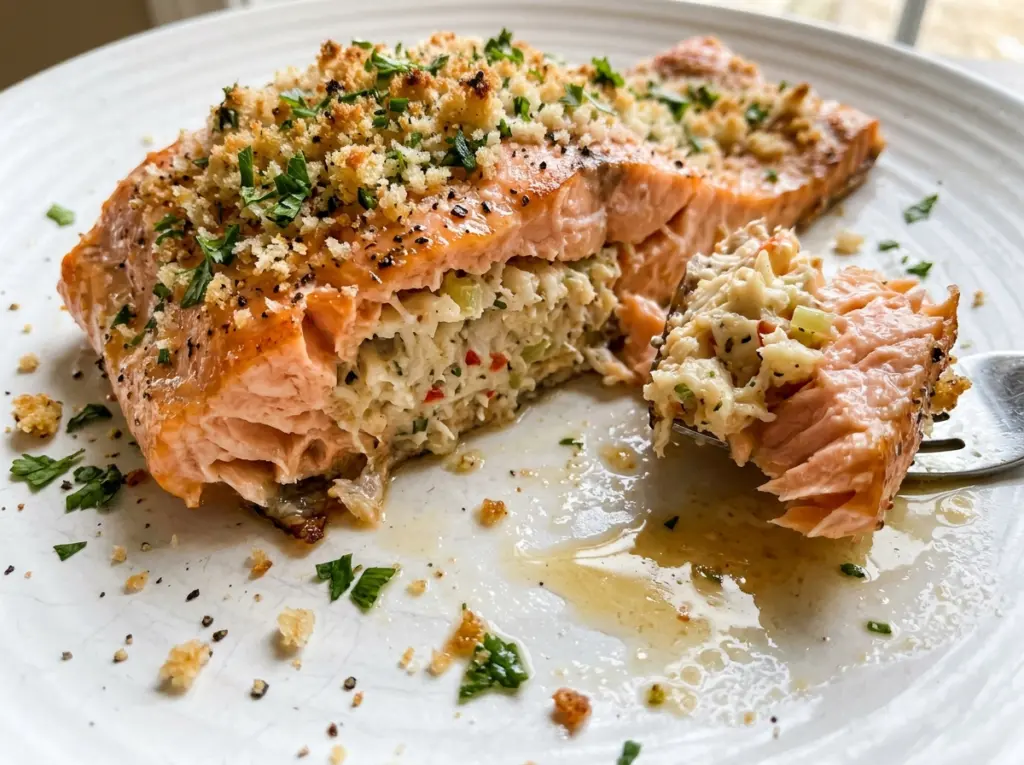
When the salmon comes out of the oven, the crab should still be tucked into a pocket rather than spread in a wet layer across the pan. I cut into the thick side of each fillet and leave one edge intact, which gives the filling a place to sit while the fish bakes. These crab stuffed salmon fillets bring together tender center-cut salmon and a lightly seasoned crab filling without needing a separate sauce.
The filling comes together with a gentle fold, not a vigorous stir. That keeps the lump crab in pieces, while panko and mayonnaise help the mixture hold together inside the salmon. A little Dijon, lemon, green onion, parsley, and Old Bay season the crab without burying its flavor. The finished fish is opaque and flakes easily, with the filling warm in the center and a bright, savory bite.
Kitchen Note
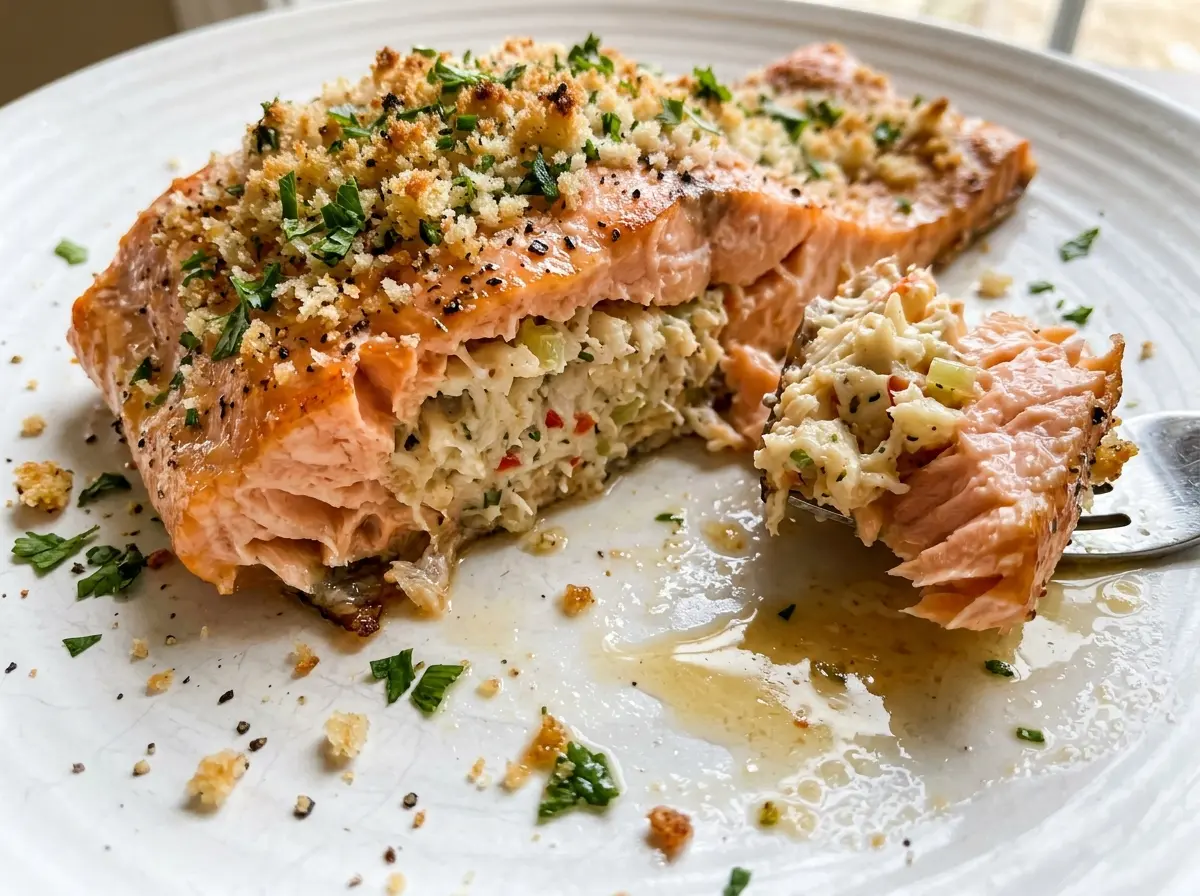
Give the salmon its full five-minute rest after baking. The fillets firm up a little as they sit, so the crab stays nestled in place when you move them from the dish.
Save this crab stuffed salmon for a dinner that pairs tender baked fish with a savory, lemony crab center.
Why a Deep Pocket Beats a Slit Across the Top
A slit across the top gives the crab filling nowhere to settle. It can slide over the sides as the salmon cooks, and the fish and filling don’t bake as one tidy portion. Cutting horizontally into the thick side creates a small cavity with a hinge, so the filling sits inside the fillet instead of riding on top.
The center-cut shape matters here, too. Fillets about 1 1/2 inches thick have enough depth for that pocket and enough salmon around it to hold its shape in the baking dish. A thinner piece is harder to stuff neatly, and it has less room for the crab without opening through the other side. Keeping the opening facing up also gives the filling a stable place to stay while the salmon bakes. It’s a small difference in how you cut the fish, but it changes how cleanly the finished portions lift from the dish.
What the Crab Filling Needs from Each Ingredient
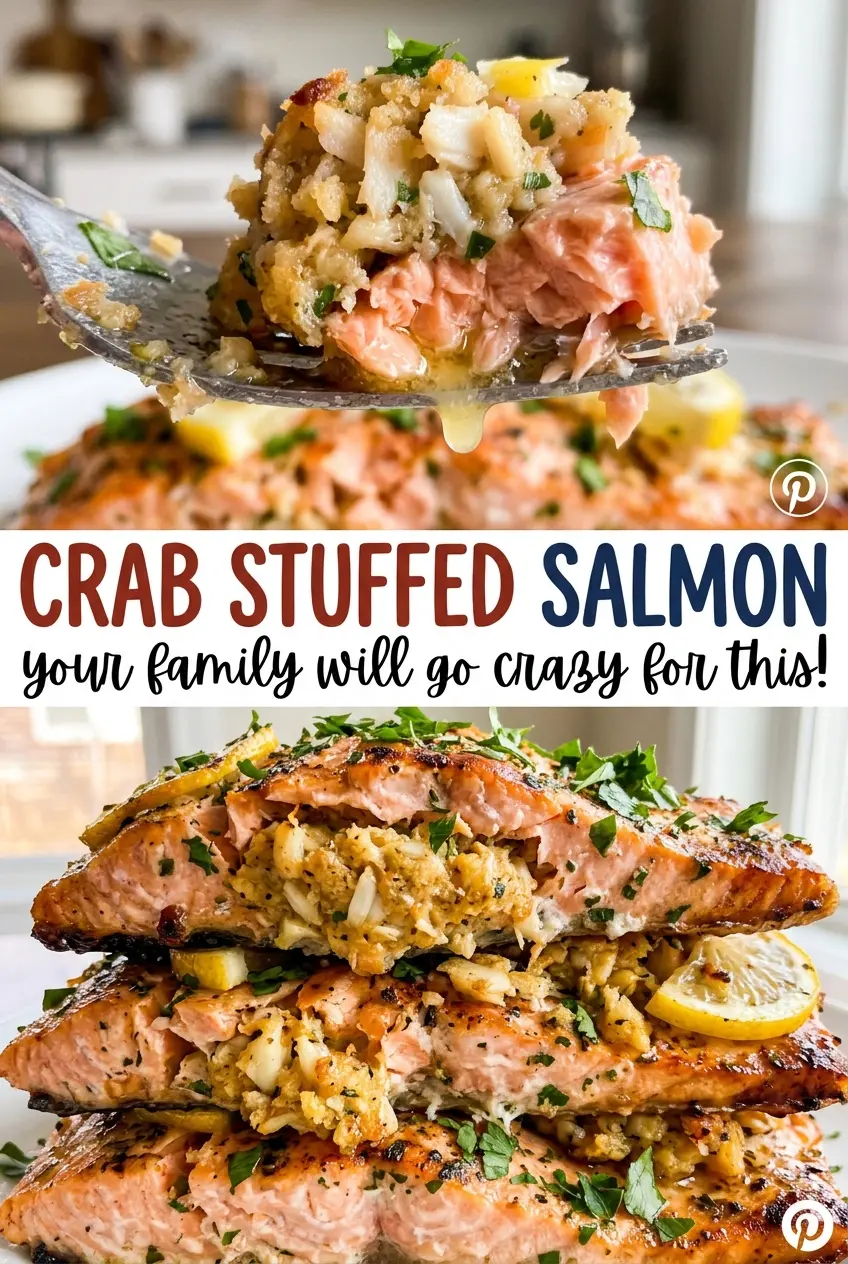
- Lump crabmeat — Pick through it for shells before mixing, even when the package says it’s ready to use. Lump pieces give the filling its tender, meaty texture; finely shredded or imitation crab won’t give the same result. Refrigerated or canned lump crab works, but drain canned crab well so excess liquid doesn’t loosen the mixture.
- Panko breadcrumbs — These absorb some of the moisture from the crab and mayonnaise while keeping the filling lighter than fine breadcrumbs. Regular breadcrumbs can stand in at the same measure, though they make a more compact filling. For a gluten-free version, use gluten-free panko.
- Mayonnaise — Mayo binds the crab and brings enough richness to keep the filling cohesive. A thinner substitute such as sour cream can make the mixture loose, so I’d keep the mayonnaise here. A good everyday mayonnaise is fine; there’s no need for a specialty brand.
- Dijon mustard and lemon juice — Dijon adds a gentle tang, and lemon brightens the crab so the filling doesn’t taste heavy. Their sharpness is part of the balance; leaving both out makes the crab mixture flatter. Fresh lemon juice gives a clean, lively note.
- Green onion, parsley, and Old Bay — Thinly sliced green onion adds a mild savory bite, parsley keeps the filling fresh, and Old Bay gives it a familiar seafood seasoning. Fresh parsley is worth using for its brighter flavor. Old Bay is distinctive, so another seasoning won’t taste quite the same.
Stuffing the Salmon Without Losing the Crab Filling
Fold the Filling Gently
In a medium bowl, combine the lump crabmeat, panko, mayonnaise, Dijon, lemon juice, green onion, parsley, and Old Bay. Fold until the ingredients are just combined rather than stirring hard. You want the mixture cohesive, but the crab should still have recognizable pieces. Mixing too vigorously turns those tender lumps into a paste.
Cut a Pocket in the Thick Side
Heat the oven to 400°F and lightly grease a 9×13-inch baking dish with the olive oil. Pat each salmon fillet dry, then season both sides with kosher salt and black pepper. Cut horizontally into the thick side of each fillet, stopping before the knife reaches the opposite side so the pocket remains closed at the back. A steady, shallow cut is easier to control than trying to force the knife through in one deep slice.
Fill and Bake with the Openings Up
Divide the crab mixture among the salmon pockets, then arrange the fillets in the prepared dish with their openings facing up. Bake for 18 to 22 minutes. The salmon should look opaque and flake easily; check the thickest part of each fillet with an instant-read thermometer and look for 145°F. Put the thermometer into the salmon flesh, not the crab filling, since the filling won’t tell you whether the fish itself has reached the right temperature.
Let the Portions Set Before Serving
Take the dish from the oven and rest the salmon for five minutes before serving. The fillets are delicate right out of the oven, and that short pause makes them easier to lift without the crab spilling from the pockets. Use a thin spatula to transfer each portion from the baking dish.
Simple Changes for Different Tables
Make the Crab Filling Gluten-Free
Swap the panko for gluten-free panko, keeping the listed measure the same. It still gives the filling light structure, though the exact crunch depends on the brand. Check that the other packaged ingredients suit your needs.
Let the Crab Taste More Forward
Leave out the Old Bay for a gentler, less seasoned filling. You’ll lose its signature savory seafood seasoning, but the crab, Dijon, and lemon still give the stuffing plenty of character.
Storage and Reheating
- Refrigerator: Refrigerate leftovers within two hours in a covered container and eat them within 3 to 4 days. The panko softens as it sits, so the filling won’t have the same light texture.
- Freezer: I don’t recommend freezing the baked portions. The salmon can dry out, and the mayonnaise-based filling may become watery after thawing.
- Reheating: Cover and warm in the oven or microwave until the center reaches 165°F. Gentle heat helps keep the salmon moist; high heat can dry the fish before the filling warms through.
Questions That Come Up When Making Crab Stuffed Salmon
Crab Stuffed Salmon
Ingredients
Equipment
Method
- Preheat the oven to 400°F.
- In a medium bowl, gently fold together the crabmeat, panko, mayonnaise, Dijon mustard, lemon juice, green onion, parsley, and Old Bay seasoning until combined.
- Lightly grease a 9x13-inch baking dish with the olive oil.
- Pat the salmon dry and season both sides with the salt and pepper.
- Cut a pocket horizontally into the thick side of each fillet without cutting through the opposite side.
- Divide the crab mixture among the pockets.
- Place the fillets in the baking dish with the openings facing up.
- Bake for 18-22 minutes, until the salmon is opaque and flakes easily and the thickest part of each fillet registers 145°F on an instant-read thermometer; insert the thermometer into the salmon flesh, not the filling.
- Rest the salmon for 5 minutes before serving.