
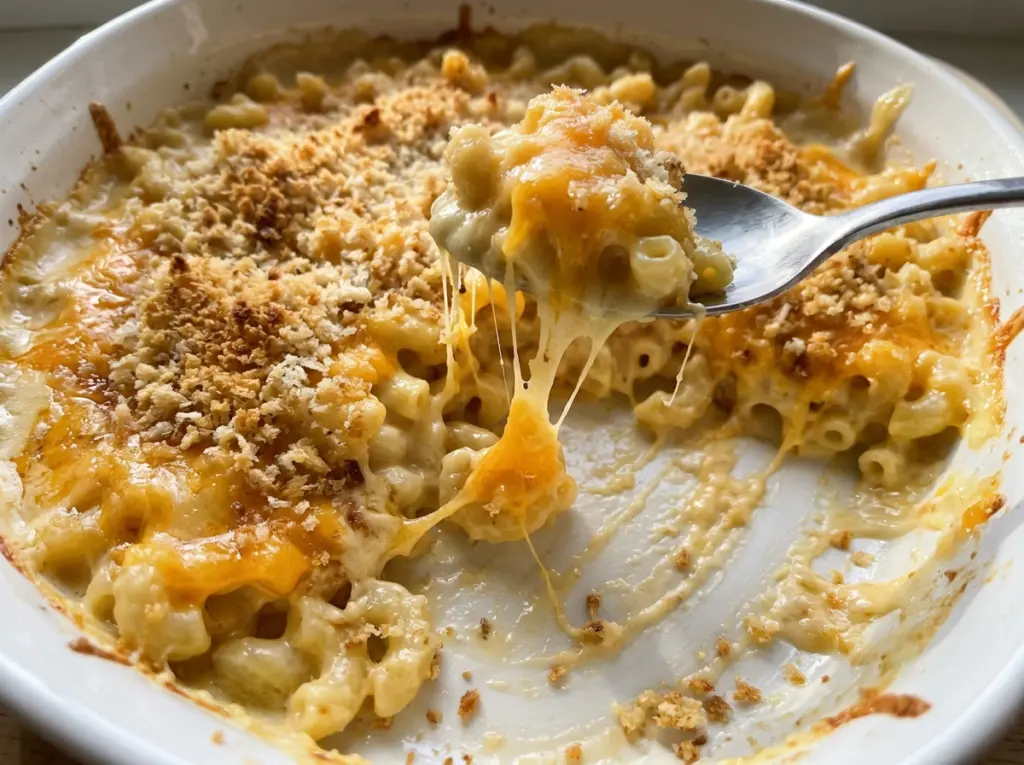
The first thing I watch is the edge of the dish: when the cheese sauce starts bubbling there and the panko turns golden, the middle is ready to come out. Baking it just long enough gives you a crisp top without sacrificing the creamy macaroni underneath. That balance is what I want from classic creamy baked macaroni and cheese.
I cook the elbows only until they’re just al dente before they meet the sauce, because they’ll soften a little more in the oven. The sauce starts with a quick butter-and-flour roux, then whole milk makes it rich enough to coat the pasta without turning stiff. Freshly shredded sharp cheddar melts into it after the pan comes off the heat, so the cheese stays smooth and the finished bake has plenty of cheddar flavor.
Kitchen Note
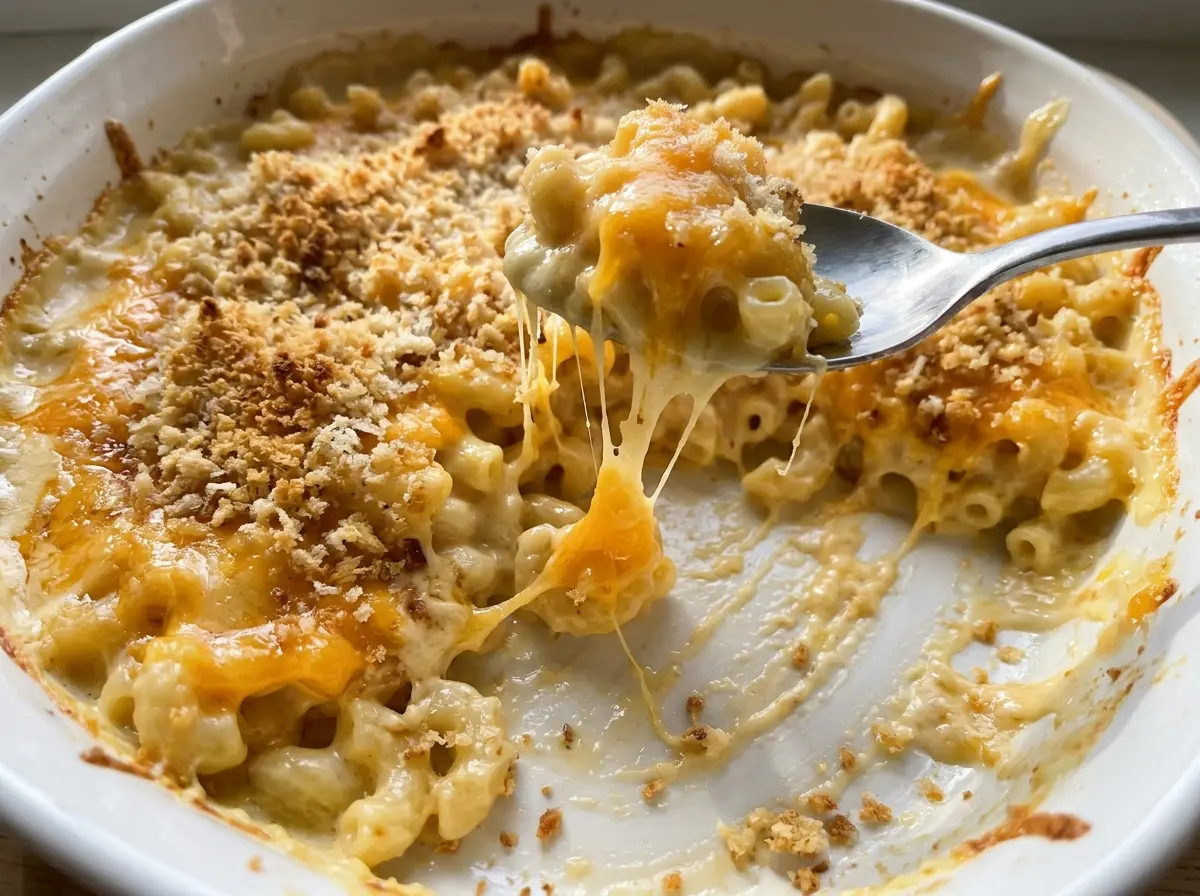
Give the baked macaroni the full 10-minute rest before serving. The sauce settles around the elbows during that pause, so a scoop holds together instead of sliding apart while it’s piping hot.
Save this classic baked macaroni and cheese for its creamy cheddar sauce and golden, buttery panko top.
Why the Sauce Should Coat a Spoon, Not Stand Up Like Paste
A baked macaroni dish keeps cooking after the sauce and pasta leave the stovetop. The elbows absorb some of that sauce in the oven, and the heat tightens the cheese mixture further. If you thicken the milk sauce until it’s stiff before adding the pasta, the finished bake can feel heavy and dry rather than creamy.
Look for a sauce that clings to the back of a spoon but still moves easily when you whisk it. That’s a useful middle ground: thick enough to stay with the macaroni, loose enough to account for the time in the oven. The pasta also needs a little room to finish softening, which is why I stop at just al dente instead of cooking it until tender.
The balance matters more than getting a dense sauce on the stove. Once the macaroni is coated, the cheese sauce and pasta bake together; at the end, bubbling edges tell you the center has heated through, while the panko gives the top its crisp contrast.
What the Cheddar, Milk, and Panko Each Bring to the Dish
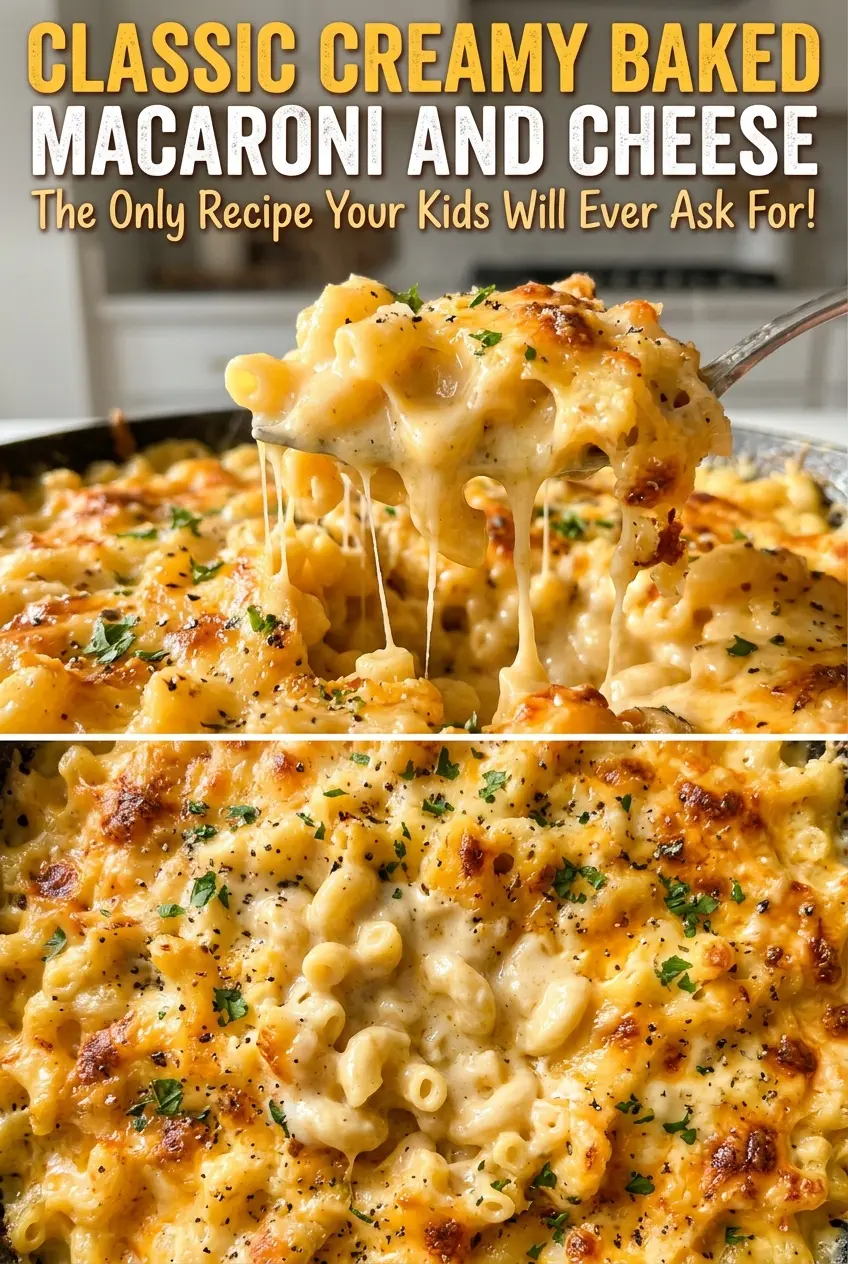
- Elbow macaroni — Its short curves catch sauce inside and out, so each forkful gets a good coating. Another short pasta can work, but choose one with ridges or curves rather than a long, smooth shape.
- Whole milk and all-purpose flour — Together they make the creamy base: the flour thickens the milk, while whole milk gives it a fuller texture. Lower-fat milk can make a thinner, less rich sauce; if that’s what you have, watch the sauce cue rather than expecting it to feel as lush.
- Sharp cheddar — It brings the familiar tangy cheese flavor and melts into the warm sauce. Buy a block and shred it at home for the smoothest result; the store brand is fine, but pre-shredded cheese often contains coatings that can keep the sauce from feeling quite as silky.
- Dry mustard and black pepper — They keep the cheddar from tasting flat without making the sauce taste like mustard. Dry mustard is the right form here; prepared mustard adds liquid and a different flavor.
- Panko and butter — Panko makes a light, crisp topping, and butter helps it brown evenly. Regular breadcrumbs can stand in, but they make a finer, denser crust rather than the airy crunch panko gives.
Building the Sauce and Getting the Golden Top
Stop the elbows while they still have a little bite
Bring a large pot of water to a boil, add the kosher salt and elbow macaroni, and cook for 7–8 minutes, until just al dente. The pasta should bend but still have a slight firmness at the center; it’ll soften more as it bakes. Drain it well so extra water doesn’t thin the cheese sauce.
Cook the roux before adding the milk
Melt 4 tablespoons of butter in a large saucepan over medium heat, then whisk in the flour. Keep whisking and cook for 1 minute, until the mixture looks smooth and smells lightly buttery rather than raw. If flour remains in little clumps, work them out before the milk goes in.
Whisk the milk in gradually, then melt in the cheddar
Add the whole milk gradually while whisking, then cook for 5–8 minutes, whisking often. The sauce is ready when it thickens and coats the back of a spoon; it shouldn’t look lumpy or stiff. Take the saucepan off the heat before stirring in the dry mustard, kosher salt, black pepper, and freshly shredded cheddar, and keep stirring until the cheese has melted.
Top the macaroni and bake until the edges bubble
Stir the drained macaroni into the cheese sauce and transfer it to a greased 9×13-inch baking dish. Melt the remaining butter, toss it with the panko, and scatter the crumbs evenly over the top so you don’t leave bare patches. Bake uncovered at 350°F for 20–25 minutes, until the edges bubble and the top is golden, then let it rest for 10 minutes before serving.
Two Changes That Still Keep the Comforting Baked-Mac Texture
Make it gluten-free without losing the crunchy top
Use gluten-free elbow pasta, a gluten-free all-purpose flour blend, and gluten-free panko in place of their wheat-based counterparts. Keep the pasta just al dente, since gluten-free shapes can soften quickly, and check the sauce as it thickens because flour blends vary. The result keeps the creamy-cheddar-and-crisp-crumb contrast, though the pasta may have a slightly different bite.
Trade some cheddar for Gruyère
Replace half of the sharp cheddar with freshly shredded Gruyère while keeping the total cheese amount the same. The sauce stays rich and melts smoothly, but the flavor shifts from distinctly tangy cheddar toward a nuttier, more mellow finish. Shred both cheeses yourself so they melt evenly into the sauce.
Storage and Reheating
- Refrigerator: Store leftovers in a covered container for 3–4 days. The sauce firms up when cold, and the panko topping loses some of its crunch.
- Freezer: Freeze cooled portions in airtight containers for up to 2 months for best quality. Thaw overnight in the refrigerator; expect a softer topping and a slightly less silky sauce.
- Reheating: Cover portions and warm them in a 325°F oven until the center reaches 165°F. Avoid reheating uncovered for too long, which can dry out the pasta before the middle is hot.
Questions That Come Up When Making Baked Macaroni and Cheese
Classic Creamy Baked Macaroni and Cheese
Ingredients
Equipment
Method
- Heat the oven to 350°F.
- Coat a 9x13-inch baking dish with cooking spray.
- Bring a large pot of water to a boil.
- Add the 2 teaspoons kosher salt and 1 pound elbow macaroni, and cook for 7–8 minutes, until just al dente.
- Drain the macaroni well.
- Melt 4 tablespoons of the unsalted butter in a large saucepan over medium heat.
- Whisk in the all-purpose flour and cook for 1 minute.
- Gradually whisk in the whole milk and cook, whisking often, for 5–8 minutes, until the sauce thickens and coats the back of a spoon.
- Remove the saucepan from the heat.
- Stir in the dry mustard, 3/4 teaspoon kosher salt, black pepper, and sharp cheddar cheese until the cheese is melted.
- Stir the drained macaroni into the cheese sauce.
- Transfer the mixture to the prepared baking dish.
- Melt the remaining 2 tablespoons unsalted butter.
- Toss the melted butter with the panko breadcrumbs.
- Sprinkle the panko mixture evenly over the macaroni.
- Bake uncovered for 20–25 minutes, until bubbling at the edges and golden on top.
- Rest for 10 minutes before serving.