
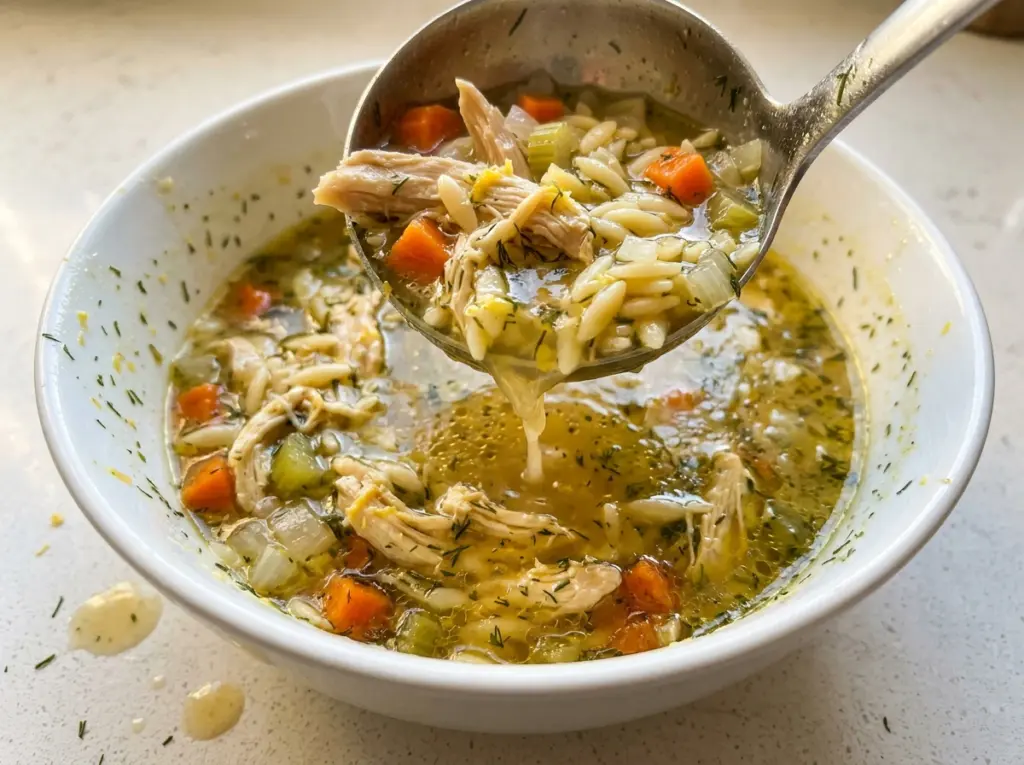
As soon as orzo hits simmering broth, it starts soaking up the liquid around it. That’s lovely when it’s just tender, but the timing matters in chicken lemon orzo soup: cook the pasta alongside the chicken and it can turn soft before the chicken is ready. I cook the chicken first, then let the orzo take its turn in the same flavorful broth.
The vegetables soften in olive oil before garlic and broth go in, giving the soup a gentle savory base without browning or rushing the aromatics. Boneless chicken breasts simmer right in that broth, and fresh lemon juice and dill go in after the heat is off. The finish tastes bright and herby, not cooked down or heavy.
It’s a practical one-pot soup, but each ingredient gets its moment. The chicken stays tender enough to shred, and the orzo makes every spoonful satisfying without hiding the fresh lemon and dill.
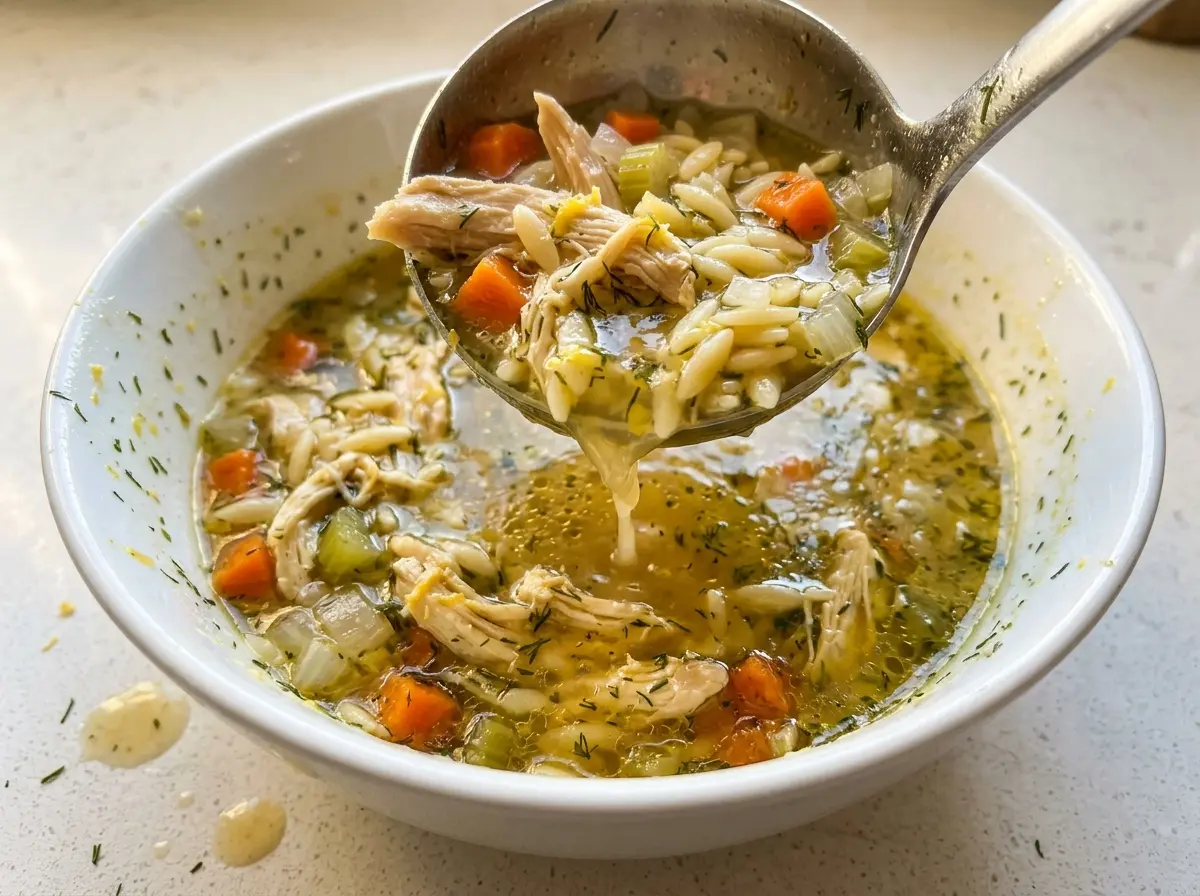
Kitchen Note
Give the soup its full two-minute rest after the lemon and dill go in. That short pause lets the fresh dill settle into the broth instead of tasting like it was just tossed on top.
Save this chicken lemon orzo soup for a bright, brothy dinner with tender chicken and a fresh dill finish.
Why the Orzo Goes In Only After the Chicken Comes Out
Chicken breasts and orzo don’t need the same amount of time in the pot. The chicken needs a longer, gentle simmer to cook through, while the orzo becomes tender in just a few minutes. Putting them in together would leave the pasta waiting in hot broth while the chicken finishes, and pasta that keeps sitting in liquid gets softer as it absorbs more of it.
Taking the chicken out solves both timing problems at once. It gives the orzo room to cook directly in the broth, where it picks up the flavor of the onion, carrots, celery, garlic, and chicken. Meanwhile, the cooked chicken rests on a plate instead of simmering longer than it needs to. Once the orzo is tender, shredding the chicken and returning it to the pot brings the soup back together without asking either ingredient to overcook.
This order also makes the doneness cues easier to read. You can check the chicken’s thickest part before removing it, then focus on the orzo’s texture while it cooks. The pasta should be tender, not left to simmer while you finish shredding the chicken.
The Ingredients That Keep Lemon, Dill, and Broth in Balance

- Low-sodium chicken broth — It gives the chicken and vegetables room to season the soup without the broth starting out overly salty. A store-brand carton works well here; the low-sodium choice matters more than buying a premium brand because it leaves you control over the finished seasoning.
- Boneless, skinless chicken breasts — They cook directly in the broth and shred easily when done. Keeping them whole for simmering helps them stay moist; cutting them up beforehand changes how quickly they cook and makes the doneness cue less straightforward.
- Dry orzo — This small pasta cooks quickly and gives the broth a soft, substantial feel. Use dry orzo for the timing in this method; fresh pasta would cook differently and won’t follow the same window.
- Fresh lemon juice — Freshly squeezed juice has a clean, bright edge that bottled juice doesn’t fully match. Since lemon is part of the final flavor rather than just background acidity, fresh is worth choosing when you can.
- Fresh dill — Dill gives the soup its distinctive fresh, green finish. Chopping it shortly before it goes into the pot helps preserve its aroma; dried dill won’t bring the same fresh-herb character.
- Yellow onion, carrots, celery, and garlic — These build the savory base before the broth is added. Cut the onion into an even dice and slice the carrots and celery consistently so the vegetables soften at about the same pace. Fresh garlic is especially noticeable here because it cooks briefly before the liquid goes in.
Build the Broth First, Then Let the Orzo Take Its Turn
Soften the vegetables without browning them
Warm the olive oil in a 6-quart pot over medium heat, then add the diced onion and sliced carrots and celery. Cook for 5 to 7 minutes, stirring occasionally, until the vegetables have softened. You’re looking for a gentle, even sizzle rather than dark, browned edges. If the pot is too hot, lower the heat so the vegetables soften instead of catching on the bottom.
Wake up the garlic, then simmer the chicken
Stir in the minced garlic and cook for 30 seconds, just until fragrant; garlic can turn bitter if it browns. Pour in the broth, then add the chicken breasts, kosher salt, black pepper, and bay leaf. Bring the pot to a boil, then reduce the heat and simmer uncovered for 15 to 22 minutes. Check the thickest part of the chicken and remove it when it reaches 165°F.
Cook the orzo in the seasoned broth
Transfer the chicken to a plate before stirring the dry orzo into the simmering broth. Cook for 8 to 10 minutes, stirring occasionally, until the orzo is tender. Keep the broth at a simmer rather than a hard boil, which can make the pasta cook unevenly. Start checking near the shorter end of the cooking window so the orzo doesn’t slip past tender.
Shred, return, and finish off the heat
Remove and discard the bay leaf, then shred the chicken with two forks and return it to the pot. Turn off the heat before stirring in the fresh lemon juice and chopped dill. The lemon and herbs go in at the end so their fresh flavors stay distinct in the hot broth. Let the soup rest for 2 minutes before serving.
Small Changes That Keep This Soup’s Bright, Brothy Character
Use gluten-free orzo for a gluten-free version
Replace the regular orzo with gluten-free orzo and follow its package cooking time, checking for tenderness as it cooks. Different gluten-free pastas can absorb broth and release starch differently, so the soup’s texture may not be exactly the same, but the lemon, dill, chicken, and vegetable base still fit together.
Keep the chicken in larger shreds
When shredding with two forks, stop while the chicken is still in broad, tender pieces instead of pulling it into fine strands. The flavor stays the same, but each spoonful has a more noticeable piece of chicken alongside the small orzo.
Storage and Reheating
- Refrigerator: Refrigerate leftovers within 2 hours and keep them in a covered container for 3 to 4 days. The orzo will continue to absorb broth, so the soup will be thicker after chilling.
- Freezer: The soup can be frozen in an airtight freezer-safe container for 2 to 3 months. The chicken and broth freeze well, though the orzo will be softer after thawing.
- Reheating: Warm it gently in a saucepan, stirring occasionally, until it’s steaming hot throughout and reaches 165°F. Avoid a hard boil, which can make the orzo softer.
Answers to the Questions That Come Up With Lemon Orzo Soup
Chicken Lemon Orzo Soup with Fresh Dill
Ingredients
Equipment
Method
- Heat the olive oil in a 6-quart pot over medium heat, then add the onion, carrots, and celery and cook for 5 to 7 minutes, stirring occasionally, until softened.
- Add the garlic and cook for 30 seconds, stirring, until fragrant.
- Pour in the broth and add the chicken, salt, pepper, and bay leaf.
- Bring the soup to a boil, then reduce the heat and simmer uncovered for 15 to 22 minutes, until the thickest part of the chicken reaches 165°F.
- Transfer the chicken to a plate.
- Stir the orzo into the simmering broth and cook for 8 to 10 minutes, stirring occasionally, until the orzo is tender.
- Remove and discard the bay leaf.
- Shred the chicken with two forks and return it to the pot.
- Turn off the heat and stir in the lemon juice and dill.
- Let the soup rest for 2 minutes before serving.