
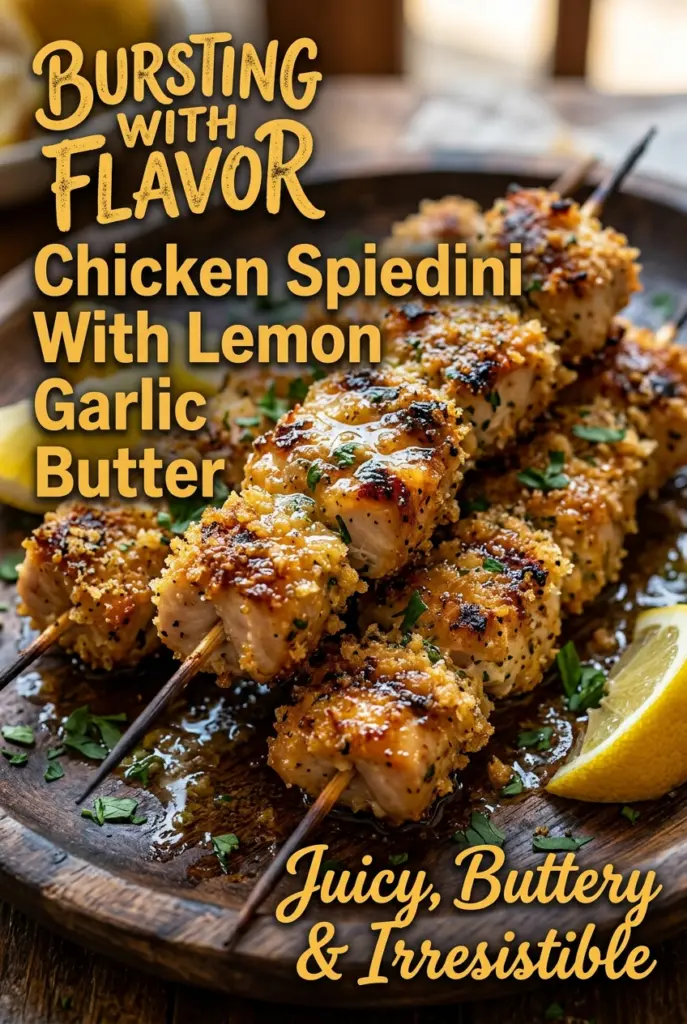
Juicy chicken wrapped in a crisp, savory breadcrumb coating and finished with lemon garlic butter has a way of disappearing fast. The chicken stays tender because the pieces are small enough to cook quickly, while the breadcrumb-Parmesan mix gives you that lightly textured crust that clings to the skewers instead of falling off into the grill. Then the butter sauce cuts through everything with brightness and just enough richness to make each bite feel finished.
The details matter here. A short marinade seasons the chicken all the way through, and it also gives the breadcrumbs something to grab onto. The skewers help the chicken cook evenly and make turning easier, but the real payoff is that the coating toasts while the inside stays juicy. The lemon garlic butter goes on at the end, not during grilling, so the garlic stays sweet and the butter doesn’t burn on the heat.
Below, I’ve included the small adjustments that keep this recipe from turning dry or soggy, plus a few variations if you want to adapt it for a different diet or an easier weeknight schedule.
The breadcrumb coating stayed on the chicken and the lemon garlic butter soaked in without making it greasy. I used metal skewers and the chicken was cooked through in right around 11 minutes.
Love the crisp-skewered chicken and lemon garlic butter finish? Save this Chicken Spiedini for the nights when you want a grilled dinner that tastes special without extra fuss.
The Breadcrumb Coating Needs Heat, Not Patience
With chicken spiedini, the biggest mistake is treating the breadcrumb layer like a breaded cutlet. It isn’t. The chicken is cut into chunks and threaded on skewers, so the coating is meant to be light and textured, not thick and fully enclosed. If you pack on too much, the crumbs slide off before the chicken has a chance to brown.
The grill needs to be hot enough to toast the exterior fast while the chicken finishes cooking through. Medium-high heat gives you those browned edges without drying out the meat. If the grill is too cool, the breadcrumbs absorb moisture, turn pasty, and never develop that crisp finish that makes the dish worth repeating.
- The marinade does two jobs at once: it seasons the meat and helps the crumb mixture cling.
- Thread the pieces with a little space between them so heat can move around each chunk.
- Turn the skewers gently. Dragging them across the grates can strip off the coating.
- Pull the chicken as soon as it hits 165°F. Past that point, the breasts tighten up fast.
What Each Ingredient Is Actually Doing in This Dish
The chicken breasts need to be cut into even chunks so they cook at the same pace. If some pieces are much larger than others, the small ones dry out before the bigger ones are done. Chicken thighs can work here if you want a richer result, but they’ll need a little more attention on the grill because the fat renders differently.
Italian seasoned breadcrumbs bring more than texture; they carry herbs and salt through the crust so every bite tastes seasoned. Parmesan adds a nutty edge and helps the coating brown. If you only have plain breadcrumbs, add a little extra Italian seasoning and a pinch more salt, but know the flavor will be less rounded.
Butter is the base of the sauce, and it needs to be unsalted so you can control the seasoning after the lemon goes in. Fresh lemon juice matters more than bottled here because the sauce is short and simple. Garlic should be cooked just long enough to smell sweet and fragrant. If it browns, the sauce turns sharp and bitter.
Building the Skewers and Finishing the Sauce
Marinate the Chicken Briefly
Stir the olive oil, lemon juice, garlic, Italian seasoning, salt, and pepper together first, then coat the chicken evenly. Thirty minutes is enough to season the surface and start tenderizing without changing the texture of the meat. Longer isn’t better here because too much acid can make the outside turn a little mealy. Keep the pieces cold while they marinate so they stay firm enough to skewer cleanly.
Coat Before Grilling
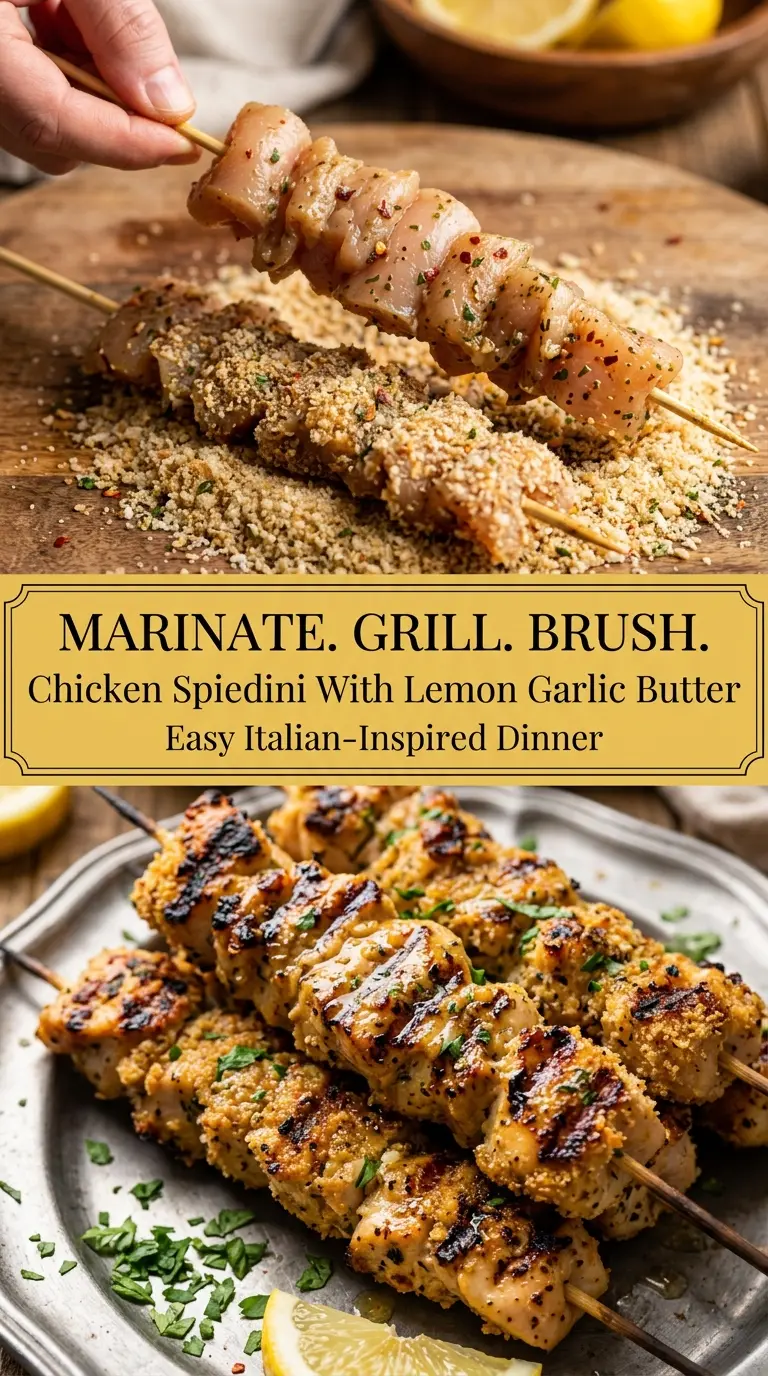
Mix the breadcrumbs and Parmesan in a shallow bowl, then thread the chicken onto skewers before rolling the pieces lightly in the mixture. The breading should look patchy, not caked on. That thin coat is what crisps instead of falling off. If the chicken is dripping wet, the crumbs clump into heavy spots, so let excess marinade drip off for a moment before coating.
Grill Until Just Done
Place the skewers over medium-high heat and turn them occasionally so the surfaces brown evenly. You’re looking for small charred spots, a firm exterior, and juices that run clear when a piece is cut. The chicken should reach 165°F in the thickest piece, but don’t wait for much more than that or the breast meat gets stringy fast. If flare-ups happen, move the skewers briefly to a cooler spot instead of chasing the flames.
Brush on the Lemon Garlic Butter at the End
Melt the butter in a small pan, add the garlic, and cook it just until fragrant. That one minute is enough; any longer and the garlic starts to toast instead of flavor the sauce. Stir in the lemon juice, parsley, and salt, then brush it over the hot chicken right before serving. Doing it at the end keeps the butter glossy and lets it soak into the crumb coating without burning away on the grill.
Three Ways to Make This Chicken Spiedini Fit Your Table
Gluten-Free Version
Use gluten-free Italian-style breadcrumbs and check that your Parmesan is free of additives. The texture stays close to the original, though the crust may look a little less deeply browned. Keep the coating light so it still adheres well to the chicken.
Dairy-Free Swap
Skip the Parmesan and finish the chicken with olive oil whisked with lemon juice, garlic, and parsley instead of butter. You lose some richness and browning, but the dish stays bright and savory. A spoonful of dairy-free grated cheese can help replace some of the coating.
Oven-Baked Weeknight Version
Set the skewers on a lined sheet pan and bake at 425°F until the chicken reaches temperature, then broil briefly to brown the crumbs. It won’t have the same grill flavor, but it keeps the chicken juicy and works well when the weather won’t cooperate.
Storage and Reheating
- Refrigerator: Store leftovers in an airtight container for up to 3 days. The coating softens a bit as it sits, but the flavor holds up well.
- Freezer: Freeze the cooked chicken without the sauce for up to 2 months. Wrap tightly and thaw in the refrigerator before reheating.
- Reheating: Warm in a 325°F oven until heated through, then brush with fresh or reserved lemon garlic butter. The main mistake is using the microwave too long, which makes the chicken rubbery and the coating soggy.
Answers to the Questions Worth Asking
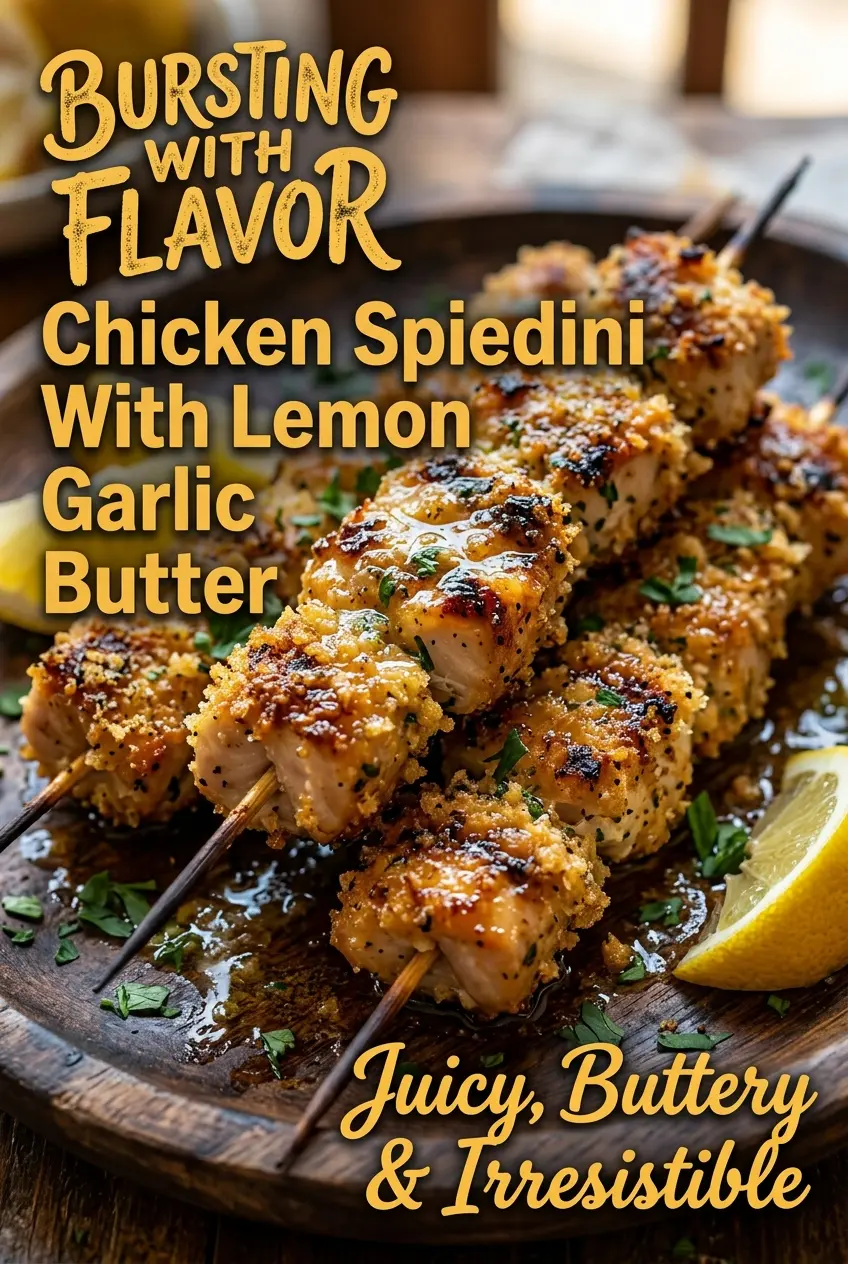
Chicken Spiedini With Lemon Garlic Butter
Ingredients
Equipment
Method
- In a bowl, combine olive oil, lemon juice, garlic cloves, Italian seasoning, salt, and black pepper until evenly mixed.
- Add the chicken pieces and marinate for 30 minutes.
- In a shallow bowl, mix Italian seasoned breadcrumbs and grated Parmesan cheese.
- Thread the marinated chicken onto skewers.
- Roll the skewers lightly in the breadcrumb mixture to coat.
- Preheat the grill to medium-high heat.
- Grill the chicken for 10–12 minutes, turning occasionally, until cooked through.
- Continue grilling until the chicken reaches 165°F (74°C), visible juices should run clear and the coating should look lightly golden.
- In a saucepan, melt unsalted butter over low heat until just foaming.
- Add garlic cloves and cook for 1 minute, stirring, until fragrant.
- Stir in lemon juice, fresh parsley, and salt until the sauce looks glossy.
- Brush lemon garlic butter generously over the grilled chicken so it clings to the breadcrumb coating.
- Garnish with fresh parsley and lemon wedges.
- Serve immediately while the butter is warm and the chicken is juicy.