
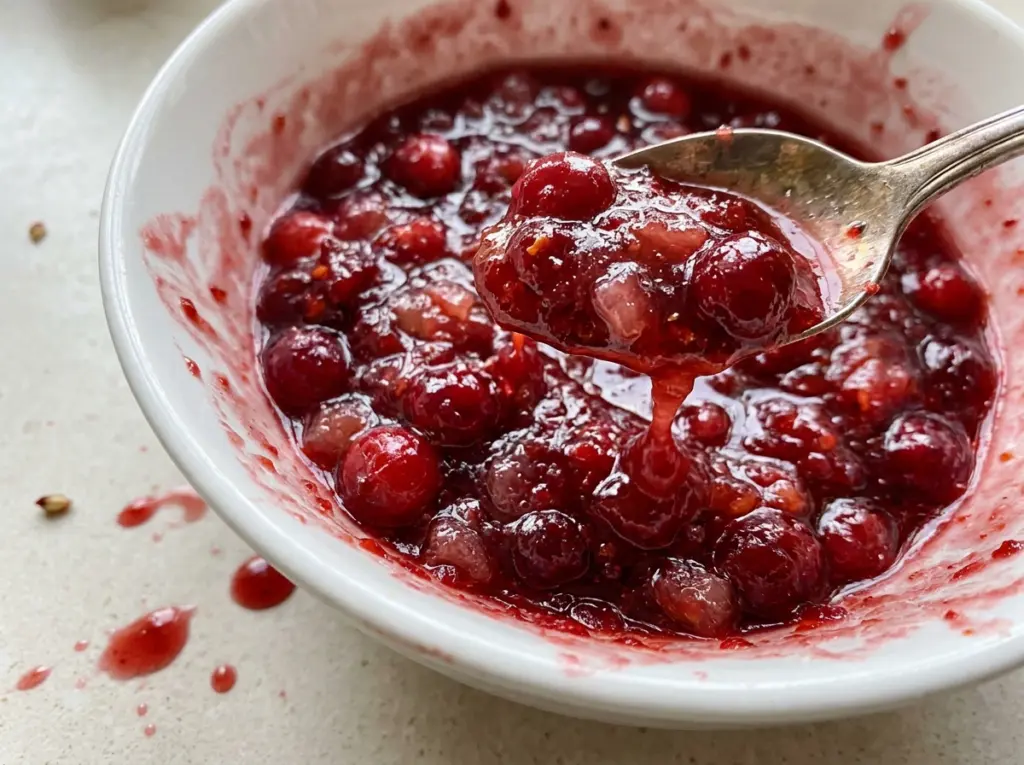
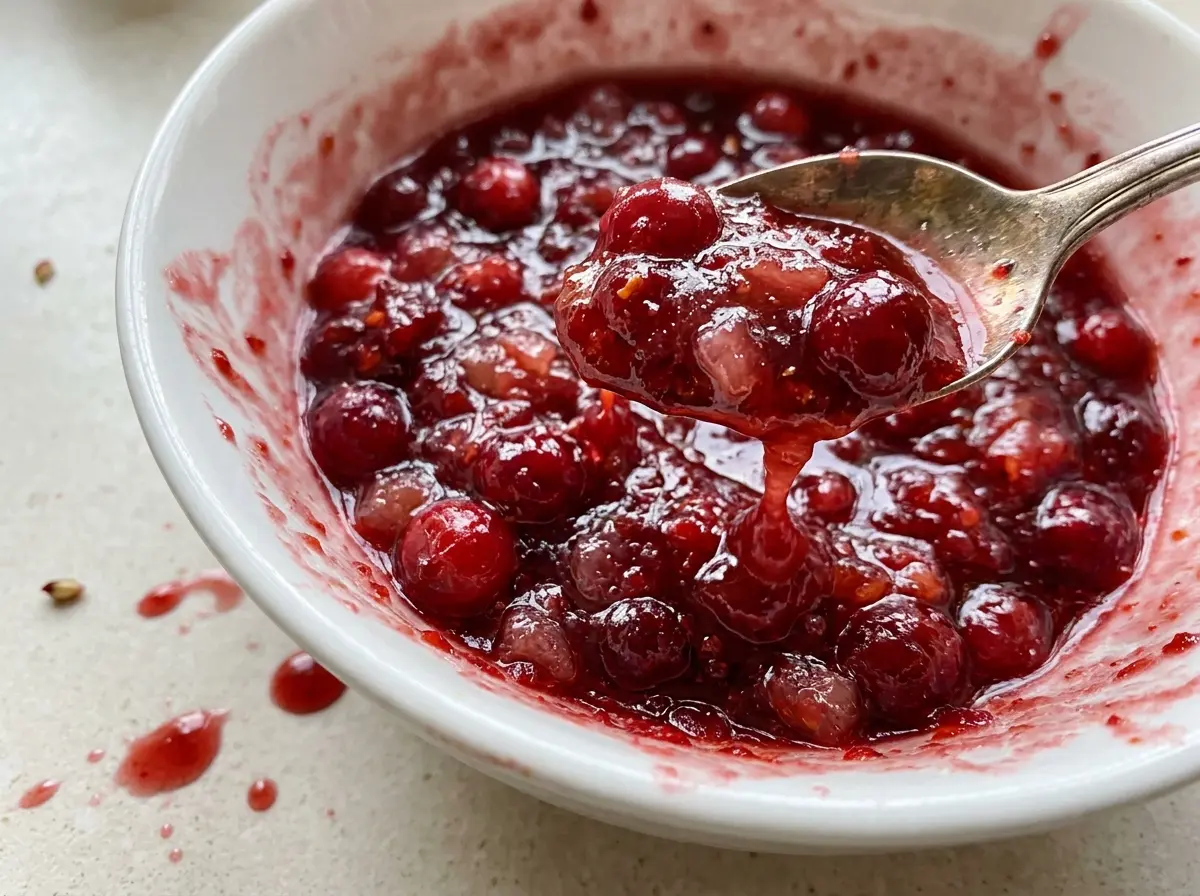
The sugar syrup turns clear before the cranberries go in, and then the pan gets lively fast: berries pop, red juice splashes, and the sauce thickens as it cooks. I keep a close eye on it during those few minutes, because the difference between whole berries and a more broken-down sauce comes down to how long they simmer. This canning cranberry sauce starts with just cranberries, water, and sugar, then goes into hot half-pint jars for processing.
Getting the jars ready while the sauce cooks keeps the hot-pack process moving without a long pause. I sort out any soft berries first, warm the jars in the canner, and ladle the sauce while both the jars and sauce are hot. That steady sequence makes it easier to fill cleanly, leave the right headspace, and get the jars into the canner while everything is still hot. The finished sauce is ruby red, glossy, and full of tender cranberries.
Kitchen Note
Keep the bands fingertip-tight, not cranked down hard. A snug fit holds the lids in place during processing while still letting air escape from the jars.
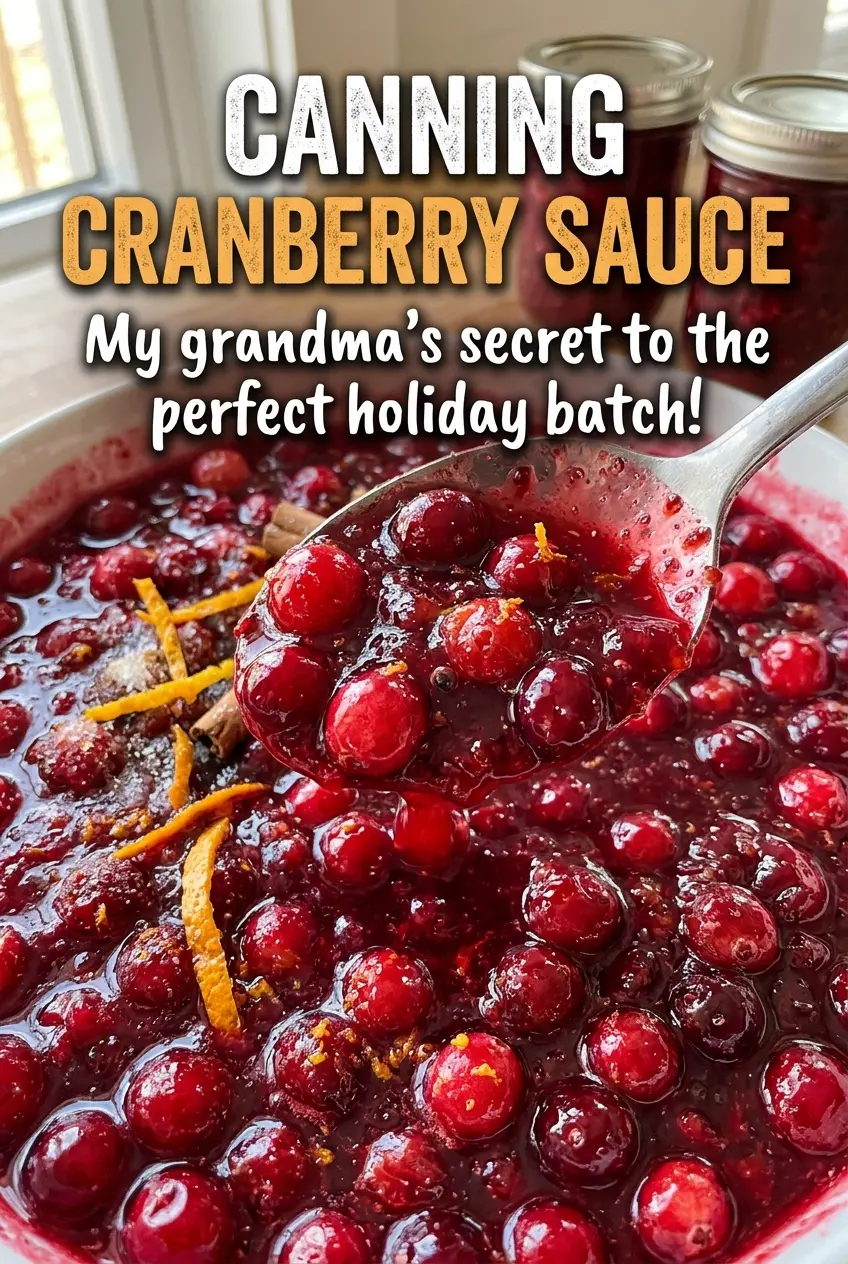
Save this canning cranberry sauce for a batch of glossy, whole-berry jars you can open long after cranberry season.
Why the Canner Timer Starts After the Boil Returns
Putting jars into the canner doesn’t start the processing time. The water cools when the filled jars go in, so wait until it comes back to a full rolling boil before starting the timer. A gentle simmer or a few lazy bubbles aren’t enough; look for vigorous bubbles across the surface that continue while the pot is covered.
Altitude changes the processing time because water boils at a lower temperature as elevation rises. Use your elevation to choose the correct time: 15 minutes at 0–1,000 feet, 20 minutes at 1,001–3,000 feet, 25 minutes at 3,001–6,000 feet, or 30 minutes above 6,000 feet. If the boil stops during processing, bring the canner back to a full rolling boil and restart the timer from the beginning. Keeping the water at least an inch over the jars throughout processing matters, too; top it up with boiling water if needed so the jars remain covered.
Why Cranberries, Sugar, and Water Stay in This Canning Balance
- Fresh cranberries — Choose firm berries and pick out any that feel soft or look damaged. Sorting matters because those berries won’t cook up with the same clean, even texture. Rinsing and draining removes debris without adding extra water to the saucepan.
- Granulated sugar — Sugar dissolves into the water to make the syrup that surrounds the berries and gives the finished sauce its familiar sweet-tart balance. Keep the stated amount for this canned batch; swapping in another sweetener or reducing the sugar changes the tested formula and can affect the finished texture.
- Water — Water dissolves the sugar and gives the cranberries liquid to cook in as they begin to burst. Use plain water here; juice or another liquid changes the recipe’s proportions and isn’t a tested replacement.
There isn’t a safe ingredient swap I recommend for this shelf-stable version. The simple ingredient list is also naturally vegan and gluten-free, so no special replacement is needed for those diets.
From Hot Jars to a Properly Processed Seal
Sort the Berries and Warm the Jars
Discard soft or damaged cranberries, then rinse and drain the firm berries. Wash the four half-pint jars, lids, and bands before setting the jars in the boiling-water canner. Cover the jars with water and heat the canner to a simmer, about 180°F; keep the jars hot while you prepare the sauce. Cold jars can be more prone to cracking when filled with hot sauce, so don’t let them cool on the counter.
Make the Syrup and Pop the Cranberries
Combine the water and sugar in a 4-quart saucepan and bring it to a boil over medium-high heat, stirring until the sugar has dissolved. Add the cranberries and bring the pan back to a full boil. Cook uncovered for 5 to 10 minutes, stirring often, until the berries pop. Stay close and stir across the bottom of the pan so the syrup doesn’t catch as it bubbles.
Fill the Hot Jars Cleanly
Ladle the hot sauce into the hot jars, leaving 1/4 inch of headspace at the top. Run a nonmetallic bubble remover around the inside of each jar, then wipe the rims clean; a spot of sauce on the rim can interfere with sealing. Apply the lids and bands fingertip-tight, then set the jars upright on the canner rack. Check that water covers the jars by at least 1 inch before you cover the canner.
Process, Rest, and Check the Jars
Bring the canner water to a full rolling boil and start the altitude-adjusted processing time only when the boil resumes. When the time is up, turn off the heat, remove the canner lid, and let the jars rest in the canner for 5 minutes. Lift them out upright and set them on a towel to cool undisturbed for 12 to 24 hours; moving or tilting hot jars can disturb the seals as they form. After cooling, check each seal, remove the bands, wipe the jars, and label them; refrigerate any jar that hasn’t sealed.
Texture Choices and Safe Ways to Adapt the Finished Sauce
Keep the canned formula unchanged
For shelf-stable jars, use the listed ingredients and proportions rather than adding spices, citrus, or another sweetener before canning. Those additions change the formula. If you want to personalize the flavor, add anything extra only to the portion you remove from a jar just before serving.
Make a smoother portion after opening
If you prefer less distinct berries, mash the amount you plan to serve with a fork after opening the jar. That gives you a softer, more spoonable texture without changing the ingredients or processing of the sealed jars.
Naturally vegan and gluten-free
Cranberries, water, and granulated sugar make this sauce a straightforward fit for vegan and gluten-free menus. It needs no dietary substitution, and keeping the jar’s ingredient list as written also keeps the canning formula intact.
Storage and Reheating
- Refrigerator: Refrigerate any unsealed jar. Once opened, keep the sauce covered and refrigerated, and use it within 1 week.
- Freezer: The sauce freezes well after opening. Transfer it to a freezer-safe container, leave room for expansion, and freeze for up to 2 to 3 months for best quality; don’t freeze it in a glass canning jar.
- Reheating: Warm the amount you need in a small saucepan over low heat, stirring gently. Avoid high heat and prolonged boiling, which can make the sauce reduce and thicken more than you want.
Store sealed jars in a cool, dark, dry place and use within 1 year for best quality.
Questions That Come Up When Canning Cranberry Sauce
Canning Cranberry Sauce
Ingredients
Equipment
Method
- Sort the cranberries and discard any soft or damaged berries, then rinse and drain them.
- Wash four half-pint canning jars, lids, and bands; set the jars in a boiling-water canner, cover with water, and heat to a simmer (about 180°F). Keep the jars hot while preparing the sauce.
- Combine the water and sugar in a 4-quart saucepan and bring to a boil over medium-high heat, stirring until the sugar dissolves.
- Add the cranberries and return the mixture to a full boil; cook uncovered for 5 to 10 minutes, stirring often, until the berries pop.
- Ladle the hot sauce into the hot jars, leaving 1/4 inch headspace; remove air bubbles, wipe the rims clean, and apply the lids and bands fingertip-tight.
- Set the jars on the canner rack and ensure they are covered by at least 1 inch of water.
- Cover the canner and bring the water to a full rolling boil.
- Process for 15 minutes at 0–1,000 feet, 20 minutes at 1,001–3,000 feet, 25 minutes at 3,001–6,000 feet, or 30 minutes above 6,000 feet, starting the timer when the boil resumes.
- Turn off the heat, remove the canner lid, and let the jars rest in the canner for 5 minutes.
- Lift the jars out upright and cool undisturbed on a towel for 12 to 24 hours.
- Check the seals, remove the bands, and wipe and label the sealed jars; refrigerate any unsealed jars.