
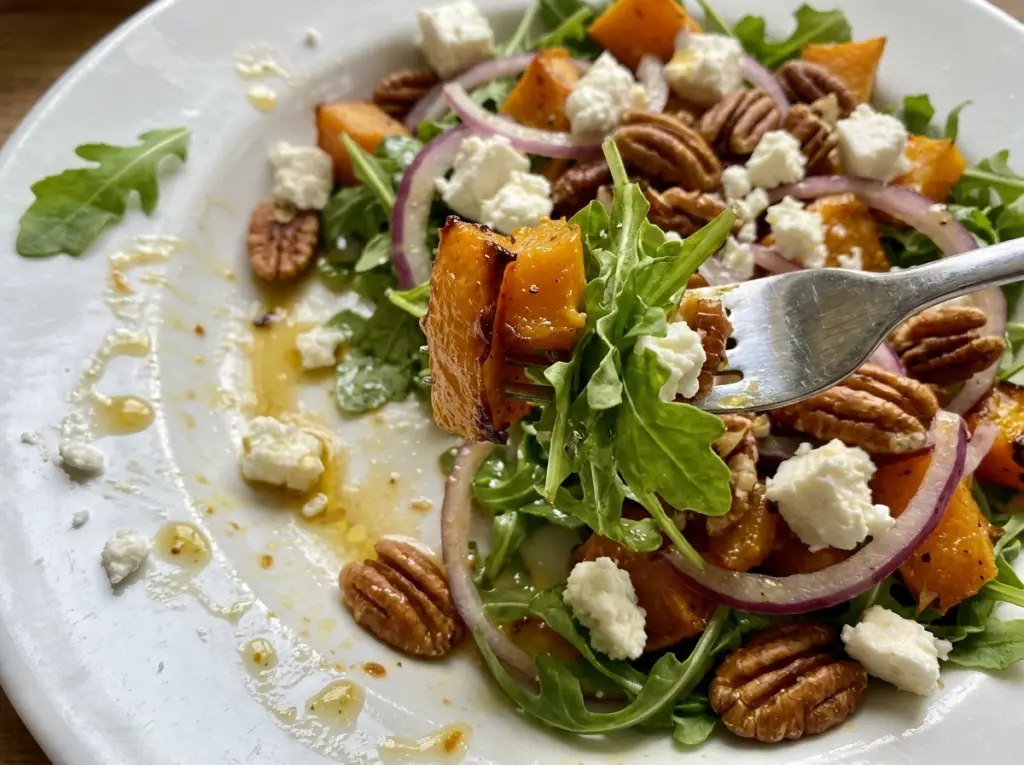
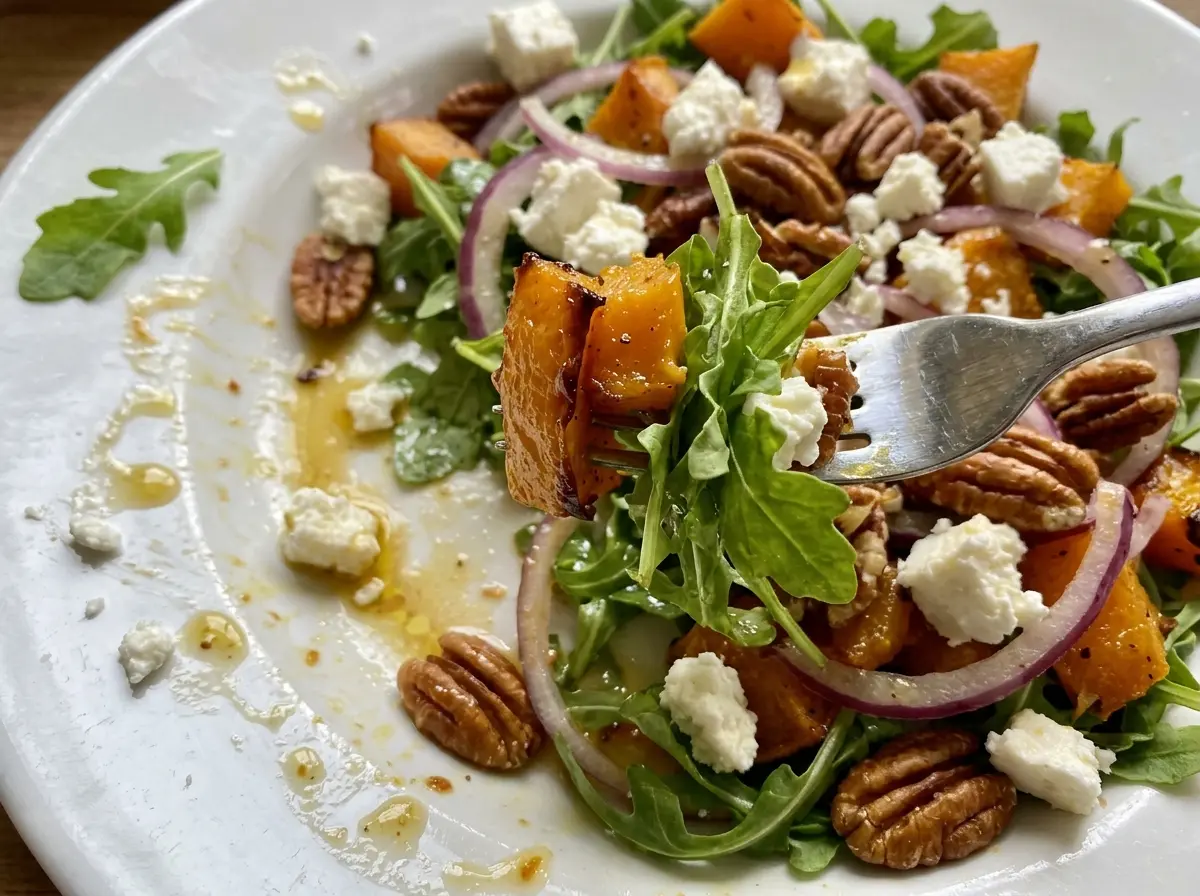
The squash should come out of the oven with browned edges and a tender center, not pale and soft all over. Giving the cubes room on the pan helps them roast instead of steam, and that little bit of caramelization is what makes this butternut squash feta salad worth turning on the oven for. The sweet squash, salty feta, tart cranberries, and toasted pecans give each forkful a different texture without making the salad fussy.
I toss the dressing together while the oven heats, then let the squash cool before it goes anywhere near the greens. That short pause keeps the leaves fresh-looking and gives the warm squash a chance to settle into the salad instead of wilting everything on contact. With a quick balsamic-maple dressing tying the sweet and savory pieces together, this is a generous, colorful salad that still feels balanced.
Kitchen Note
Give the roasted squash its full 10 minutes to cool before adding it to the greens. It can still be warm, but letting the first rush of heat pass keeps the leaves from wilting as soon as you toss the salad.
Save this butternut squash feta salad for a colorful bowl of browned squash, tart cranberries, salty feta, and toasted pecans.
Why the squash needs room on the pan before it can brown
Butternut squash gives off moisture as it roasts. When cubes are crowded together, that moisture collects between them and the squash steams; you get soft pieces without the browned edges that make the salad taste full and roasted. Spreading the cubes in one layer on a rimmed baking sheet leaves hot air room to circulate around them.
Cutting the squash into even 1-inch cubes matters for the same reason. Small pieces can turn soft before larger ones are tender, while a consistent size lets the whole pan finish together. Turn the cubes once halfway through roasting so more than one side gets contact with the hot pan. You’re looking for squash that gives easily when pierced and has visible browning around the edges, not deep, dark crust. If your pan looks packed, spread the cubes out rather than piling them up; an even layer is more useful than having every piece touch the center of the pan.
What each ingredient contributes to the sweet, salty, and crunchy balance
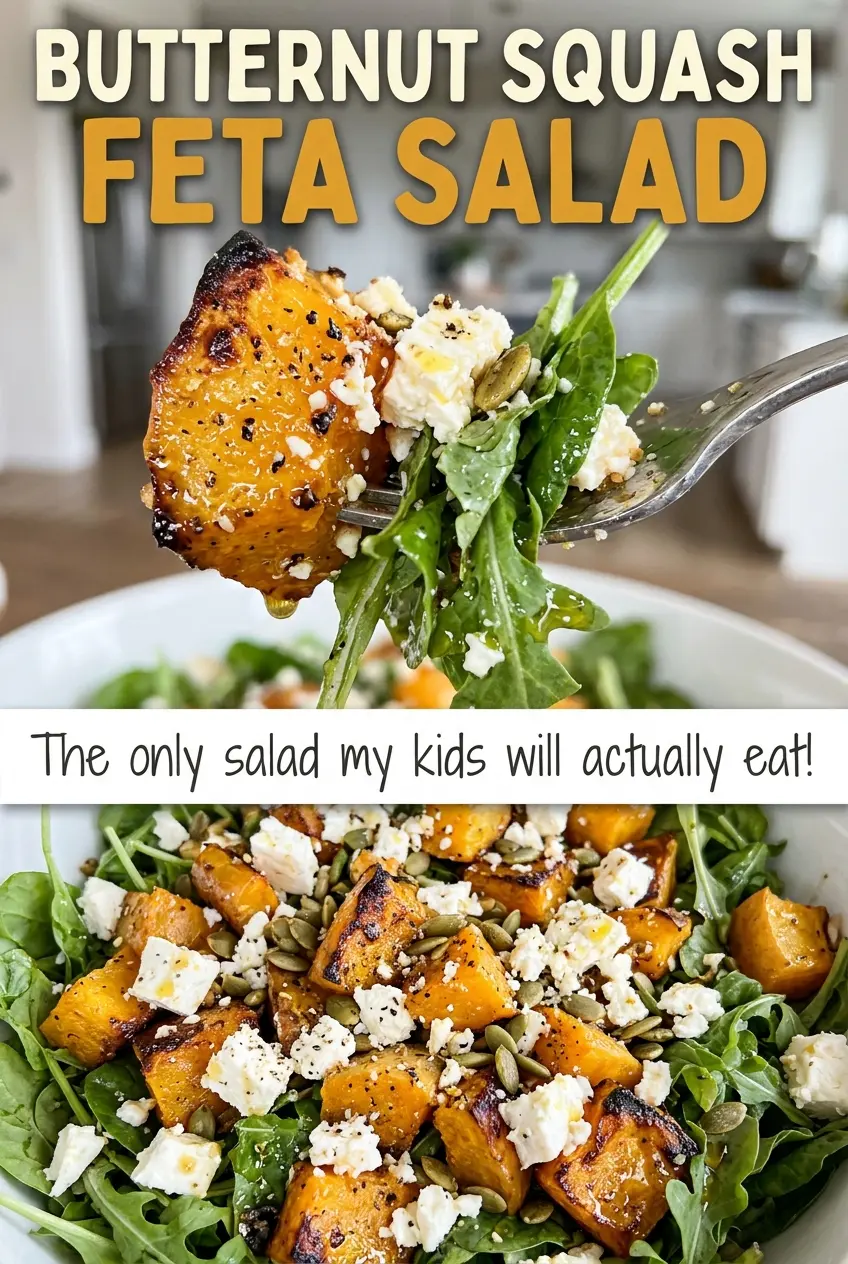
- Butternut squash — This is the hearty, naturally sweet base, so choose firm squash without soft spots. The cut matters more than finding the biggest squash: even 1-inch cubes roast at a similar pace and sit neatly among the greens.
- Mixed salad greens — A bagged mix is a practical choice here; the variety gives the bowl a more interesting feel than a single mild leaf. Keep the greens dry after washing so the dressing clings instead of sliding to the bottom.
- Feta — Its salty tang cuts through the sweetness of the squash and maple dressing. Crumbled feta is ready to scatter through the bowl; if the cheese tastes especially salty, distribute it evenly rather than leaving a big pile in one spot.
- Dried cranberries — Their chewy texture and tart-sweet bite keep the roasted squash from making every forkful taste alike. Standard dried cranberries work well; no special variety is needed.
- Toasted pecans — Toasting brings out a warmer, nuttier flavor and gives the salad its crisp contrast. Use pecans that are crisp and fresh-tasting; stale nuts can make the finished bowl taste flat.
- Balsamic, maple, and Dijon — Balsamic adds acidity, maple syrup rounds it with sweetness, and Dijon helps the dressing come together when whisked. A familiar olive oil is fine; its taste is noticeable in this short ingredient list, so use one you enjoy.
Roast the squash first, then build the salad while it cools
Whisk the dressing until it comes together
In a small bowl, whisk the olive oil, balsamic vinegar, maple syrup, Dijon mustard, kosher salt, and black pepper until combined. The mixture should look blended rather than like a slick of oil sitting on top of the vinegar. If it separates while you work on the squash, give it another quick whisk before dressing the greens. Set the bowl aside so the dressing is ready when the roasted pieces have cooled.
Roast the cubes until their edges are browned
Heat the oven to 425°F and line an 18×13-inch rimmed baking sheet with parchment paper. Toss the 1-inch squash cubes with olive oil, kosher salt, and black pepper, then spread them out in a single layer. Roast for 25 to 30 minutes, turning the squash once halfway through. They’re ready when tender and browned at the edges; if some pieces are larger, use tenderness as your cue rather than expecting every cube to look identical.
Cool the squash before tossing everything together
Let the squash cool for 10 minutes after roasting. Put the mixed greens in a large serving bowl, then add the squash, crumbled feta, dried cranberries, and toasted pecans. Drizzle over the dressing and toss gently, lifting from the bottom so the toppings don’t all settle in one place. Stop once the leaves are lightly coated; a heavy-handed toss can break up the softer squash and feta.
Easy ways to adjust the sweet, salty, and crunchy balance
A nut-free bowl without pecans
Leave out the pecans for a nut-free version. You’ll lose the crisp, toasted contrast, but the cranberries still bring a chewy bite and the squash keeps the salad substantial.
A dairy-free version without feta
Omit the feta to make the salad dairy-free. The bowl will taste sweeter and less salty, so toss it gently and taste a dressed forkful before serving; the squash, cranberries, and balsamic-maple dressing still give it plenty of character.
A less-sweet salad with no cranberries
Leave out the dried cranberries if you’d rather keep the bowl focused on savory squash and feta. The dressing still has maple syrup, but each bite will have less concentrated sweetness and a little less chew.
Make-Ahead and Storage
- Make ahead: Roast the squash and whisk the dressing ahead, keeping each covered and refrigerated separately. Combine the greens and toppings just before serving so the leaves stay fresh.
- Refrigerator: Refrigerate leftover salad promptly and eat it within 3 to 4 days. The greens will soften after dressing, so the leftovers won’t have the same fresh texture as the first serving.
- Freezer and serving: Don’t freeze the assembled salad; the greens lose their texture when thawed. This salad is served cold or at room temperature, so reheating isn’t needed.
Questions that come up while making butternut squash feta salad
Butternut Squash Feta Salad
Ingredients
Equipment
Method
- Whisk the olive oil, balsamic vinegar, maple syrup, Dijon mustard, kosher salt, and black pepper in a small bowl until combined.
- Heat the oven to 425°F.
- Line an 18x13-inch rimmed baking sheet with parchment paper.
- Toss the squash with the olive oil, kosher salt, and black pepper.
- Spread the squash in a single layer on the baking sheet.
- Roast for 25 to 30 minutes, turning the squash once halfway through, until tender and browned at the edges.
- Let the squash cool for 10 minutes so it does not wilt the greens.
- Place the greens in a large serving bowl.
- Add the squash, feta, cranberries, and pecans.
- Drizzle with the dressing and toss gently to coat.