
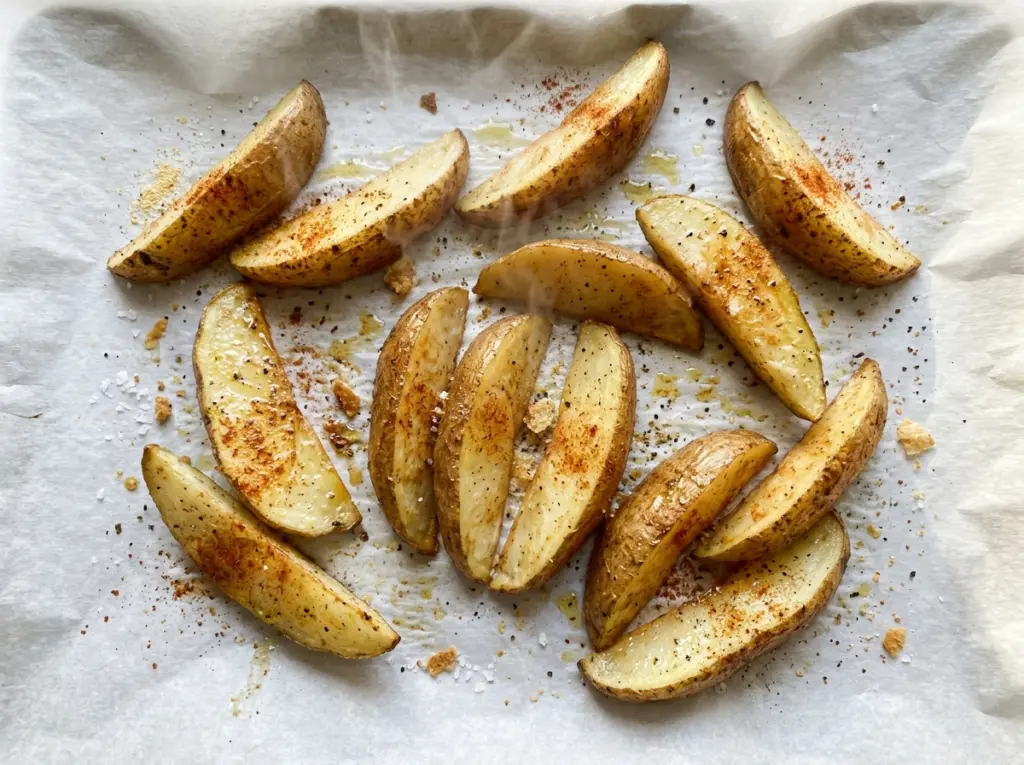
The wedges look ready to turn when their bottoms have started to brown, but the centers still feel firm if you press one with a spatula. That’s the point to flip them, not when they’re already dark. I learned to trust the full first 20 minutes on the pan, and these baked potato wedges come out with browned cut sides instead of tearing or sticking as I turn them.
Russet potatoes are a good fit here because their fluffy centers contrast with the crisp edges. Patting the cut wedges dry before adding oil and seasonings helps them brown, while setting each one in a single layer gives the hot pan room to do its job. The paprika, garlic powder, and onion powder coat the surface without a wet seasoning mixture to weigh it down. Serve them when the edges are crisp and the centers are tender enough for a fork.
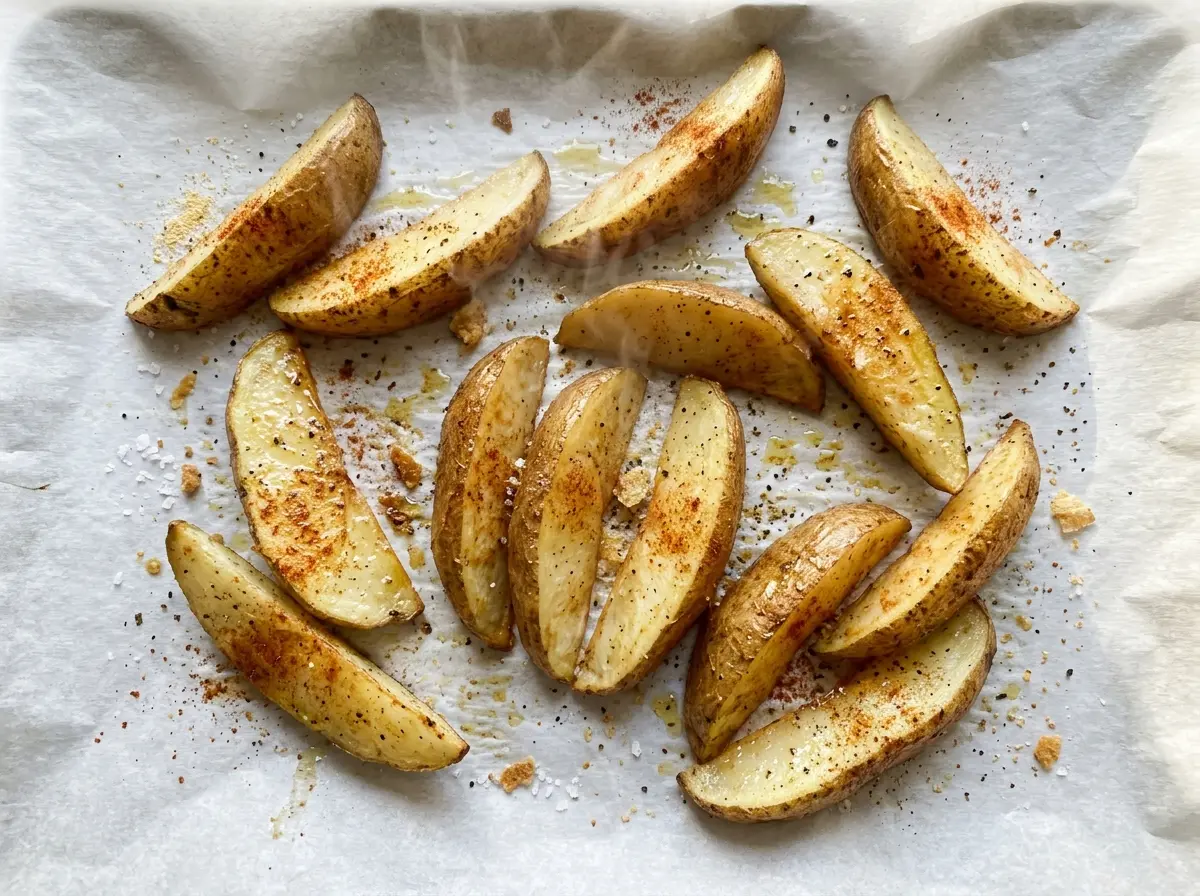
Kitchen Note
Set a timer for the first 20 minutes. Turning the wedges at that point gives the second cut side time against the pan, too, so you get browning on both sides rather than one browned face and one pale one.
Save these baked potato wedges with seasonings for a crisp-edged side with fluffy russet centers and pantry-friendly spices.
Why Dry Wedges Brown Better Than Oiled, Damp Ones
A little surface moisture works against the texture you want. Wet potato faces release steam as they bake, and steam softens the outside instead of letting it brown. Patting the wedges dry first is a small step, but it gives the oil and seasonings a better chance to coat the potato rather than slide around on water.
Space matters just as much. If wedges overlap or crowd each other, the sides touching will stay softer because they don’t have direct contact with the hot air and parchment. Arrange them in one layer with a cut side down, leaving a little breathing room where you can. Each flat face gets its own contact with the pan, and the browned surface becomes easier to turn once it has had time to set.
- Dry the cut surfaces before tossing; don’t leave visible water on the wedges.
- Keep the wedges in a single layer rather than piling them up to fit.
- Use the fork test as well as color: browned outsides alone don’t tell you whether the centers are tender.
How Russets and Dry Seasonings Build the Right Texture

- Russet potatoes — Their starchy, fluffy interior gives these wedges a soft center beneath the browned exterior. Scrub them well and leave the skin on; it keeps the wedges sturdy as you turn them. Russets are the right choice for this particular texture.
- Olive oil — The oil helps the seasonings cling and encourages browning on the cut surfaces. A standard olive oil works well; there’s no need to use a specialty bottle for roasting.
- Paprika — It brings warm color and a mild, rounded pepper flavor to the outside. A fresh, fragrant jar matters more than an expensive one, since stale paprika can taste flat.
- Garlic powder and onion powder — These dry seasonings spread across the potato without adding moisture. Their fine texture helps them distribute evenly when the wedges are tossed on the lined pan.
- Kosher salt and black pepper — Salt brings the potato’s flavor forward, while black pepper adds a gentle bite. Grind the pepper fresh if convenient, but the potato’s browning and tenderness matter more than a particular pepper brand.
Getting Two Browned Cut Sides Without Overcooking the Centers
Cut the Russets into Similar Wedges
Scrub the potatoes, then cut each one lengthwise into wedges. Aim for pieces that are close in thickness so thinner ones don’t race ahead while the thickest pieces are still firm. Heat the oven to 425°F and line a large rimmed baking sheet with parchment paper. Pat the cut wedges dry before they meet the oil.
Coat Everything on the Baking Sheet
Add the wedges to the prepared sheet with the olive oil, paprika, garlic powder, onion powder, kosher salt, and black pepper. Toss until the seasoning is spread across the potato surfaces; patchy coating can leave some bites bland and others overly seasoned. Spread the wedges back out after tossing, arranging them in a single layer with one cut side down. If the pan is crowded, use a larger surface rather than stacking the potatoes.
Roast, Turn, and Check the Centers
Bake for 20 minutes with the first cut side against the pan. Turn the wedges onto their other cut side, then bake for 15–25 minutes more. Look for browned, crisp outsides and pierce a thick wedge with a fork; it should slide into a tender center without the outside losing its color. The time range allows for differences in wedge thickness and ovens, so use the color and fork test together.
Two Small Cut Changes That Give You Different Wedges
Narrower wedges for more crisp edges
Cut the russets into narrower lengthwise wedges while keeping the seasoning ingredients the same. The extra cut surface gives you more browned edges in each serving, but thinner pieces can become tender sooner, so begin checking them with a fork during the final baking stretch.
Shorter wedges for easier serving
After cutting the potatoes lengthwise into wedges, cut those pieces crosswise into shorter sections. This changes the shape without changing the seasoning, and the shorter pieces are handy to portion alongside a meal. Keep the cut faces down and rely on the browned exterior and fork-tender center to judge when they’re ready.
Storage and Reheating
- Refrigerator: Keep cooled wedges in a covered container for up to 3–4 days. They’ll lose some crispness as they sit.
- Freezer: They can be frozen in an airtight container, though thawed wedges won’t have quite the same crisp outside. Freeze in a single layer first if you want the pieces to stay separate, then transfer them to the container.
- Reheating: Spread the wedges in one layer on a baking sheet and heat in a 425°F oven until hot and crisp at the edges. Avoid microwaving if you want to bring back the browned texture; it tends to leave the outside soft.
Questions That Come Up When Baking Potato Wedges
Baked Potato Wedges with Seasonings
Ingredients
Equipment
Method
- Heat the oven to 425°F.
- Line a large rimmed baking sheet with parchment paper.
- Pat the potato wedges dry.
- Toss the wedges on the baking sheet with the olive oil, paprika, garlic powder, onion powder, kosher salt, and black pepper until evenly coated.
- Arrange the wedges in a single layer with a cut side down.
- Bake for 20 minutes.
- Turn the wedges onto the other cut side.
- Bake for 15–25 minutes more, until browned and crisp outside and tender when pierced with a fork.