
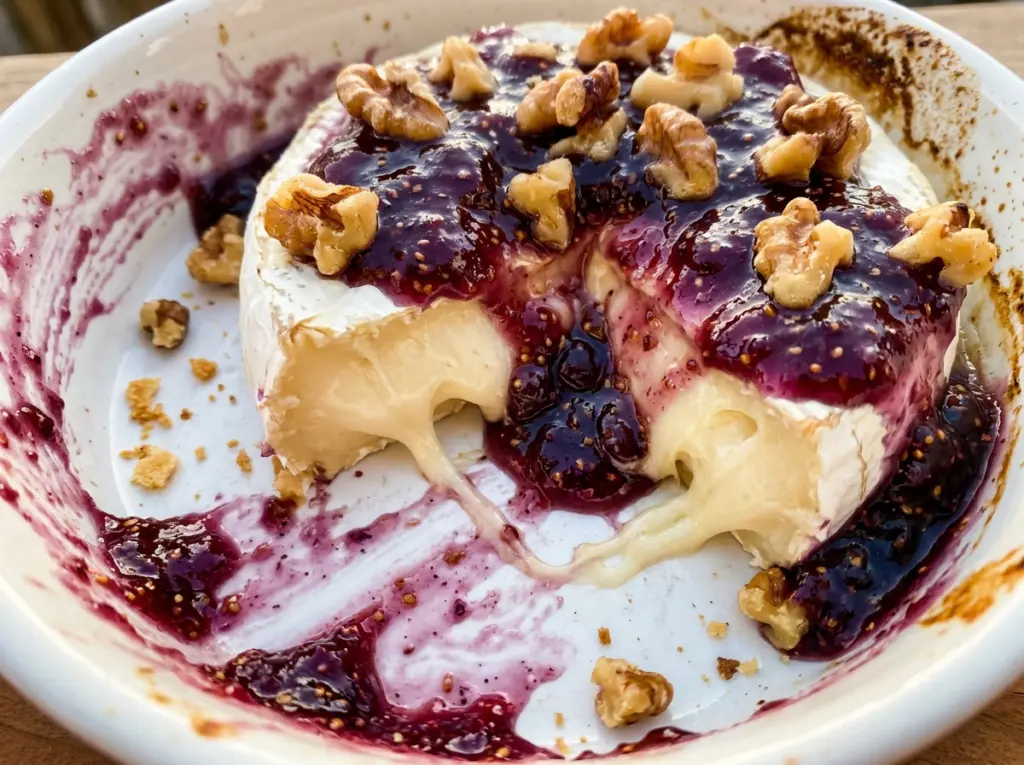
The Brie goes into the oven looking much as it did on the counter; the change is underneath the glossy fig jam. After a short bake, the center softens while the wheel still keeps its shape, giving you warm Brie without turning the baking sheet into a puddle. I like this baked Brie with fig jam and walnuts when I want an appetizer that feels special but doesn’t need a long list of steps.
The best cue isn’t a browned top or a dramatic bubble. Gently press the center and look for softness, while the wheel still feels supported around the edges. That balance lets the jam stay on top and the chopped walnuts add crunch. Give the Brie a few minutes to rest before serving, and you’ll have a warm, creamy center beneath the sweet, nutty topping.
Kitchen Note
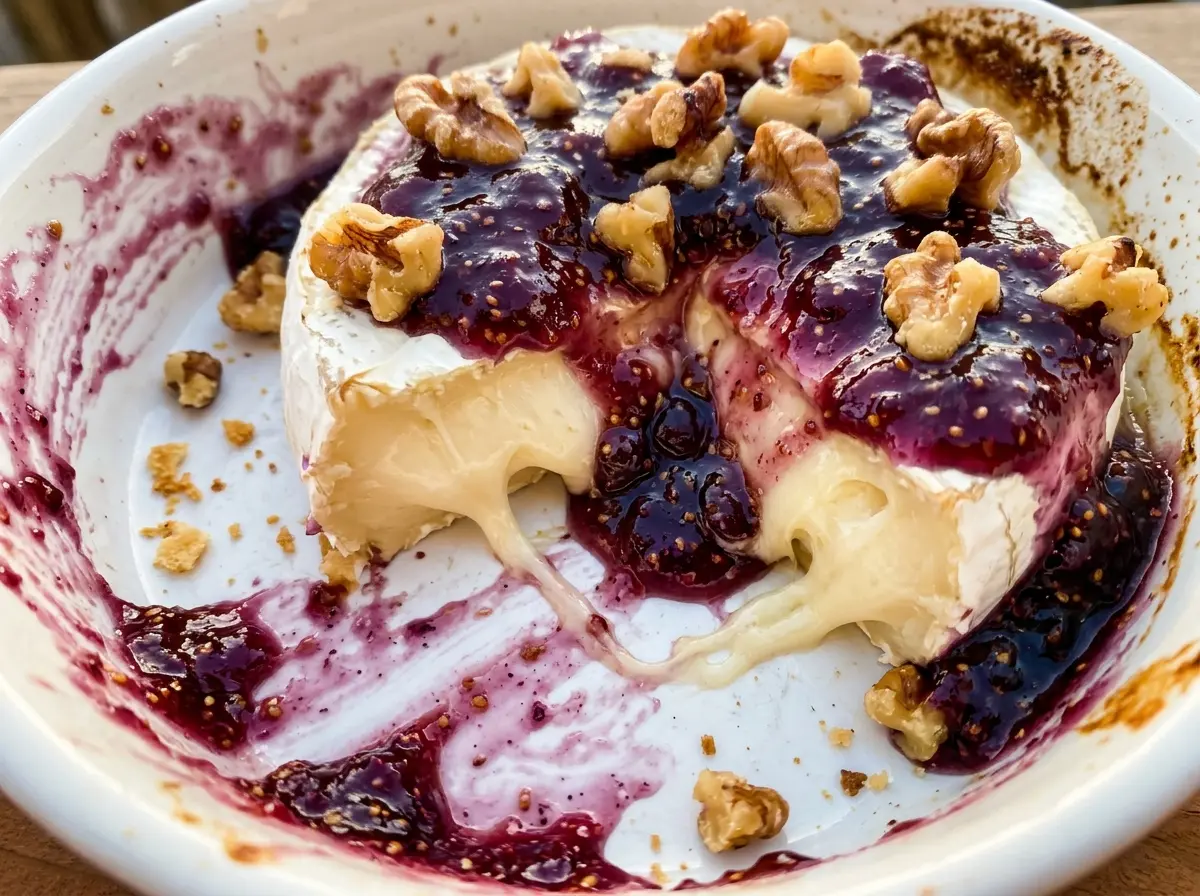
Let the Brie rest for the full 5 minutes before you serve it. That pause gives the hot cheese a chance to settle, so the wheel is easier to serve without the topping sliding off at the first cut.
Save this baked Brie with fig jam and walnuts for a warm, soft-centered appetizer with a sweet, nutty top.
Why Baked Brie Should Be Soft in the Center, Not Running Off the Wheel
It’s easy to think baked Brie needs to be bubbling all over to be ready. For this version, chasing that fully liquid look works against the shape you want: the cheese should feel soft in the middle, but the wheel should still hold together. The Brie itself is the serving dish, so keeping it intact matters as much as warming the center.
That’s why I use a gentle press rather than judging the top by color. Fig jam can stay glossy rather than turning deeply browned, and the walnuts don’t need to toast dark for the cheese to be ready. A rimmed baking sheet lined with parchment also gives you a steady surface for the wheel and catches any cheese that escapes. Aim for a soft center and a supported edge, not a completely collapsed round.
This balance makes the texture feel considered: creamy Brie beneath a concentrated layer of fruit and crunchy nuts. If you usually wait for baked cheese to look dramatic, trust the feel of the center instead. The right stopping point is just before the wheel loses its structure.
How Fig Jam and Walnuts Balance the Brie’s Creamy Center
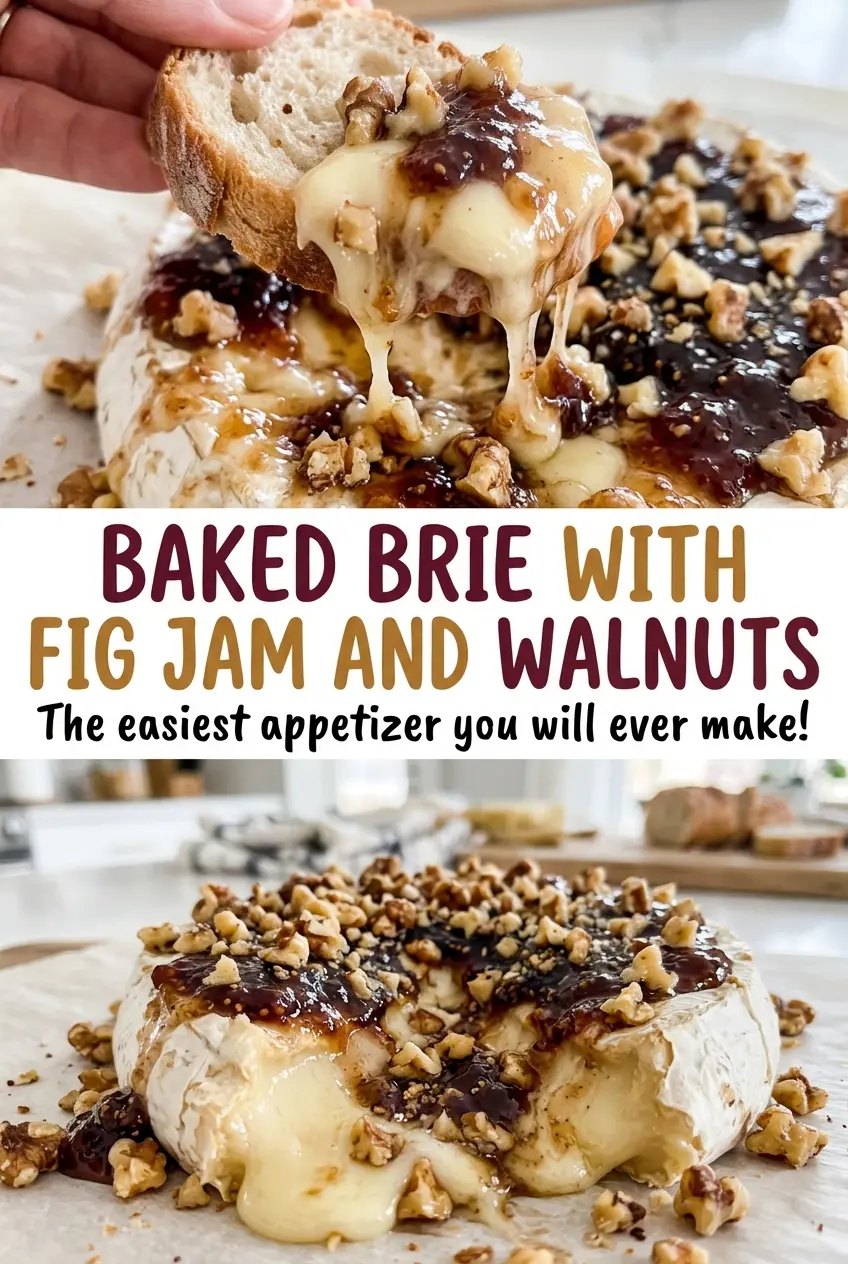
- Brie — Use a whole wheel so the cheese stays together as it warms. The rind helps the Brie keep its shape, and there’s no need to remove it before baking. A fresh, intact wheel is more useful here than choosing Brie based on a particular brand; avoid one with damaged packaging or a cracked surface.
- Fig jam — Its thick, spreadable texture sits on top of the Brie instead of running off like a thin liquid. Choose a jam you enjoy tasting on its own, since the fruit flavor remains distinct against the mild cheese. A jam with fruit pieces is fine as long as you can spread it over the top.
- Walnuts — Chopping them gives you smaller pieces that are easier to distribute across the jam than large halves. Fresh-tasting walnuts matter because their nutty flavor is right at the surface; if they smell stale or taste bitter, replace them. Keep the pieces roughly similar in size so each bite gets a little crunch.
How to Bake the Brie Without Losing Its Shape
Prepare the oven and baking sheet
Heat the oven to 350°F and line a rimmed baking sheet with parchment paper. The rim gives the wheel a contained place to sit, while the parchment makes it easier to lift or serve if any cheese softens beyond the rind. Set up the pan before adding the toppings so the assembled Brie can go straight into the oven. Keep the wheel whole; cutting it first would take away the shape this method relies on.
Spread the jam and add the walnuts
Set the Brie on the prepared baking sheet, then spread the fig jam over the top. Work it across the surface in an even layer rather than piling it in one spot. Sprinkle the chopped walnuts over the jam so the nuts are distributed across the wheel. If you press too firmly while topping it, the cheese can shift, so use a light hand.
Bake until the center softens
Bake for 12 to 15 minutes, then gently press the center to check it. You’re looking for a soft feel while the wheel still holds its shape; don’t wait for the whole Brie to slump. If it needs more time, continue toward the end of the baking range and check the center again. The top doesn’t have to brown for the cheese to be ready.
Three Thoughtful Ways to Change the Jam or Crunch
Swap the walnuts for pecans
Use chopped pecans in place of the walnuts, keeping the same volume. Pecans give the topping a milder, slightly sweeter crunch, while walnuts have a more pronounced earthy edge.
Try apricot preserves instead of fig
Replace the fig jam with the same amount of apricot preserves for a brighter, more tart-fruity topping. Choose a spreadable preserve so it can cover the Brie in a similar layer.
Make the topping nut-free with pumpkin seeds
Replace the walnuts with chopped pumpkin seeds in the same volume for a crisp topping without tree nuts. The result is less buttery in flavor but still gives the soft cheese a crunchy contrast. For an allergy-sensitive kitchen, use seeds that are safe for the person eating them.
Storage and Reheating
- Refrigerator: Refrigerate leftovers in a covered container for 3 to 4 days. The Brie will firm up when cold, and the walnuts will lose some crunch.
- Freezer: Freezing isn’t a good fit for this finished dish. Brie can turn crumbly or watery after thawing, and the jam-and-walnut topping won’t have the same texture.
- Reheating: Warm leftovers in a 300°F oven until the center is soft again. Avoid heating them until the wheel collapses; the Brie can become runny before the topping is warmed through.
Questions That Come Up Before Baking Brie
Baked Brie with Fig Jam and Walnuts
Ingredients
Equipment
Method
- Preheat the oven to 350°F.
- Line a rimmed baking sheet with parchment paper.
- Set the Brie on the prepared baking sheet.
- Spread the fig jam over the top.
- Sprinkle with the walnuts.
- Bake for 12 to 15 minutes, until the center feels soft when gently pressed but the wheel still holds its shape.
- Let the Brie rest for 5 minutes before serving.