
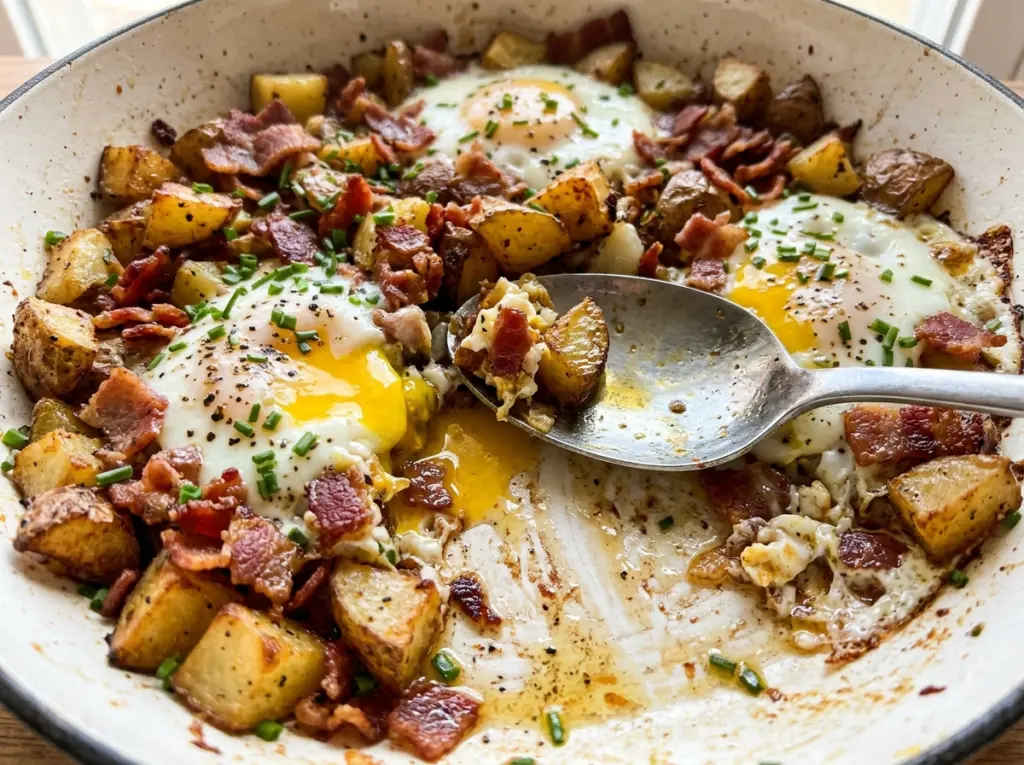
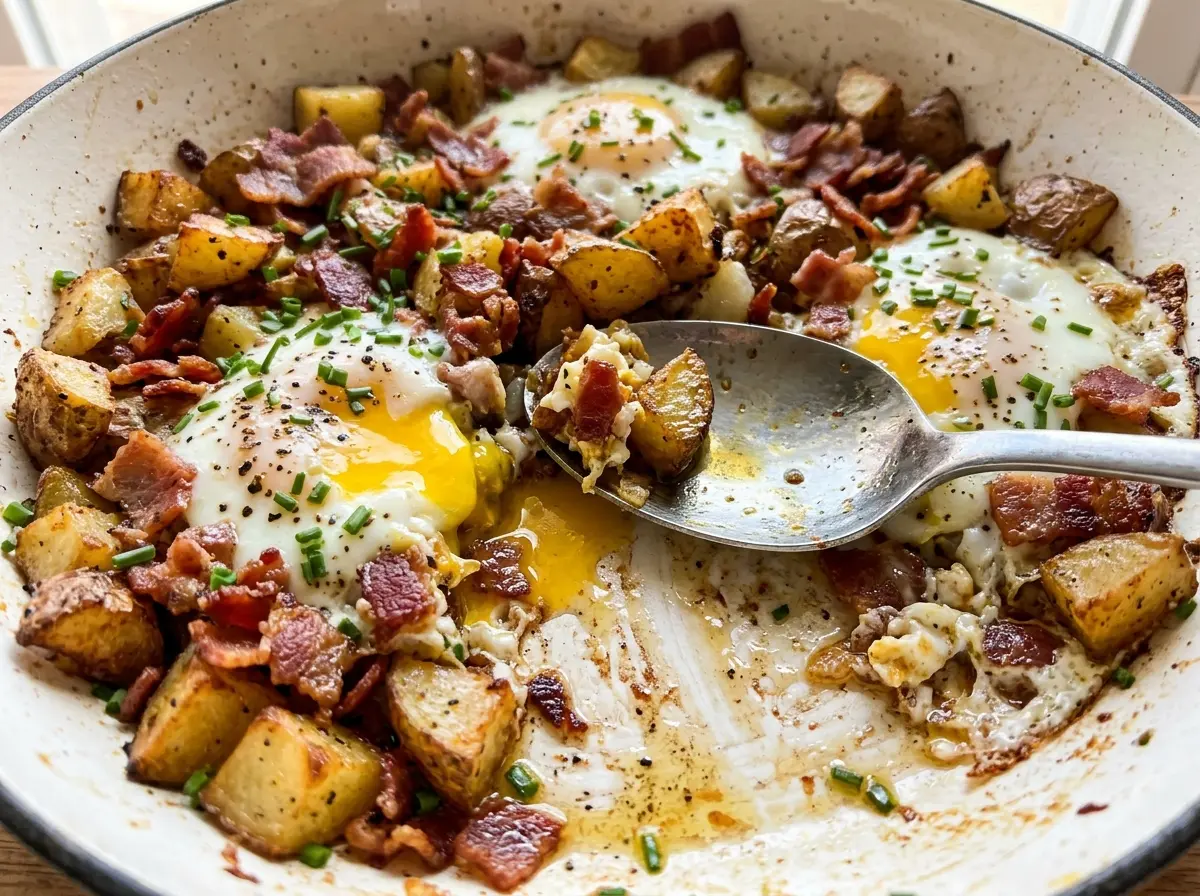
The bacon starts to sizzle before the potatoes ever hit the pan, and that’s where this breakfast skillet gets its head start. Once the bacon is crisp, its drippings season the potatoes as they cook; a little olive oil rounds out the fat without leaving the pan greasy. I make this Bacon Egg and Potato Breakfast Skillet when I want breakfast to feel substantial but still come together in one skillet.
The potatoes get a covered stretch first, then cook uncovered with the onion until their edges turn golden. That order matters: the covered time softens the centers, while the uncovered time lets the surfaces brown instead of staying pale and damp. The eggs cook right in six little wells at the end, so every serving gets a set egg alongside tender potatoes and crisp bacon.
Kitchen Note
Keep the lid on while the eggs cook, and check the whites and yolks for firmness before taking the skillet off the heat. The eggs are the last part to finish, so lifting the lid again and again only slows that covered cook.
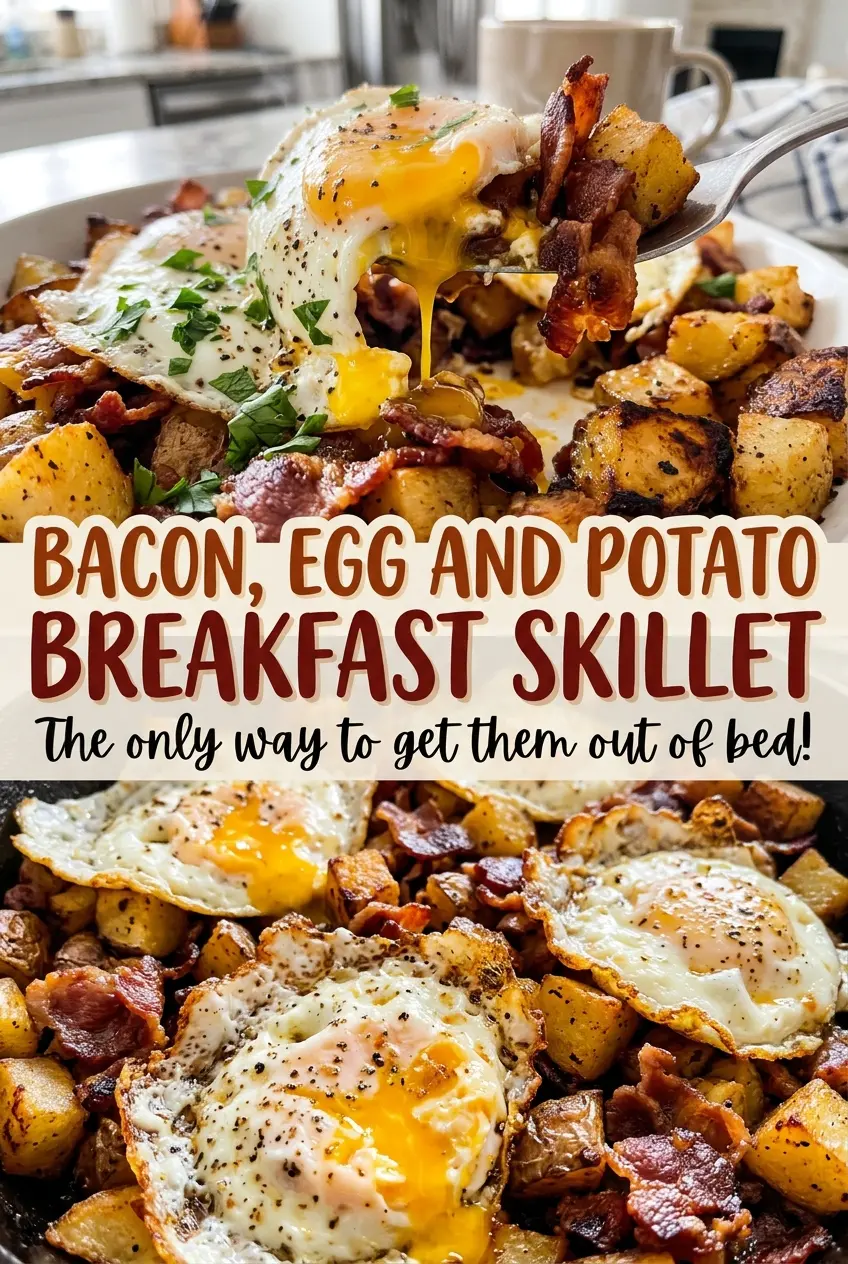
Save this Bacon Egg and Potato Breakfast Skillet for crisp bacon, golden potatoes, and eggs cooked right in the pan.
Why the Potatoes Need a Covered Start Before They Can Brown
It’s easy to think that browning potatoes means leaving them uncovered from the beginning. In this skillet, that would put the outside ahead of the middle: the diced potatoes need time to turn tender before they can pick up a golden surface. Covering the pan traps the potatoes’ own moisture, helping the centers cook through while the pieces stay in place.
Once the potatoes are tender, uncovering the skillet changes the job. Moisture can escape, and the potatoes have a chance to color as the onion softens. Stirring every few minutes distributes the heat and keeps the pieces from sitting in one spot too long. The bacon joins near the end, after its fat has helped cook the potatoes, so the crisp pieces don’t spend the entire cooking time softening under the lid. This two-part potato cook is what gives the skillet both a tender center and browned edges.
What Yukon Gold Potatoes and Bacon Each Bring to the Skillet
- Yukon Gold potatoes — Their creamy centers and ability to hold their shape make them a good fit for a skillet where you want distinct pieces, not mashed potatoes. Cut them evenly into 1/2-inch dice so they soften at roughly the same pace. Red potatoes are the closest swap; they hold their shape too, though the texture and skin are a little firmer.
- Bacon — Chopped bacon renders the fat that seasons the potatoes, then gets stirred back in for crisp, savory bites. Fresh bacon cooks more predictably than pieces that have dried out in an open package. If you prefer a meatless version, the variation below explains what changes when you leave it out.
- Yellow onion — A small yellow onion softens quickly and brings sweetness to the browned potatoes without taking over the skillet. Dice it before cooking so the pieces soften in the short uncovered stage.
- Olive oil — The oil works with the reserved bacon drippings to coat the potatoes as they cook. Use a standard olive oil here; a delicate finishing oil won’t add anything useful to a covered skillet cook.
- Eggs — Large eggs fit the six wells without overwhelming the potato mixture. Crack each one into its own space so the whites set around the potatoes rather than running together across the whole pan.
How to Cook the Potatoes Tender, Then Set the Eggs
Render the Bacon and Reserve the Right Amount of Drippings
Cook the chopped bacon in a 12-inch skillet over medium heat, stirring occasionally, until crisp, about 8 to 10 minutes. Transfer it to a paper towel-lined plate so excess grease can drain. Pour off the drippings, leaving 1 tablespoon in the skillet; keeping all the fat can make the potatoes greasy, while removing all of it loses the base that seasons them. Set the bacon aside to stir back in later.
Soften the Potatoes Under the Lid
Add the diced Yukon Gold potatoes and olive oil to the skillet, then season with kosher salt and black pepper. Cover and cook over medium heat, stirring every 4 to 5 minutes, until the potatoes are tender, about 12 to 15 minutes. Keep the pieces in an even layer when you can, and use the stirring to turn them through the fat. Check tenderness before moving on; browned edges won’t make up for centers that are still firm.
Uncover for Golden Edges and Soft Onion
Take off the lid, add the diced onion, and cook over medium heat, stirring occasionally, for 5 to 7 minutes. Look for golden potato surfaces and onion that has softened, not dark, dry onion edges. This uncovered stage lets moisture leave the pan, so the potatoes can brown rather than steam. Stir the crisp bacon back into the potato mixture once the onion is ready.
Set One Egg in Each Well
Make six wells in the potato mixture and crack one egg into each. Cover the skillet and cook over medium-low heat for 6 to 8 minutes, until both the whites and yolks are firm. If the wells are too shallow, the eggs may spread over the potatoes, so make enough room for each egg before cracking it in. Keep the heat at medium-low; the goal is firm eggs without scorching the potato layer underneath.
Two Useful Ways to Adapt This Breakfast Skillet
Make a Half Batch for Two
Halve each ingredient, including the eggs, and keep the potato dice at 1/2 inch. Use the same 12-inch skillet, but start checking the potatoes and eggs by their texture and doneness rather than assuming the full-batch timing will fit a smaller amount. The skillet keeps the same bacon-and-potato balance, with fewer portions to serve.
Leave Out the Bacon for a Meatless Version
Omit the bacon and its drippings, and use the listed olive oil to cook the potatoes. A nonstick 12-inch skillet helps prevent sticking without the bacon fat. The finished dish is still a potato-and-egg breakfast, but it won’t have bacon’s crisp texture or smoky, salty flavor.
Storage and Reheating
- Refrigerator: Refrigerate leftovers in an airtight container within 2 hours and use them within 3 to 4 days. The potatoes soften, and the eggs lose their just-set texture.
- Freezer: I don’t recommend freezing this skillet. The potatoes tend to turn mealy and the cooked eggs rubbery after thawing.
- Reheating: Reheat a portion covered in the microwave until it reaches 165°F throughout. Use short bursts so the eggs don’t become tough; a long, high-power blast dries them out.
Questions That Come Up When Cooking This Skillet
Bacon Egg and Potato Breakfast Skillet
Ingredients
Equipment
Method
- Cook the bacon in a 12-inch skillet over medium heat, stirring occasionally, until crisp, 8-10 minutes.
- Transfer the bacon to a paper towel-lined plate.
- Pour off the drippings, leaving 1 tablespoon in the skillet.
- Add the potatoes and olive oil to the skillet; season with the salt and pepper.
- Cover and cook over medium heat, stirring every 4-5 minutes, until the potatoes are tender, 12-15 minutes.
- Uncover and add the onion.
- Cook, stirring occasionally, until the potatoes are golden and the onion is softened, 5-7 minutes.
- Stir in the bacon.
- Make 6 wells in the potato mixture and crack an egg into each.
- Cover and cook over medium-low heat until the whites and yolks are firm, 6-8 minutes.