
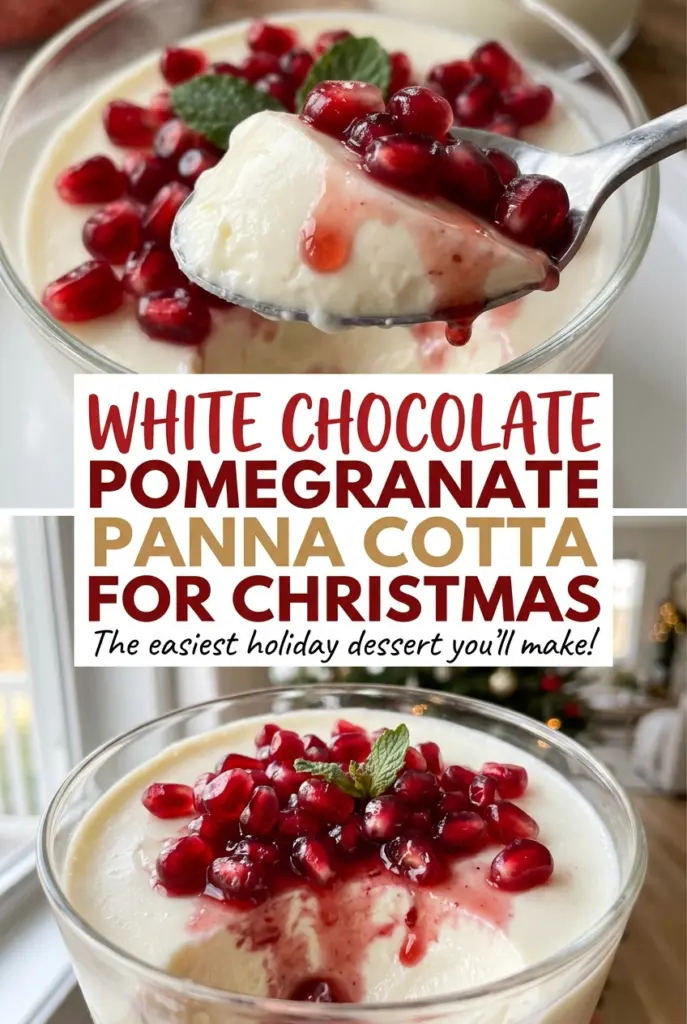
The cream should give off wisps of steam, not bubbles, when it’s ready to come off the stove. Let it boil and you risk a less delicate panna cotta; keep the heat gentle and the mixture stays smooth for folding in the white chocolate. I make these individual servings in small glasses, which means there’s no unmolding drama when dessert is ready.
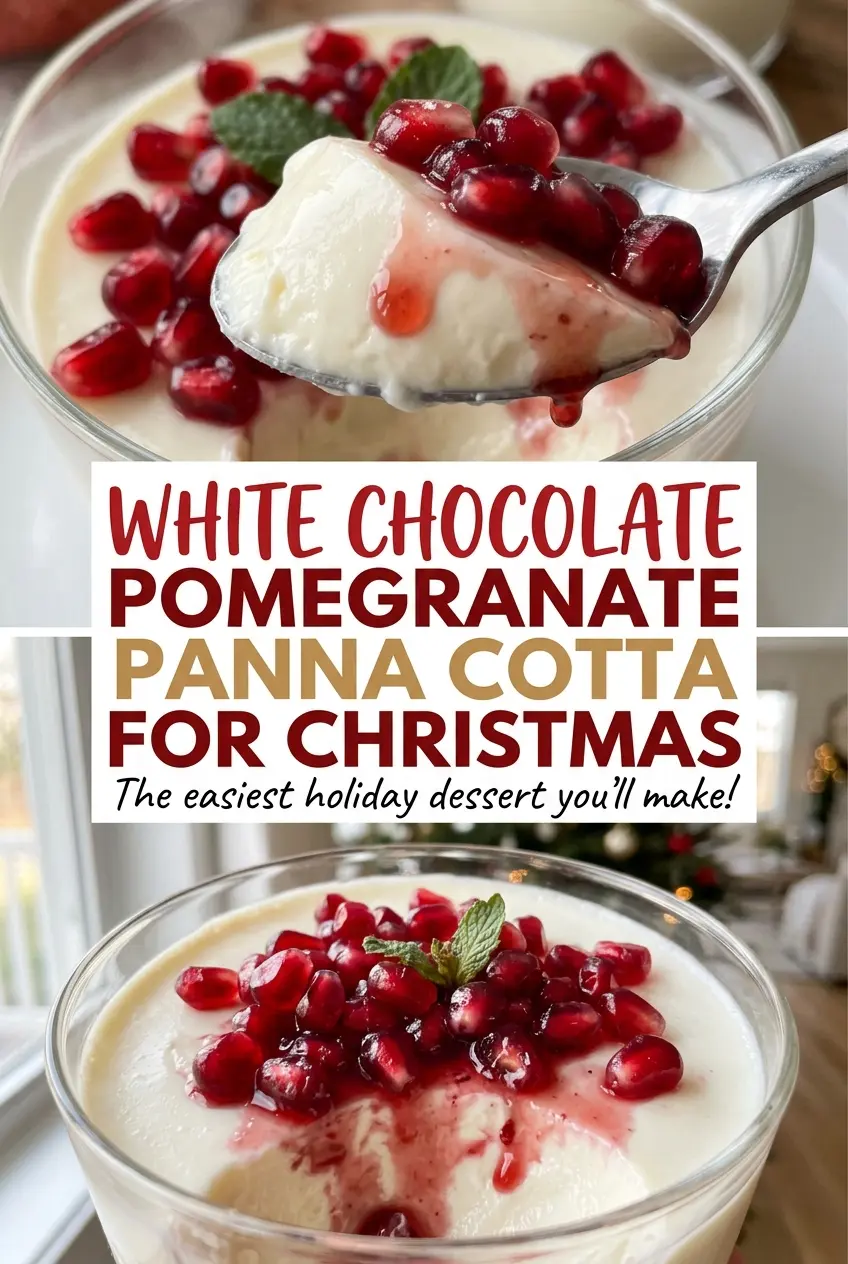
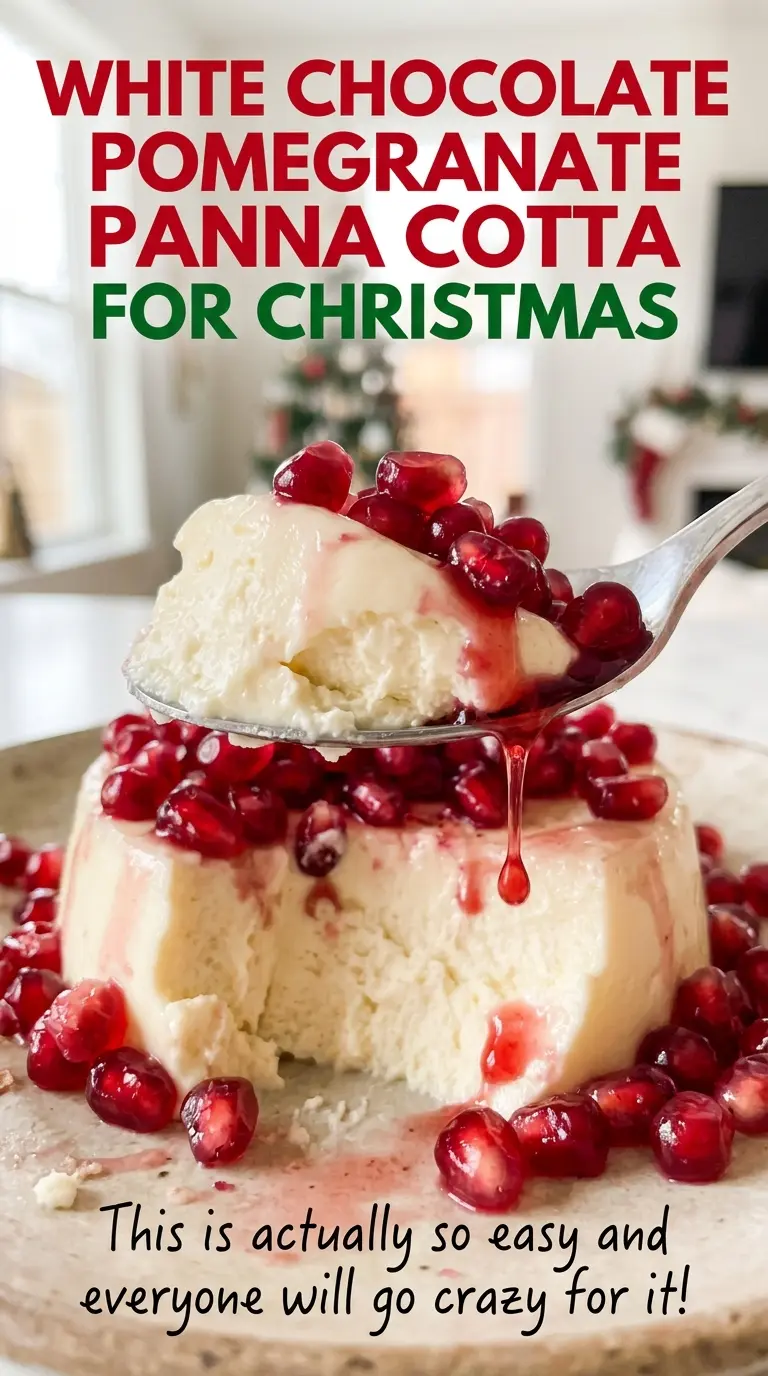
For this White Chocolate Pomegranate Panna Cotta for Christmas, the topping gets its own saucepan and its own chill time. Pomegranate juice turns glossy with a quick cornstarch slurry, then the arils go in once the sauce is cold. That contrast is what makes each spoonful work: cool, creamy panna cotta under a bright, tart-sweet layer with little bursts of pomegranate. It looks festive in the glass, but the real pleasure is how the silky base softens the sharp edge of the fruit.
Kitchen Note
Sprinkle the gelatin across the cold water rather than tipping it in as one pile. After five minutes, it should look thick and hydrated, which makes it much easier to whisk evenly into the warm cream.
Save this White Chocolate Pomegranate Panna Cotta for Christmas when you want a make-ahead dessert with a silky white chocolate base and a bright, jewel-toned topping.
Why the Pomegranate Sauce Needs Its Own Chill Time
The panna cotta and topping are both easy to make, but they don’t finish at the same pace. The cream mixture needs several hours in the refrigerator to become softly set. The pomegranate sauce thickens on the stove, then needs to cool separately before it goes anywhere near that delicate surface.
If you spoon warm sauce over the panna cotta, the top can soften and the layers lose their clean look. Cooling the sauce first also keeps the contrast pleasant: the panna cotta stays cool and creamy while the topping brings a fresh, fruity bite. I like to plan the sauce’s chill time alongside the panna cotta’s setting time, rather than leaving both parts to the last minute. The arils are stirred into the cold sauce at the end, so they keep their juicy pop instead of sitting in hot syrup.
What Gives the Creamy Base Its Smooth Set and the Topping Its Shine
- Powdered gelatin — This is what gives the chilled cream its delicate, spoonable set. It needs to hydrate in cold water before it meets the warm dairy; it doesn’t have a direct swap that keeps this exact texture, so use powdered gelatin for the intended result.
- Heavy cream and whole milk — Cream brings the rich, silky feel, while whole milk keeps the base from feeling too heavy. Full-fat dairy gives the most dependable texture here; a dairy-free adaptation is described below, though it brings a coconut note.
- White chocolate — Finely chopping it helps it melt smoothly into the warm cream. A good-tasting white chocolate matters because its sweetness and creamy cocoa-butter character come through clearly; dairy-free white chocolate works in the adaptation, but changes the flavor.
- Pomegranate juice and cornstarch — The juice supplies the fruit’s tartness, and the cornstarch thickens it into a glossy sauce. A 100% pomegranate juice keeps the topping’s sweetness easier to judge; don’t replace the cornstarch with flour, which won’t give the same clear finish.
- Pomegranate arils — These add fresh, juicy bursts against the smooth sauce. Choose arils that look plump rather than dried out, or leave them out for a completely smooth topping.
- Vanilla and granulated sugar — Vanilla rounds out the white chocolate without taking over, and sugar balances the tart juice. There’s no need to use a special kind of granulated sugar; regular pantry sugar dissolves in the warm mixture and simmering juice.
Building the Panna Cotta and Glossy Pomegranate Topping
Hydrate the Gelatin, Then Warm the Dairy Gently
Sprinkle the powdered gelatin evenly over the cold water in a small bowl and let it stand for five minutes, until thickened. While it blooms, combine the cream, milk, sugar, and salt in a medium saucepan. Stir over medium heat for about four to six minutes, until the mixture is steaming and the sugar has dissolved. Keep it below a boil; bubbling cream can make the finished texture less delicate.
Whisk in the Chocolate While the Cream Is Warm
Take the saucepan off the heat before adding the bloomed gelatin, then whisk until it has dissolved. Add the finely chopped white chocolate and whisk until the mixture looks smooth, with no visible pieces. Stir in the vanilla last. If the chocolate still looks lumpy, keep whisking while the mixture is warm rather than putting the pan back over high heat.
Portion the Cream and Give It Time to Set
Divide the mixture among six 6-ounce glasses, cover them, and refrigerate for at least four hours. The panna cotta should be set enough to hold its shape in the glass while still yielding softly to a spoon. Don’t judge the set by the surface alone; give the centers the full chilling time. Keeping the portions in glasses also means you can serve them without trying to turn out a fragile dessert.
Thicken the Juice, Chill It, and Finish with Arils
Combine the pomegranate juice and sugar in a small saucepan, then bring them to a gentle simmer over medium heat, stirring until the sugar dissolves. Stir the cornstarch into cold water until smooth, whisk it into the simmering juice, and cook for one to two minutes, until glossy and slightly thickened. Cool the sauce at room temperature for 15 minutes, then refrigerate it until cold, about 30 minutes. Stir in the arils and spoon the topping over the chilled glasses just before serving.
Two Ways to Adapt the Pomegranate Panna Cotta
Make a Dairy-Free Coconut Version
Replace the combined cream and milk with the same volume of full-fat canned coconut milk, and replace the white chocolate with dairy-free white chocolate in the same amount. Keep the powdered gelatin; this version is dairy-free, not vegan. The coconut adds its own flavor, so expect a less classic white-chocolate taste.
Leave the Topping Smooth
Skip the pomegranate arils and spoon the chilled, thickened juice sauce over the glasses on its own. You’ll keep the tart pomegranate contrast but lose the juicy pops of fruit, which makes each bite more uniform.
Make-Ahead and Storage
- Make-ahead: Prepare the covered panna cotta glasses and the sauce separately, then stir the arils into the cold sauce shortly before serving.
- Refrigerator: Keep the covered glasses and topping refrigerated and use within 3 days for the best texture. The sauce may thicken further as it chills.
- Freezer: Freezing isn’t recommended; thawed panna cotta can lose its smooth, delicate texture. Serve it cold from the refrigerator rather than reheating it.
Questions That Come Up When Making Panna Cotta
White Chocolate Pomegranate Panna Cotta for Christmas
Ingredients
Equipment
Method
- Sprinkle the gelatin evenly over the cold water in a small bowl and let it stand for 5 minutes, until thickened.
- Combine the cream, milk, sugar, and salt in a medium saucepan. Heat over medium heat, stirring, until steaming and the sugar has dissolved, about 4 to 6 minutes; do not let it boil.
- Remove the saucepan from the heat and whisk in the gelatin until dissolved. Add the white chocolate and whisk until smooth, then whisk in the vanilla.
- Divide the mixture among six 6-ounce glasses, cover, and refrigerate until set, at least 4 hours.
- Combine the pomegranate juice and sugar in a small saucepan and bring to a gentle simmer over medium heat, stirring until the sugar dissolves.
- Stir the cornstarch into the cold water until smooth, then whisk it into the simmering juice. Cook, whisking, until glossy and slightly thickened, 1 to 2 minutes.
- Let the sauce cool at room temperature for 15 minutes, then refrigerate until cold, about 30 minutes.
- Stir the pomegranate arils into the chilled sauce, spoon it over the panna cottas, and serve.