
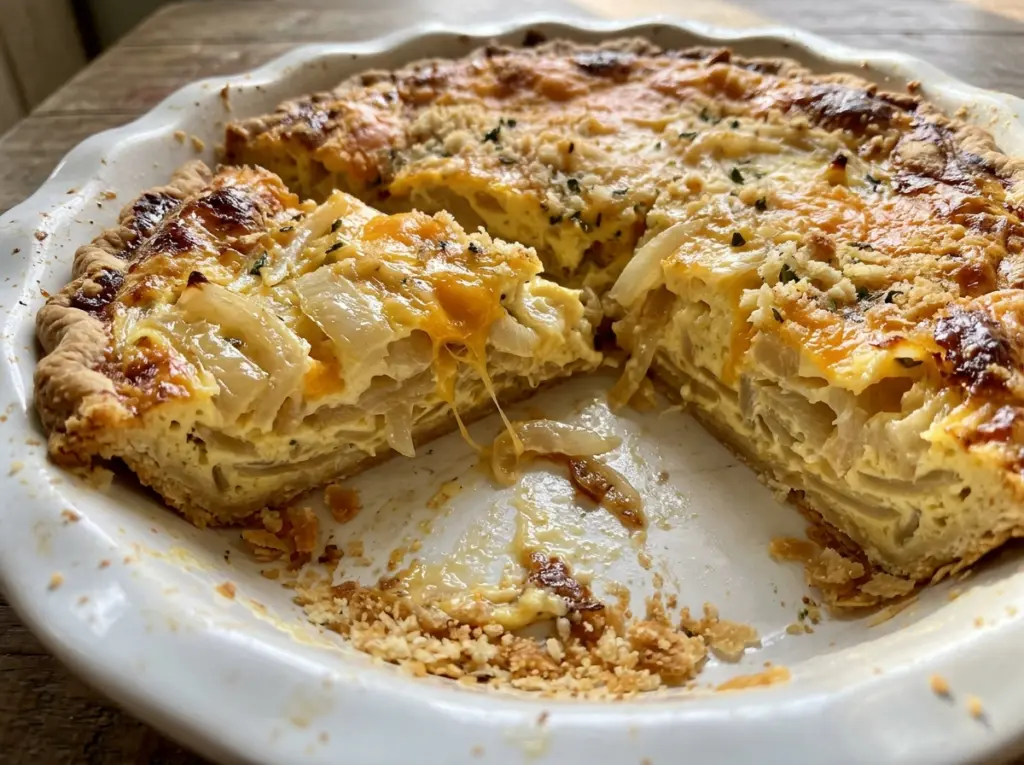
The onions are the part of this pie that take patience: they need time in the skillet to soften and give up their liquid without picking up color. When they’re ready, they’re silky and sweet, not browned or crisp. That gentle onion base is what makes Vidalia Onion Pie taste mellow and savory instead of sharp.
I bake the crust before adding the filling, which gives it a head start under the creamy egg mixture. Then the onions cool while I whisk together the sour cream, milk, eggs, and seasonings. Sharp cheddar brings a little bite to the soft, custardy filling, and paprika adds a warm note without taking over. Give the pie a short rest after baking, and each slice holds together with a tender center and a crisp-edged crust.
Kitchen Note
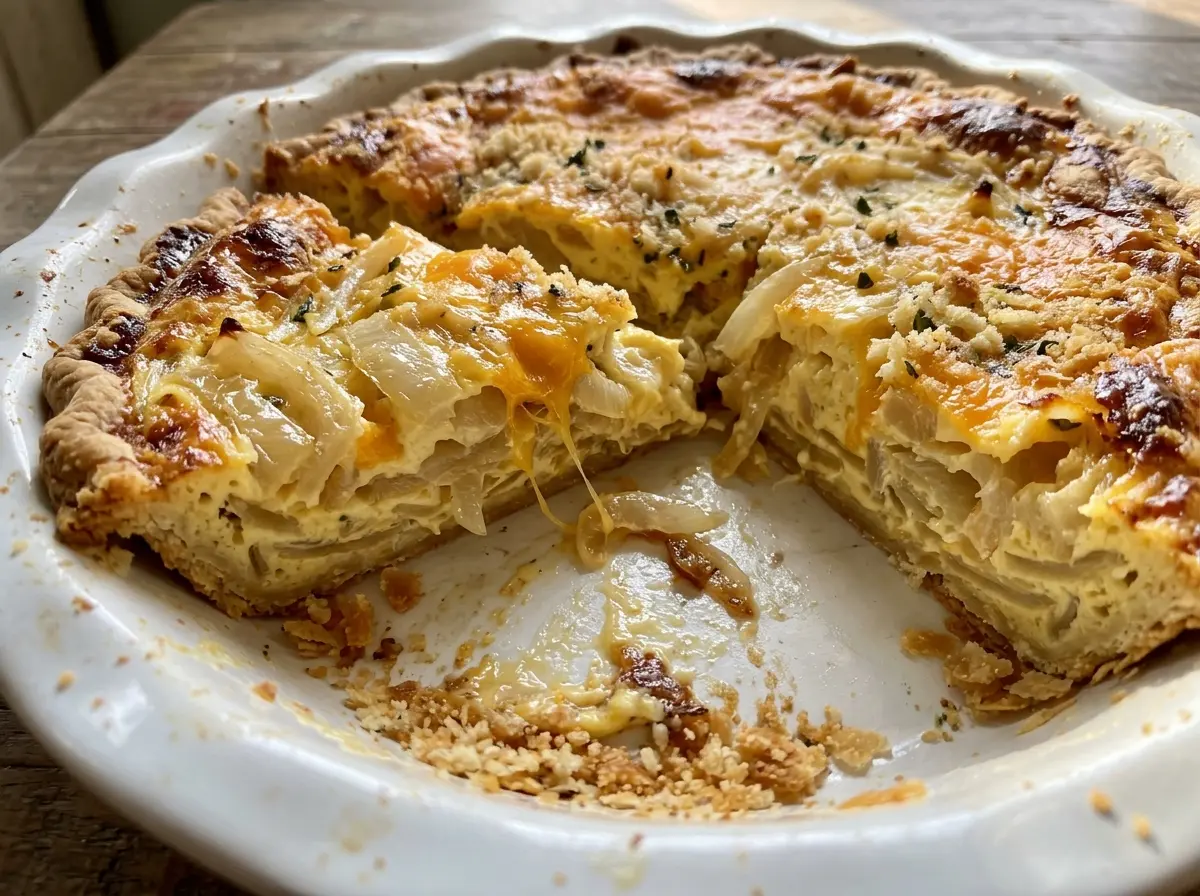
Keep the skillet at medium-low and stir the onions often. They’re ready when they’re very soft and the liquid has evaporated, but they haven’t browned.
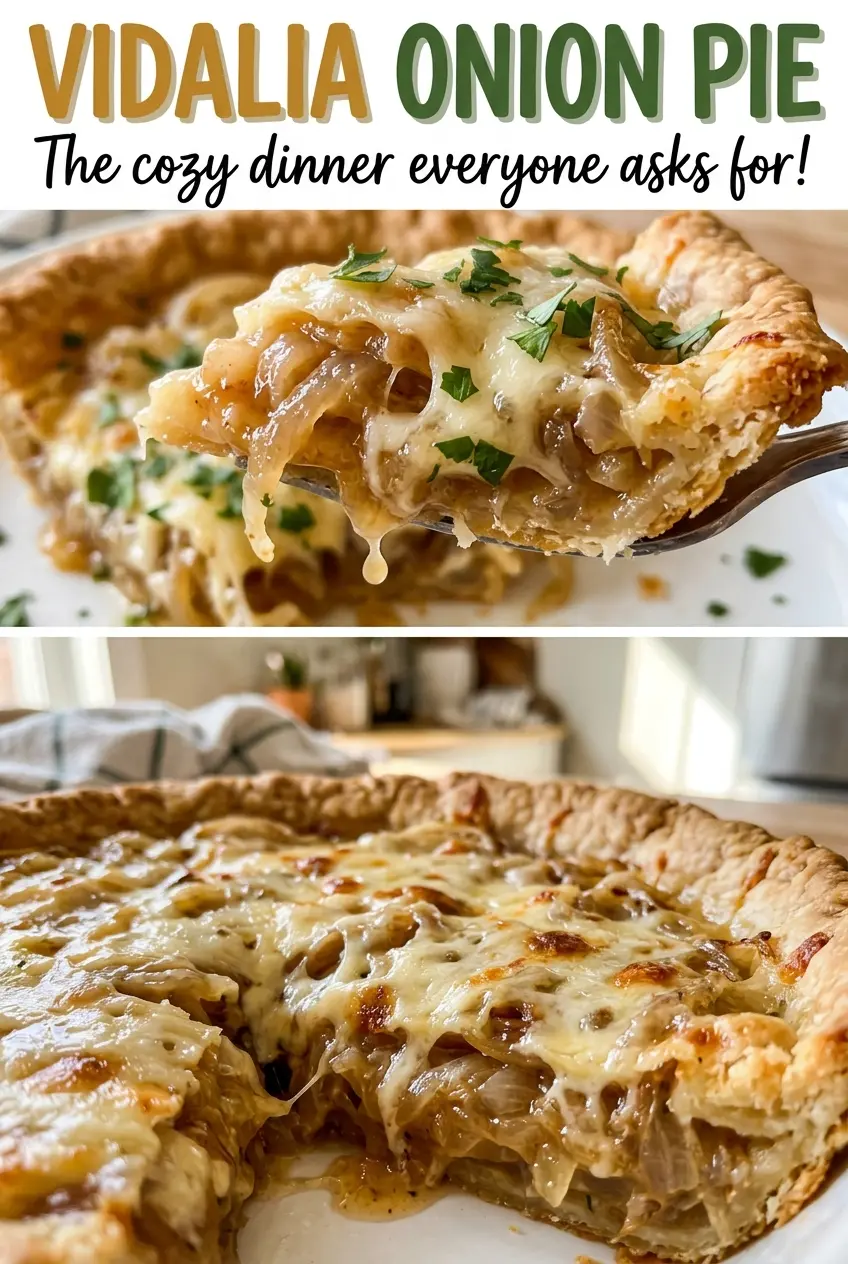
Save Vidalia Onion Pie for a savory brunch or supper: tender sweet onions tucked into a sharp cheddar custard and a crisp, pre-baked crust.
Why Vidalia Onion Pie Needs a Dry, Partly Baked Crust
The filling is a moist custard, so an unbaked crust has a tough job: it has to cook through while sitting beneath eggs, sour cream, milk, cheese, and cooked onions. That’s a common reason savory pies come out with a pale, soft bottom even when the top looks finished. Giving the crust its own time in the oven helps it set before the filling goes in.
The two-stage bake matters here. Pie weights hold the pastry in place during the first bake, so the sides are less likely to slump. Removing the weights for the final few minutes exposes the base and lets it dry out, while the faint golden color is a useful cue that it’s ready for filling. It won’t be deeply browned at this point, and it doesn’t need to be; it will bake again once the custard is added. Letting the shell cool while you prepare the filling also keeps the hot crust from going straight into the bowl of egg mixture. That little bit of separation helps you build the pie in steady stages instead of rushing the delicate pastry.
What Vidalia Onions and Sharp Cheddar Bring to the Custard
- Vidalia onions — Their naturally mild, sweet character is a good fit for a pie where onion is the main event. Slice them thinly so they soften evenly in the skillet. Keep the slices reasonably uniform; thick pieces take longer to turn tender.
- Sharp cheddar — Sharpness gives the creamy filling a savory edge, so the pie doesn’t taste flat or overly rich. A block you shred yourself usually melts smoothly, though packaged shredded cheddar is convenient and works in the filling.
- Sour cream and whole milk — Sour cream gives the custard body and a gentle tang, while whole milk loosens it enough to pour. Together they make a softer, creamier filling than milk alone. Keep both in the mixture rather than replacing one with the other.
- Eggs — Eggs are what turn the dairy and cheese into a sliceable custard. Whisk them with the sour cream, milk, and seasonings until smooth before stirring in the onions and cheddar; that distributes the seasoning through the filling.
- Refrigerated pie crust — A ready-to-fit 9-inch crust keeps the pastry work simple and gives the filling a sturdy shell. Handle it gently when fitting it into the plate so it doesn’t tear, then crimp the edge before lining it for the first bake.
- Paprika and black pepper — These seasonings add warmth and balance without hiding the onions. Paprika also gives the pale custard a little color, while black pepper keeps the sweet onions from being the only note in each bite.
Build the Pie in Four Calm Stages
Set the crust before adding the filling
Heat the oven to 400°F and fit the refrigerated crust into a 9-inch pie plate, crimping the edge. Line it with parchment and fill it with pie weights so the pastry stays in place as it bakes. Bake for 15 minutes, then lift out the parchment and weights and return the crust to the oven for 5 to 7 minutes. Look for a dry surface that’s just beginning to turn golden, then let the shell cool while you prepare the onions.
Soften the onions slowly
Melt the butter in a large skillet over medium-low heat, then add the thinly sliced onions. Stir often as they cook for 20 to 25 minutes; the goal is very soft onions, with the liquid evaporated and no browning. If the onions start coloring, lower the heat rather than trying to hurry them along. Transfer the skillet off the heat and let the onions cool for 10 minutes.
Whisk a smooth cheddar custard
Reduce the oven temperature to 350°F. In a large bowl, whisk the eggs, sour cream, whole milk, kosher salt, black pepper, and paprika until the mixture looks smooth. Stir in the shredded cheddar and cooled onions so they’re spread through the custard rather than sitting in one clump. If the onions are still hot, give them more time to cool before mixing them with the eggs.
Bake until the center sets
Pour the filling into the cooled crust and bake for 35 to 45 minutes. The center should look set rather than liquid, and an instant-read thermometer inserted in the middle should register 160°F. If the edges look ready before the middle, use the center temperature as your check instead of relying on color alone. Rest the pie for 15 minutes before slicing so the custard has time to settle into neat wedges.
Make-Ahead Options and a Gluten-Free Crust Swap
Use a Gluten-Free Refrigerated Crust
For a gluten-free adaptation, replace the regular refrigerated crust with a gluten-free refrigerated crust sized for a 9-inch pie plate. The onion-and-cheddar custard stays the same, while the pastry may be more delicate to handle. Follow the crust package’s directions for fitting and blind baking, since gluten-free crusts vary in how they behave in the oven.
Prepare the Crust and Onions Ahead
You can blind-bake the crust and cook the onions ahead, then refrigerate them separately once cooled. When you’re ready to bake, whisk the custard, stir in the cheddar and onions, and fill the crust. Keeping the components separate until assembly preserves the crust’s texture better than leaving it filled and waiting.
Storage and Reheating
- Refrigerator: Refrigerate leftovers in a covered container for 3 to 4 days. The crust softens somewhat as it sits, but the custard remains tender.
- Freezer: Freeze fully cooled slices, wrapped individually and placed in an airtight container, for up to 2 months. Thaw them in the refrigerator before reheating; the crust may be softer than when freshly baked.
- Reheating: Warm slices in a 325°F oven until heated through. Avoid reheating for too long or at a high temperature, which can make the egg custard tough.
Questions I Get Asked About Vidalia Onion Pie
Vidalia Onion Pie
Ingredients
Equipment
Method
- Heat the oven to 400°F.
- Fit the pie crust into a 9-inch pie plate, crimping the edge.
- Line the crust with parchment paper and fill with pie weights.
- Bake for 15 minutes.
- Remove the parchment and weights.
- Bake for 5 to 7 minutes more, until the crust looks dry and is just beginning to turn golden.
- Cool the crust while you prepare the filling.
- Melt the butter in a large skillet over medium-low heat.
- Add the onions and cook for 20 to 25 minutes, stirring often, until very soft and the liquid has evaporated without browning.
- Cool the onions for 10 minutes.
- Reduce the oven temperature to 350°F.
- In a large bowl, whisk the eggs, sour cream, milk, salt, pepper, and paprika until smooth.
- Stir in the cheddar and cooled onions.
- Pour the filling into the crust.
- Bake for 35 to 45 minutes, until the center is set and registers 160°F on an instant-read thermometer.
- Let the pie rest for 15 minutes before slicing.