
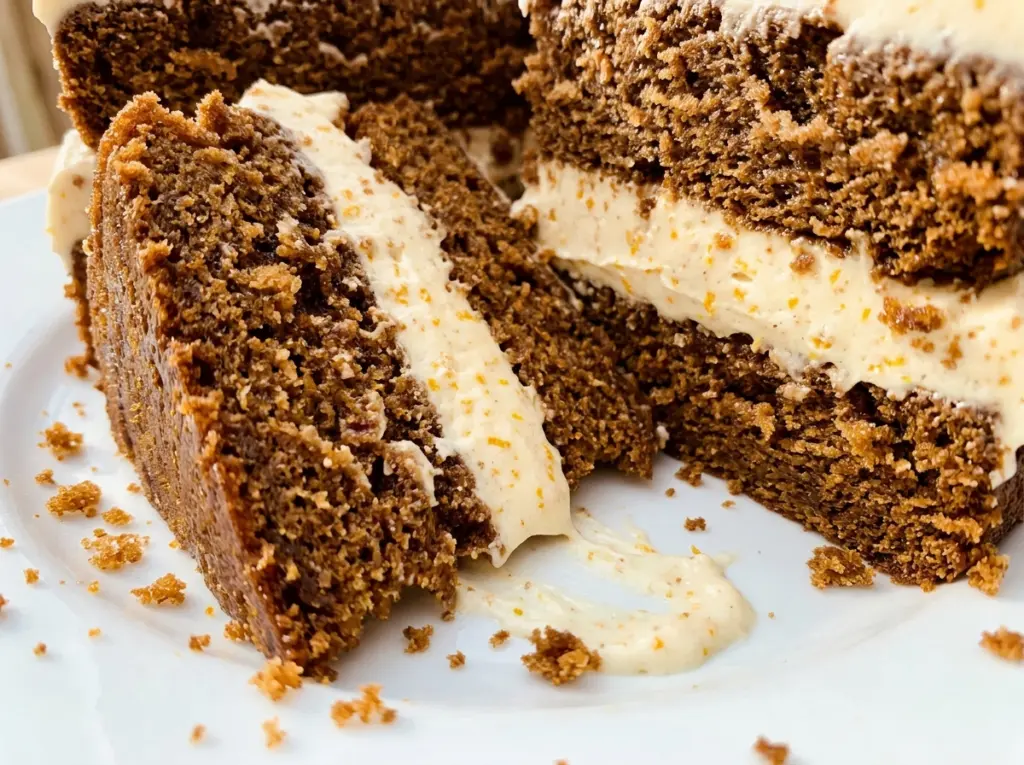
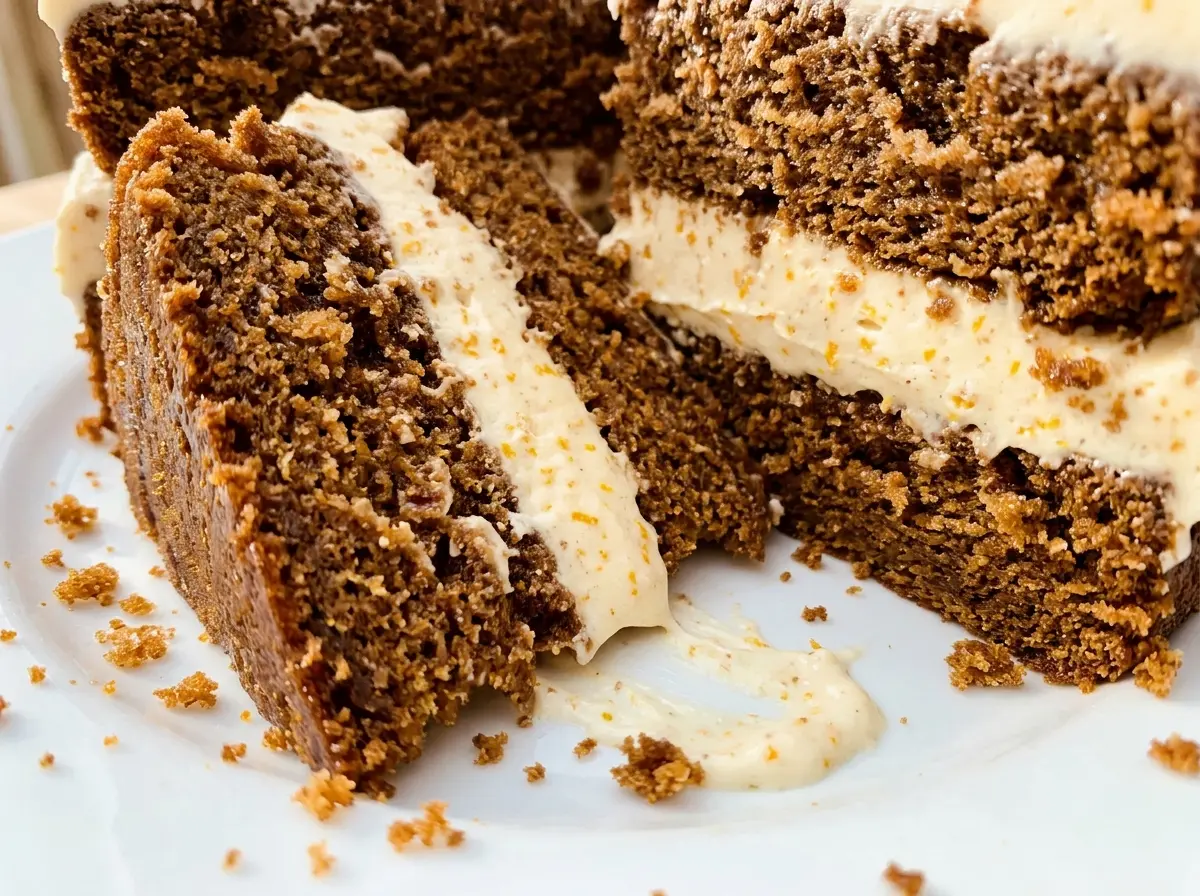
The batter smells like ginger and molasses before it even reaches the oven, and the cake comes out with a tender crumb that holds up under a generous layer of cream. I wanted this Vanilla Orange Gingerbread Cream Cake to taste unmistakably like gingerbread without making the frosting overly sweet or heavy.
Buttermilk gives the spiced cake a gentle tang, while orange zest keeps the mascarpone cream bright. I mix the dry ingredients into the butter mixture in stages, alternating with buttermilk, so the batter comes together without extra mixing. Once the layers are cool, the vanilla-orange cream spreads smoothly over the top and sides, ready to chill into a neat, softly spiced slice.
Kitchen Note
I set the eggs and buttermilk out before I start mixing. Cold ingredients can make the creamed butter look curdled when they go into the bowl, while room-temperature ingredients blend in more smoothly.
Save this Vanilla Orange Gingerbread Cream Cake for a layered dessert with warm gingerbread spice and a bright vanilla-orange cream.
Why This Gingerbread Cake Uses Both Baking Soda and Baking Powder
It’s easy to assume the two leaveners are interchangeable, but they have different jobs here. Buttermilk and molasses bring acidity to the batter, and baking soda reacts with that acidity. Baking powder contributes additional lift, helping the layers rise into a soft, even crumb.
Leaving one out changes the balance. Extra baking soda isn’t a simple way to make the cake taller, and using baking powder alone won’t create the same reaction with the acidic ingredients. Whisk both leaveners thoroughly with the flour and spices before they go into the wet ingredients; that distributes them through the batter and helps the layers bake evenly. The result is a cake that feels light enough for cream frosting but still has the sturdy, close crumb you want in a layered gingerbread cake.
What Gives the Cake Its Gingerbread Character—and the Cream Its Lift

- Unsulphured molasses — It supplies the deep, rounded sweetness that gives the cake its gingerbread taste. Choose a fresh bottle with a clean, familiar molasses aroma; it’s the defining ingredient, so a very dark, bitter variety can overwhelm the spices.
- Ground ginger, cinnamon, and cloves — Together they make the cake taste warm and spiced rather than sharply gingery. Fresh, fragrant spices matter more than an expensive brand; if a jar smells faint, the cake will taste less lively.
- Buttermilk — Its tang balances the molasses and helps keep the crumb tender. For a practical substitute, stir lemon juice or white vinegar into regular milk and let it stand for 5 minutes before using; the texture may be a little less rich than cultured buttermilk.
- All-purpose flour — It gives the layers enough structure to stack and hold the cream. Spoon it into the measuring cup and level it rather than packing it down, which can leave the cake heavier than intended.
- Mascarpone and heavy cream — Mascarpone makes the frosting creamy and mellow, while cold heavy cream whips it into a spreadable topping. Use full-fat mascarpone and heavy cream; lighter cream won’t whip into the same stable texture.
- Fresh orange zest — Finely grated zest brings fragrant citrus oils without adding liquid to the cream. A fresh orange is worth using here, and a fine grater helps keep bitter white pith out of the frosting.
Build the Layers Without Overmixing the Batter
Prepare the pans and spice mixture
Heat the oven to 350°F and grease two 8-inch round cake pans. Line the bottoms with parchment, then grease the parchment so the layers release cleanly. Whisk the flour, baking soda, baking powder, salt, ginger, cinnamon, and cloves in a medium bowl until the spices are evenly distributed. A few clumps of baking soda or spice can leave an uneven bite, so break them up as you whisk.
Cream the butter, sugar, eggs, and molasses
Beat the softened butter and packed light brown sugar with an electric mixer on medium speed for about 2 minutes, until the mixture looks fluffy. Add the eggs one at a time, beating after each, then mix in the molasses until it’s combined. Scrape down the bowl if butter or sugar is clinging to the sides. The mixture should look cohesive before you start adding flour.
Alternate the flour mixture and buttermilk
Add the flour mixture in three additions and the buttermilk in two, beginning and ending with the flour. Mix on low just until each addition disappears, stopping to scrape the bowl if needed. Don’t beat the batter until it looks silky; extra mixing after the flour goes in can make the crumb tougher. Divide the batter evenly between the prepared pans so the layers finish baking at about the same time.
Bake until the centers spring back
Bake for 30–35 minutes, until the centers spring back lightly when touched and a toothpick inserted in the middle comes out with a few moist crumbs. If the toothpick is coated in wet batter, give the cakes more time and check again. Let the cakes cool in their pans for 15 minutes, then turn them onto a wire rack, remove the parchment, and cool completely before frosting.
Whip the orange cream and assemble
Beat the cold mascarpone with the confectioners’ sugar, orange zest, and vanilla until smooth. Gradually beat in the cold heavy cream, then whip to medium-stiff peaks; stop once the cream holds its shape instead of pushing on after it looks firm. Set one cake layer on a serving plate and spread about 1 1/2 cups of cream over it. Add the second layer, frost the top and sides with the remaining cream, and refrigerate for at least 30 minutes before serving.
Three Smart Ways to Adapt the Gingerbread and Orange Balance
Use a one-to-one gluten-free flour blend
Replace the all-purpose flour with the same amount of a gluten-free measure-for-measure baking blend that includes xanthan gum. The layers may have a slightly different crumb, but the blend gives the cake structure without changing the method.
Trade the orange for lemon
Use finely grated lemon zest in place of the orange zest in the cream. The frosting will taste sharper and less sweetly citrusy, which makes a nice contrast with the molasses and warm spices.
Make the brown sugar darker
Swap the light brown sugar for the same amount of dark brown sugar. Its stronger molasses notes make the cake taste deeper and more assertively spiced, without changing the mixing steps.
Storage and Serving
- Refrigerator: Cover and refrigerate leftover frosted cake for 3–4 days. The cream may lose a little of its freshly whipped texture over time.
- Freezer: The assembled cake isn’t the best candidate for freezing because the cream can lose its smooth texture. Freeze unfrosted, completely cooled layers, wrapped tightly, for up to 2 months; thaw before frosting.
- Serving: Serve the cake chilled rather than reheating it. Don’t leave the cream-topped cake at room temperature for more than 2 hours.
Questions That Come Up When Baking This Gingerbread Cream Cake
Vanilla Orange Gingerbread Cream Cake
Ingredients
Equipment
Method
- Heat the oven to 350°F.
- Grease two 8-inch round cake pans, line the bottoms with parchment paper, and grease the parchment.
- Whisk the flour, baking soda, baking powder, salt, ginger, cinnamon, and cloves together in a medium bowl.
- Beat the butter and brown sugar in a large bowl with an electric mixer on medium speed until fluffy, about 2 minutes.
- Beat in the eggs one at a time.
- Beat in the molasses until combined.
- Add the flour mixture in three additions, alternating with the buttermilk in two additions, beginning and ending with the flour mixture.
- Mix on low just until combined.
- Divide the batter evenly between the pans.
- Bake for 30–35 minutes, until the centers spring back lightly and a toothpick inserted in the center comes out with a few moist crumbs.
- Cool the cakes in the pans for 15 minutes.
- Turn the cakes out onto a wire rack and remove the parchment.
- Cool the cakes completely.
- Beat the mascarpone, confectioners’ sugar, orange zest, and vanilla in a large bowl until smooth.
- Gradually beat in the cold heavy cream and whip to medium-stiff peaks.
- Place one cake layer on a serving plate.
- Spread about 1 1/2 cups of cream over the layer.
- Top with the second layer.
- Spread the remaining cream over the top and sides.
- Refrigerate the cake for at least 30 minutes before serving.
- Refrigerate leftovers.