
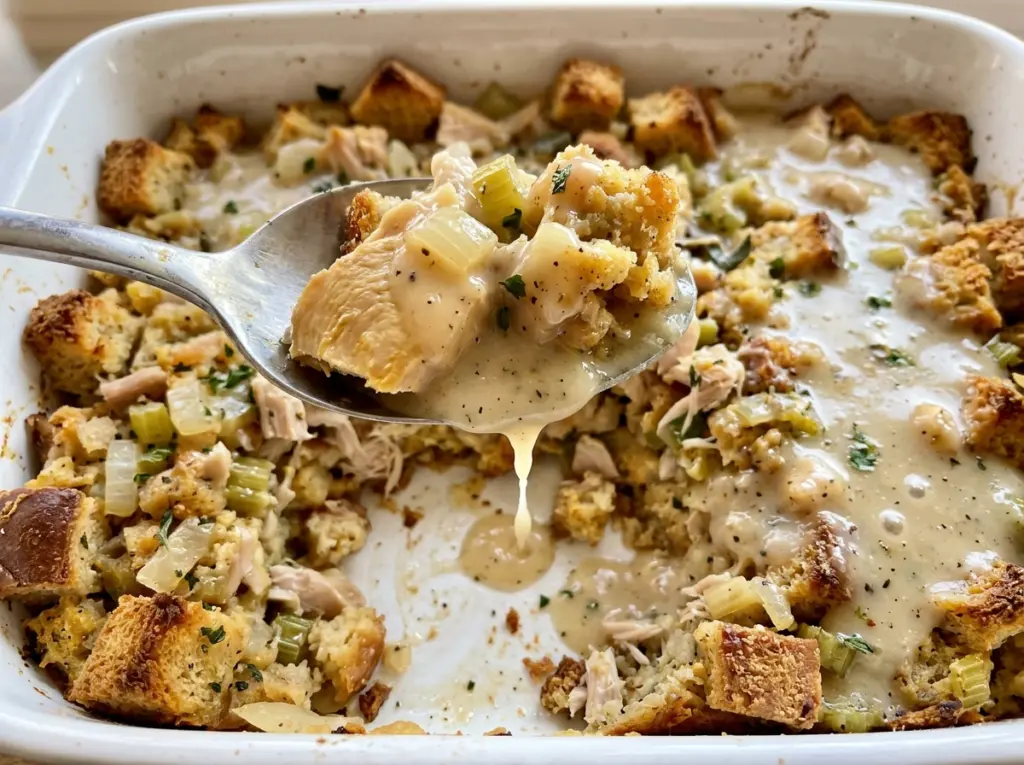
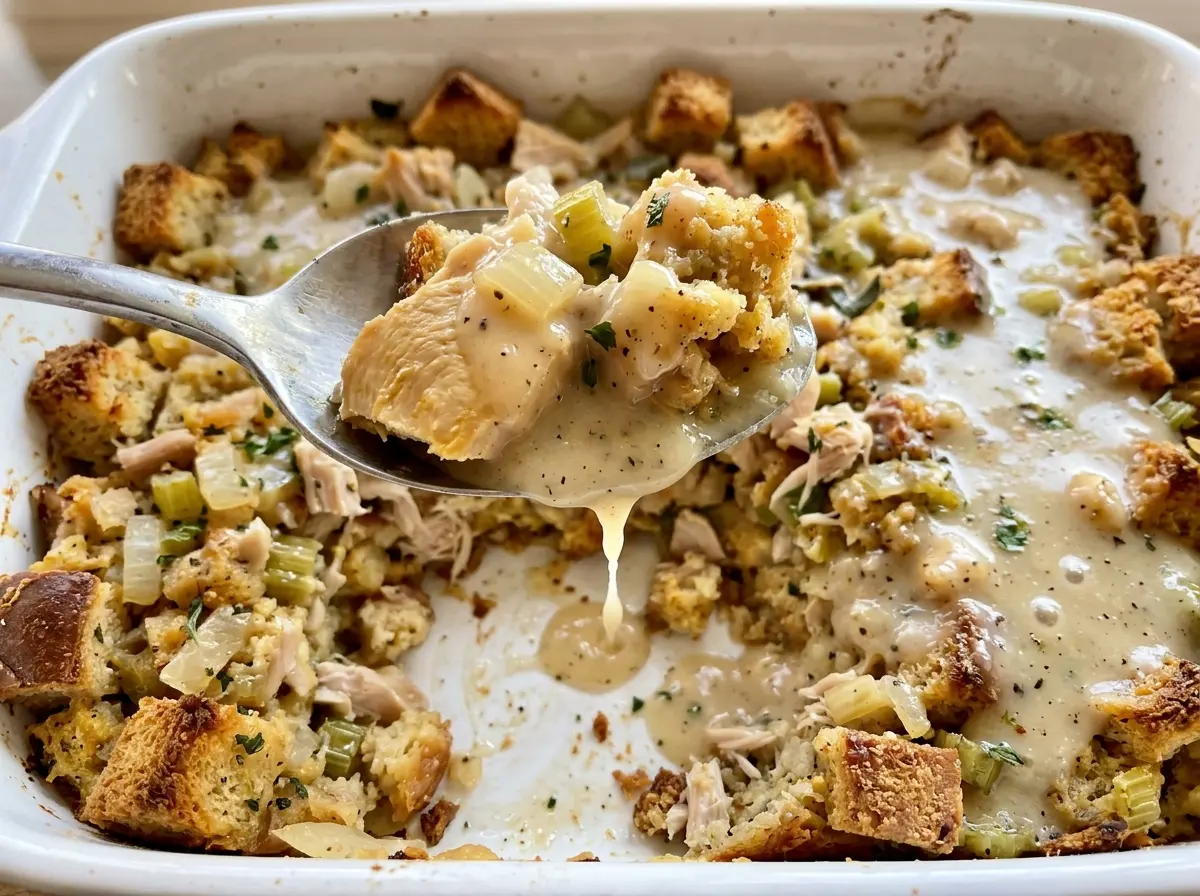
When the gravy bubbles around the edges and the stuffing turns golden, you know this casserole is ready for its ten-minute rest. Before that, though, the topping needs a little care: pack it down and it can bake up heavy instead of staying soft in the middle. This Thanksgiving turkey and stuffing casserole with creamy gravy gives cooked turkey a cozy place to go, all in one 9×13-inch dish.
I build the filling in a skillet, so the onion and celery soften right in the butter before flour, broth, and cream turn them into gravy. The stuffing gets its own bowl and a few minutes to absorb the buttery boiling water before the eggs go in. That separation keeps the layers distinct: savory turkey and vegetables underneath, tender stuffing on top, with browned edges where the gravy bubbles up.
Kitchen Note
Give the stuffing cubes the full 10 minutes to absorb the hot water and butter. Fold in the eggs only when the mixture feels warm, not hot, so they blend in without setting early.
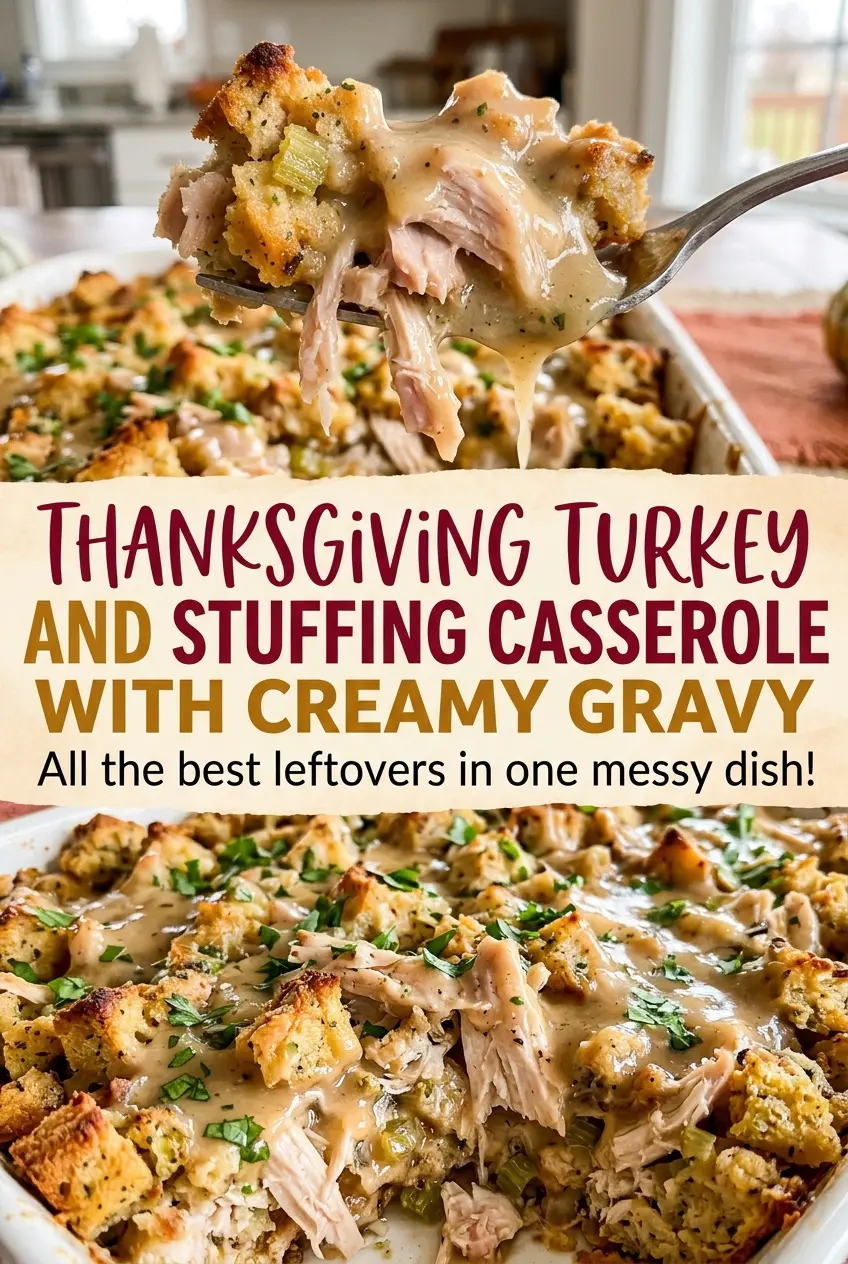
Save this Thanksgiving turkey and stuffing casserole for a golden stuffing top and creamy gravy wrapped around tender turkey.
Why a Loose Stuffing Layer Bakes Better Than a Packed One
Stuffing pressed firmly into the dish behaves differently from stuffing spooned on lightly. A tight layer compresses the cubes, leaving less room for the steam and hot air to move through; the center can turn dense while the surface browns. I spread the stuffing across the turkey filling without tamping it down, so it stays tender underneath and gets more color on top.
The covered start and uncovered finish solve two different problems. Foil gives the casserole time to heat through without drying out the bread, while the final stretch uncovered lets the top turn golden. Keep the foil loose rather than pressing it against the stuffing. When the filling bubbles around the edges and the center reaches 165°F, the casserole is hot through and the top has had time to brown. A ten-minute rest lets the layers settle enough to serve without the gravy rushing across the plate.
What the Stuffing Cubes and Cream Bring to This Casserole
- Seasoned bread stuffing cubes — Their dry, airy texture absorbs the buttery water while holding a spoonable shape. Fresh bread doesn’t absorb liquid the same way, and plain cubes won’t bring the same seasoning; use the packaged seasoned cubes for the most reliable topping.
- Heavy cream — It gives the gravy a rich texture that holds up as the casserole bakes. Half-and-half works for a lighter result, though the sauce won’t feel as rich; the flour still helps it thicken.
- Low-sodium chicken broth — This brings the savory base without making it hard to control the salt. If you only have regular broth, leave out the added kosher salt at first, taste the finished gravy, and season gradually.
- All-purpose flour — It thickens the broth and cream into a gravy that coats the turkey instead of running to the bottom of the dish. For a gluten-free version, use a cup-for-cup gluten-free flour blend in the gravy and gluten-free stuffing cubes for the topping.
- Cooked turkey — Chopped turkey gives the filling substantial pieces; shredded turkey spreads more evenly through the gravy. Either works, and cooked chicken is a close, straightforward swap if that’s what you have.
- Frozen peas and carrots — Thaw them before stirring them into the gravy so they don’t cool the filling or release extra water as they bake. Frozen vegetables are a practical choice here; there’s no need to seek out fresh ones.
- Unsalted butter — It adds richness to both the gravy base and the stuffing without building in extra salt. Salted butter can work, but hold back on seasoning the gravy until you’ve tasted it.
- Eggs — Beaten eggs help the hydrated cubes hold together as a topping. I don’t recommend leaving them out; the stuffing is more likely to crumble instead of serving in soft, cohesive portions.
Build the Gravy First, Then Keep the Topping Light
Soften the onion and celery
Heat the oven to 375°F and grease a 9×13-inch baking dish. Melt 4 tablespoons of butter in a 12-inch skillet over medium heat, then add the finely chopped onion and celery. Cook for 6 to 8 minutes, stirring occasionally, until the vegetables have softened and smell sweet rather than sharp. If they begin to brown before softening, lower the heat.
Whisk a smooth, creamy gravy
Stir the flour into the softened vegetables and cook for 1 minute so the raw flour taste cooks off. Gradually whisk in the broth and cream, keeping the whisk moving as the liquid joins the butter-flour mixture; adding it all at once makes lumps more likely. Stir in the poultry seasoning, kosher salt, and black pepper, then simmer for 4 to 6 minutes, whisking, until the gravy thickens. It should look smooth and cling to the vegetables.
Hydrate and bind the stuffing
Put the stuffing cubes in a large bowl while you melt the remaining butter. Stir the butter into the boiling water, pour it over the cubes, and toss until the liquid is distributed. Let the mixture stand for 10 minutes, then fold in the beaten eggs until the cubes are evenly moistened. If you see dry pockets, gently fold again rather than crushing the bread.
Layer, bake, and let it rest
Stir the turkey and thawed peas and carrots into the gravy, then take the skillet off the heat. Spread the filling in the prepared dish and spoon the stuffing over it in an even, uncompressed layer. Cover loosely with foil and bake for 20 minutes; remove the foil and bake for another 15 to 20 minutes, until the edges bubble, the top is golden, and the center reaches 165°F. Rest the casserole for 10 minutes before serving.
Swaps That Keep the Casserole’s Balance
Make the casserole gluten-free
Replace the all-purpose flour with a cup-for-cup gluten-free flour blend, and use gluten-free seasoned stuffing cubes. The gravy may thicken at a slightly different pace, so judge it by its smooth, coating texture; the topping may also have a different crumb from wheat-based cubes.
Use cooked chicken instead of turkey
Swap in the same amount of chopped or shredded cooked chicken. The creamy gravy and seasoned stuffing still suit it well, though the filling will have a milder, less distinctly turkey-like flavor.
Trade the peas and carrots for green beans
Use an equal amount of thawed, chopped green beans in place of the peas and carrots. They bring a firmer bite and a more savory vegetable note; drain them well after thawing so extra water doesn’t loosen the gravy.
Storage and Reheating
- Refrigerator: Store leftovers covered for 3 to 4 days. The stuffing will soften as it sits against the gravy.
- Freezer: Freeze tightly covered portions for up to 2 to 3 months. Thaw in the refrigerator; the cream gravy may be a little less silky and the stuffing softer after freezing.
- Reheating: Cover individual portions and warm them in the microwave, or cover the baking dish and heat in the oven until hot throughout. Reheat leftovers to 165°F, and don’t leave the casserole uncovered while warming or the stuffing can dry out.
Questions That Come Up When Making Turkey and Stuffing Casserole
Thanksgiving Turkey and Stuffing Casserole with Creamy Gravy
Ingredients
Equipment
Method
- Heat the oven to 375°F.
- Grease a 9x13-inch baking dish.
- Melt 4 tablespoons of the butter in a 12-inch skillet over medium heat, add the onion and celery, and cook for 6 to 8 minutes until softened.
- Stir in the flour and cook for 1 minute, then gradually whisk in the broth and cream; add the poultry seasoning, salt, and pepper and simmer for 4 to 6 minutes, whisking, until thickened.
- Stir in the turkey and peas and carrots, then remove the skillet from the heat.
- Put the stuffing cubes in a large bowl, melt the remaining 4 tablespoons butter, stir it into the boiling water, and pour the mixture over the cubes; toss and let stand for 10 minutes until warm, not hot.
- Fold the beaten eggs into the stuffing until evenly moistened.
- Spread the turkey mixture in the prepared baking dish and spoon the stuffing evenly over the top without packing it down.
- Cover the dish loosely with foil and bake for 20 minutes, then remove the foil and bake for 15 to 20 minutes until the filling bubbles around the edges, the stuffing is golden, and the center reaches 165°F.
- Let the casserole rest for 10 minutes before serving.