
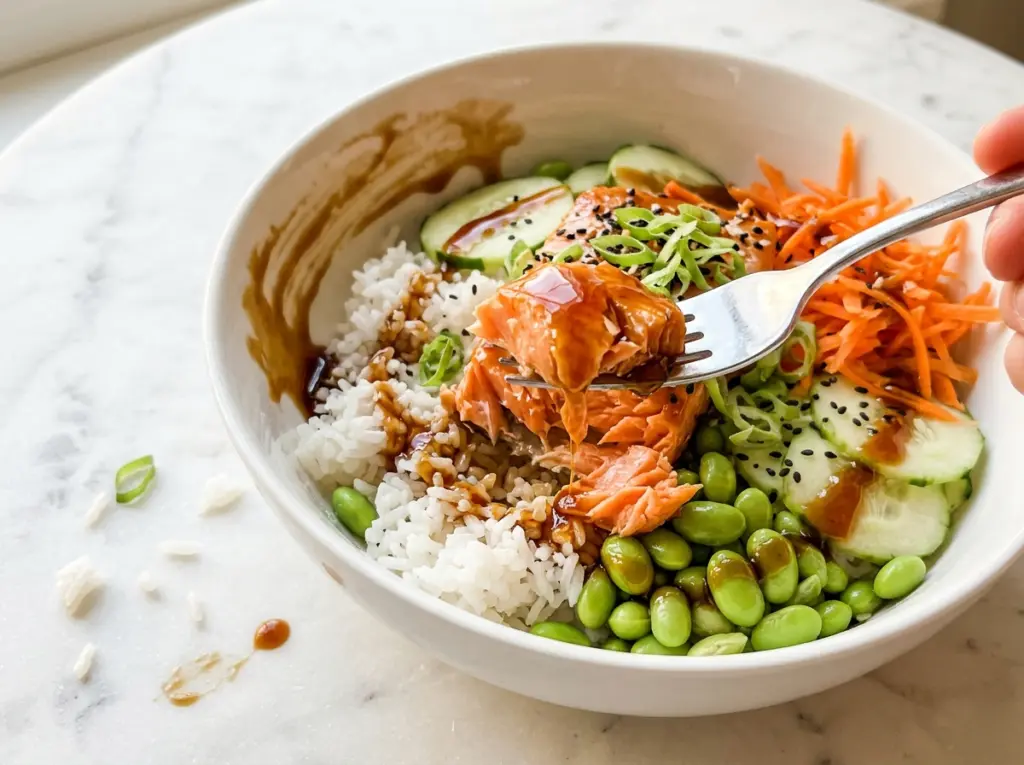
The broccoli gets a six-minute head start in the oven, and that small bit of timing makes this sheet-pan dinner come together neatly. By the time the salmon is cooked through, the florets are tender and browned at the edges instead of sitting raw beside a finished fillet. These teriyaki salmon rice bowls pair that roasted broccoli with fluffy rice and a glossy homemade sauce.
I like that the sauce comes together on the stovetop while the rice cooks. A quick cornstarch slurry thickens it enough to cling to the salmon, and the soy, mirin, ginger, garlic, and brown sugar make a balanced sweet-savory glaze. The salmon roasts right alongside the broccoli, so there’s no second pan to manage. Each bowl gets a little of everything, plus sesame seeds and scallions on top.
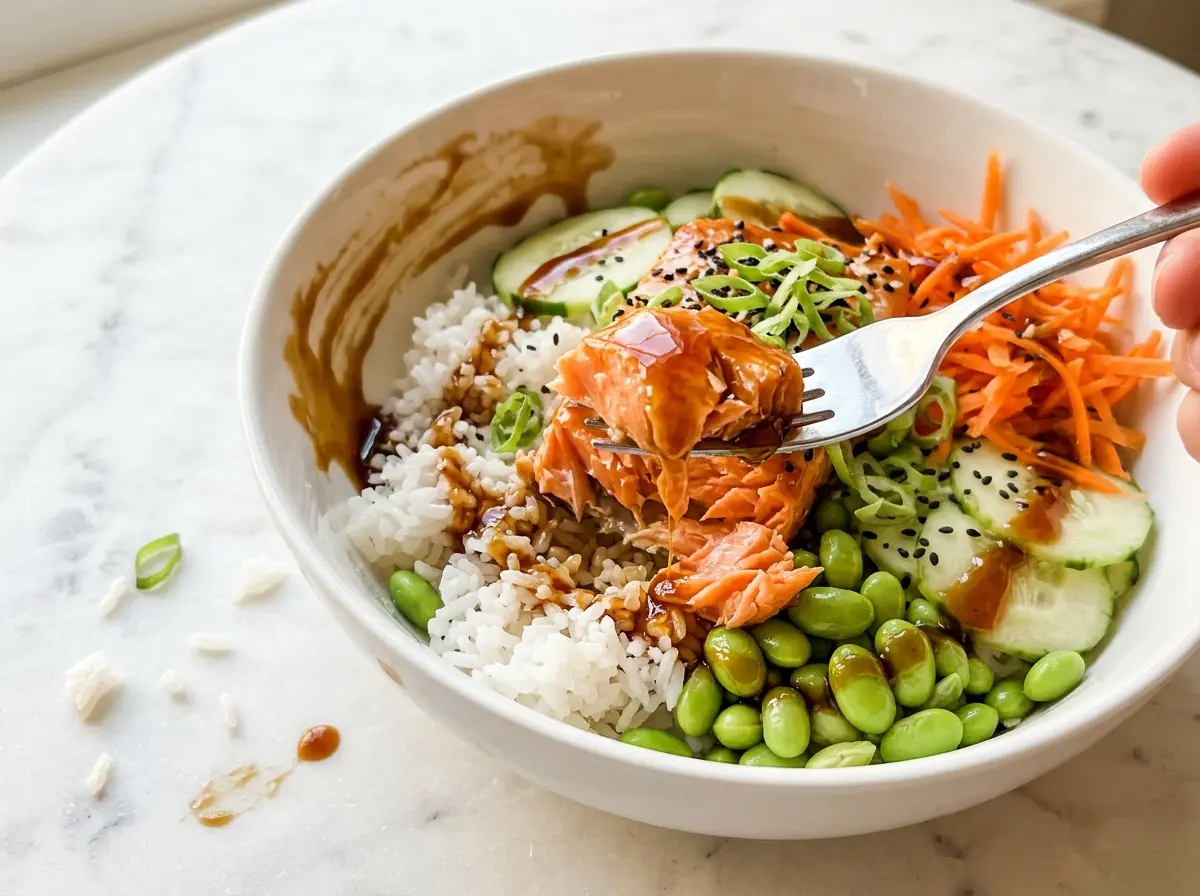
Kitchen Note
Divide the sauce before brushing any onto the salmon. The portion that touches raw fish stays separate from the sauce for the bowls, so the finishing drizzle is ready to use straight from its own saucepan portion.
Save these teriyaki salmon rice bowls for a weeknight dinner with glossy salmon, roasted broccoli, and fluffy rice.
Why the Broccoli Goes Into the Oven Before the Salmon
Broccoli and salmon don’t need the same amount of oven time. Giving the broccoli six minutes alone lets it start softening before the salmon goes on the pan. The salmon then gets its own 10 to 14 minutes, enough time to cook through without making the broccoli wait through the entire roast from raw.
The order also keeps the sheet pan working efficiently. The florets move to the edges when the salmon goes in the center, leaving room for the portions while keeping everything on one pan. Spread the broccoli out rather than piling it together; crowded florets are more likely to soften without the browned edges you want. Once the salmon reaches 145°F in its thickest part and the broccoli is tender, both are ready to go straight into the bowls.
What Makes the Teriyaki Sauce Glossy and the Bowls Balanced

- Long-grain white rice — Its separate, tender grains make a good base for the sauce without turning the bowl into a sticky mass. Rinsing removes loose surface starch; the covered rest after cooking lets the grains settle.
- Soy sauce and mirin — Soy sauce brings the savory, salty foundation, while mirin gives the sauce sweetness and its characteristic rounded taste. Use a soy sauce you enjoy on its own; there’s no need for a specialty bottle. Mirin is more distinctive, so swapping it changes the sauce’s sweetness and character.
- Fresh ginger and garlic — Finely grated ginger disperses through the sauce instead of leaving large fibrous pieces, and minced garlic gives it a savory edge. Freshly prepared aromatics are worth using here because the sauce has only a short simmer.
- Brown sugar — It adds sweetness and helps round out the soy sauce. Packed brown sugar blends into the simmering liquid more readily than a hard lump, so break up any clumps before measuring.
- Cornstarch — A cold-water slurry thickens the sauce into a glaze that clings to the salmon. Mixing it with cold water first is important; sprinkling dry cornstarch into hot sauce can leave stubborn lumps.
- Broccoli florets — Choose florets that are similar in size so they roast at a similar pace. The oil helps coat their surfaces, while the brief head start gives them time to become tender alongside the salmon.
- Salmon fillets — Cut the fillet into four portions before roasting so each serving is easy to assemble. The thickest portion is the one to check with a thermometer, since thinner pieces cook faster.
- Sesame seeds and scallions — These go on at the end, where their contrasting texture and fresh, savory bite remain noticeable against the glaze. Slice the scallions thinly so they scatter easily over the bowls.
How to Time the Rice, Sauce, and Sheet Pan Together
Rinse and Steam the Rice
Rinse the rice under cool water until the water runs mostly clear, then drain it well. Combine it with the water and kosher salt in a 2-quart saucepan, and bring it to a boil over medium-high heat. Cover the pan, turn the heat to low, and cook for 15 to 18 minutes, until the water has been absorbed. Take the saucepan off the heat and leave it covered for 10 minutes; lifting the lid during that rest lets steam escape before the grains have finished settling.
Simmer and Thicken the Teriyaki
Combine the soy sauce, mirin, brown sugar, grated ginger, and minced garlic in a small saucepan. Bring the mixture to a simmer over medium heat, stirring so the sugar dissolves. In a small bowl, stir the cornstarch and cold water together until smooth, then whisk that slurry into the simmering sauce. Cook for 1 minute, until the sauce looks glossy and slightly thickened, then set aside half for serving.
Give the Broccoli Its Head Start
Heat the oven to 425°F and line an 18×13-inch rimmed sheet pan with parchment paper. Toss the broccoli florets with the oil and salt, then spread them across the pan. Roast for 6 minutes before adding the salmon; this is the point where the broccoli gets time to begin cooking without keeping the fish in the oven longer than it needs.
Roast the Salmon and Assemble
Move the broccoli to the edges of the pan and place the salmon portions in the center. Brush the salmon with the sauce that wasn’t set aside for serving. Roast for 10 to 14 minutes, until the thickest part of the salmon reaches 145°F and the broccoli is tender. Divide the rice, broccoli, and salmon among four bowls, then drizzle with the reserved sauce and finish with sesame seeds and sliced scallions.
Three Small Changes That Make These Bowls Your Own
Make a lower-carb salmon and broccoli bowl
Leave out the rice and divide the salmon and broccoli among four bowls instead. You’ll have a lighter bowl with the same teriyaki glaze, though it won’t be as filling as the rice-based version.
Serve the salmon in flakes
After roasting, break each salmon portion into large flakes and distribute them over the rice and broccoli. This makes the glaze and fish easy to mix through the bowl, while keeping the same roasted flavor and ingredients.
Make the sauce less sweet
Leave the brown sugar out of the sauce for a sharper, more savory result. The cornstarch slurry will still thicken the sauce, but it won’t have the same sweet balance as the original glaze.
Storage and Reheating
- Refrigerator: Store the rice, salmon, and broccoli in airtight containers for 3 to 4 days. The broccoli will soften, and the salmon is best when it isn’t reheated more than once.
- Freezer: Freeze the components separately in airtight containers for up to 2 months for best quality. The rice and salmon freeze well; the broccoli will be softer after thawing.
- Reheating: Reheat a covered portion in the microwave in short bursts until it reaches 165°F throughout, then add the reserved sauce. Long, uncovered heating dries out salmon before the rice warms evenly.
Questions That Come Up With Teriyaki Salmon Rice Bowls
Teriyaki Salmon Rice Bowls
Ingredients
Equipment
Method
- Rinse the rice under cool water until the water runs mostly clear, then drain.
- Combine the rice, water, and salt in a 2-quart saucepan and bring to a boil over medium-high heat.
- Cover, reduce the heat to low, and cook for 15 to 18 minutes, until the water is absorbed.
- Remove the rice from the heat and let stand, covered, for 10 minutes.
- Combine the soy sauce, mirin, brown sugar, ginger, and garlic in a small saucepan and bring to a simmer over medium heat.
- Stir the cornstarch and cold water together in a small bowl.
- Whisk the cornstarch mixture into the simmering sauce and cook for 1 minute, until glossy and slightly thickened.
- Set aside half of the sauce for serving, keeping it separate from the portion used on the raw salmon.
- Heat the oven to 425°F.
- Line an 18x13-inch rimmed sheet pan with parchment paper.
- Toss the broccoli with the oil and salt, then spread it on the pan.
- Roast the broccoli for 6 minutes.
- Move the broccoli to the edges of the pan.
- Place the salmon in the center of the pan and brush it with the remaining sauce.
- Roast for 10 to 14 minutes, until the salmon reaches 145°F in the thickest part and the broccoli is tender.
- Divide the rice, broccoli, and salmon among 4 bowls.
- Drizzle the reserved sauce over the bowls.
- Top with the sesame seeds and scallions.