
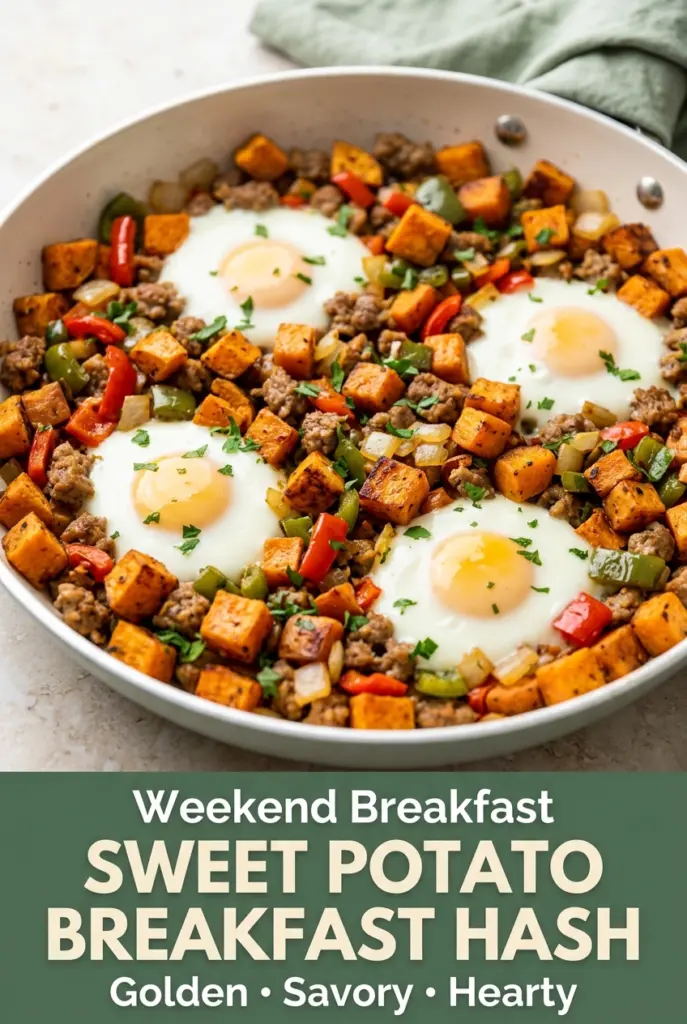
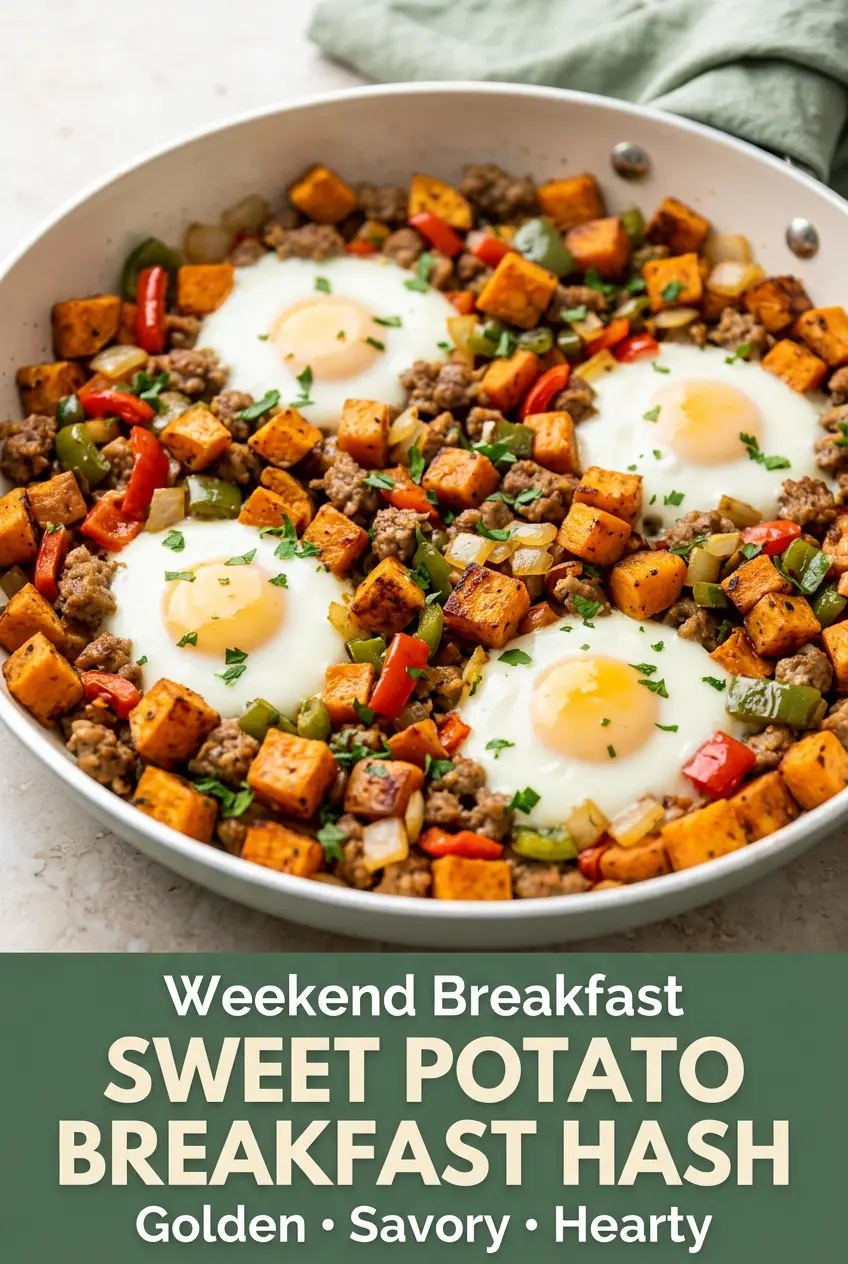
Sweet potato breakfast hash is the kind of skillet breakfast that actually earns repeat status: crisp-edged sweet potatoes, browned sausage, softened peppers and onions, and eggs cooked right in the middle so every bite gets a little bit of everything. The sweet and savory balance keeps it from feeling heavy, and the texture stays interesting from the first scoop to the last.
The part that makes this version worth keeping is the order. The sweet potatoes get their own time in the pan first, which gives them a chance to caramelize instead of steaming under the weight of the sausage and vegetables. Browning the sausage in the same skillet picks up flavor from the potatoes, and the eggs finish the whole dish without needing another pan.
Below, I’ve included the trick that keeps the potatoes from going soft, the ingredient swaps that still give you a good result, and the few timing cues that matter most when you want runny yolks or fully set eggs.
The sweet potatoes got those caramelized edges I was hoping for, and the eggs were perfect at 6 minutes covered. My husband went back for seconds before I even sat down.
Save this sweet potato breakfast hash for a skillet breakfast with crisp potatoes, savory sausage, and eggs cooked right on top.
The Difference Between Crisp Sweet Potatoes and Soft Ones
The biggest mistake with a breakfast hash like this is crowding everything into the pan too early. Sweet potatoes give off moisture as they cook, and if the sausage and peppers go in before the potatoes have had a chance to brown, the whole skillet turns soft instead of layered and caramelized. Cooking the potatoes first lets the cut surfaces dry out and take on color before anything else starts releasing liquid.
Cast-iron gives the best browning here because it holds heat when the potatoes hit the pan. A nonstick skillet still works, but the potatoes need a little more patience and a bit less stirring. The goal is tender cubes with dark edges, not mashed sweet potato bits clinging to the bottom of the pan.
- Sweet potatoes — Peel and cut them into even 1/2-inch cubes so they cook at the same rate. Smaller pieces brown faster but can go soft before they color.
- Breakfast sausage — This brings the savory backbone of the dish. Pork sausage gives the richest result, but chicken sausage works if you want something lighter.
- Bell peppers and onion — These add sweetness and moisture after the potatoes are already browned. Dice them small enough that they soften in a few minutes instead of staying crunchy.
- Smoked paprika — This is doing more work than plain paprika would. It gives the potatoes a deeper, almost smoky warmth that helps the whole skillet taste balanced.
- Eggs — Fresh eggs hold their shape best when they’re cooked in wells. If your eggs spread, the hash was either too loose in the center or the pan wasn’t covered long enough.
What Each Ingredient Is Actually Doing in This Skillet
Sweet potatoes are the base, but the sausage is what turns this from a vegetable side into a full breakfast. The fat from the sausage seasons the pan as it cooks, which is why you don’t need to add much oil beyond the first two tablespoons. If your sausage is very lean, add a small splash more oil before the vegetables go in so they don’t stick.
The garlic goes in at the very end of the vegetable stage because it burns fast. Once it smells fragrant, you’re done. Any longer and it turns bitter, which is easy to taste against the sweetness of the potatoes.
Fresh parsley is more than a garnish here. It wakes up the whole skillet right before serving and keeps the dish from tasting one-note. If you don’t have parsley, chopped chives or green onion work better than dried herbs.
Building the Hash So Every Part Finishes at the Right Time
Getting the Potatoes Browned First
Heat one tablespoon of oil in the skillet and add the sweet potatoes with the spices and half of the salt. Stir occasionally, but not constantly. If you keep the potatoes moving, they never sit long enough on one side to brown, and that browned surface is where the best flavor lives. When they’re ready, the cubes should be tender enough to pierce with a fork and edged in deep gold.
Cooking the Sausage in the Same Pan
After the potatoes come out, brown the sausage in the same skillet. Break it into small crumbles so it mixes well with the vegetables later, and let it actually brown instead of just turning gray. If there’s a lot of grease in the pan, spoon off a little, but leave enough behind to cook the onions and peppers with flavor already built in.
Softening the Vegetables Without Losing Texture
Add the onion and peppers and cook until they’ve softened and picked up a little color at the edges. They should still have some shape; mushy peppers make the hash taste tired. Stir in the garlic for just 30 seconds at the end so it perfumes the pan without scorching.
Finishing with the Eggs Covered
Return the potatoes to the skillet, create four wells, and crack in the eggs. Cover the pan and lower the heat so the whites set gently while the yolks stay where you want them. If the heat is too high, the bottoms overcook before the tops finish. A covered skillet traps enough steam to cook the whites without having to flip a single egg.
How to Adapt This for Different Diets and Breakfast Crowds
Make It Dairy-Free Without Losing Richness
This recipe is naturally dairy-free as written, which is part of why it works so well for a big breakfast crowd. If you want extra richness, add a small pat of butter at the end only if dairy is fine for your table; otherwise the sausage drippings and olive oil already give enough body.
Make It Vegetarian Without a Mushy Skillet
Swap the sausage for a plant-based breakfast sausage or well-seasoned crumbled tofu. The key is to brown the replacement first so it has some texture before the vegetables go back in; otherwise the hash tastes soft instead of hearty.
Turn It Into a Meal Prep Breakfast
Cook everything except the eggs and store the hash in containers for easy breakfasts during the week. Reheat the base first, then top with a fresh fried or poached egg so the yolk still adds something creamy instead of turning rubbery in the microwave.
Use Bacon Instead of Sausage
Bacon gives a smokier, saltier hash and a little less bulk. Cook it first, remove it from the pan, then use the rendered fat in place of some of the olive oil. The finished skillet will be crisper and a touch saltier, so taste before adding extra seasoning.
Storage and Reheating
- Refrigerator: Store the cooked hash without the eggs for up to 4 days. The potatoes soften a little as they sit, but the flavor holds well.
- Freezer: The potato, sausage, and vegetable mixture freezes well for up to 2 months. Cool it completely, portion it flat in freezer containers, and add fresh eggs after reheating.
- Reheating: Reheat in a skillet over medium heat for the best texture. The microwave works in a pinch, but it tends to steam the potatoes, so use short bursts and stop as soon as the hash is hot.
Answers to the Questions Worth Asking
Sweet Potato Breakfast Hash
Ingredients
Equipment
Method
- Heat 1 tbsp olive oil in a large cast-iron or nonstick skillet over medium heat. Add the sweet potatoes, smoked paprika, garlic powder, ¼ tsp kosher salt, and black pepper.
- Cook the sweet potatoes for 12–15 minutes, stirring occasionally, until tender inside with caramelized golden-brown edges. Transfer them to a plate.
- Brown the breakfast sausage in the same skillet over medium-high heat for 5–7 minutes. Break it into small crumbles and cook until completely browned.
- Add the remaining 1 tbsp olive oil, yellow onion, red bell pepper, and green bell pepper to the skillet. Cook for 5–6 minutes until softened and lightly caramelized.
- Stir in the garlic and cook for 30 seconds until fragrant.
- Return the sweet potatoes to the skillet and add the remaining ¼ tsp kosher salt. Stir gently until the sausage and vegetables are evenly distributed.
- Create four wells in the hash and crack one egg into each well. Cover the skillet and cook over medium-low heat for 5–7 minutes, until the egg whites are set and the yolks reach your preferred doneness.
- Sprinkle the hash with fresh parsley. Serve directly from the skillet while warm.