
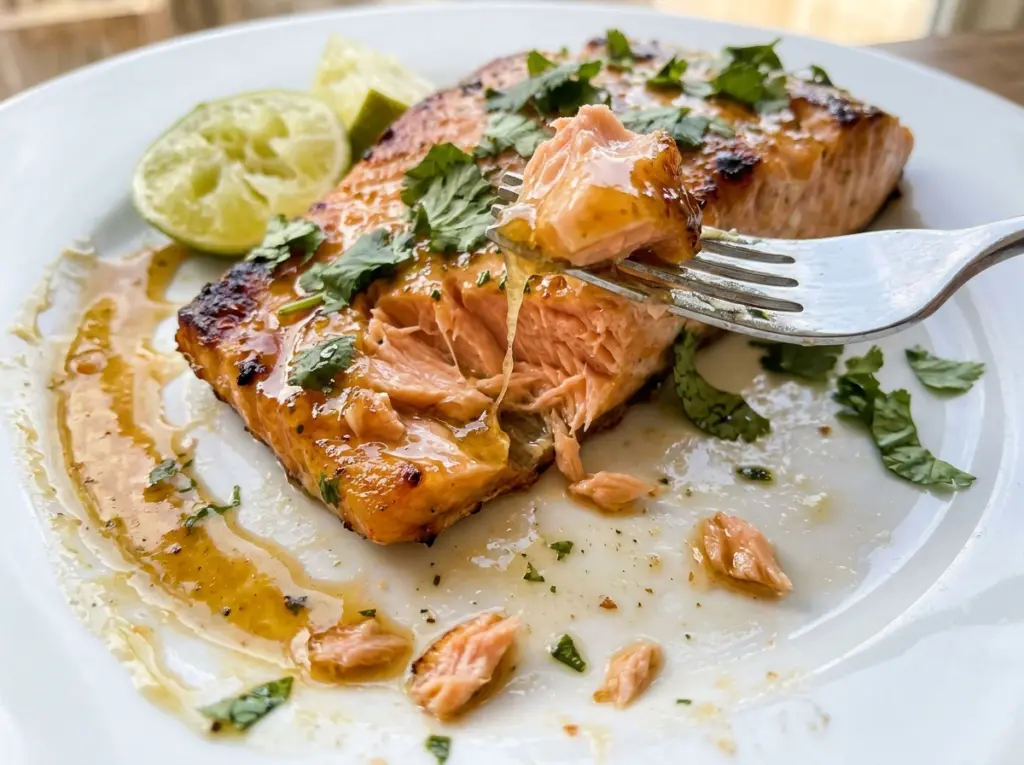
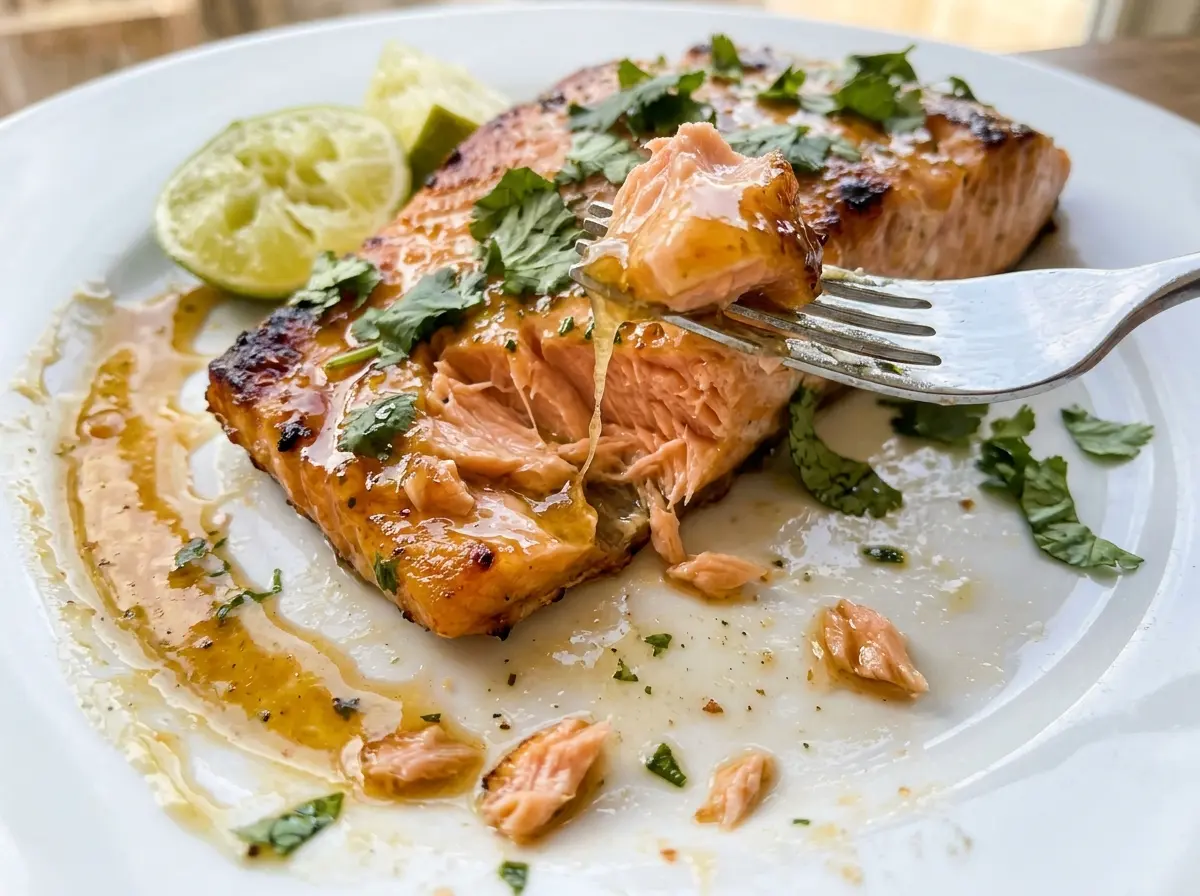
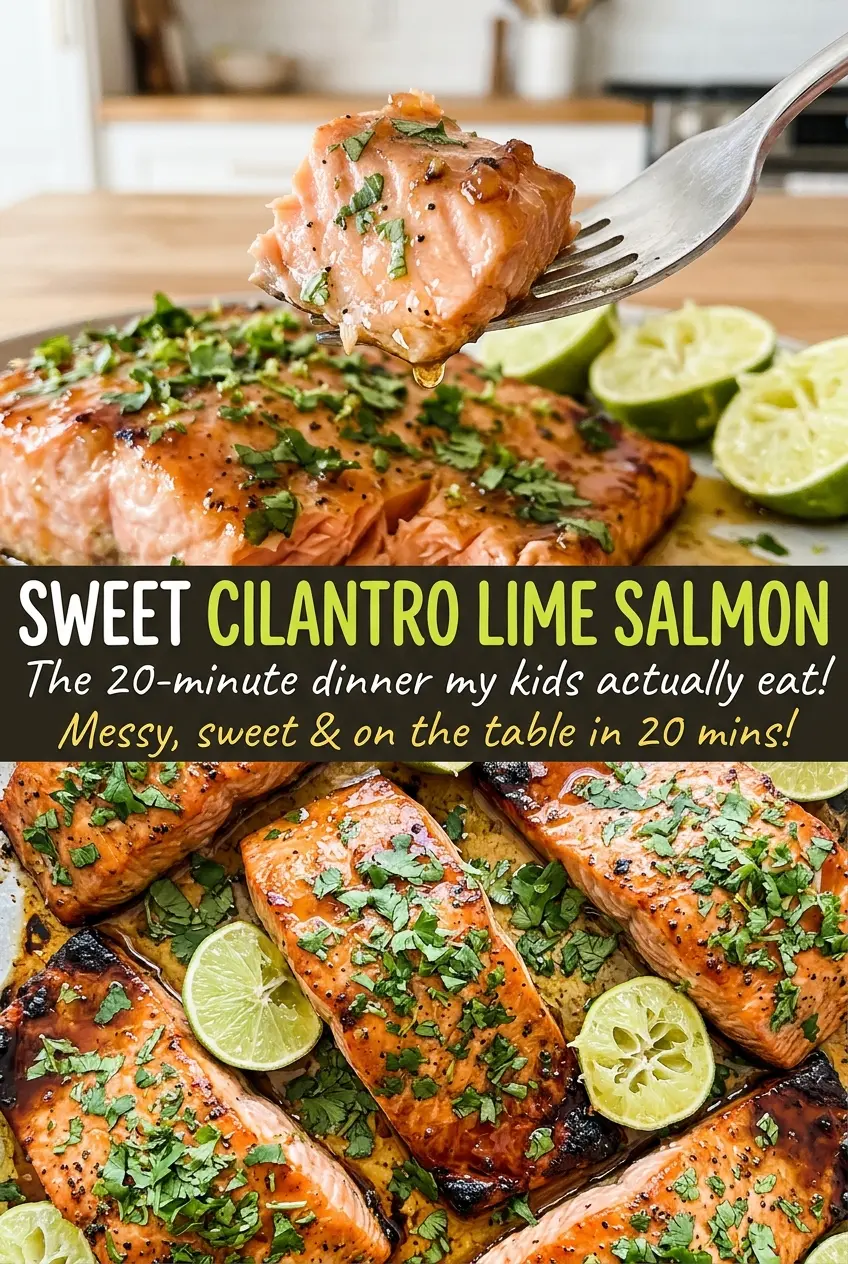
The glaze turns shiny as it bakes, and the lime and garlic smell bright before the salmon even reaches the table. I like this method when I want a sweet-savory finish without marinating or standing over a skillet. The salmon portions go straight onto a lined baking sheet, get seasoned, then get brushed with a quick honey-lime glaze.
Because the glaze is whisked together in one bowl and brushed over the fish just before baking, the salmon stays the center of attention instead of tasting like a sticky sauce. The soy sauce keeps the honey from becoming one-note sweet, while lime brings a clean, tart edge. A short rest after baking gives the juices a moment to settle, so each portion flakes neatly. Sweet Cilantro Lime Salmon is glossy on top, tender in the middle, and full of fresh citrus flavor.
Kitchen Note
Chop the cilantro finely before whisking it into the glaze. Bigger leaves tend to clump together, while a fine chop spreads that fresh flavor across every portion.
Save Sweet Cilantro Lime Salmon for a night when you want tender baked fish with a glossy honey-lime finish and fresh cilantro in every bite.
Why This Honey-Lime Glaze Goes on Just Before Baking
This is a quick brushed glaze, not a long marinade. Lime juice starts changing the texture of fish when it sits against the surface for an extended stretch, and honey left on the salmon too long can make the outside tacky before the fish is ready for the oven. Whisking the glaze while the oven heats keeps the order simple: season the portions, make the glaze, brush it on, and bake.
That timing also lets the glaze do its job without hiding the salmon. Honey gives the top a glossy finish, soy sauce adds a savory note, and lime keeps the sweetness lively. Since the glaze goes on the exposed side of each portion, its flavor stays concentrated where you can taste it in every forkful. There’s no need to let the fish sit in a bowl of sauce or turn it over halfway through cooking.
The glaze should coat the top evenly rather than gather in a thick puddle. A quick pass with a pastry brush spreads it from edge to edge, while the lined pan catches any that runs off. This approach keeps the work light and the salmon easy to lift from the pan after baking.
What Each Glaze Ingredient Brings to the Salmon
- Salmon — A skin-on fillet gives you sturdy portions that sit neatly skin-side down on the pan. Fresh or previously frozen salmon both work; choose pieces with a moist, clean-looking surface and a mild smell. If you only have skinless portions, see the note in the FAQ.
- Honey — Honey creates the glaze’s shine and sweetness. A familiar, mild honey lets the lime and cilantro come through; a strongly flavored honey will be more noticeable. Maple syrup can replace it for a less floral, more woodsy sweetness.
- Low-sodium soy sauce — This brings savory depth without making the glaze as salty as regular soy sauce could. For a gluten-free version, use low-sodium gluten-free tamari in the same measure. The result stays savory, though tamari can taste a little richer.
- Fresh lime — Juice gives the glaze its tart balance, while finely grated zest adds fragrant citrus oils that bottled juice can’t provide. Zest the lime before squeezing it, and use fresh lemon juice and zest in matching measures if that’s what you have; the flavor will be less distinctly lime-forward.
- Unsalted butter — Melted butter gives the glaze a smooth, rounded finish. Unsalted butter lets the soy sauce supply the seasoning without an extra salty edge; olive oil can stand in for a dairy-free option, though the glaze will taste less buttery.
- Garlic and cilantro — Minced garlic gives the glaze a savory backbone, and fresh cilantro makes the finish taste green and bright. Fresh cilantro is worth using here; dried cilantro won’t give the same lift. If cilantro isn’t your favorite, use less of it rather than replacing it with another herb.
How to Bake the Salmon Without Losing the Glossy Glaze
Set Up the Pan and Season the Portions
Heat the oven to 400°F and line a rimmed 18×13-inch baking sheet with parchment paper. Arrange the salmon portions skin-side down, leaving them in a single layer, then season with kosher salt and black pepper. Keeping the skin against the parchment makes the portions easier to handle once they’re baked. If the pieces are different thicknesses, remember that the thinner ones will finish sooner.
Whisk and Brush on the Cilantro-Lime Glaze
In a small bowl, whisk together the honey, low-sodium soy sauce, fresh lime juice, lime zest, melted unsalted butter, minced garlic, and chopped cilantro. Keep whisking until the honey loosens and the mixture looks evenly combined. Brush the glaze over the top of each portion, spreading it into a thin, even coat. Don’t worry if a little slips down the sides; the parchment will catch it.
Bake to Temperature, Then Let the Fish Rest
Bake for 12 to 15 minutes, checking the thickest part of the salmon with an instant-read thermometer. The center should reach 145°F; the thermometer gives you a more dependable answer than the color of the glaze. Remove the pan from the oven and let the salmon rest for 3 minutes before serving. The rest is short, but it helps the fish settle before you lift the portions from the parchment.
Easy Swaps for a Different Take on Cilantro Lime Salmon
Make It Gluten-Free with Tamari
Swap the low-sodium soy sauce for the same measure of low-sodium gluten-free tamari. The glaze keeps its salty-savory balance, with a slightly deeper taste; choose a low-sodium version so it doesn’t overwhelm the honey and lime.
Try an Orange-Citrus Glaze
Replace the lime juice and zest with orange juice and zest in the same measures. Orange makes the glaze sweeter and softer, with less of lime’s sharp tang, so the honey becomes more prominent.
Use Maple Instead of Honey
Replace the honey with the same measure of maple syrup for a warmer, less floral sweetness. The glaze will have a more pronounced maple note and may look a little less glossy, but it still brushes easily over the salmon.
Storage and Reheating
- Refrigerator: Keep leftovers in an airtight container for 3 to 4 days. The salmon will firm up as it chills, and the glaze won’t look as glossy.
- Freezer: Freeze cooled portions in an airtight freezer-safe container for up to 2 to 3 months. Thaw them overnight in the refrigerator for the best texture.
- Reheating: Cover the salmon loosely and warm it in a 300°F oven until it reaches 165°F. High heat or repeated microwave bursts can dry the fish before the center is warm.
Questions That Come Up When Baking This Salmon
Sweet Cilantro Lime Salmon
Ingredients
Equipment
Method
- Preheat the oven to 400°F.
- Line a rimmed 18x13-inch baking sheet with parchment paper.
- Arrange the salmon portions skin-side down on the baking sheet.
- Season the salmon with the salt and pepper.
- Whisk together the honey, soy sauce, lime juice, lime zest, melted butter, garlic, and cilantro in a small bowl.
- Brush the glaze evenly over the salmon.
- Bake for 12 to 15 minutes, until the thickest part of the salmon reaches 145°F on an instant-read thermometer.
- Let the salmon rest for 3 minutes before serving.