
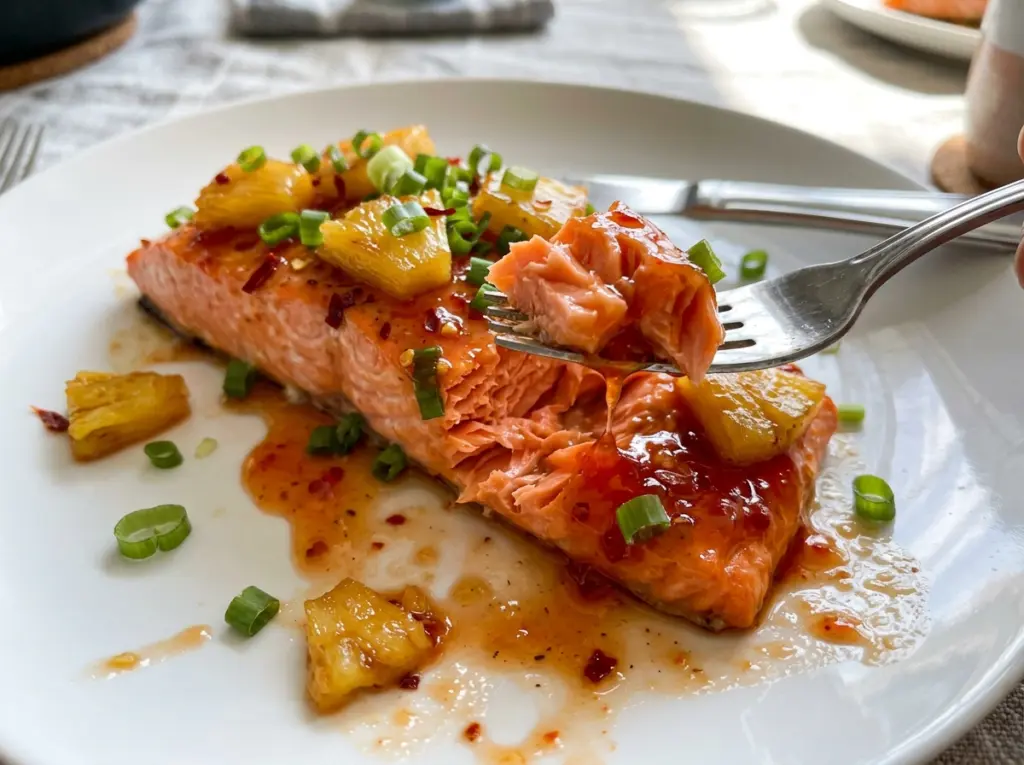
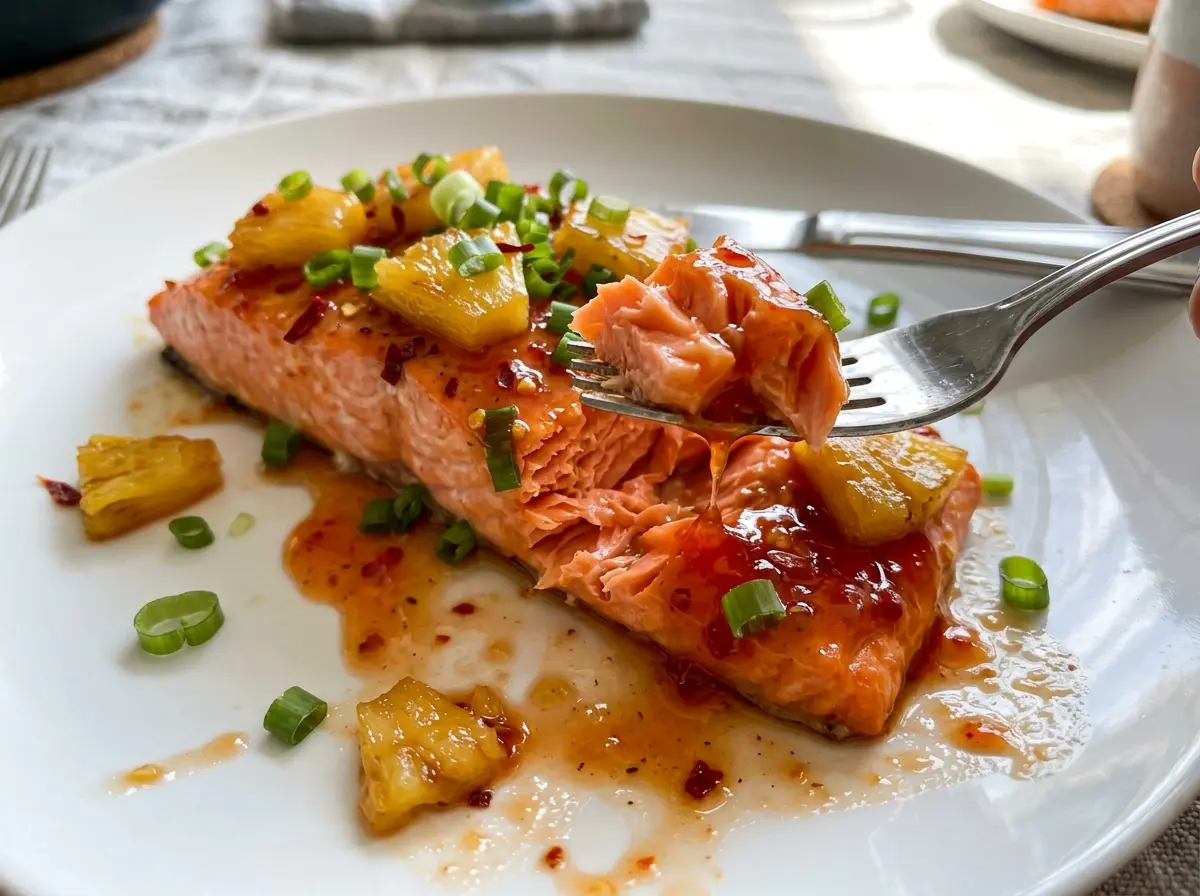
The pineapple chunks soften at the edges while the glaze turns shiny on the salmon, and the whole pan smells sweet, garlicky, and a little fiery. That contrast is what makes this Sweet and Spicy Pineapple Salmon worth making: tender fish, juicy fruit, and a glaze with enough heat to keep the sweetness in check.
I like this approach because the glaze gets a quick turn on the stove before it ever reaches the fish. That gives it a glossy, clingable texture instead of leaving the salmon sitting in a puddle of thin liquid. The pineapple goes on and around the fillet, so each serving gets fruit as well as that savory-sweet coating.
The oven does the rest, and there’s no flipping a delicate fillet halfway through. With four servings from one 1 1/2-pound piece of salmon, it’s a colorful dinner that brings together bright pineapple, a little lime, and a warm sriracha finish.
Kitchen Note
Keep the parchment tucked inside the rim of the baking sheet so any sticky glaze stays on the paper, not under it. That small bit of setup makes serving and cleanup much easier.
Save this Sweet and Spicy Pineapple Salmon for a dinner with glossy pineapple glaze, tender fish, and just enough sriracha heat.
Why the Pineapple Glaze Needs a Stovetop Head Start
Pineapple juice, soy sauce, brown sugar, sriracha, garlic, and lime juice make a flavorful glaze, but they begin as a thin liquid. If that mixture went straight onto the salmon, much of it would run across the parchment before it could coat the fish. A short simmer dissolves the sugar and brings the flavors together; a cornstarch slurry then gives the glaze enough body to brush over the fillet.
That order matters because cornstarch needs to be mixed with water before it goes into the hot liquid. Whisking the slurry in smoothly helps prevent little dry starch pockets, and cooking it briefly lets the glaze turn glossy and lightly thickened. It shouldn’t be as thick as a paste. You want it loose enough to brush across the salmon but substantial enough to stay on top while the fruit is arranged.
The glaze doesn’t need to become a separate dipping sauce. Its job here is to coat the fish and bring pineapple flavor to each bite, while the chunks add juicy texture. Keeping those two jobs in balance is what lets the finished salmon taste bright rather than syrupy.
Why Canned Pineapple Gives You Both the Fruit and the Glaze

- Pineapple chunks in juice — The can provides fruit for the topping and juice for the glaze, so drain it into a measuring cup and reserve the amount needed before setting the chunks aside. A store-brand can works well; choose pineapple packed in juice, not syrup, to keep the glaze’s sweetness in balance.
- Skin-on salmon — The skin helps the fillet hold together on the baking sheet, and an even-thickness piece cooks more consistently from end to end. Have the pin bones removed before seasoning so the salmon is easy to serve in clean portions.
- Brown sugar, soy sauce, and sriracha — These create the glaze’s sweet, salty, and spicy backbone. Packed light brown sugar dissolves into the juice, while soy sauce brings savory depth and sriracha supplies the heat; the quality of your soy sauce matters less than choosing one whose saltiness you enjoy.
- Garlic and lime juice — Finely grated garlic spreads through the glaze without leaving large pieces, and lime keeps the sweet ingredients from tasting flat. Grate the garlic finely so it blends into the liquid rather than collecting in one spot on the fish.
- Cornstarch — This is what thickens the juice-based mixture into a brushable glaze. Whisk it with water in a separate small bowl first; adding dry cornstarch directly to the saucepan is more likely to leave lumps.
Building the Glaze Before the Salmon Goes in the Oven
Simmer the juice with the seasonings
Heat the oven to 400°F and line a rimmed baking sheet with parchment paper. Drain the pineapple, saving the specified 1/2 cup of juice and setting the chunks aside. Combine the juice with the brown sugar, soy sauce, sriracha, grated garlic, and lime juice in a small saucepan. Bring it to a simmer over medium heat and stir for 2 minutes, until the sugar dissolves.
Whisk in the smooth cornstarch slurry
Whisk the cornstarch and water together in a small bowl until the mixture looks even, with no dry pockets. Whisk it into the simmering glaze and cook for 1 minute, stirring as it thickens. Look for a glossy finish and a lightly thickened consistency rather than a stiff paste. If you stop stirring, the glaze can catch on the bottom of the saucepan, so keep it moving through this short stage.
Arrange the fruit and bake the fillet
Set the salmon skin side down on the prepared baking sheet and season it with kosher salt and black pepper. Brush the glaze over the top, then arrange the pineapple chunks on and around the salmon. Bake for 12 to 16 minutes, until the thickest part registers 145°F; the exact time depends on the thickness of the fillet. Let it rest for 3 minutes before serving so the fish settles after baking.
Two Practical Ways to Adapt the Glaze
Make the glaze milder
Use 1 teaspoon of sriracha instead of 1 tablespoon for a gentler finish. The pineapple and brown sugar will come through more clearly, while the soy sauce and lime keep the glaze savory and bright.
Make it gluten-free with tamari
Replace the soy sauce with the same amount of gluten-free tamari. It keeps the glaze’s salty, savory note, though the finished sauce may taste a little different depending on the tamari you use.
Storage and Reheating
- Refrigerator: Store leftover salmon in an airtight container for up to 3 days. The fish will firm up as it chills, and the pineapple will soften.
- Freezer: Freeze cooked portions in an airtight freezer-safe container for up to 2 months. The texture will be softer after thawing, but the salmon and glaze freeze safely.
- Reheating: Warm a portion covered in the microwave in short bursts, stopping when the center reaches 165°F. Long, high-heat reheating can dry out the fish.
Questions That Come Up While Making Pineapple Salmon
Sweet and Spicy Pineapple Salmon
Ingredients
Equipment
Method
- Preheat the oven to 400°F.
- Line a rimmed baking sheet with parchment paper.
- Drain the pineapple into a measuring cup, reserve 1/2 cup juice, and set the pineapple chunks aside.
- Combine the reserved juice, brown sugar, soy sauce, sriracha, garlic, and lime juice in a small saucepan.
- Bring the mixture to a simmer over medium heat.
- Cook for 2 minutes, stirring until the sugar dissolves.
- Whisk the cornstarch and water together in a small bowl.
- Whisk the cornstarch mixture into the saucepan.
- Cook for 1 minute, stirring, until the glaze is glossy and lightly thickened.
- Place the salmon skin side down on the prepared baking sheet.
- Season it with the salt and pepper.
- Brush the glaze over the top.
- Arrange the pineapple chunks on and around the salmon.
- Bake for 12 to 16 minutes, until the thickest part of the salmon registers 145°F.
- Let the salmon rest for 3 minutes before serving.