
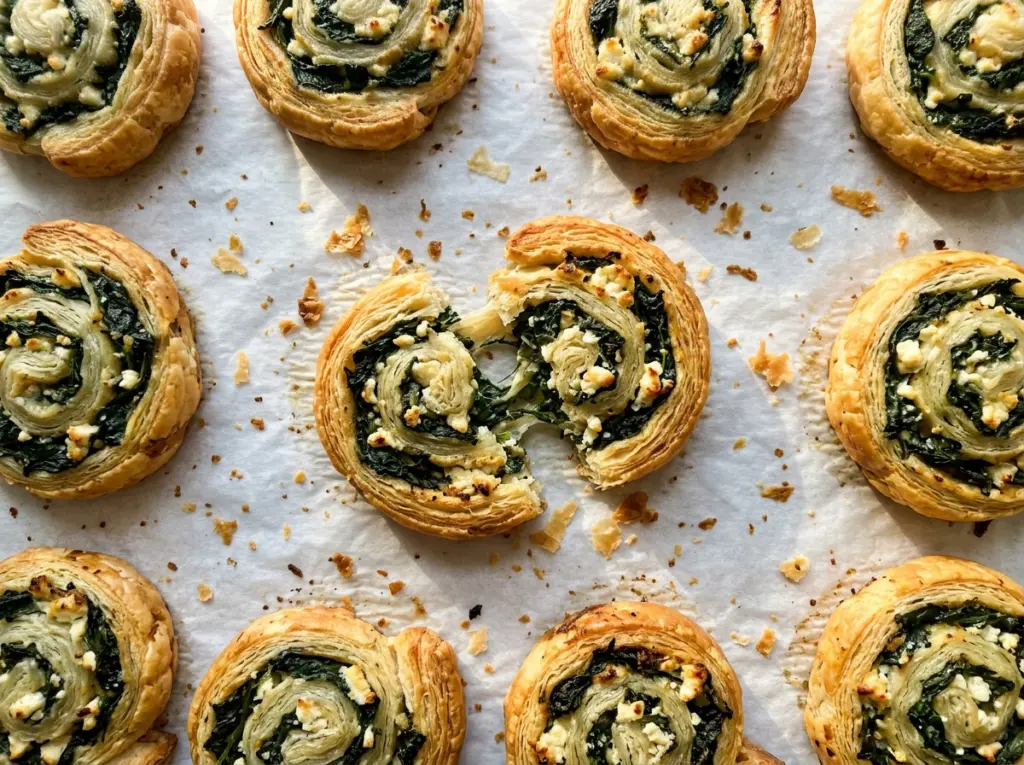
The pastry feels soft and a little delicate when it first comes out of the package, but it gets much easier to handle once it’s cold again. I spread the spinach and feta filling across both sheets, roll them into logs, and chill them before slicing; that pause makes these spinach feta puff pastry pinwheels far less likely to get squashed under the knife.
The filling brings together tangy feta and smooth cream cheese, with spinach tucked through every spiral. Squeezing the thawed spinach very dry keeps the mixture thick enough to spread without making the pastry soggy. Once baked, the pinwheels puff into golden rounds with crisp edges and a soft, savory center.
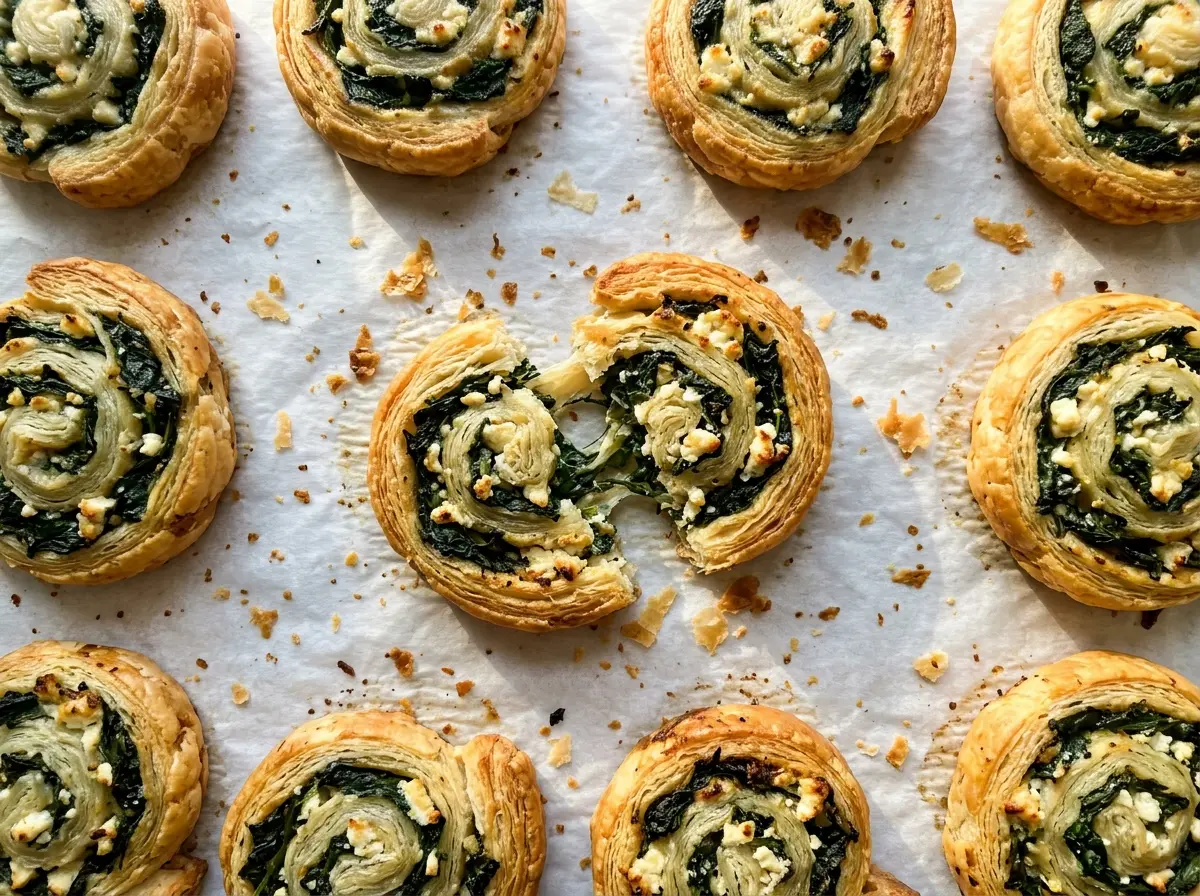
Kitchen Note
I don’t rush the refrigerator rest. The logs should feel cold and firm before you slice them; a warm log compresses easily and can lose its neat spiral.
Save these spinach feta puff pastry pinwheels for a savory party bite with crisp, golden layers and a creamy spinach filling.
Why the Spinach Has to Be Drier Than You Think
Spinach holds more water than it looks like it should, especially after thawing. If that liquid goes into the filling, the cream cheese loosens and the feta mixture can turn wet and slippery. Inside a pastry roll, extra moisture has nowhere to go; it can soften the layers where the filling touches the dough and make the pinwheels less crisp.
Squeeze the thawed spinach until it feels almost compact rather than damp. I use my hands and press out more than the first stream of liquid, then break up any dense clumps before stirring it into the cheeses. The filling should look evenly green and thick, with no puddle gathering in the bottom of the bowl. That texture makes it easier to spread in a thin, even layer and leaves the pastry free to puff.
There’s a second benefit to keeping the mixture thick: the spiral stays defined when you slice it. A loose filling tends to shift toward the edge as the log is rolled, so a dry, cohesive mixture helps each round hold its shape from the baking sheet to the serving plate.
What the Feta and Cream Cheese Each Bring to the Filling

- Frozen chopped spinach — Frozen spinach is convenient here because it’s already chopped and distributes neatly through the filling. A basic store-brand package works well; what matters more than brand is thawing it and squeezing it very dry. Fresh spinach isn’t a direct swap because it needs cooking down and has a different moisture level.
- Cream cheese — Softened cream cheese gives the feta something smooth to cling to and helps the filling spread in an even layer. Standard cream cheese is a good choice; it doesn’t need to be a specialty brand. Let it soften enough to stir without leaving firm lumps.
- Feta — Feta supplies the salty, tangy bite that keeps the creamy filling from tasting flat. Pre-crumbled feta is convenient and works here, while a block you crumble yourself may have a softer texture. If you’re changing the cheese, choose one with a similar tang rather than a mild, stretchy cheese.
- Puff pastry — The package size and two-sheet format make it easy to divide the filling evenly. A standard grocery-store puff pastry works; the more important detail is that it’s thawed but still cold when you unfold it. Warm pastry gets soft and sticky, making the sheets harder to roll cleanly.
- Egg wash — Beating the egg with water gives the exposed pastry a golden finish and helps seal the bare edge of each log. Use a small bowl and beat until the yolk and white are blended, so the brush-on coating doesn’t leave streaks of egg white.
Rolling and Chilling Before the Pastry Hits the Oven
Stir a Thick, Even Filling
Stir the spinach, softened cream cheese, feta, garlic powder, and black pepper together in a medium bowl. Keep mixing until the spinach is spread throughout and there aren’t large pockets of plain cream cheese. The mixture should hold together on a spoon rather than run across the bowl. Beat the egg and water in a separate small bowl for the wash.
Spread and Roll Without Trapping Gaps
Heat the oven to 400°F and line two rimmed baking sheets with parchment paper. Unfold each pastry sheet on a parchment-lined work surface, then spread half the filling over each one in an even layer. Leave a 1/2-inch border along one edge; that uncovered strip gives the egg wash a clean place to seal the roll. Starting at the opposite edge, roll each sheet into a tight log, brush the bare edge with egg wash, and press it closed.
Chill the Logs for Neat Rounds
Set the logs seam-side down in the refrigerator for 20 minutes. This gives the pastry time to firm up after rolling, which helps the slices keep their round shape. Cut each log into 12 even rounds, about 3/4 inch thick. If a slice flattens as you cut, keep the remaining log cold rather than pressing harder on the knife.
Bake Until the Layers Turn Golden
Arrange the rounds cut-side up on the prepared baking sheets with space between them, then brush the tops with egg wash. Bake for 18 to 22 minutes, switching the pans’ rack positions halfway through so they brown evenly. Look for puffed pastry with a golden-brown surface, not pale dough around the edges. Let the pinwheels rest on the pans for 5 minutes before serving; the filling will be hot when they first come out.
Two Ways to Adapt These Spinach Feta Pinwheels
Use Tangy Goat Cheese Instead of Feta
Replace the feta with the same amount of crumbled goat cheese. It makes the filling tangier and a little softer, with less of feta’s briny bite; keep the spinach especially well squeezed so the softer cheese doesn’t make the mixture loose.
Make a Dairy-Free Batch
Use dairy-free cream cheese and a dairy-free feta alternative in place of the two cheeses, keeping their amounts the same, and choose puff pastry made without dairy. The filling may be less tangy or creamy depending on the products, but the spinach, rolling, chilling, and baking method stays the same.
Storage and Reheating
- Refrigerator: Store baked pinwheels in a covered container for 3 to 4 days. The pastry softens in the refrigerator, so it won’t stay as crisp as it was fresh from the oven.
- Freezer: Freeze the baked pinwheels after they’ve cooled, in an airtight container, for up to 2 months. Thaw them in the refrigerator before reheating.
- Reheating: Warm them in a 350°F oven until hot and crisp again. The microwave is quick, but it softens the pastry rather than restoring its flaky edges.
Questions I Get Asked About These Pinwheels
Spinach Feta Puff Pastry Pinwheels
Ingredients
Equipment
Method
- Stir the spinach, cream cheese, feta, garlic powder, and black pepper together in a medium bowl until evenly combined.
- Beat the egg and water together in a small bowl.
- Heat the oven to 400°F.
- Line two rimmed baking sheets with parchment paper.
- Unfold each pastry sheet on a parchment-lined work surface and spread half the filling evenly over each, leaving a 1/2-inch border along one edge.
- Starting at the opposite edge, roll each sheet into a tight log.
- Brush the bare edge with egg wash to seal.
- Place the logs seam-side down in the refrigerator for 20 minutes.
- Cut each log into 12 even rounds, about 3/4 inch thick, and arrange them cut-side up on the prepared baking sheets with space between them.
- Brush the tops with egg wash.
- Bake for 18 to 22 minutes, switching the pans’ rack positions halfway through, until the pastry is puffed and golden brown.
- Let the pinwheels rest on the pans for 5 minutes before serving.