
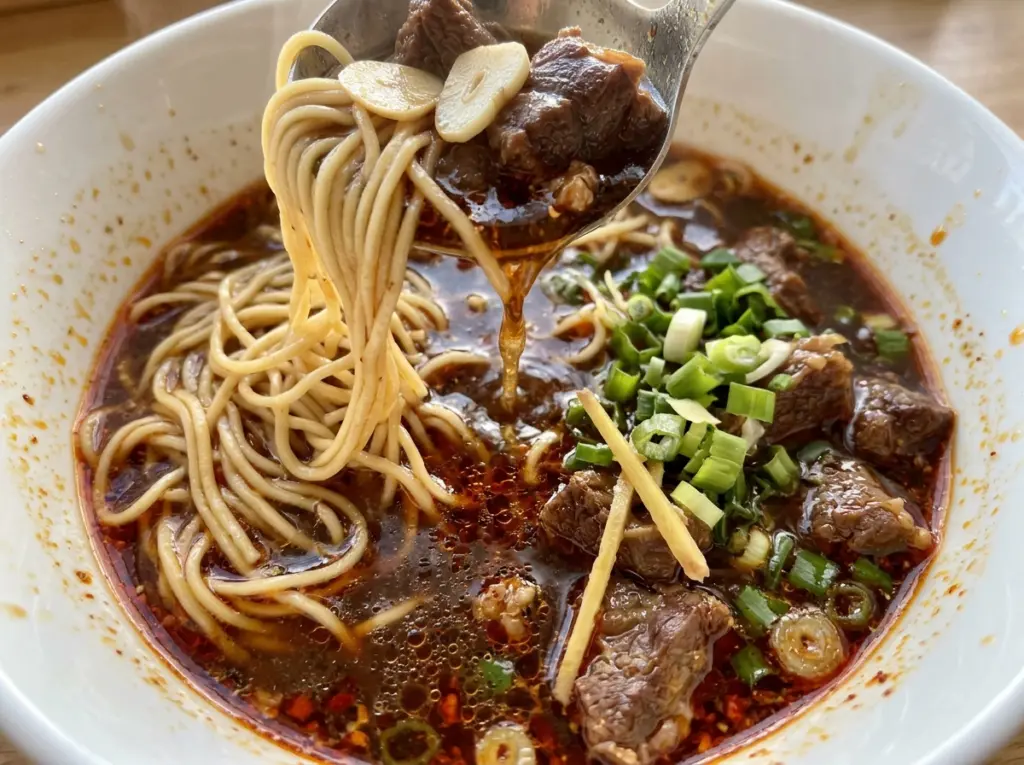
The second the ramen noodles hit the simmering broth, they start to loosen and curl, and the whole pot smells of ginger, garlic, and warm chile. That quick change is what makes this spicy beef ramen soup such a satisfying one-pot dinner: the beef browns first, then the broth builds right over it, and the noodles cook in the same savory liquid. I like how little time there is between adding the noodles and getting bowls on the table.
Fresh ginger and garlic give the broth its lively aroma, while low-sodium beef broth and soy sauce keep the seasoning from becoming too heavy. Chili garlic sauce brings heat and garlic in one spoonful, and a little brown sugar rounds the sharper edges. The beef makes the soup hearty without turning it into a long-simmering project. Finish with sliced scallions, and serve while the noodles are tender and the broth is still hot.
Kitchen Note
Keep the garlic and ginger moving for the full 30 seconds. They need only a brief turn in the hot pot before the broth goes in; letting the garlic sit against the bottom can make its flavor bitter.
Save this spicy beef ramen soup for a night when you want a fast, warming bowl with ginger, garlic, and a chili-garlic kick.
The Ramen Keeps Drinking the Broth After You Turn Off the Heat
Instant ramen cooks quickly, but it doesn’t stop changing the moment it becomes tender. As it sits in the hot soup, the noodles keep absorbing broth and soften further. That’s why this is a better just-before-serving meal than a pot to leave on the stove while everyone finds a bowl. Cook the noodles until tender, stir in the scallions, and serve right away.
Cooking the noodles in the seasoned broth also gives them a chance to pick up the beef, soy, and chili-garlic flavors as they soften. There’s no separate pot of water to drain, and the broth stays part of every bite. Stir as the noodles cook so the blocks separate instead of clumping together. If you’re making the soup ahead, hold off on adding the ramen until you’re ready to serve; the beef-and-broth base can wait, but cooked noodles lose their spring in the pot.
How the Beef, Fresh Aromatics, and Low-Sodium Broth Build the Bowl
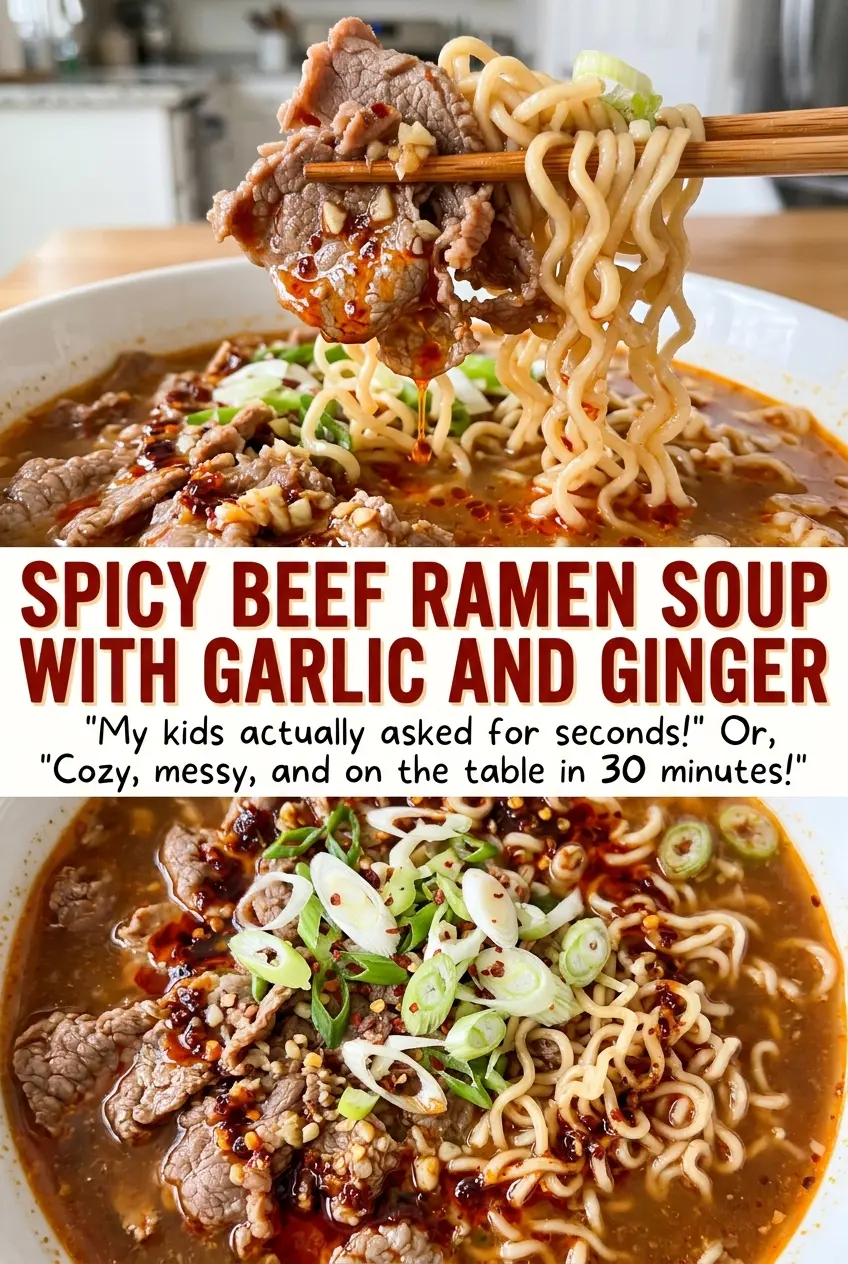
- Ground beef — The 90% lean beef browns without leaving as much excess fat in the pot as a fattier grind, while still giving the soup a meaty base. You don’t need a premium cut here; fresh, lean ground beef is the useful choice because it breaks into small pieces and seasons the broth as it cooks.
- Fresh garlic and ginger — They give the soup its fragrant, sharp backbone, and freshly grated ginger disperses more evenly than thick pieces. A fine grater makes quick work of the peeled ginger. If fresh ginger isn’t available, use about 1/2 teaspoon ground ginger in its place; the soup will be warmer and less bright. Prepared minced garlic also works, though fresh cloves taste livelier.
- Low-sodium beef broth and soy sauce — These provide the beefy liquid and salty, savory depth without making the finished broth taste overly seasoned. Regular-sodium broth will make the bowl saltier, so low-sodium broth is worth choosing when you can. Tamari can replace the soy sauce in the same quantity for a gluten-free version, as long as the other packaged ingredients are gluten-free too.
- Chili garlic sauce and brown sugar — The sauce brings both chile heat and garlic, while the small amount of brown sugar softens the sharp edges without making the soup sweet. A hotter or milder brand will change the bowl noticeably, so use a familiar one if you have a preferred heat level. The brown sugar’s molasses note is subtle but more rounded than plain white sugar.
- Instant ramen and scallions — The ramen is designed to soften quickly in hot liquid; discard the seasoning packets so they don’t compete with the broth you’ve built. Scallions go in at the end for a fresh onion bite. Buy crisp scallions with firm green tops, since limp ones won’t bring the same freshness to the bowl.
Brown the Beef First, Then Give the Noodles Only a Few Minutes
Brown the Beef in the Dutch Oven
Heat the canola oil in a 6-quart Dutch oven over medium-high heat, then add the ground beef. Break it into small pieces as it cooks for 6 to 8 minutes, until browned and it reaches 160°F. Avoid leaving it in large chunks; smaller crumbles spread through the soup more evenly. If you have an instant-read thermometer, check a few pieces rather than judging doneness by color alone.
Stir the Garlic and Ginger Through
Add the minced garlic and finely grated ginger to the browned beef. Stir constantly for 30 seconds so the aromatics warm through without sitting against the pot. You’ll smell the garlic and ginger almost immediately. Have the broth ready to add when that brief cooking time is up.
Simmer the Seasoned Broth
Pour in the beef broth, soy sauce, chili garlic sauce, and brown sugar, then bring the mixture to a boil. Once it boils, reduce the heat and simmer for 5 minutes. Stir well so the brown sugar dissolves and the chili garlic sauce spreads through the broth. The liquid should be gently bubbling, not boiling hard.
Separate the Ramen and Finish with Scallions
Add the ramen noodles and cook for 2 to 3 minutes, stirring to separate them, until tender. Check the texture near the end of that window; the noodles should bend easily but still hold their shape. Stir in the sliced scallions, then serve immediately. The noodles keep softening in the hot broth, so don’t leave the finished pot standing.
Easy Changes for a Milder or Gluten-Free Bowl
Use ground pork instead of beef
Replace the ground beef with ground pork and brown it in the same way, cooking until it reaches 160°F. Pork gives the broth a slightly sweeter, less beef-forward flavor, but the garlic, ginger, and chili garlic sauce still fit naturally.
Make the bowl gluten-free
Use gluten-free ramen noodles and tamari in place of the wheat ramen and soy sauce, and choose a gluten-free chili garlic sauce. Gluten-free noodles vary in thickness, so follow their package timing and check them as they cook; their texture may be less springy than instant wheat ramen.
Turn down the chile heat
Use 1 tablespoon of chili garlic sauce instead of 2 for a gentler bowl. You’ll get less heat and a softer garlic-chile punch, while the beef broth, soy sauce, ginger, and scallions still make a full-flavored soup.
Storage and Reheating
- Refrigerator: Refrigerate leftovers within 2 hours and keep them in an airtight container for 3 to 4 days. The noodles will absorb broth and become softer as they sit.
- Freezer: Freeze the beef-and-broth base before adding noodles, in an airtight freezer-safe container for up to 3 months. Thaw it in the refrigerator, reheat, then cook fresh ramen in the soup.
- Reheating: Warm leftovers on the stovetop, stirring, until they reach 165°F. Avoid simmering the noodle-filled soup for a long time, which makes the noodles softer.
Questions That Come Up When Making Beef Ramen Soup
Spicy Beef Ramen Soup with Garlic and Ginger
Ingredients
Equipment
Method
- Heat the oil in a 6-quart Dutch oven over medium-high heat.
- Add the ground beef and cook for 6 to 8 minutes, breaking it into small pieces, until browned and it reaches 160°F.
- Stir in the garlic and ginger and cook for 30 seconds, stirring constantly.
- Add the broth, soy sauce, chili garlic sauce, and brown sugar.
- Bring to a boil, then reduce the heat and simmer for 5 minutes.
- Add the ramen noodles and cook for 2 to 3 minutes, stirring to separate them, until tender.
- Stir in the scallions and serve immediately.