
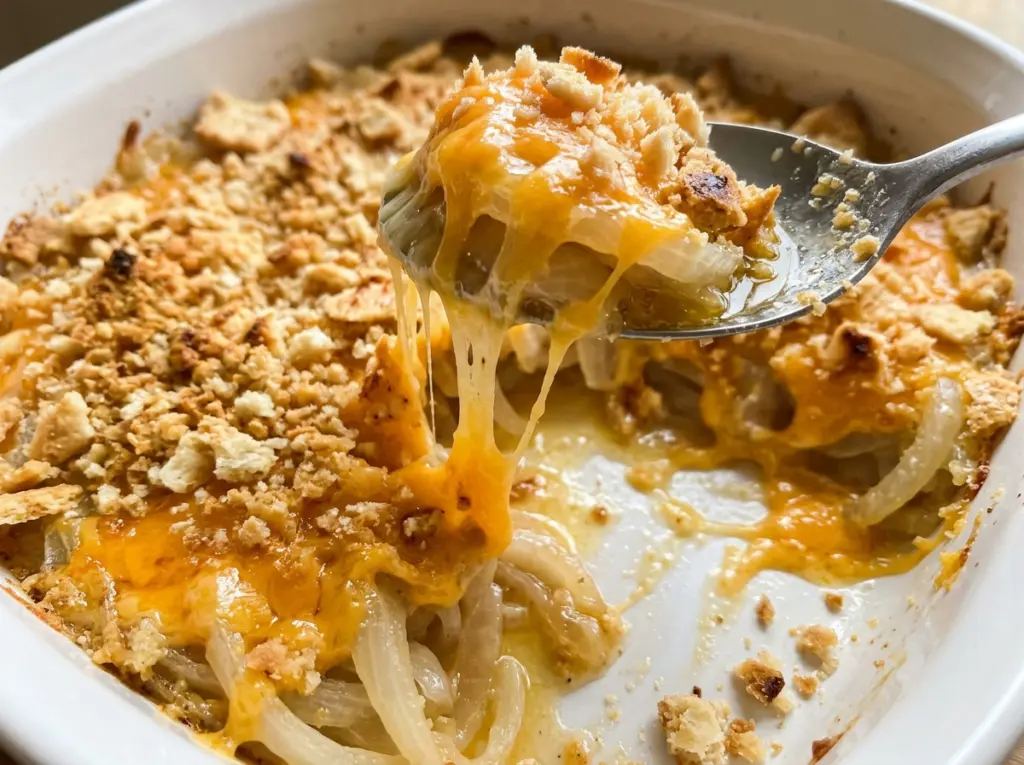
The onions start out piled high in the skillet, then soften down until they’re glossy and translucent. That change is what makes Southern Sweet Onion Casserole more than onions under a cracker crust: the sweet, mellow filling gets folded with sour cream and sharp cheddar, then baked until it bubbles at the edges.
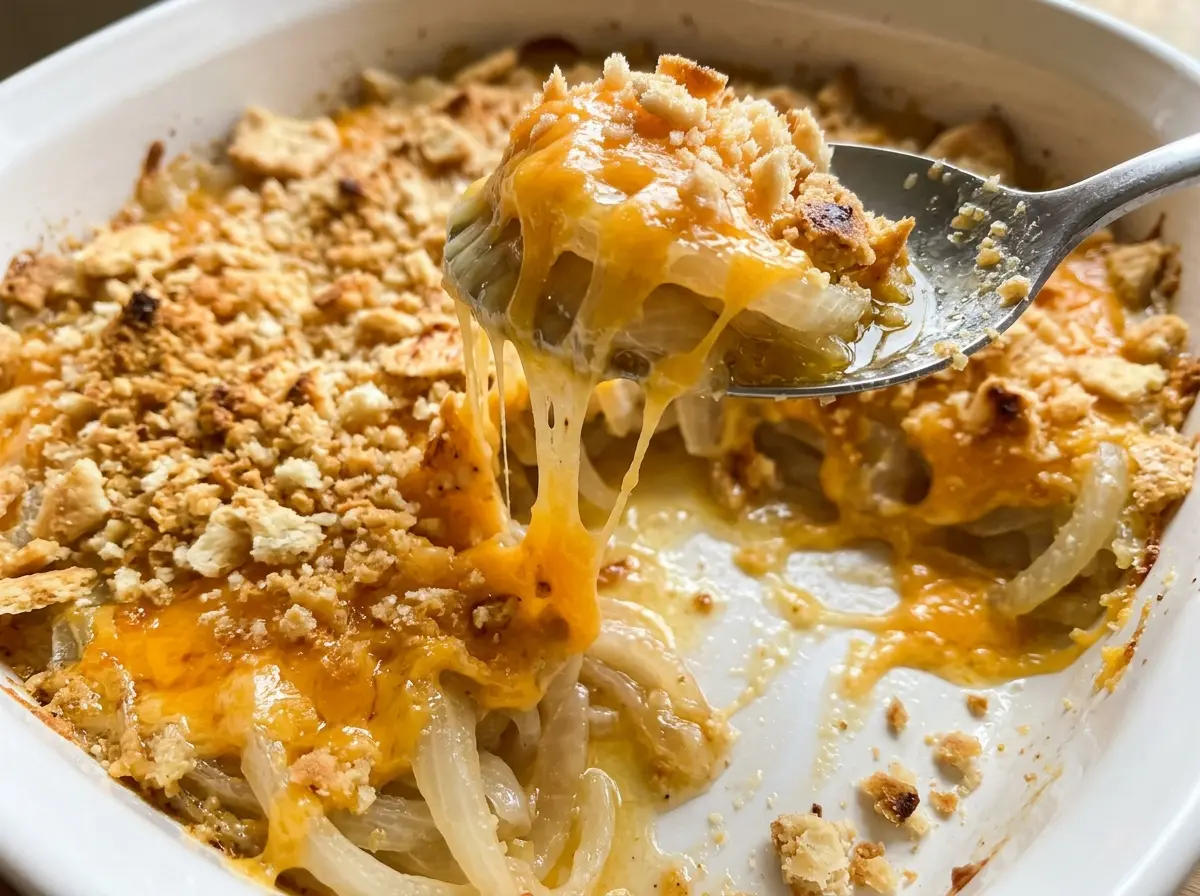
I keep the onions moving while they cook so they soften evenly instead of catching in one spot. There’s no need to chase deep browning here. The casserole is at its best when the onions stay tender and sweet, the cheddar gives the filling a savory edge, and the buttery crackers turn crisp and golden on top. After a short rest, each scoop holds together while still feeling creamy.
Kitchen Note
Slice the onions thinly and keep the slices close in size. Even pieces soften at the same pace, so you don’t end up with tender onions mixed with thicker, firmer ones.
Save this Southern Sweet Onion Casserole for its soft, sweet onion filling and buttery, golden cracker topping.
Why These Onions Should Turn Translucent, Not Brown
This casserole isn’t built around deeply caramelized onions. They cook first in butter until soft and translucent, then finish in the oven with sour cream and cheddar. That shorter skillet cook keeps the onion flavor sweet and clear, so it can sit alongside the tangy, creamy filling instead of taking over with a darker, more concentrated taste.
There’s also a texture difference. Fully softened slices settle into the casserole and become tender through the bake; onions that are still firm when they go into the dish won’t have the same chance to soften once they’re covered in the filling. Stirring often over medium heat helps the slices cook evenly. If you see browned patches developing before the onions are translucent, lower the heat and keep stirring rather than waiting for more color.
Think of the skillet as the place to soften the onions, not finish the casserole. The oven takes over once the sour cream and cheddar are stirred in, and the cracker topping turns the whole dish into a bubbly, crisp-edged bake.
What Makes the Onion, Cheese, and Cracker Layers Work

- Sweet onions — Vidalia onions are a natural fit, and other sweet onions work too. Choose onions that feel firm and heavy for their size, with dry outer skins. The sweetness is central to the casserole; a sharper onion changes the balance rather than giving you the same mellow filling.
- Unsalted butter — Butter carries the onions through their skillet cook and gives the cracker topping its rich, crisp finish. Unsalted butter lets the kosher salt season the filling without adding extra salt from the butter. A standard store-brand butter is fine here.
- Sour cream — Its tang keeps the softened onions and cheddar from tasting too rich. A fresh, plain sour cream is all you need; there’s no need for a specialty product. Because it’s part of the creamy base, replacing it changes the character of the casserole.
- Sharp cheddar — The sharper flavor stands up to the sweet onions, while the cheese melts into the sour cream to bind the filling. Shredding a block gives you a soft, even melt; pre-shredded cheddar is convenient, though its coating can make the finished filling a little less smooth.
- Buttery round crackers — These bring both seasoning and crunch, so a buttery round cracker is more useful than a plain, dry crumb. Crush them enough to scatter across the dish, but don’t turn them into powder; a mix of small pieces gives the baked top a little texture.
From Softened Onions to a Golden Cracker Top
Set Up the Dish and Slice the Onions
Heat the oven to 350°F and grease a 9×13-inch baking dish. Peel the sweet onions and slice them thinly so they soften at a similar pace. Keep the baking dish nearby; once the filling is mixed, it’s ready to transfer. Getting the pan prepared first means the onion mixture doesn’t have to sit in the skillet while you grease the dish.
Soften the Onions in Butter
Melt the butter in a large skillet over medium heat, then add the sliced onions, kosher salt, and black pepper. Cook for 12 to 15 minutes, stirring often, until the onions are softened and translucent. They should look glossy and flexible rather than browned and crisp at the edges. If the skillet is crowded, stir through the center and scrape along the bottom so the slices cook evenly.
Stir in the Creamy Filling
Take the skillet off the heat before stirring in the sour cream and shredded sharp cheddar. Stir until the onions are coated and the cheese is distributed through the mixture. If you add the dairy while the skillet is still over the burner, the direct heat can make the sour cream less smooth. Spread the mixture into the greased baking dish in an even layer.
Butter the Cracker Crumbs and Bake
Stir the crushed crackers with the melted butter until the crumbs are coated, then scatter them evenly over the onion mixture. Try not to leave large bare patches, since the top should brown across the dish. Bake for 25 to 30 minutes, until the filling bubbles around the edges and the topping is golden brown. Let the casserole rest for 10 minutes before serving so the filling settles and is easier to scoop.
Small Changes for a Different Onion Casserole
Choose another sweet onion
Vidalia is one option, not the only one. Use another sweet onion in the same preparation for a slightly different degree of sweetness while keeping the casserole’s mellow onion character.
Make the topping gluten-free
Replace the buttery round crackers with gluten-free buttery crackers, crushed and tossed with the melted butter as usual. Use enough to cover the onion filling evenly; the exact number will depend on the size of the crackers, and the topping’s texture may vary a little by brand.
Keep some larger cracker pieces
Crush the crackers less finely for a more uneven, pronounced crunch across the top. Smaller crumbs make a more uniform layer, while larger pieces give each scoop a bit more crisp texture.
Storage and Reheating
- Refrigerator: Refrigerate leftovers within 2 hours and keep them covered for 3 to 4 days. The cracker topping softens as it sits against the creamy filling.
- Freezer: Freeze cooled portions in an airtight container for up to 2 months. The filling can separate slightly and the topping loses some crispness after thawing, so the texture is best fresh.
- Reheating: Reheat in a 350°F oven until the center reaches 165°F. A microwave works for a single serving, but it softens the cracker topping; avoid reheating the whole casserole until the top dries out.
Questions That Come Up When Making This Onion Bake
Southern Sweet Onion Casserole
Ingredients
Equipment
Method
- Heat the oven to 350°F and grease a 9x13-inch baking dish.
- Melt 4 tablespoons butter in a large skillet over medium heat, then add the onions, salt, and pepper and cook, stirring often, for 12 to 15 minutes until softened and translucent.
- Remove the skillet from the heat and stir in the sour cream and cheddar, then spread the mixture in the prepared baking dish.
- Stir the crushed crackers with the melted butter and scatter the mixture evenly over the onions.
- Bake for 25 to 30 minutes until the filling is bubbling around the edges and the topping is golden brown, then rest for 10 minutes before serving.