
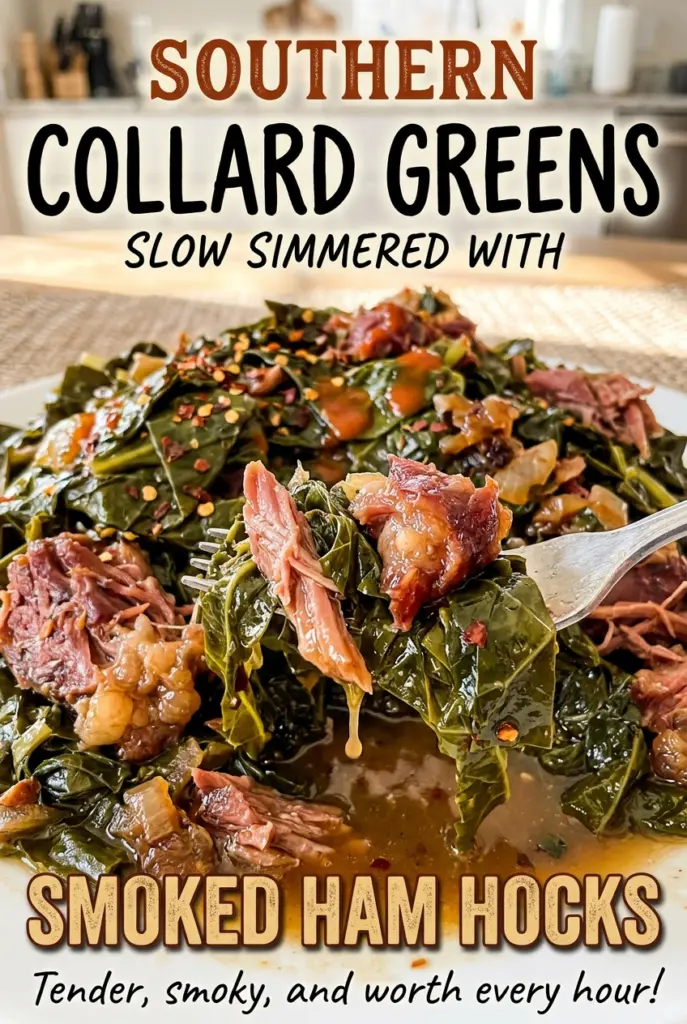
The collards start out high in the pot, then sink as they soften into the smoky broth. I add them a few handfuls at a time so I can stir them down without packing the Dutch oven too tightly. With these Southern collard greens slow simmered with smoked ham hocks, the greens get their time in the pot after the ham has already made a rich, savory cooking liquid.
Giving the ham hocks a long head start matters. They need to simmer until the meat pulls easily from the bone, while the collards need far less time to become tender. Cooking them in stages keeps the greens from spending hours in the pot before the broth is ready. At the end, apple cider vinegar brings a clean, tangy lift to the smoky, mellow greens.
When everything comes together, the leaves are tender without turning to mush, and the ham is easy to pull into satisfying pieces. A spoonful of the broth belongs right alongside them.
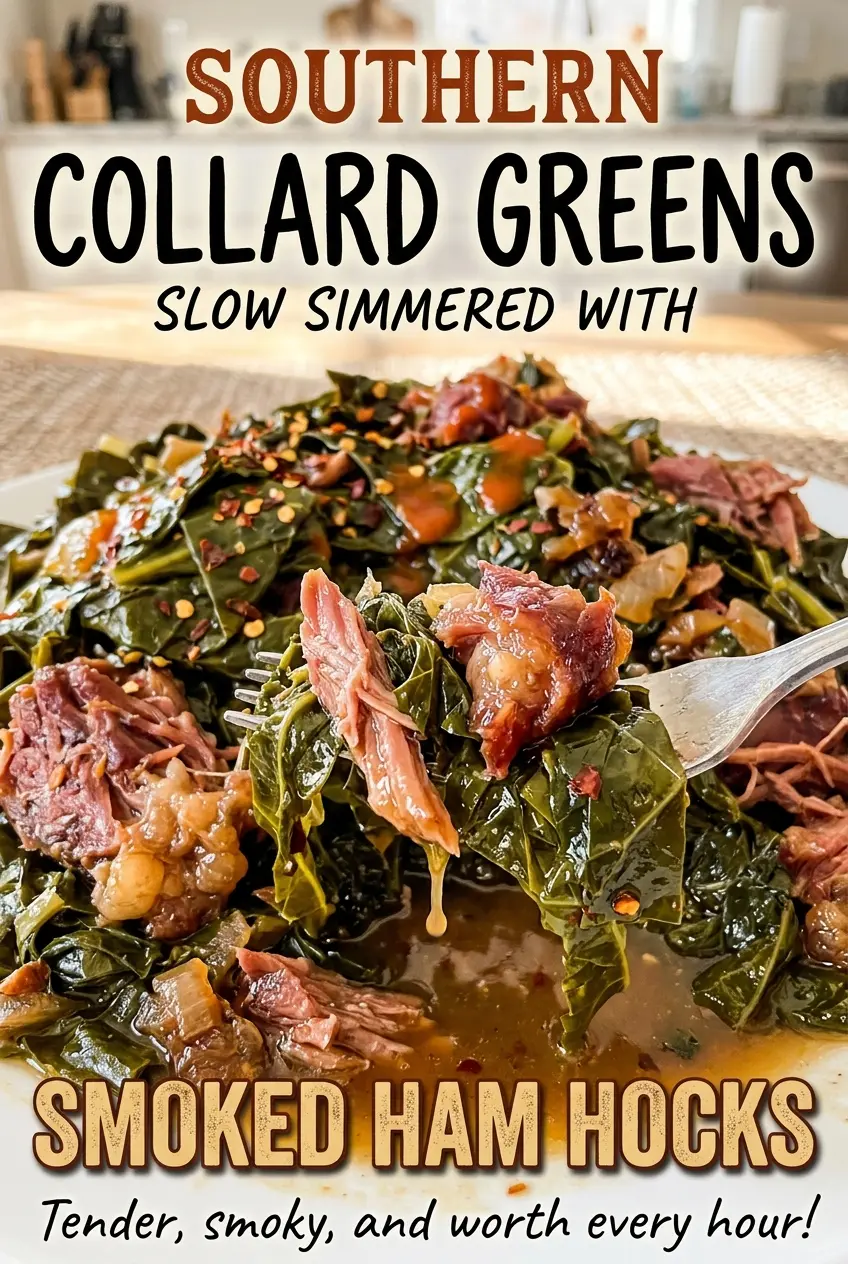
Kitchen Note
Wait until the ham and vinegar are back in the pot before deciding whether it needs more salt. The smoked meat already brings seasoning, and tasting at the finish gives you a much better read than salting the broth early.
Save these slow-simmered collard greens with smoked ham hocks for a pot of tender greens and smoky broth finished with apple cider vinegar.
Why the Ham Hocks Need Their Own Simmer Before the Greens Go In
Ham hocks need a long, gentle simmer before their meat is tender enough to pull from the bone. Collard greens don’t need that much time. Putting everything in at once would leave the leaves simmering through the entire time it takes the hocks to soften, which can push them past tender and into limp, broken-down territory.
Separating the two stages lets each ingredient reach the texture it needs. The hocks first season the water along with onion, garlic, and crushed red pepper flakes. Once the meat is tender, it comes out of the pot; the greens then simmer in that flavorful liquid until soft. The final short simmer brings the pulled meat back into the pot and lets the vinegar mingle with the broth.
The broth is part of the dish, not something to cook away. Keep the pot covered for the long simmering stages so the liquid stays in place, then uncover only for the final few minutes. You should end up with greens that are tender and richly seasoned, with enough broth to spoon over them.
What the Collards, Ham Hocks, and Vinegar Each Bring to the Pot
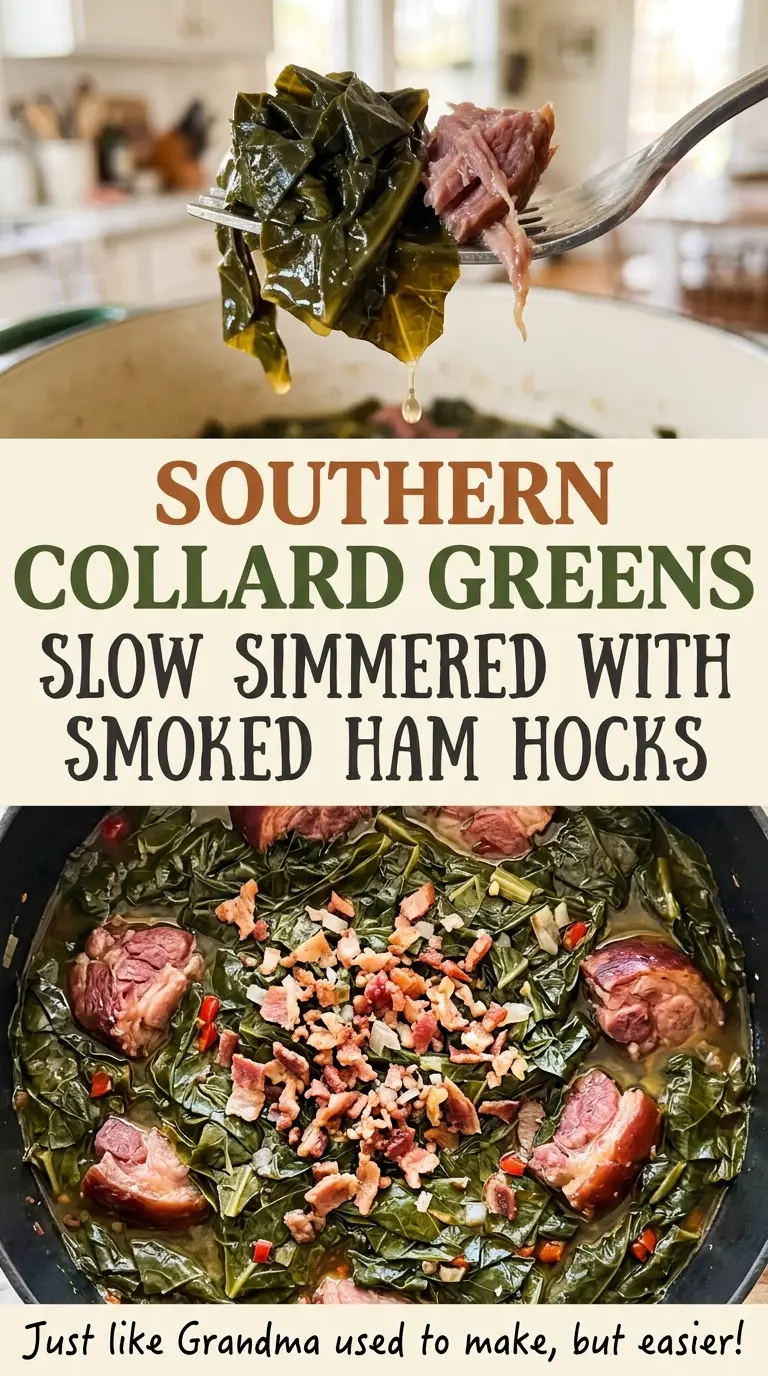
- Collard greens — Choose fresh leaves that look sturdy and are free of yellowed or slimy spots. Rinsing them well matters because grit can hide in the leaves; remove the tough stems and chop the leaves before they go into the pot. Their firm texture stands up to a long simmer better than delicate greens would.
- Smoked ham hocks — These provide both the meat and the smoke that define the broth. Their size and meatiness vary, so judge tenderness by whether the meat pulls easily from the bone rather than by appearance alone. There isn’t a like-for-like replacement among the ingredients in this pot; leaving them out means losing the smoky, savory base.
- Yellow onion and garlic — They season the cooking liquid while the hocks simmer. Smashed garlic releases its flavor into the broth without needing to be minced, and chopped onion softens as it cooks. No special upgrade is needed here; ordinary fresh onion and garlic do the job.
- Crushed red pepper flakes — They add a gentle heat in the background rather than turning the greens into a hot dish. If you know you prefer no chile warmth, the variation below explains how to leave them out.
- Apple cider vinegar — Stirred in at the end, its acidity balances the richness of the smoked meat and gives the greens a brighter finish. Use apple cider vinegar for the intended mellow tang; the greens don’t need a more aggressive acid to taste lively.
- Kosher salt and black pepper — The pepper seasons the pot, while the salt is best judged after the ham meat and vinegar are stirred in. Smoked hocks vary in saltiness, so taste before adding any extra.
Build the Pot Liquor First, Then Let the Greens Collapse
Simmer the hocks into a smoky broth
Put the ham hocks, water, chopped onion, smashed garlic, and red pepper flakes in an 8-quart Dutch oven. Bring the pot to a boil over medium-high heat, then cover it and lower the heat to maintain a gentle simmer. Cook for 1 1/2 to 2 hours, until the meat pulls easily from the bone. If the liquid is boiling hard, lower the heat; a steady, gentle simmer is what you want.
Pull the tender meat from the bones
Transfer the hocks to a plate and let them cool for about 10 minutes, until they’re easy to handle. Pull the meat away from the bones and set it aside. Discard the bones, skin, and excess fat so the finished greens have tender pieces of meat rather than tough or overly fatty bits. If the meat doesn’t pull easily, it needs more time in the broth before you separate it.
Work the collards into the pot in handfuls
Add the chopped collards a few handfuls at a time, stirring as each addition wilts. Don’t try to force every leaf under the liquid at the start; the greens take up less room as they soften. Once they’re in the pot, cover and simmer over low heat for 45 to 60 minutes, stirring occasionally. They’re ready when the leaves are very tender, not just softened at the edges.
Finish with the ham, pepper, and vinegar
Stir the reserved ham hock meat into the greens with the kosher salt, black pepper, and apple cider vinegar. Simmer uncovered for 5 minutes so the flavors come together. Taste the greens and broth at the end, then add more salt if needed. The vinegar should brighten the smoky pot without overpowering it.
Small Changes That Keep the Pot in Balance
Leave out the red pepper for a milder pot
Skip the crushed red pepper flakes if you want the smoky ham and collards to lead without a chile kick. The broth will still get its depth from the hocks, onion, and garlic; you’ll just lose that little warm note in the background.
Keep the pulled ham in larger pieces
When you pull the tender meat from the hocks, leave it in larger bite-size pieces instead of shredding it finely. Stir it back into the greens as usual for a more noticeable contrast between the soft leaves and the meaty pieces.
Reduce the added salt
For less added salt, leave out the measured kosher salt and taste the finished pot before deciding whether it needs any more. The smoked ham hocks still contribute sodium, so this reduces the added salt but doesn’t make the dish low-sodium.
Storage and Reheating
- Refrigerator: Refrigerate leftovers in a covered container within 2 hours and use them within 3 to 4 days. The greens soften a little more as they sit in the broth.
- Freezer: Freeze in airtight containers for up to 3 months. The greens may be softer after thawing, but the smoky broth and ham hold up well.
- Reheating: Warm gently in a saucepan over low to medium heat, stirring now and then, until the leftovers reach 165°F. Avoid a hard boil, which can break down the greens further.
The Questions That Come Up While the Pot Simmeres
Southern Collard Greens Slow Simmered with Smoked Ham Hocks
Ingredients
Equipment
Method
- Place the ham hocks, water, onion, garlic, and red pepper flakes in an 8-quart Dutch oven.
- Bring to a boil over medium-high heat.
- Cover and simmer over low heat for 1 1/2 to 2 hours, until the meat is tender and pulls easily from the bone.
- Transfer the ham hocks to a plate.
- Let them cool for about 10 minutes, until easy to handle.
- Pull off the meat, discard the bones, skin, and excess fat, and set the meat aside.
- Add the collard greens to the pot a few handfuls at a time, stirring as they wilt.
- Cover and simmer over low heat for 45 to 60 minutes, stirring occasionally, until the greens are very tender.
- Stir the ham hock meat, salt, black pepper, and vinegar into the greens.
- Simmer uncovered for 5 minutes.
- Taste and add more salt if needed.