
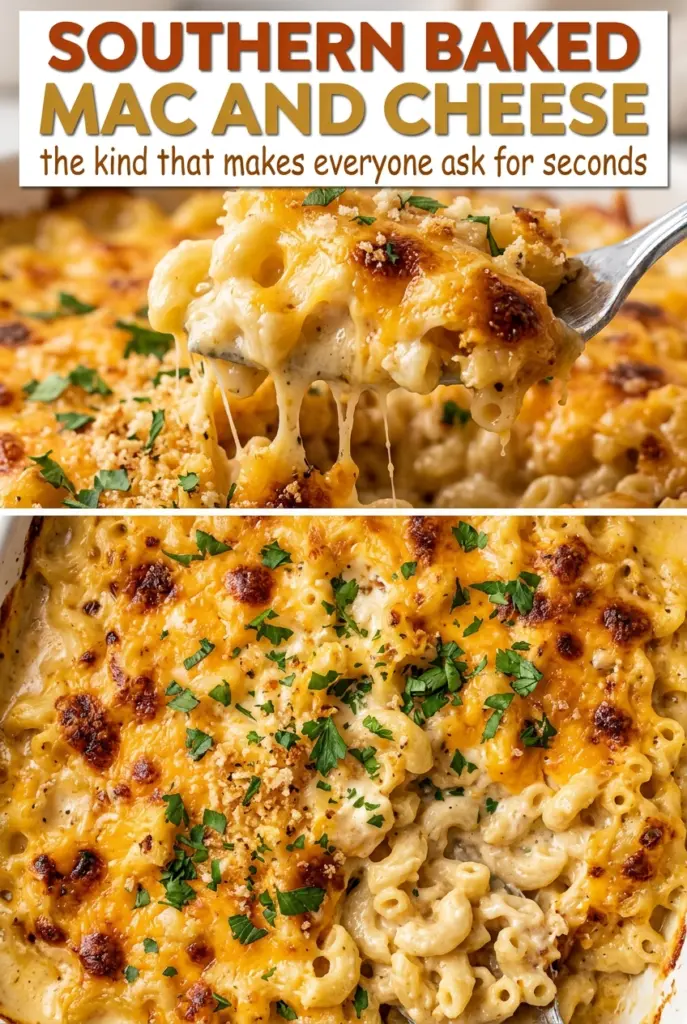
The milk mixture looks like more liquid than the macaroni can hold when it first goes into the dish. I used to worry that meant the casserole would turn out soupy, but the eggs set as it bakes and the pasta absorbs some of that creamy mixture. This Southern baked mac and cheese comes out with a golden top and a tender, set center—not a pot of stovetop macaroni dressed up for the oven.
Layering the macaroni with the cheeses gives each serving pockets of cheddar and Monterey Jack, while the reserved cheese melts across the top. The evaporated milk adds body, and the eggs help the casserole hold together after it rests. Cook the elbows just shy of al dente before they go into the dish; they’ll keep softening in the oven. The result is rich without needing a separate sauce on the stove, with a browned cheese top and creamy layers underneath.
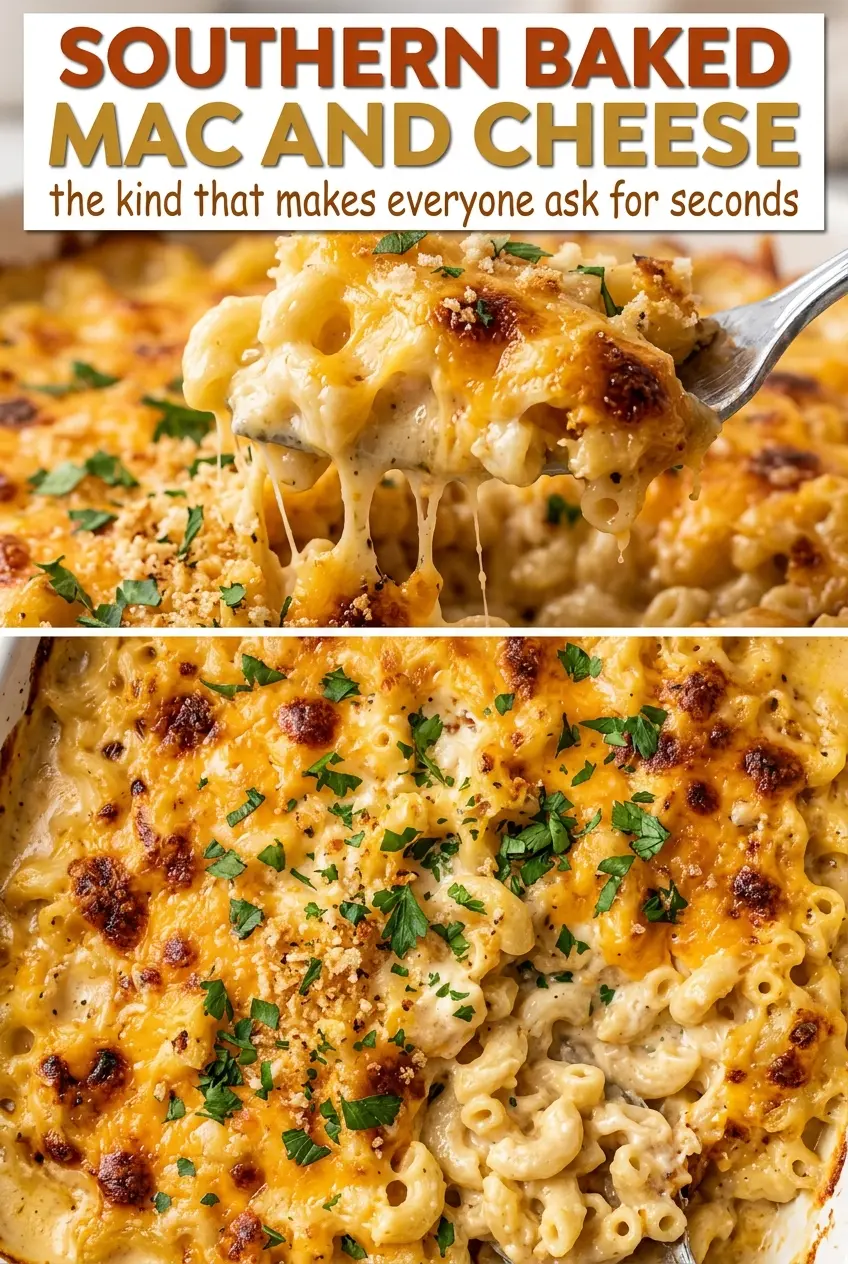
Kitchen Note
Grease the bottom and sides of the baking dish with the tablespoon of butter, not just the center. Cheese that melts against a bare edge can cling when you serve the first portions.
Save Southern baked mac and cheese for a cozy dinner—the layered cheddar and Monterey Jack bake under a golden top.
Why the Egg-and-Milk Mixture Belongs on Layered Pasta
This casserole doesn’t start with a flour-thickened sauce. Instead, whisked eggs and milk are poured over alternating layers of macaroni and shredded cheese. As it bakes, the eggs set and help hold the casserole together, while the milk keeps the pasta from baking up dry. That’s what gives the finished dish its sliceable, custardy texture.
Resist the urge to stir everything together in the baking dish. The layers make it easier to spread the cheese through the casserole and leave a generous portion for the top. Pour the milk mixture slowly and evenly over the whole dish so it can work down between the noodles. If you see a little liquid around the edges before baking, don’t panic; the casserole needs that moisture as it cooks.
The center should be set rather than loose when it comes out of the oven. A browned top alone isn’t enough to tell you the middle has finished cooking, so check the center as well as looking at the surface. A short rest after baking lets the set center settle before you cut into it.
How the Cheeses, Milk, and Eggs Shape This Casserole

- Elbow macaroni — The curves hold onto the milk mixture and cheese. Cook it just shy of al dente so it doesn’t turn overly soft during baking. If you need a gluten-free version, use gluten-free elbow pasta and follow its package timing, stopping just shy of al dente; its texture may be a little more delicate.
- Sharp cheddar and Monterey Jack — Cheddar supplies the pronounced cheese flavor, while Monterey Jack melts smoothly and softens the blend. Shredding the cheese yourself gives a more even melt than many pre-shredded bags, which can contain anti-caking starch. For a sharper, more cheddar-forward casserole, replace the Monterey Jack with the same amount of sharp cheddar; the flavor will be bolder and less mellow.
- Evaporated milk and whole milk — Evaporated milk brings concentrated dairy richness, and whole milk loosens the mixture so it can spread through the pasta. Keep both for the intended balance; swapping in water would thin the casserole and remove richness.
- Eggs — These set the milk mixture into the casserole’s soft, cohesive center. They aren’t a garnish or an optional thickener, so leaving them out changes the structure. There isn’t a reliable dairy-free or egg-free swap that keeps this particular baked casserole’s texture.
- Butter and seasonings — Unsalted butter coats the baking dish and the hot pasta, while dry mustard, paprika, black pepper, and salt season the cheese and custard. Dry mustard adds a quiet savory edge without making the dish taste overtly like mustard.
Building the Layers Before the Casserole Goes in the Oven
Get the dish and pasta ready
Heat the oven to 350°F and grease a 9×13-inch baking dish with 1 tablespoon of butter. Bring a large pot of water to a boil, add 1 tablespoon of kosher salt, and cook the elbow macaroni according to the package timing until just shy of al dente. Drain it well; excess water clinging to the noodles dilutes the milk mixture. Return the hot pasta to the pot and toss it with the remaining butter.
Whisk the custard mixture
In a medium bowl, whisk together the evaporated milk, whole milk, eggs, remaining salt, dry mustard, paprika, and black pepper. Whisk until the eggs are fully blended and no streaks of white remain. This even mixture helps the seasoning reach more than just the top layer. Set the bowl beside the dish before you begin layering so you can pour it evenly as soon as the pasta and cheese are in place.
Layer the macaroni and cheese
Combine the shredded cheddar and Monterey Jack, then set aside 1 cup for the top. Spread half the macaroni in the prepared dish and cover it with half of the remaining cheese. Repeat with the rest of the pasta and cheese, keeping the reserved cup separate for the surface. Pour the milk mixture evenly over the layers rather than in one spot, where it could pool before reaching the rest of the casserole.
Bake until the center sets
Bake uncovered for 35 to 45 minutes, until the top is golden, the center is set, and the center reaches 160°F. Ovens and dishes can vary, so use those visual cues along with a thermometer rather than relying only on the clock. If the top is browning but the middle still looks loose, give it more time in the oven. Rest the casserole for 10 minutes before serving so the portions hold together.
Two Useful Ways to Adapt the Cheese or Pasta
A sharper, all-cheddar bake
Replace the Monterey Jack with an equal amount of sharp cheddar and keep the rest of the ingredients and layering the same. The casserole will taste more assertively cheesy, with less of the mild, creamy contrast that Jack brings. Shred the cheese finely so it disperses well between the pasta layers.
A gluten-free pasta option
Use 1 pound of gluten-free elbow pasta in place of the regular elbows, and cook it according to its package timing until just shy of al dente. Gluten-free pasta can soften faster once it’s baked, so drain it promptly and avoid cooking it fully tender in the pot. The cheese and egg mixture stay the same.
Storage and Reheating
- Refrigerator: Refrigerate leftovers within 2 hours and keep them for 3 to 4 days. The pasta will firm up as it chills, so the texture is denser than it is straight from the oven.
- Freezer: Freeze cooled portions in airtight containers for up to 2 to 3 months. Thaw overnight in the refrigerator for more even reheating; the pasta may be softer after freezing.
- Reheating: Warm individual portions in the microwave in short intervals until steaming hot throughout, or until they reach 165°F. Avoid one long blast on high, which can make the edges tough before the middle is hot.
Questions That Come Up With Baked Mac and Cheese
Southern Baked Mac and Cheese
Ingredients
Equipment
Method
- Heat the oven to 350°F.
- Grease a 9x13-inch baking dish with 1 tablespoon of the butter.
- Bring a large pot of water to a boil, add 1 tablespoon of the salt, and cook the macaroni until just shy of al dente, following the package timing; drain well.
- Return the hot macaroni to the pot and toss with the remaining 2 tablespoons butter.
- In a medium bowl, whisk together the evaporated milk, whole milk, eggs, remaining 1/2 teaspoon salt, dry mustard, paprika, and black pepper.
- Combine the cheddar and Monterey Jack, reserving 1 cup for the top.
- Layer half the macaroni and half the remaining cheese in the dish, then repeat with the rest.
- Pour the milk mixture evenly over everything.
- Bake uncovered for 35 to 45 minutes, until the top is golden, the center is set, and the center reaches 160°F.
- Rest for 10 minutes before serving.