
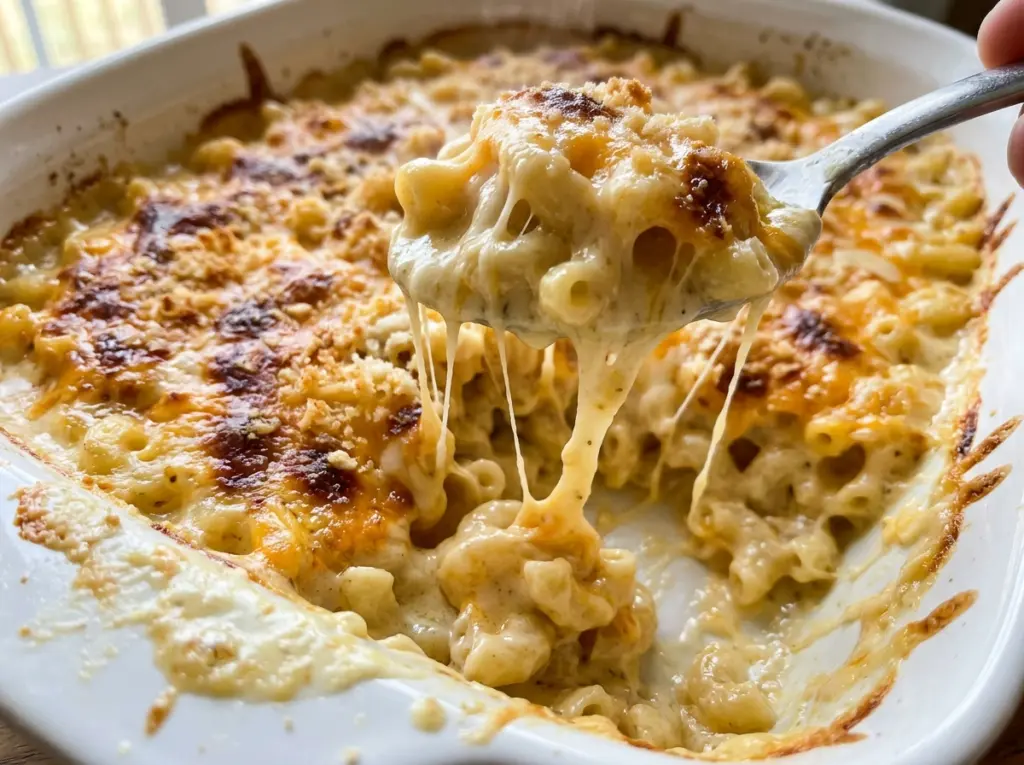
At the oven door, the edges of this casserole are bubbling while the middle still has a little movement. That contrast is what I watch with Southern baked mac and cheese with three cheeses: the corners are hot and set, but the center needs its full bake before the dish can hold together. A golden top alone doesn’t tell you what’s happening underneath.
The texture here is different from stovetop macaroni, where a loose cheese sauce coats every noodle. This version bakes into a tender, sliceable casserole, with a soft custard holding the pasta together and a browned layer of cheese on top. I stop cooking the elbows just before they reach al dente so they have room to finish in the oven.
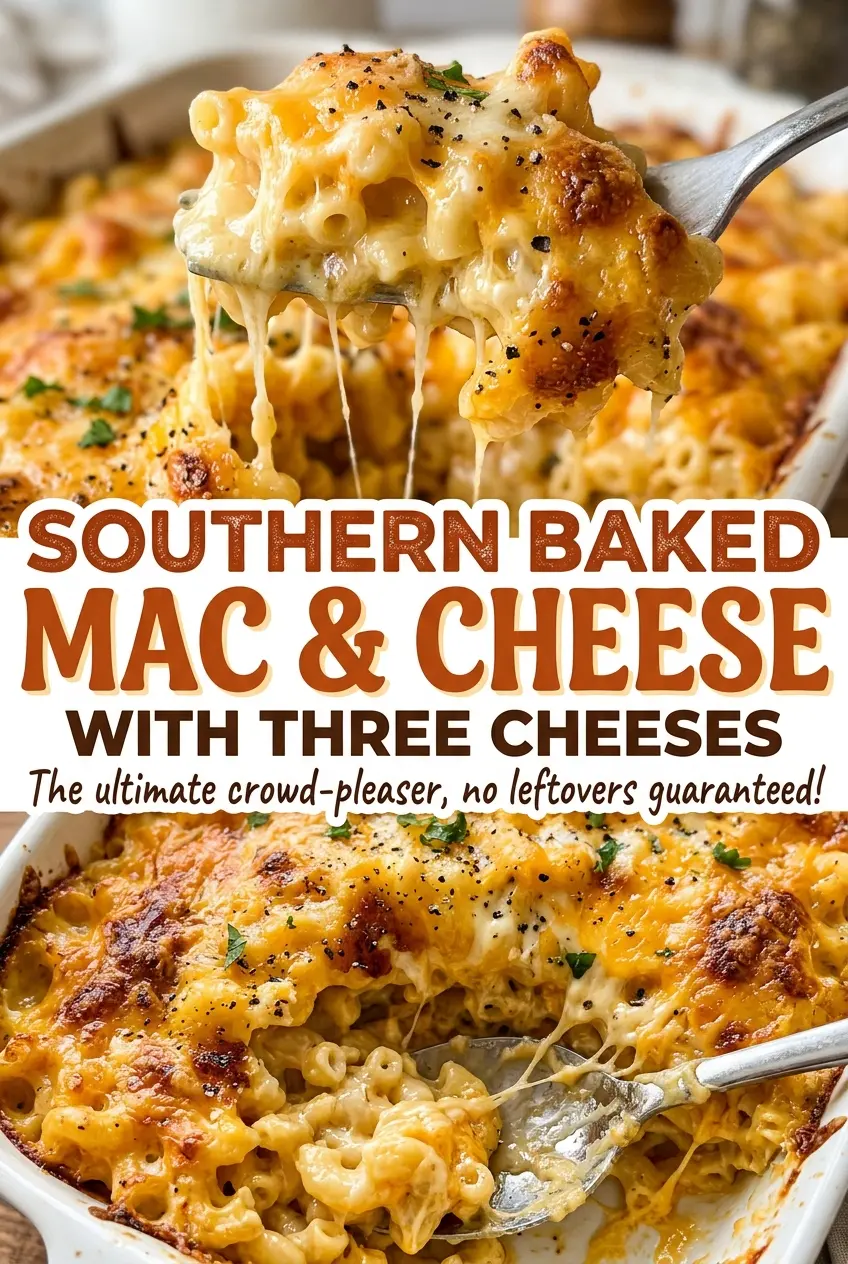
Sharp cheddar brings the familiar savory bite, while Monterey Jack and Colby keep the cheese mixture mellow and easy to enjoy. Once it comes out of the oven, the top is golden and the edges are bubbling around a creamy, settled center.
Kitchen Note
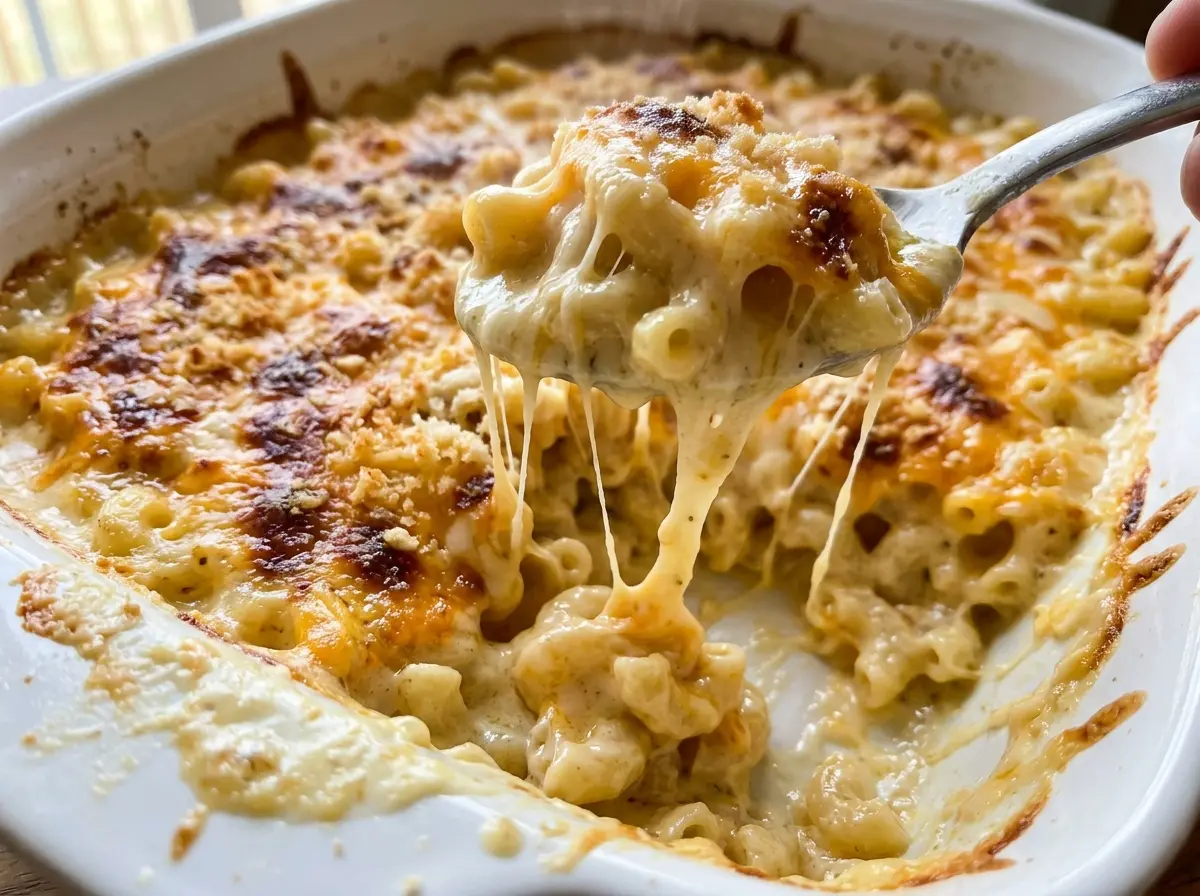
I give the casserole its full 10 to 15 minutes to rest before serving. The center looks softer straight from the oven, but it settles as it stands; cut too soon and the portions won’t hold their shape.
Save this Southern baked mac and cheese for its golden top, tender elbows, and three-cheese custard center.
Why Southern Baked Mac and Cheese Sets Like a Casserole, Not a Cheese Sauce
There isn’t a separate cheese sauce to thicken on the stove. Instead, the milk and eggs pour over the buttered pasta and cheese, then bake together into a custard. That changes what to expect from the finished dish: it should be creamy and tender, but it won’t flow like macaroni pulled straight from a saucepan.
The pasta needs to be slightly undercooked before it goes into the dish because it keeps softening as it bakes. Cooking it all the way to al dente first leaves less room for that second round of heat. The cheese is split between the pasta and the top, too; the first portion melts through the casserole, while the reserved cheese makes a browned, savory lid. If you expect a smooth stovetop sauce, the layered texture may surprise you—in a good way. Each scoop has soft pasta, a set center, and a bit of golden cheese from the top.
How the Three Cheeses Divide the Work
- Sharp cheddar — It gives the casserole its clearest cheese flavor. Choose a cheddar you enjoy eating on its own; a sharper block brings more character than a mild one.
- Monterey Jack and Colby — These make the blend rounder and softer than cheddar alone. Colby has a mild, buttery taste, while Monterey Jack melts smoothly. Together they keep the cheddar from dominating every bite.
- Evaporated milk and whole milk — Evaporated milk adds concentrated dairy richness, and whole milk loosens the mixture so it can spread through the pasta. Keep the evaporated milk unsweetened; sweetened condensed milk isn’t a match for this savory casserole.
- Eggs — They help the milk mixture set around the macaroni as it bakes. Whisk them thoroughly with the other liquids and seasonings so the custard doesn’t collect in one spot.
- Elbow macaroni — The small curves catch cheese and make each serving easy to scoop. Choose a standard dried elbow pasta, and check the package timing so you can stop it just before al dente.
- Dry mustard and paprika — Dry mustard adds a gentle savory sharpness without making the casserole taste like mustard. Paprika contributes warmth and color; fresh, aromatic spices have a clearer taste than jars that have been open for years.
- Butter — Butter coats the drained macaroni and greases the baking dish. Unsalted butter keeps the seasoning predictable, since the cheese already contributes saltiness.
The Order That Keeps the Pasta Tender and the Custard Even
Start the Pasta Just Short of Al Dente
Heat the oven to 350°F and grease a 9×13-inch baking dish with 1 tablespoon of the butter. Bring 4 quarts of water to a boil, add 1 tablespoon of kosher salt and the elbow macaroni, then cook according to the package directions, stopping 1 minute before the listed al dente time. Drain the pasta well; water clinging to the elbows can thin the custard.
Coat the Elbows While They’re Hot
Return the drained macaroni to the pot and add the remaining 2 tablespoons of butter. Toss until the butter melts and coats the pasta, working while the noodles are still warm. This gives the cheese something to cling to and keeps the elbows from sticking together in a solid mass.
Whisk the Milk Mixture and Divide the Cheese
In a large bowl, whisk together the evaporated milk, whole milk, eggs, dry mustard, paprika, black pepper, and the remaining 1/2 teaspoon of kosher salt. In a separate bowl, stir together the sharp cheddar, Monterey Jack, and Colby, then set aside 1 1/2 cups for the topping. Whisk until the eggs are fully blended rather than leaving streaks of yolk or white.
Layer the Pasta, Custard, and Cheese
Toss the cheese that wasn’t reserved with the buttered macaroni, then spread the mixture in the prepared baking dish. Pour the milk mixture evenly over the pasta instead of dumping it in one spot, and finish with the reserved cheese. Spread the topping across the surface so the edges and center both get a cheesy crust.
Bake Until the Center Is Set
Bake for 35 to 40 minutes, until the top is golden, the edges are bubbling, and the center reaches 160°F. The middle may still look a little softer than the edges, but it shouldn’t be loose or slosh when the dish is nudged. Rest the casserole for 10 to 15 minutes before serving.
Flavor Swaps That Keep the Casserole’s Structure Intact
Make the Top Smoky
Use smoked paprika in place of the regular paprika. It adds a light smoky note without changing the custard or the way the casserole bakes.
Give the Cheese a Peppery Kick
Replace the Monterey Jack with pepper Jack. It keeps the blend soft and melty, with a noticeable bit of heat in each serving.
Use Gluten-Free Elbow Pasta
Choose a gluten-free elbow macaroni and follow its package timing, stopping 1 minute before the listed al dente time. The casserole still bakes the same way, though gluten-free pasta can soften more quickly, so avoid cooking it past that point before it goes into the oven.
Storage and Reheating
- Refrigerator: Refrigerate leftovers within 2 hours and keep them covered for 3 to 4 days. The pasta softens a little as it sits.
- Freezer: Freeze airtight portions for up to 2 months for the best texture. Thaw overnight in the refrigerator; the custard may be a little less creamy after freezing.
- Reheating: Reheat covered in a 350°F oven until hot through, or warm individual portions in the microwave in short bursts. Leaving it uncovered over high heat can dry the edges before the center warms.
Questions I Get Asked About This Baked Mac and Cheese
Southern Baked Mac and Cheese with Three Cheeses
Ingredients
Equipment
Method
- Heat the oven to 350°F.
- Grease a 9x13-inch baking dish with 1 tablespoon of the butter.
- Bring 4 quarts water to a boil in a large pot, then add 1 tablespoon of the salt and the macaroni.
- Cook according to the package directions, stopping 1 minute before the listed al dente time, then drain well.
- Return the macaroni to the pot, add the remaining 2 tablespoons butter, and toss until the butter melts and coats the pasta.
- Whisk together the evaporated milk, whole milk, eggs, dry mustard, paprika, black pepper, and remaining 1/2 teaspoon salt in a large bowl.
- Stir the cheddar, Monterey Jack, and Colby together in a bowl.
- Set aside 1 1/2 cups of the cheese for the topping.
- Toss the remaining cheese with the macaroni.
- Spread the mixture in the prepared dish.
- Pour the milk mixture evenly over the macaroni mixture.
- Sprinkle the reserved cheese on top.
- Bake for 35-40 minutes, until the top is golden, the edges are bubbling, and the center reaches 160°F.
- Rest for 10-15 minutes before serving.