
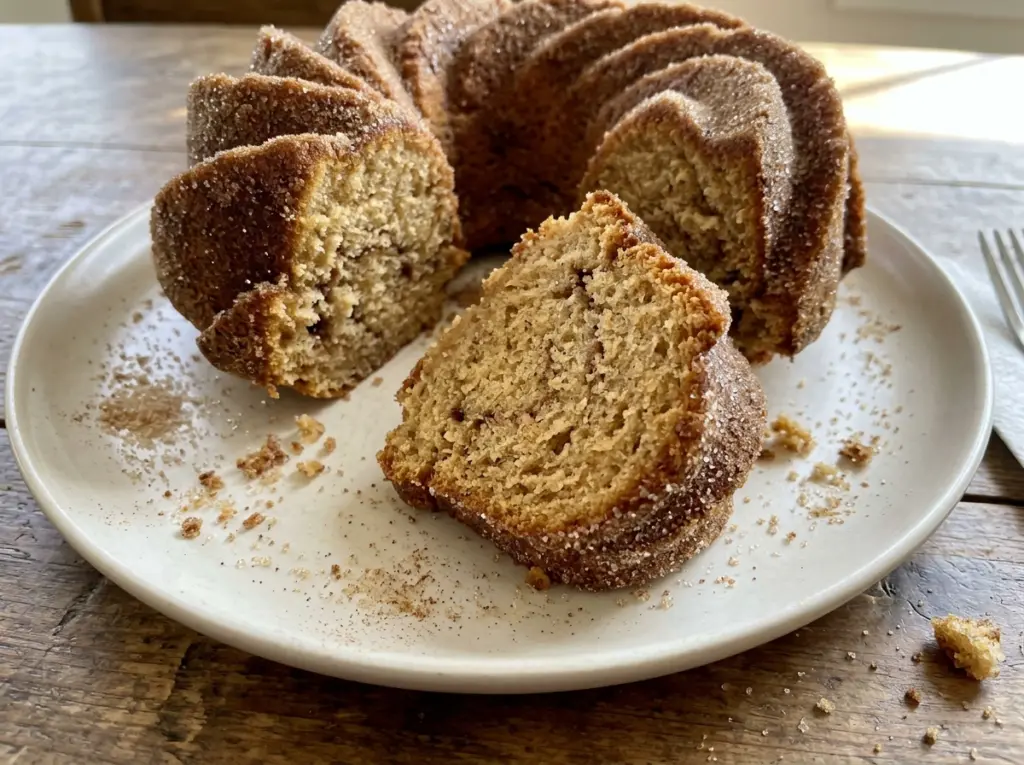
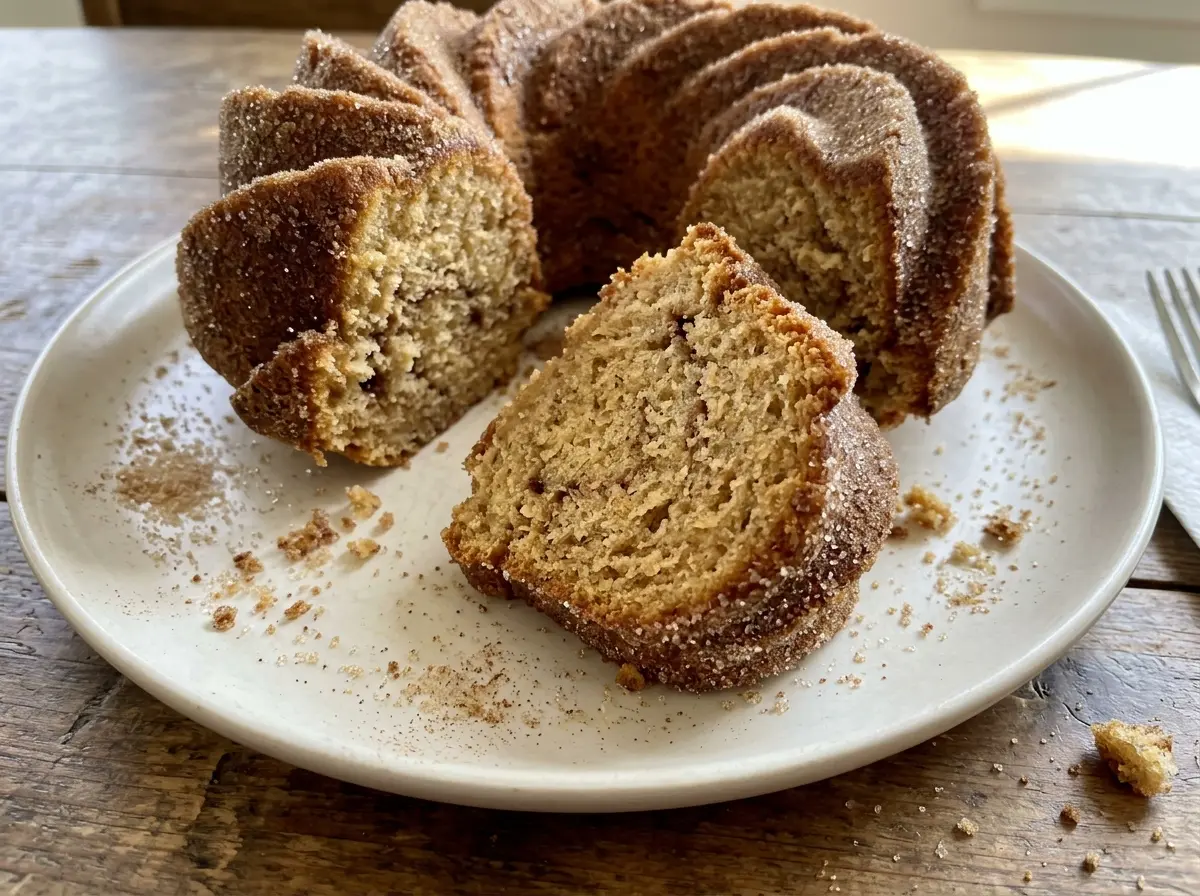
The first thing I notice when this cake comes out of the oven is the cinnamon-sugar smell clinging to the Bundt pan. That sugared coating gives each slice a delicate, sweet edge, while a cinnamon ribbon runs through the soft cake. Snickerdoodle Bundt Cake brings the familiar cinnamon-and-sugar flavor into a generous cake that’s easy to slice for sharing.
I pay close attention to how the batter comes together. The butter and sugar need a full few minutes of beating before the eggs go in, and the sour cream, milk, and flour mixtures get added in alternating stages. That keeps the batter smooth without beating it longer than needed. After baking, a short rest in the pan gives the cake time to settle before you turn it out, and the golden outside looks lovely dusted only with its own cinnamon sugar.
Kitchen Note
Room-temperature eggs and dairy blend into the butter mixture much more smoothly than cold ingredients. Set them out ahead of time; a more even batter is easier to layer without knocking the air out of it.
Save this Snickerdoodle Bundt Cake for its cinnamon-sugar edge and soft, swirled center.
Why the Cinnamon Sugar Coats the Pan and the Center
The cinnamon sugar has two jobs here, and where it goes matters. A little of the mixture coats the buttered Bundt pan, so the outside of the cake gets a thin, fragrant sugar crust. The rest is tucked between two layers of batter, where it becomes the cinnamon stripe running through each slice.
It’s easy to treat that center layer like a filling and pile it in one thick band. Spreading it evenly over the first half of the batter makes the cinnamon show up across the cake instead of in one concentrated pocket. The thin-knife swirl connects the layers without turning the whole batter brown. If you run the knife around too much, the defined ribbon fades into a more uniform cinnamon flavor; a gentle pass leaves the contrast intact. The same mixture ties the outer edge to the center, so each bite has both the sugared crust and the familiar snickerdoodle warmth.
What Gives This Bundt Its Snickerdoodle Character
- Cream of tartar — Alongside the baking powder and baking soda, it gives the cake the gentle tang that calls snickerdoodles to mind. Keep it in the batter rather than trying to make the cinnamon alone carry that signature taste.
- Sour cream — It brings richness and a tender, moist crumb. Use plain sour cream; a flavored or sweetened version would change the balance of the cake.
- Unsalted butter — Butter creates the cake’s rich base and helps the cinnamon sugar cling to the pan. Softened butter should give slightly when pressed but still hold its shape; melted butter won’t cream with sugar the same way.
- Ground cinnamon and granulated sugar — Mixing them together creates one consistent cinnamon-sugar blend for both the pan coating and the center. Fresh-smelling cinnamon makes a noticeable difference here, while regular granulated sugar works well.
- Vanilla extract — It rounds out the buttery cake without competing with the cinnamon. Pure vanilla is lovely, but the most important detail is measuring and mixing it with the sour cream and milk before adding that mixture to the batter.
Build the Batter and Swirl Without Losing the Ribbon
Coat the Bundt Pan First
Heat the oven to 350°F and thoroughly grease a 10-inch, 12-cup Bundt pan with softened butter, including the center tube and the grooves. Stir the granulated sugar and cinnamon together, then sprinkle 2 tablespoons into the pan. Turn the pan so the mixture coats the buttered surface, and set the remaining cinnamon sugar aside. Any bare patches are more likely to catch the cake, so take a moment to check the whole inside.
Cream the Butter, Sugar, and Eggs
Beat the softened butter and granulated sugar with an electric mixer on medium speed for about 3 minutes. The mixture should look light and fluffy, not like a dense paste; this stage gives the cake a head start on its tender texture. Add the eggs one at a time and mix well after each addition. Adding them gradually helps the butter mixture stay cohesive instead of turning lumpy.
Alternate the Wet and Dry Mixtures
Whisk the flour, baking powder, baking soda, cream of tartar, and salt in a medium bowl. In a separate bowl, whisk the sour cream, milk, and vanilla. Add the sour cream mixture in three additions, alternating with the flour mixture in two additions, and begin and end with flour. Keep the mixer on low and stop as soon as the batter is combined; streaks of dry flour should disappear, but prolonged mixing can make the cake tougher.
Layer the Batter and Cinnamon Sugar
Spread half the batter into the prepared pan, then scatter the remaining cinnamon sugar evenly over it. Cover with the rest of the batter and gently swirl through the layers with a thin knife. Try not to scrape the sides or bottom of the pan; the goal is a ribbon through the center, not a mixture of cinnamon sugar throughout the cake. Smooth the top enough for an even layer before the pan goes into the oven.
Bake, Rest, and Turn Out
Bake for 50 to 60 minutes, until the cake is golden and a toothpick inserted near the center comes out clean or with a few moist crumbs. If the toothpick has wet batter on it, give the cake more time and check again. Let the cake cool in the pan for 15 minutes, then invert it onto a wire rack and cool completely. Turning it out while hot can leave pieces behind, while letting it sit too long in the pan can make the sugared coating harder to release.
Two Ways to Change the Cinnamon Stripe
Keep the Cinnamon Sugar in a Clear Ribbon
For a more distinct stripe, layer the cinnamon sugar between the batter as usual but skip the knife swirl. The slices will have a sharper line of cinnamon sugar instead of a gently marbled center; the cake still gets its cinnamon-sugar coating in the pan.
Put All the Cinnamon Sugar in the Middle
For a cleaner-looking exterior, grease the pan with the softened butter but keep the cinnamon sugar for the center layer. The outside will be less crusted with sugar, while the full cinnamon-sugar mixture makes a more concentrated stripe inside. Grease every groove carefully when you leave out the sugared coating.
Storage and Reheating
- Refrigerator: Keep the cooled cake covered in an airtight container for up to 5 days. The crumb will firm up when chilled, so let a slice lose its refrigerator chill before serving.
- Freezer: Freeze individual slices or portions tightly wrapped, then place them in an airtight freezer container for up to 2 months. Thaw wrapped slices in the refrigerator or at room temperature.
- Reheating: For a warm slice, microwave it for about 10 seconds at a time until just warmed through. Longer heating can dry the crumb and melt away the sugared edge.
Questions That Come Up While Making This Bundt Cake
Snickerdoodle Bundt Cake
Ingredients
Equipment
Method
- Preheat the oven to 350°F.
- Thoroughly grease a 10-inch, 12-cup Bundt pan with the softened butter.
- Stir the sugar and cinnamon together.
- Sprinkle 2 tablespoons of the mixture into the pan and turn the pan to coat it.
- Set the remaining cinnamon sugar aside.
- Whisk the flour, baking powder, baking soda, cream of tartar, and salt together in a medium bowl.
- In a large bowl, beat the softened butter and sugar with an electric mixer on medium speed until light and fluffy, about 3 minutes.
- Beat in the eggs one at a time, mixing well after each addition.
- Whisk the sour cream, milk, and vanilla together in a separate bowl.
- Add the sour cream mixture to the butter mixture in three additions, alternating with the flour mixture in two additions and beginning and ending with the flour; mix on low just until combined.
- Spread half the batter in the prepared pan.
- Sprinkle the remaining cinnamon sugar evenly over the batter.
- Spread the remaining batter on top.
- Gently swirl through the layers with a thin knife.
- Bake for 50 to 60 minutes, until the cake is golden and a toothpick inserted near the center comes out clean or with a few moist crumbs.
- Cool the cake in the pan for 15 minutes.
- Invert it onto a wire rack and cool completely.