
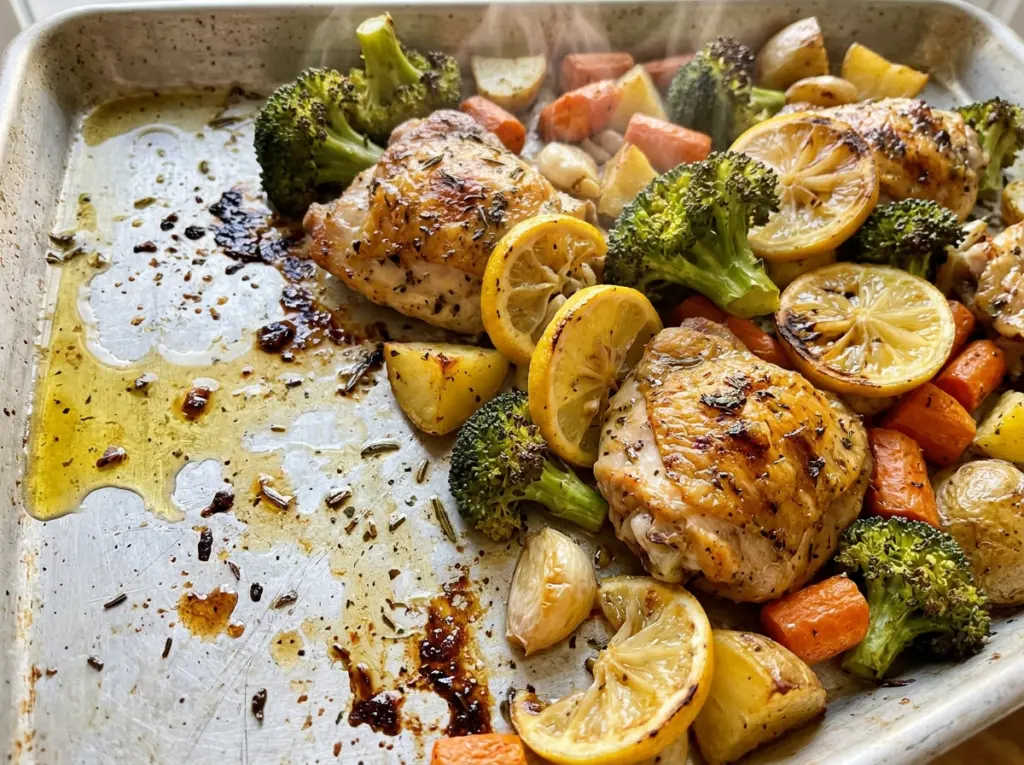
The potatoes and carrots need a head start in the oven; put the broccoli in at the same time and it can be soft before the roots are tender. Staggering the vegetables is what makes this sheet pan lemon garlic chicken with roasted vegetables work: each one gets its own stretch of heat, while the chicken cooks right alongside them.
I coat the thighs with lemon zest and juice, garlic, and oregano while the first vegetables roast, so the chicken is ready to join the pan without slowing things down. The timing is straightforward, but the cuts matter: potatoes in small, even pieces and carrots cut to a similar size cook more predictably. By the end, the chicken is juicy, the broccoli edges are browned, and the potatoes have soft centers under their roasted surfaces.
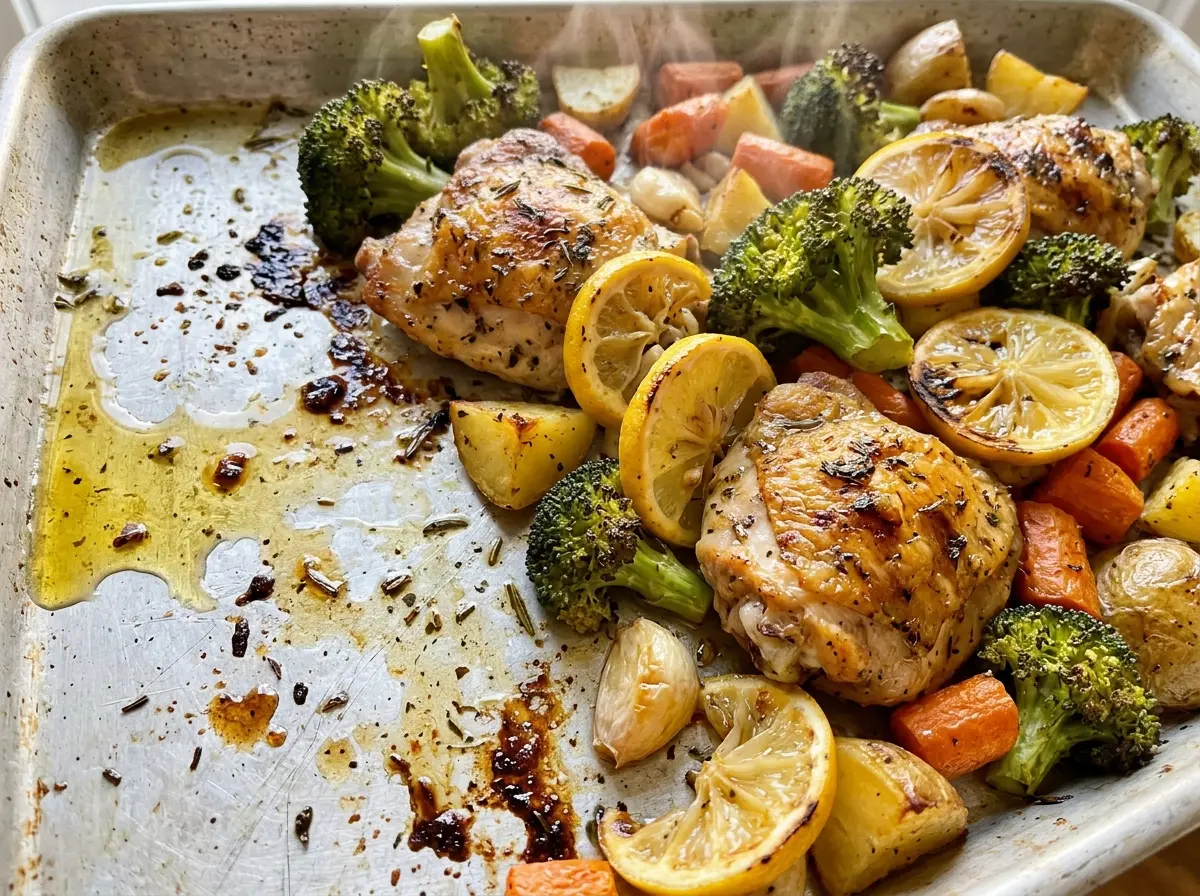
Kitchen Note
The lemon zest and juice, garlic, and oregano coat the chicken together, so scrape the whole mixture over the thighs instead of leaving the aromatic bits in the bowl. That coating is where the bright lemon-garlic flavor comes from.
Save this sheet pan lemon garlic chicken for a dinner with browned broccoli, tender potatoes, and lemon-coated thighs—all roasted on one pan.
Why the broccoli joins the pan after the potatoes
Potatoes and carrots are dense, so they need time in the oven before the chicken and broccoli enter the picture. Starting them first gives their cut surfaces a chance to roast rather than simply warm through. The chicken then gets its own stretch of cooking, and the broccoli goes in last so its florets can brown without spending the entire bake turning soft.
That staggered timing also makes the final check easier. The chicken is ready when its center reaches 165°F, while the potatoes and carrots should be tender and the broccoli browned at the edges. Those cues matter more than looking at the pan and deciding everything must be done at once. If the vegetables are cut unevenly, the smallest pieces can soften well before larger ones; aim for pieces close to the specified sizes so the tray finishes together.
An 18×13-inch rimmed pan gives the ingredients room to roast in a single layer. Crowding traps moisture around the vegetables, which works against those browned edges. Parchment keeps cleanup easy, but it doesn’t replace the single-layer arrangement: spread the potatoes and carrots across the pan before their first roast, then nestle the chicken among them.
What lemon, garlic, and the three vegetables each bring
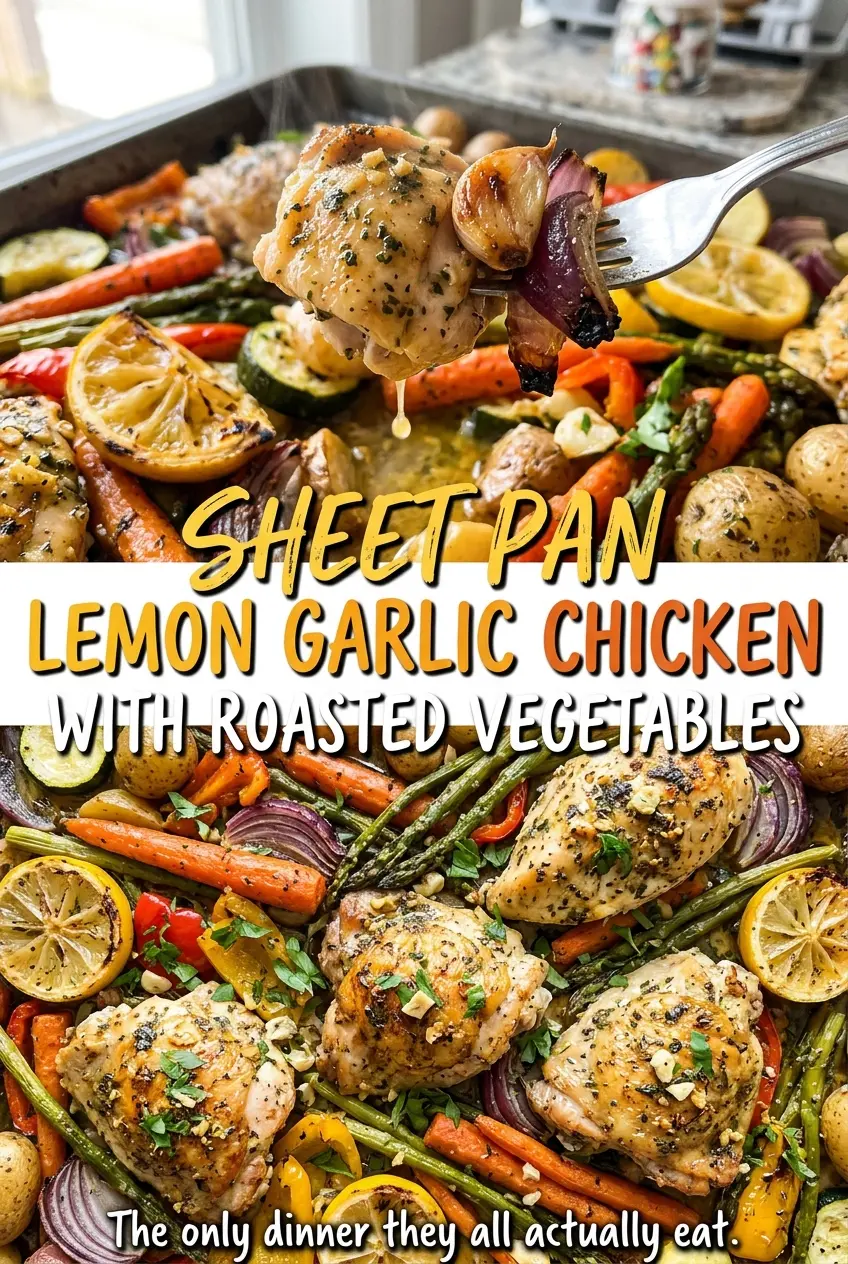
- Boneless, skinless chicken thighs — Thighs stay succulent through the staged roasting and take on the lemon-garlic coating well. Choose pieces that are fairly similar in size so they cook at a similar pace; trimming away any loose excess fat is useful, but the thighs don’t need elaborate prep.
- Lemon zest and juice — The zest gives the chicken a fragrant lemon note, while the juice brings a sharper, tangier edge. A fresh lemon matters here because both parts are used; grate the zest finely before squeezing so you can collect it cleanly.
- Garlic and dried oregano — Minced garlic distributes through the oil and citrus coating, and oregano gives the chicken a savory, herbal note. Freshly minced garlic has a brighter aroma than jarred garlic, though the dried oregano is a pantry ingredient where a standard store brand works well.
- Yukon Gold potatoes and carrots — These are the hearty vegetables that start roasting first. Yukon Golds become tender with a creamy center, and the carrots add a little sweetness; cut both into consistent pieces rather than relying on a precise count of pieces from each vegetable.
- Broccoli — Fresh florets roast quickly and develop browned edges when added later. Cut large florets into smaller, similar-sized pieces so the smaller buds don’t darken while thick stems are still firm. Frozen broccoli releases extra moisture, so fresh broccoli gives this tray a better roasted texture.
- Olive oil — The divided oil helps coat the first vegetables, the chicken, and then the broccoli as each joins the pan. Use a familiar everyday olive oil; the lemon, garlic, and browning do most of the flavor work.
How to stage the pan for tender roots and browned broccoli
Give the potatoes and carrots their head start
Heat the oven to 425°F and line an 18×13-inch rimmed sheet pan with parchment paper. Toss the potatoes and carrots on the pan with 1 tablespoon olive oil, 1/2 teaspoon kosher salt, and 1/4 teaspoon black pepper, then spread them in a single layer. Roast for 15 minutes. While they cook, prepare the chicken coating so the next stage is ready to go.
Coat the thighs while the vegetables roast
Combine the chicken with 1 tablespoon olive oil, the finely grated lemon zest, lemon juice, minced garlic, dried oregano, and the remaining 1/2 teaspoon kosher salt and 1/4 teaspoon black pepper. Turn the thighs until the coating reaches all sides. When the first vegetables have roasted for 15 minutes, add the chicken among them and return the pan to the oven for 13 minutes.
Add broccoli for its shorter roast
Toss the broccoli florets with the remaining 1 tablespoon olive oil, then add them to the pan. Spread them across open spaces instead of piling them over the other ingredients. Roast for 12–17 minutes more; the chicken should reach 165°F, the potatoes and carrots should be tender, and the broccoli should have browned edges.
Rest the chicken before serving
Take the pan from the oven once all three doneness cues are met, then let the chicken rest for 5 minutes before serving. That short pause gives the juices time to settle rather than running out as soon as you cut into a thigh. Serve the chicken with the roasted vegetables from the same pan.
Small flavor changes that keep the sheet-pan method intact
Leave out the oregano for a cleaner lemon-garlic taste
Omit the dried oregano from the chicken coating and keep the other ingredients and timing the same. The result is more direct and citrusy, with the garlic coming through more clearly.
Use the zest for a gentler lemon note
For a less tangy chicken coating, leave out the lemon juice and use the finely grated zest with the garlic, oregano, and oil. The chicken keeps its fragrant citrus aroma, but the sharper acidity is reduced.
Storage and Reheating
- Refrigerator: Store leftovers in an airtight container for 3–4 days. The potatoes soften in the refrigerator and won’t have quite the same roasted edges.
- Freezer: Freeze cooled portions in a sealed freezer-safe container for up to 2–3 months. The chicken freezes well, though the potatoes and broccoli will be softer after thawing.
- Reheating: Reheat a portion in the microwave, covered, in short bursts until hot throughout. Avoid a long, uncovered microwave cycle; it can dry the chicken before the vegetables are evenly warmed.
Questions that come up while making this chicken and vegetable tray
Sheet Pan Lemon Garlic Chicken with Roasted Vegetables
Ingredients
Equipment
Method
- Heat the oven to 425°F and line an 18x13-inch rimmed sheet pan with parchment paper.
- Toss the potatoes and carrots with 1 tablespoon olive oil, 1/2 teaspoon salt, and 1/4 teaspoon pepper on the pan.
- Spread the potatoes and carrots in a single layer and roast for 15 minutes.
- While the vegetables roast, coat the chicken with 1 tablespoon olive oil, the lemon zest and juice, garlic, oregano, and the remaining 1/2 teaspoon salt and 1/4 teaspoon pepper.
- Add the chicken to the pan among the vegetables and roast for 13 minutes.
- Toss the broccoli with the remaining 1 tablespoon olive oil.
- Add the broccoli to the pan.
- Roast for 12–17 minutes more, until the chicken reaches 165°F, the potatoes and carrots are tender, and the broccoli is browned at the edges.
- Rest the chicken for 5 minutes before serving.