
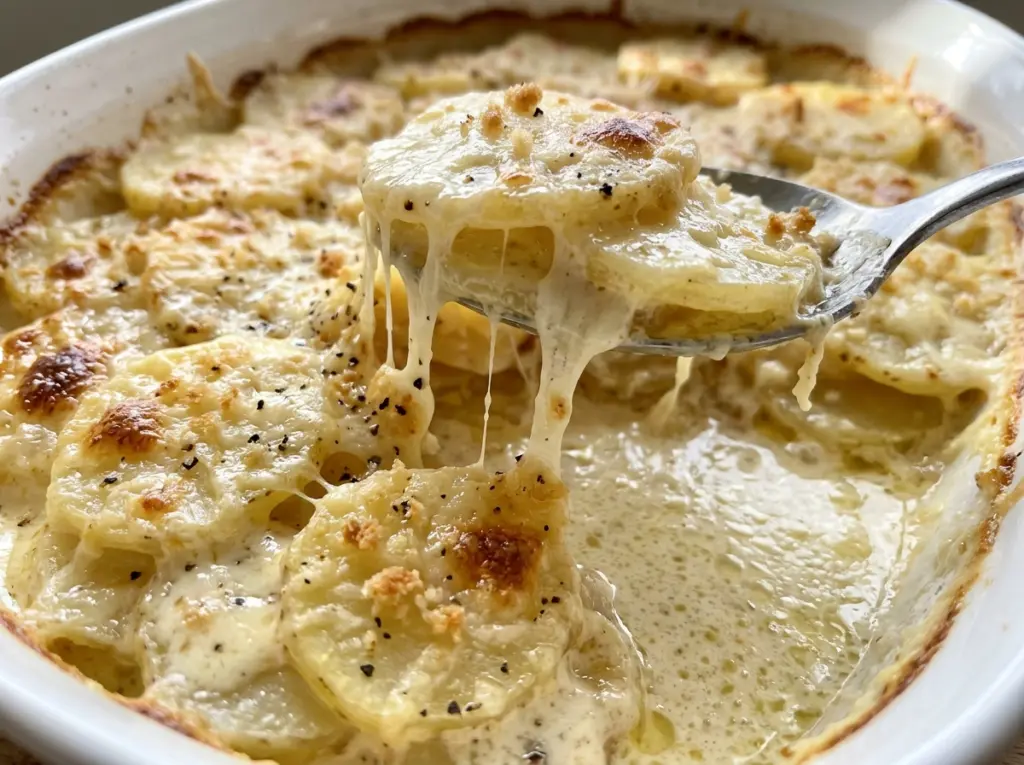
The foil comes off and the potatoes are softening, but the cream still looks loose. That’s exactly when I add the Gruyere. Scalloped potatoes with heavy cream and Gruyere get their golden top in the final stretch, while the covered bake gives the potatoes time to soften without the cheese getting too dark.
I use Yukon Gold potatoes here because they hold their shape while turning tender, and their texture suits the rich cream sauce. The thin slices matter: at 1/8 inch, they cook evenly in overlapping layers. Once the dish comes out of the oven, a short rest lets the sauce settle around the potatoes, so each spoonful is creamy rather than runny.
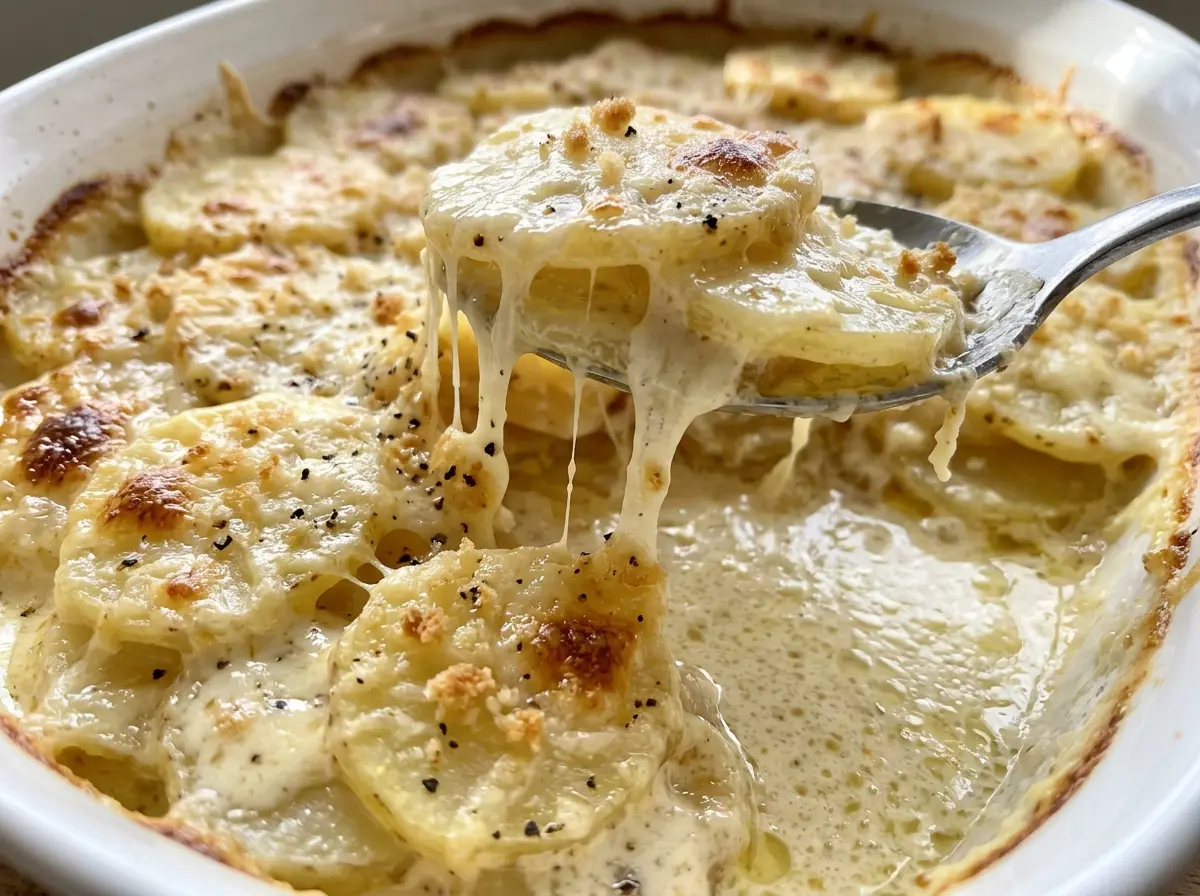
Kitchen Note
Give the potatoes the full 15-minute rest before serving. The sauce settles into the layers as it cools slightly, and the portions hold together better when you scoop them.
Save these scalloped potatoes with Gruyere for a holiday table or a cozy dinner—the tender layers and golden cheese make a rich, shareable side.
Why the Gruyere Goes on After the Potatoes Start Softening
Putting the cheese on at the beginning seems convenient, but it gives the Gruyere far longer in the oven than it needs. The potatoes need a covered bake first, so the heat and steam can soften the overlapping slices. If the cheese goes on before that stage, its surface can get deeply browned while the potato centers are still firm.
Adding the cheese after the first bake separates two jobs that need different conditions. The foil-covered portion of baking cooks the potatoes beneath the cream; the uncovered finish browns the cheese and lets the top take on color. Keep the dish covered until a knife meets only a little resistance in the potatoes, then uncover and add the Gruyere. That timing gives you a golden top without asking the cheese to sit through the entire bake. If the top is already darkening but the potatoes are not tender, cover the dish again while they finish.
Yukon Golds, Cream, and Gruyere: What Each Brings

- Yukon Gold potatoes — Their creamy texture and ability to hold their shape make them a good fit for overlapping layers. Peel them and slice them evenly; slices of different thicknesses won’t soften at the same pace. Russets work in a pinch, but they’re starchier and more likely to soften into a less distinct layer.
- Heavy cream and whole milk — The cream gives the sauce its richness, while the milk keeps it from feeling quite as heavy as an all-cream bake. Use fresh dairy, and warm the mixture before pouring it over the potatoes so it’s steaming when it goes into the oven. Replacing some cream with more whole milk makes a lighter sauce, though it won’t be as rich.
- Gruyere — This cheese melts smoothly and brings a nutty, savory taste that pairs well with the cream. A block grated at home melts more evenly than pre-shredded cheese, which is often coated to keep the shreds separate. Swiss cheese is a workable substitute with a milder flavor; sharp white cheddar gives the top a more assertive, familiar cheese taste.
- Garlic, thyme, and nutmeg — These season the cream itself, so their flavor spreads through the whole dish rather than sitting only on top. Mince the garlic finely so there aren’t large pieces between the potato slices. The nutmeg is a small background note; leave it out if you prefer a more straightforward garlic-and-thyme flavor.
- Unsalted butter — Softened butter spreads easily over the baking dish and helps keep the edges from sticking. Unsalted butter also lets the kosher salt stay in control of the seasoning.
How to Layer and Bake the Potatoes Without Guessing
Warm the Cream Mixture Until Steaming
Heat the oven to 375°F and butter a 9×13-inch baking dish. Combine the heavy cream, whole milk, minced garlic, dried thyme, kosher salt, black pepper, and ground nutmeg in a medium saucepan. Warm it over medium heat until steaming, about 4 minutes. Don’t let it boil; look for visible steam rather than a rolling surface of bubbles.
Make Even, Overlapping Potato Layers
Peel the Yukon Gold potatoes and slice them 1/8 inch thick. Arrange the slices in overlapping layers in the buttered dish, keeping the layers reasonably even so the potatoes soften together. Pour the warm cream mixture evenly over the top. If a few slices sit high and dry, nudge them down into the liquid so they’re coated.
Cover Until the Slices Begin to Soften
Cover the dish tightly with foil and bake for 45 to 50 minutes. The foil holds in heat and moisture while the potatoes cook through the first part of the bake. Check the center with a knife: the slices should be beginning to soften, but they don’t need to be completely tender yet. If they still feel firm, keep the dish covered and give them more time within that range.
Uncover, Add Gruyere, and Finish the Bake
Remove the foil and sprinkle the grated Gruyere evenly over the potatoes. Bake uncovered for 25 to 35 minutes, until a knife slides through the potatoes easily and the cheese is golden brown. If the cheese colors before the potatoes are tender, loosely cover the dish again to protect the top while the center finishes. Let the casserole rest for 15 minutes before serving so the sauce can settle.
Two Easy Ways to Change the Cheese or Sauce
Swap in sharp white cheddar
Use 8 ounces of grated sharp white cheddar in place of the Gruyere. The top will taste sharper and more familiar, with less of Gruyere’s nutty character; grate a block yourself for the smoothest melt.
Make the cream sauce a little lighter
Replace 1/2 cup of the heavy cream with 1/2 cup more whole milk. The sauce will taste less rich and may be a little looser, but it still gives the potatoes a creamy bake. Keep the rest of the ingredients and baking method the same.
Leave out the nutmeg
Omit the ground nutmeg if you’d rather keep the seasoning focused on garlic and thyme. The potatoes will still bake up creamy, but the sauce won’t have that faint warm spice note.
Storage and Reheating
- Refrigerator: Store leftovers covered in the refrigerator for up to 3 to 4 days. The potatoes will firm up as they chill, and the sauce will thicken.
- Freezer: Freeze cooled portions in an airtight, freezer-safe container for up to 2 months. The cream sauce may separate slightly after thawing, and the potatoes can be softer, but the flavor holds up.
- Reheating: Thaw frozen portions in the refrigerator, then reheat covered in a 350°F oven until hot throughout; an instant-read thermometer should register 165°F in the center. Avoid reheating uncovered from the start, since the exposed cheese can dry out before the middle warms.
Questions That Come Up When Making Scalloped Potatoes
Scalloped Potatoes with Heavy Cream and Gruyere
Ingredients
Equipment
Method
- Heat the oven to 375°F.
- Grease a 9x13-inch baking dish with the softened butter.
- Combine the heavy cream, whole milk, garlic, dried thyme, kosher salt, black pepper, and ground nutmeg in a medium saucepan.
- Warm the cream mixture over medium heat until steaming, about 4 minutes; do not let it boil.
- Arrange the potatoes in overlapping layers in the prepared dish.
- Pour the warm cream mixture evenly over the potatoes.
- Cover the dish tightly with foil and bake for 45 to 50 minutes, until the potatoes are beginning to soften when pierced with a knife.
- Remove the foil and sprinkle the Gruyere evenly over the potatoes.
- Bake for 25 to 35 minutes, until the potatoes are tender and the cheese is golden brown.
- Let the potatoes rest for 15 minutes before serving.