
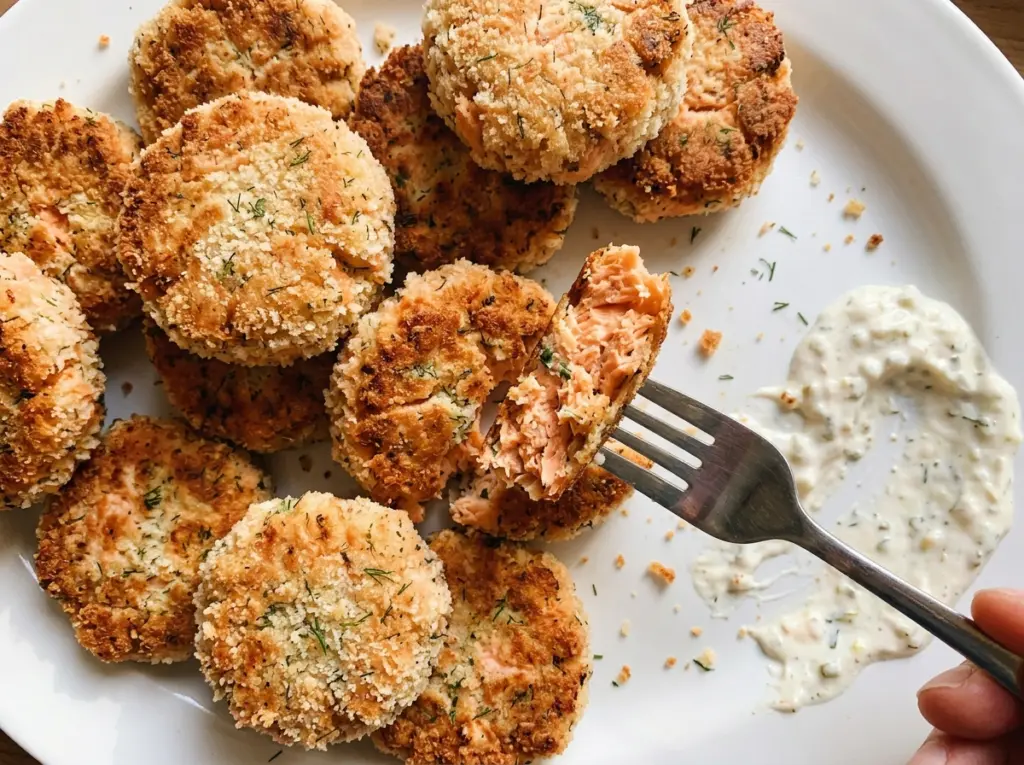
The first salmon cake should leave the bowl as a loose, flaky mound, not a smooth paste. When it hits the skillet, the outside browns while the center stays tender; mash the fish too thoroughly and you lose those distinct flakes. These salmon cakes keep the mixture simple, with panko, egg, and mayonnaise holding the salmon together and lemon juice and Old Bay giving it a bright, savory edge.
I drain and pick over the canned salmon before mixing, then fold everything together gently so the fish doesn’t disappear into the binder. A short rest in the refrigerator firms the mixture enough to shape without adding extra breadcrumbs. Once the patties are in the pan, they need a little space and time to develop a browned crust. The finished cakes are tender inside, with enough structure to lift cleanly from the skillet.
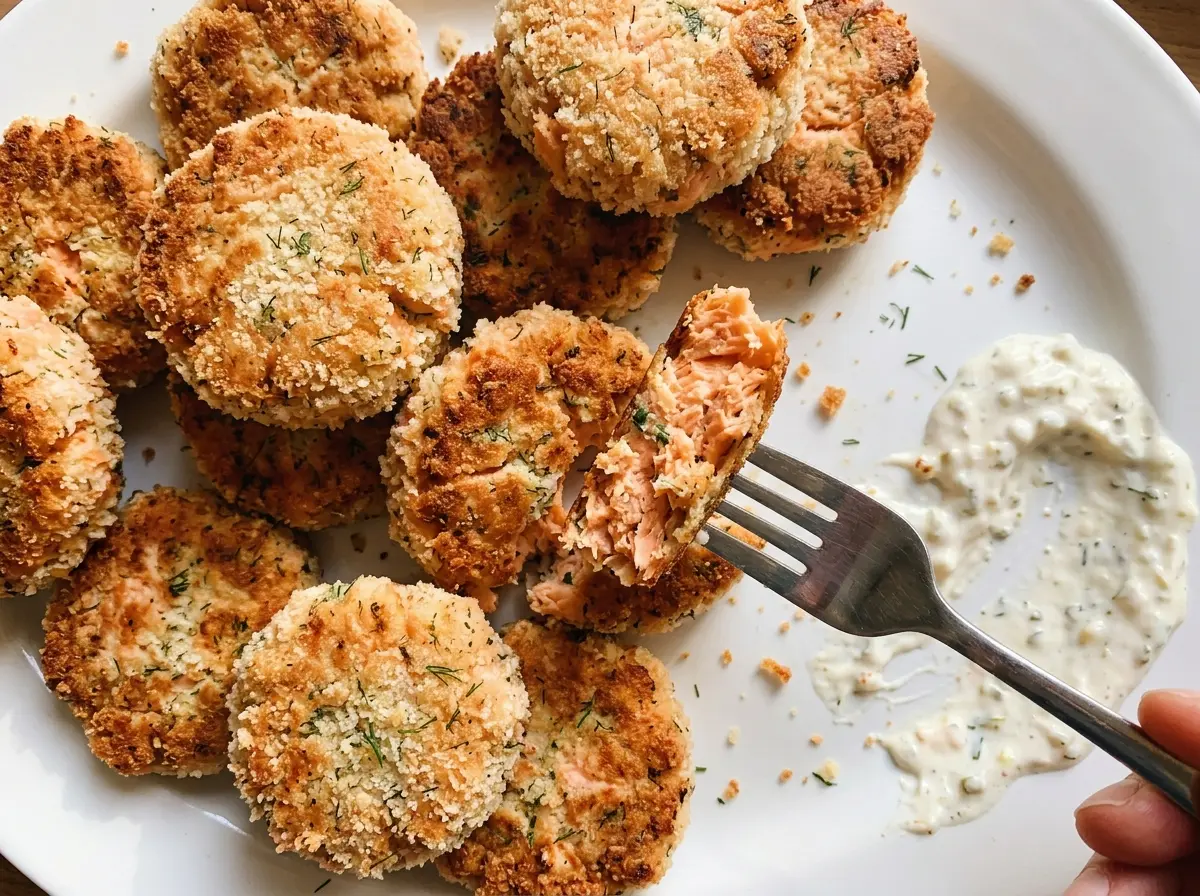
Kitchen Note
Use a wide spatula and turn each cake in one confident motion. Repeated nudging can tear the browned side before the patty has a chance to release cleanly.
Save these salmon cakes for a quick skillet dinner, with flaky centers and a browned panko crust.
Why Mashing the Salmon Makes These Cakes Heavy
Canned salmon is already cooked, so it doesn’t need to be broken down to make it safe or tender. Keeping some larger flakes in the mixture gives the cakes a lighter, more distinct texture. If you stir until the fish looks like a paste, the patties turn dense and lose the contrast between tender salmon and the crisp outside.
Fold the ingredients together just until the egg and mayonnaise are distributed and the seasonings are no longer sitting in pockets. It’s fine if the salmon still looks uneven; the patties don’t need to be perfectly uniform inside. That gentle mixing also keeps the panko from becoming packed tightly into the fish. You want a mixture that holds when shaped, with visible salmon flakes rather than a smooth, compact filling.
What Keeps the Salmon Mixture Tender Without Making It Loose

- Canned salmon — Choose a can that fits the listed size, then drain it well and pick through carefully for bones and skin. A budget canned salmon works here; good draining and a careful check matter more than choosing a premium variety.
- Panko, egg, and mayonnaise — Panko absorbs moisture while keeping the interior lighter than fine breadcrumbs. The egg helps the patties bind, and mayonnaise adds moisture and richness. For a gluten-free batch, use gluten-free panko in place of regular panko measure for measure; the finished cakes may be a little more delicate depending on the brand.
- Yellow onion and parsley — Chop the onion finely so larger pieces don’t make the patties harder to shape. Fresh parsley gives the mixture a clean, herbal note, but dried parsley won’t have the same freshness or texture.
- Dijon, lemon juice, and Old Bay — Dijon adds a gentle tang, lemon keeps the canned fish tasting bright, and Old Bay supplies the familiar savory seasoning. Freshly squeezed lemon juice has a livelier taste, though bottled juice works when that’s what you have.
From Flaky Salmon to a Golden Skillet Crust
Fold the mixture without crushing the flakes
Start by flaking the drained salmon in a medium bowl, then add the panko, egg, mayonnaise, onion, parsley, Dijon, lemon juice, Old Bay, and black pepper. Mix gently until everything is evenly combined, stopping before the salmon turns into a paste. The mixture should look moist and hold together when pressed, with flakes still visible. If you see a streak of mayonnaise or a pocket of seasoning, fold a little more rather than stirring vigorously.
Give the mixture time to firm up
Cover the bowl and refrigerate the mixture for 15 minutes. This pause lets the panko take up some of the moisture, which makes the mixture easier to shape and less likely to slump in your hands. Don’t skip straight from mixing to forming if the salmon mixture feels soft or sticky. After chilling, it should feel more cohesive without becoming stiff.
Shape eight even patties
Shape the mixture into 8 patties, each about 1/2 inch thick. Keep their size and thickness as consistent as you can so they brown at the same pace. Press just enough to make each patty hold together; compacting them hard makes the centers heavier. If a few loose flakes sit at the edge, gently tuck them in rather than squeezing the whole cake tighter.
Brown the cakes in two batches
Heat 1 tablespoon of vegetable oil in a 12-inch skillet over medium heat, then add 4 patties. Cook for 3 to 4 minutes per side, until browned and the centers reach 145°F, then transfer them to a plate. Add the remaining oil and cook the other 4 patties the same way. If the cakes are pale when you turn them, give the first side a little more time within that cooking window; the browned surface helps each patty keep its shape.
Easy Swaps That Keep Salmon Cakes Together
Trade parsley for fresh dill
Use chopped fresh dill in place of the parsley, measure for measure. Dill gives the cakes a more pronounced, slightly grassy note that works naturally with salmon and lemon without changing the mixture’s texture.
Make them gluten-free with gluten-free panko
Replace the regular panko with the same volume of gluten-free panko. The exact texture varies by brand, so handle the patties gently when turning; the flavor stays much the same, though the crust may be a little less airy.
Storage and Reheating
- Refrigerator: Store cooked cakes in an airtight container within 2 hours and eat within 3 to 4 days. The crust softens as they sit.
- Freezer: Freeze the cooled cakes in a single layer, then transfer them to an airtight freezer container with parchment between layers. Use within 3 months for the best texture.
- Reheating: Warm uncovered on a baking sheet in a 350°F oven until the centers reach 165°F. The microwave is quicker, but it softens the browned outside.
Salmon Cake Questions That Come Up at the Skillet
Salmon Cakes
Ingredients
Equipment
Method
- Gently flake the salmon in a medium bowl.
- Add the panko, egg, mayonnaise, onion, parsley, Dijon mustard, lemon juice, Old Bay, and black pepper, and mix until evenly combined.
- Cover and refrigerate the mixture for 15 minutes so it firms up and is easier to shape.
- Shape the mixture into 8 patties, about 1/2 inch thick.
- Heat 1 tablespoon of the oil in a 12-inch skillet over medium heat.
- Cook 4 patties for 3 to 4 minutes per side, until browned and the centers reach 145°F.
- Transfer the patties to a plate, then repeat with the remaining oil and patties.