
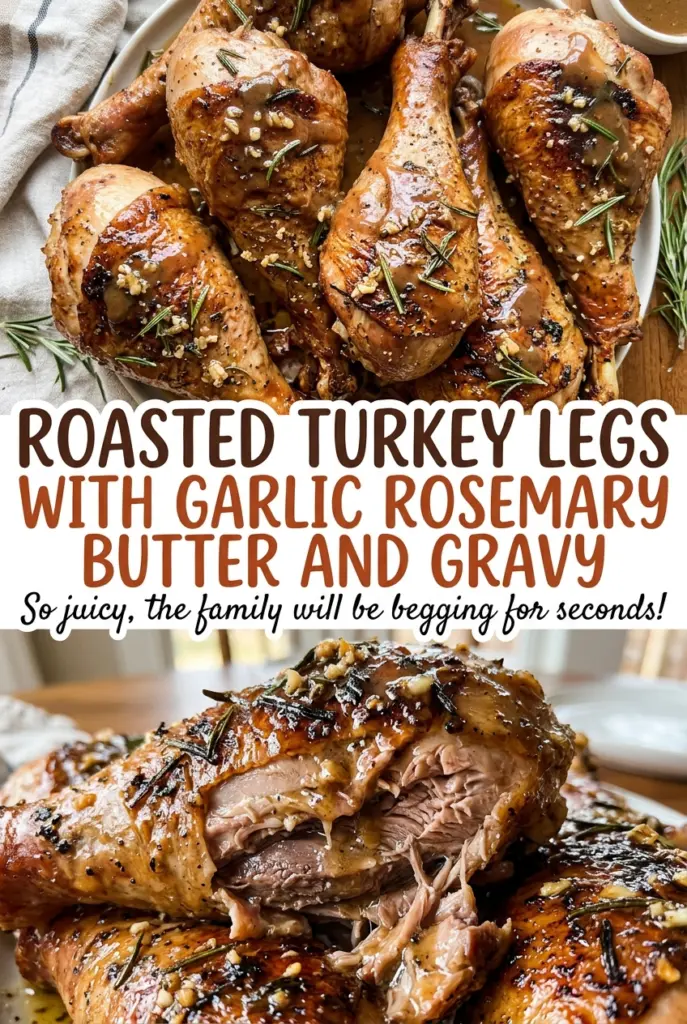
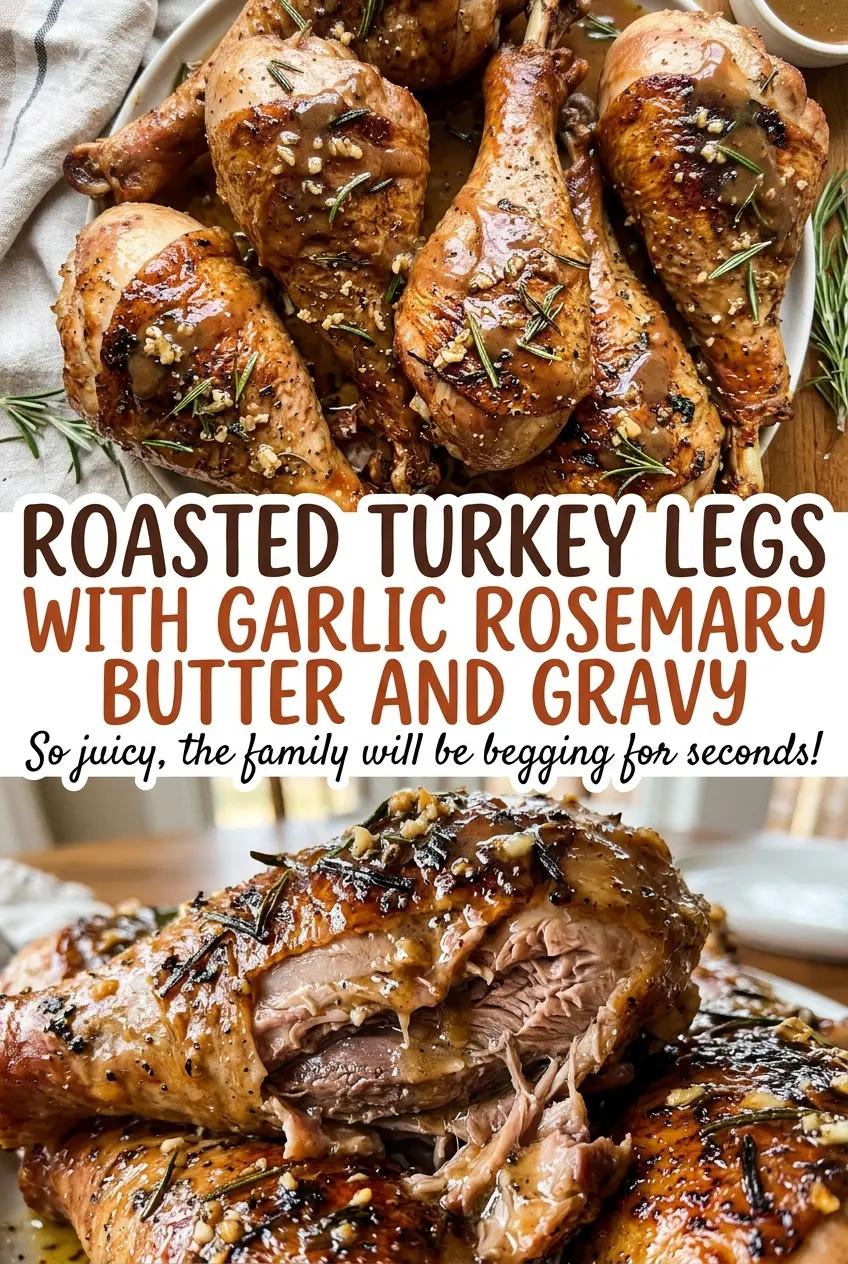
When turkey legs come out of the oven, the skin should be browned and the pan should hold plenty of buttery drippings for gravy. I used to think the legs needed a hotter oven to get there, but a steady roast gives the thick meat time to turn tender without rushing the outside. These roasted turkey legs get garlic rosemary butter under the skin and across the surface, so the herbs season the meat as it cooks.
The butter is easy to mix, and the gravy comes together while the legs rest. I like that the drippings do double duty: they carry the roasted turkey flavor into a simple roux-thickened gravy, rather than leaving those browned juices behind. The finished legs have savory, well-browned skin, tender dark meat, and a warm spoonful of rosemary gravy.
Kitchen Note
The butter should be soft enough to spread, but not melted. Cold butter can tug at the skin as you work it underneath, while melted butter runs off instead of staying where you put it.
Save these roasted turkey legs with garlic rosemary butter and gravy for a browned-skin dinner with tender dark meat and homemade pan gravy.
Why the Rack Keeps These Turkey Legs Out of Their Own Drippings
A roasting rack does more than make it easier to lift the legs out of the pan. It holds them above the drippings, so hot air reaches more of the skin while the butter and juices collect underneath for gravy. That separation matters here: the skin can brown instead of sitting against a layer of cooking liquid, and you still have the flavorful drippings waiting in the pan.
The 12×16-inch roasting pan gives four legs room to sit skin-side up on the rack. Keep them arranged in a single layer rather than stacking them; crowded or overlapping skin has less exposure to the oven air. The rack also makes it straightforward to transfer the legs to a platter when they’re done, leaving the pan juices in place for straining. There’s no need to add liquid to the roasting pan—the turkey releases the drippings you’ll use for the gravy.
What Fresh Rosemary, Skin-On Legs, and Low-Sodium Broth Each Bring
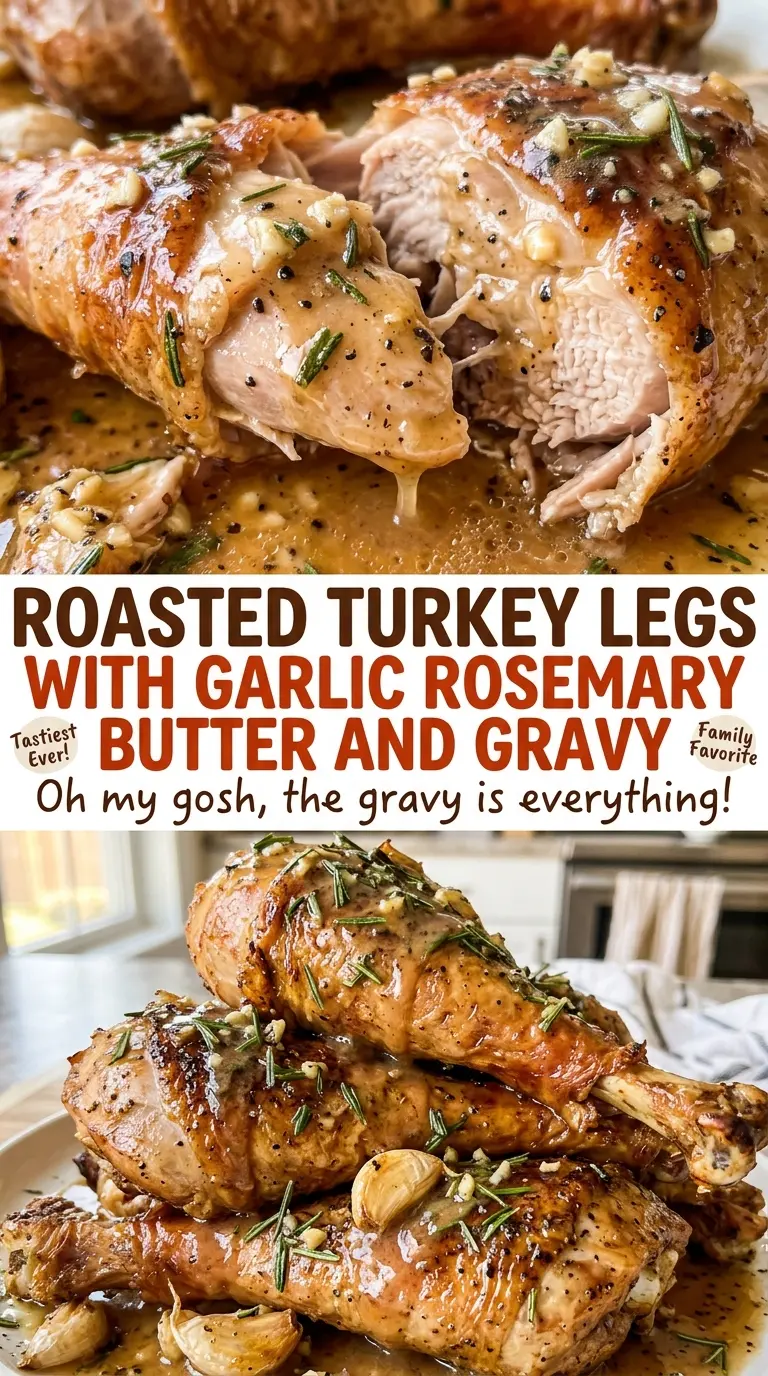
- Bone-in, skin-on turkey legs — The skin holds the butter against the meat and browns on top, while the bone gives each portion its substantial shape. Choose legs close to the same size so they roast at a similar pace. Boneless meat won’t cook or produce drippings in quite the same way.
- Unsalted butter — It carries the garlic and rosemary under the skin and forms the base of the gravy roux. Softened butter is important for spreading without tearing the skin. Unsalted butter also lets the kosher salt in the herb mixture do the seasoning.
- Fresh rosemary and garlic — Finely chopped rosemary distributes through the butter instead of leaving large, woody pieces, and minced garlic gives the coating its savory aroma. Fresh rosemary has a brighter, greener taste than dried; crush dried rosemary finely if you need to use it instead.
- Low-sodium chicken broth — This gives the gravy a savory base without competing with the seasoned drippings. Low-sodium broth is the more forgiving choice because the drippings add their own salt and flavor.
- All-purpose flour — Whisked into melted butter, it thickens the broth and drippings into a smooth, spoonable gravy. If gluten is an issue, use the cornstarch method in the variation below rather than swapping in another flour without adjusting the method.
From Herb Butter to Smooth Pan Gravy
Mix a Spreadable Garlic Rosemary Butter
Stir the softened butter, minced garlic, finely chopped rosemary, kosher salt, and black pepper together in a small bowl. Mash and mix until the garlic and rosemary are spread evenly through the butter, with no large clumps of herbs. Keep the butter soft enough to move easily under the skin. Don’t melt it; liquid butter won’t coat the legs as evenly.
Season Under the Skin, Then Set Up the Pan
Heat the oven to 350°F and set a rack inside a 12×16-inch roasting pan. Pat the turkey legs dry, then gently loosen the skin so you can spread some of the butter underneath it; work slowly if the skin catches. Rub the remaining butter over the outside of each leg. Arrange the legs skin-side up on the rack, leaving the skin exposed rather than tucked against another leg.
Roast Until the Dark Meat Turns Tender
Roast for 1½ to 2 hours, watching for browned skin as the legs cook. Check the thickest part of each leg with a thermometer, keeping the tip away from the bone; the reading should reach at least 165°F, and 175–180°F gives dark meat a more tender texture. Leg size and oven differences affect timing, so use the temperature and the browned-skin cue alongside the clock. Transfer the legs to a platter, loosely tent with foil, and rest for 15 minutes.
Turn the Drippings Into Gravy
Strain the pan drippings into a measuring cup and measure ½ cup; if you have less, add chicken broth until you reach that amount. In a medium saucepan over medium heat, melt the gravy butter, whisk in the flour, and cook for 1 minute. Gradually whisk in the measured drippings and the remaining chicken broth, adding it steadily so the roux stays smooth. Simmer for 3 to 5 minutes, whisking often, until the gravy thickens.
Three Ways to Change the Herb Butter or Gravy
Swap Rosemary for Fresh Thyme
Use the same amount of finely chopped fresh thyme in place of the rosemary. The butter will taste softer and less piney, while still pairing naturally with the turkey and garlic.
Make the Gravy Gluten-Free
Use gluten-free chicken broth and replace the flour with 2 tablespoons cornstarch. Whisk the cornstarch with 2 tablespoons cold broth taken from the measured broth until smooth. Bring the drippings and remaining broth to a simmer, whisk in the slurry, and cook until thickened; the gravy will be glossier than a flour-thickened version.
Make Both the Butter and Gravy Dairy-Free
Choose unsalted vegan butter sticks and use them one-for-one in both butter portions. They work in the herb coating and the gravy base, though the finished gravy will have a slightly less buttery taste than one made with dairy butter.
Storage and Reheating
- Refrigerator: Refrigerate the turkey and gravy in separate airtight containers within 2 hours; they keep for 3 to 4 days. The skin softens in storage, and the gravy may thicken as it chills.
- Freezer: Freeze the legs and gravy separately in airtight containers for up to 2 to 3 months for best quality. Thaw them in the refrigerator before reheating.
- Reheating: Cover the legs and warm them in a 325°F oven until hot throughout. Reheat the gravy separately over low heat, whisking; high heat can make it scorch or tighten before it warms evenly.
Questions That Come Up While Roasting Turkey Legs
Roasted Turkey Legs with Garlic Rosemary Butter and Gravy
Ingredients
Equipment
Method
- In a small bowl, mix the softened butter, garlic, rosemary, kosher salt, and black pepper.
- Heat the oven to 350°F.
- Set a rack inside a 12x16-inch roasting pan.
- Pat the turkey legs dry.
- Gently loosen the skin.
- Spread the butter mixture underneath the skin and over the outside of each leg.
- Arrange the legs skin-side up on the rack.
- Roast for 1 1/2 to 2 hours, until the skin is browned and a thermometer inserted into the thickest part of each leg, away from the bone, reads at least 165°F; for tender dark meat, aim for 175–180°F.
- Transfer the turkey legs to a platter.
- Loosely tent with foil and rest for 15 minutes while you make the gravy.
- Strain the pan drippings into a measuring cup and measure 1/2 cup.
- If there is less, add enough chicken broth to reach 1/2 cup.
- Melt the butter in a medium saucepan over medium heat.
- Whisk in the flour and cook for 1 minute.
- Gradually whisk in the 1/2 cup drippings mixture and the remaining chicken broth.
- Simmer for 3 to 5 minutes, whisking often, until thickened.