
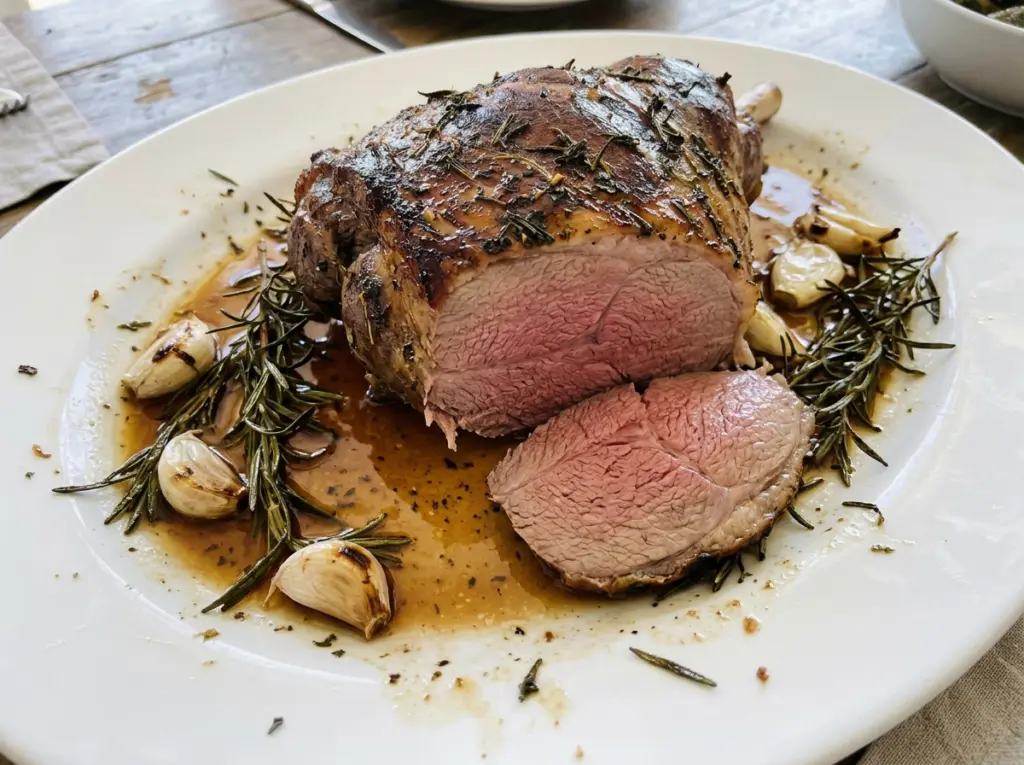
The first thing you notice is the rosemary warming in the oven while the lamb’s surface starts to brown. I used to press garlic onto the outside, where it could darken before the roast was ready. For this roasted leg of lamb with garlic and rosemary, the slivers go into shallow cuts instead, so they’re tucked into the meat while the herb-and-oil rub coats the outside.
The high-heat start gives the roast a head start on browning; then lowering the oven lets the thick, bone-in leg cook more gently. I check the thickest part with a thermometer, taking care not to touch the bone, because a reading from the bone won’t tell me how the meat itself is cooking. After a short rest, the lamb is ready to carve, with garlic and rosemary worked through each savory slice.
Kitchen Note
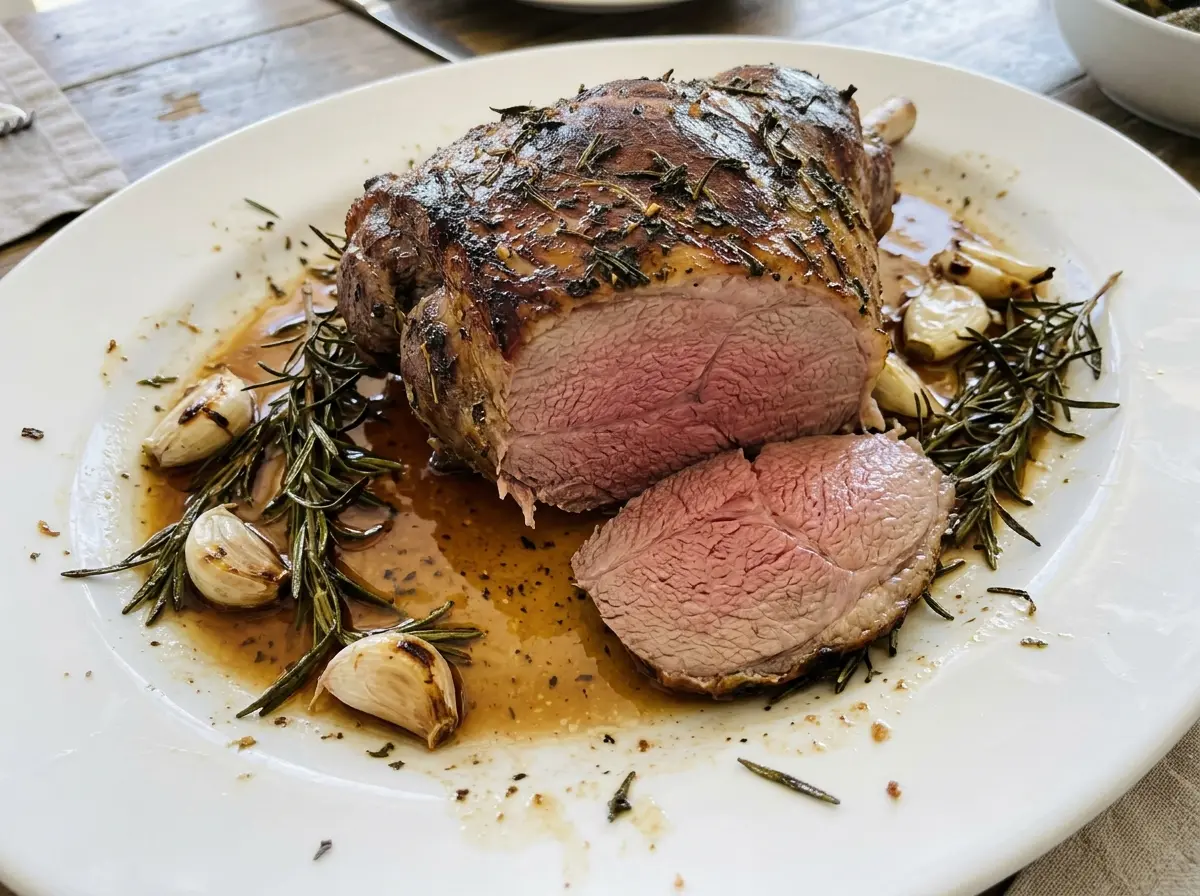
Give the roast its full 20-minute rest under a loose foil tent before carving. Cutting too soon lets the juices run onto the board instead of staying with the slices.
Save this garlic-and-rosemary leg of lamb for a roast with a browned exterior, fragrant herbs, and garlic tucked right into the meat.
Why the Garlic Belongs Beneath the Surface
Garlic on the outside of a roast is exposed to the oven from the moment the lamb goes in. During the initial 425°F roast, those exposed bits can brown much faster than the meat around them. Tucking a sliver into each shallow cut protects it while the lamb cooks and gives the garlic time to soften.
Keep the cuts shallow rather than making deep pockets. The goal is to open the surface just enough to hold a sliver, not to carve channels through the leg. Patting the lamb dry first also helps the rosemary and oil rub cling to the exterior instead of sliding over a damp surface. With the garlic tucked in and the rub spread over the outside, the roast gets two distinct layers of seasoning without a separate sauce or extra ingredients.
This is especially useful on a bone-in leg, where the thickest section takes longer to cook than the outside. The garlic isn’t left sitting on the surface while that center comes up to temperature; each sliver is nestled into the meat from the start.
What the Bone, Fresh Rosemary, and Garlic Each Bring
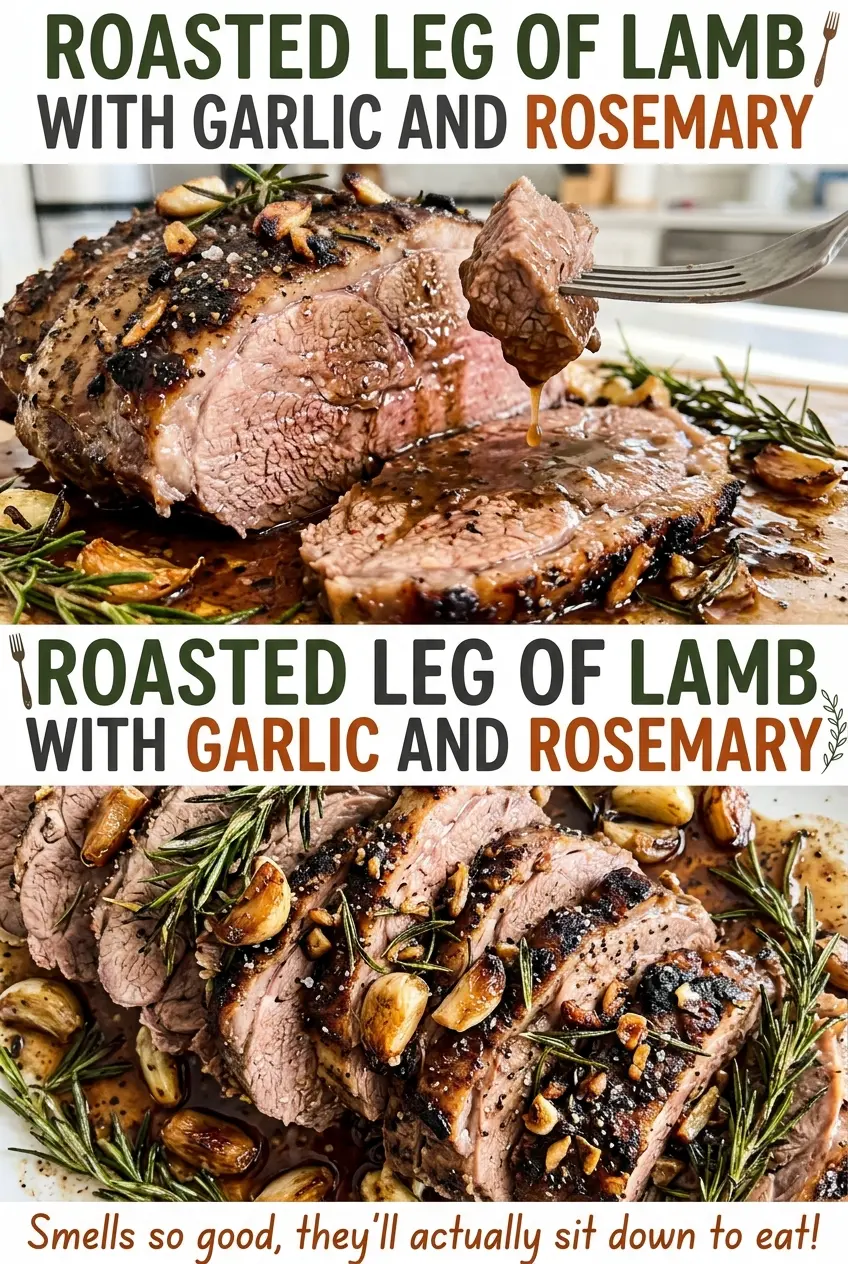
- Bone-in leg of lamb — The bone is part of what makes this particular roast cook differently from a boneless cut. Choose a leg close to the specified size so the roasting window remains useful; the bone also gives you a clear landmark when carving. There isn’t a direct cut-for-cut substitute that will behave exactly the same way.
- Garlic — Fresh cloves cut lengthwise make sturdy slivers that tuck into the shallow cuts without turning into a paste. Firm cloves are easier to handle than soft or sprouting ones. Pre-minced garlic won’t fit into the slits in the same way.
- Fresh rosemary — Finely chopped fresh leaves spread across the lamb and release their piney aroma as the roast cooks. Tender, green sprigs are easiest to chop; woody stems should be left out. Dried rosemary has a different texture and doesn’t make an exact replacement for the fresh herb here.
- Olive oil — The oil helps the rosemary, salt, and pepper coat the lamb evenly. A standard olive oil works well; there’s no need to use a premium finishing oil for a roast that goes into a hot oven.
- Kosher salt and black pepper — These season the lamb directly and round out the garlic and rosemary. Use kosher salt for the measured amount in this version; fine table salt packs differently by volume and isn’t a direct spoon-for-spoon swap.
From Garlic Slits to a Properly Rested Roast
Prepare the Lamb and Tuck in the Garlic
Set a rack in the center of the oven and preheat it to 425°F. Pat the lamb dry, then use a small knife to make shallow slits all over the surface. Tuck one lengthwise garlic sliver into each slit, keeping the cuts shallow enough that the slivers sit just beneath the surface.
Coat the Outside Before the First Roast
Rub the lamb with the finely chopped rosemary, olive oil, kosher salt, and black pepper. Spread the mixture over the surface rather than leaving a thick clump of rosemary in one spot. Set the lamb fat-side up on a rack in a roasting pan so the roast is positioned for the first, hotter stage.
Brown First, Then Lower the Heat
Roast at 425°F for 20 minutes to brown the exterior. Reduce the oven temperature to 325°F and continue roasting for 1 to 1 1/2 hours, checking after 1 hour. Insert a thermometer into the thickest part without touching bone; the roast is ready when it reads 145°F. If the probe hits bone, reposition it in the meat before relying on the reading.
Rest Before You Carve
Transfer the lamb to a carving board and tent it loosely with foil. Let it rest for 20 minutes before slicing so the meat has time to settle after roasting. Use the bone as a guide as you carve, and take care not to pull out the garlic slivers while moving the slices.
What Changes When You Choose a Different Leg
Using a Boneless Leg
A boneless leg has a different shape and cooks differently from this 5-pound bone-in roast, so the timing here shouldn’t be carried over. If you choose that cut, follow a method calibrated for its weight and shape rather than relying on this roasting window.
Roasting a Smaller Bone-In Leg
A smaller leg won’t necessarily need the same time in the oven, even if you keep the garlic-and-rosemary seasoning. Use its thickest section and a thermometer to judge doneness, not the clock alone; the 145°F reading is the target for this roast.
Storage and Reheating
- Refrigerator: Refrigerate leftover lamb within 2 hours and use it within 3 to 4 days. Slices will firm up as they chill.
- Freezer: Freeze sliced or larger pieces in an airtight container for up to 2 to 3 months for best quality. Thaw in the refrigerator before reheating.
- Reheating: Warm covered slices gently in the microwave or oven until hot throughout. High heat and long reheating can dry the lamb, so stop as soon as it’s heated through.
Questions That Come Up With a Bone-In Lamb Roast
Roasted Leg of Lamb with Garlic and Rosemary
Ingredients
Equipment
Method
- Set a rack in the center of the oven.
- Preheat the oven to 425°F.
- Pat the lamb dry.
- Use a small knife to make shallow slits all over the lamb, and tuck a garlic sliver into each slit.
- Rub the lamb with the rosemary, olive oil, salt, and pepper.
- Set the lamb fat-side up on a rack in a roasting pan and roast at 425°F for 20 minutes.
- Reduce the oven temperature to 325°F and roast for 1 to 1 1/2 hours, checking after 1 hour, until a thermometer inserted in the thickest part without touching bone reads 145°F.
- Transfer the lamb to a carving board, tent loosely with foil, and rest for 20 minutes before carving.