
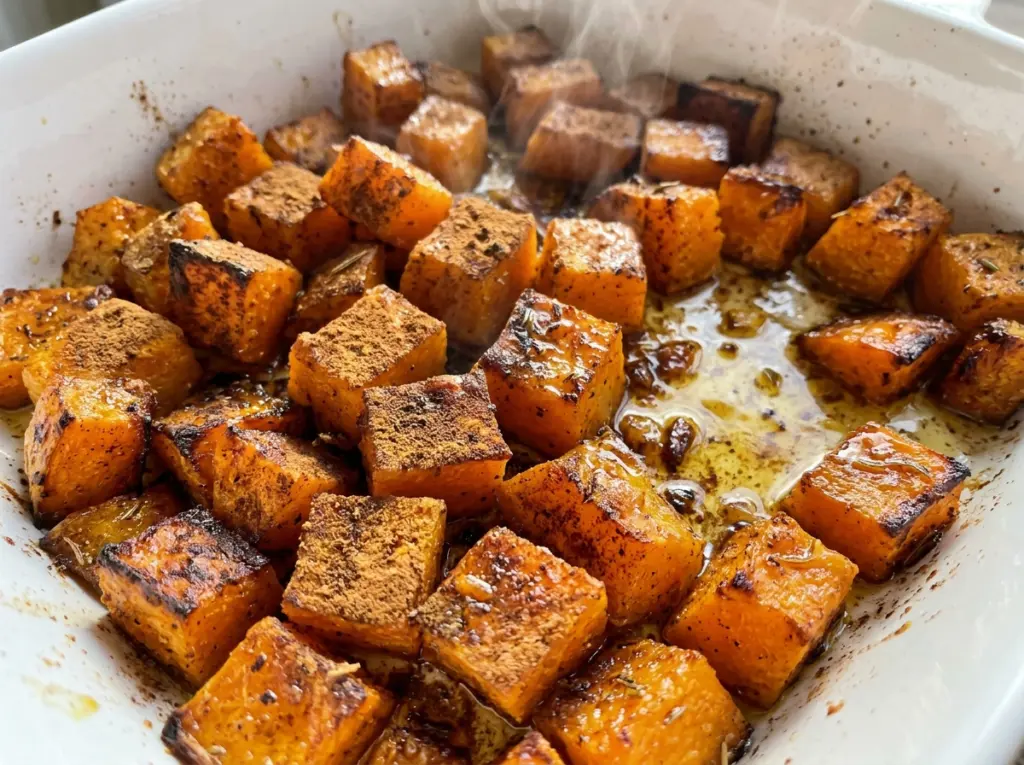
The squash can look ready on top while the pieces underneath are still pale and soft. That usually comes down to how much room they have, not a complicated trick. For this roasted butternut squash with fall spices, I spread the cubes out on a rimmed baking sheet so the edges roast instead of steam.
Maple syrup rounds out the cinnamon and nutmeg, while olive oil helps the seasoning cling to each piece. The cubes should be close in size, too: when they’re uneven, the small ones soften before the big ones have browned. Keep them around one inch and you’ll get tender centers with browned edges in the same window.
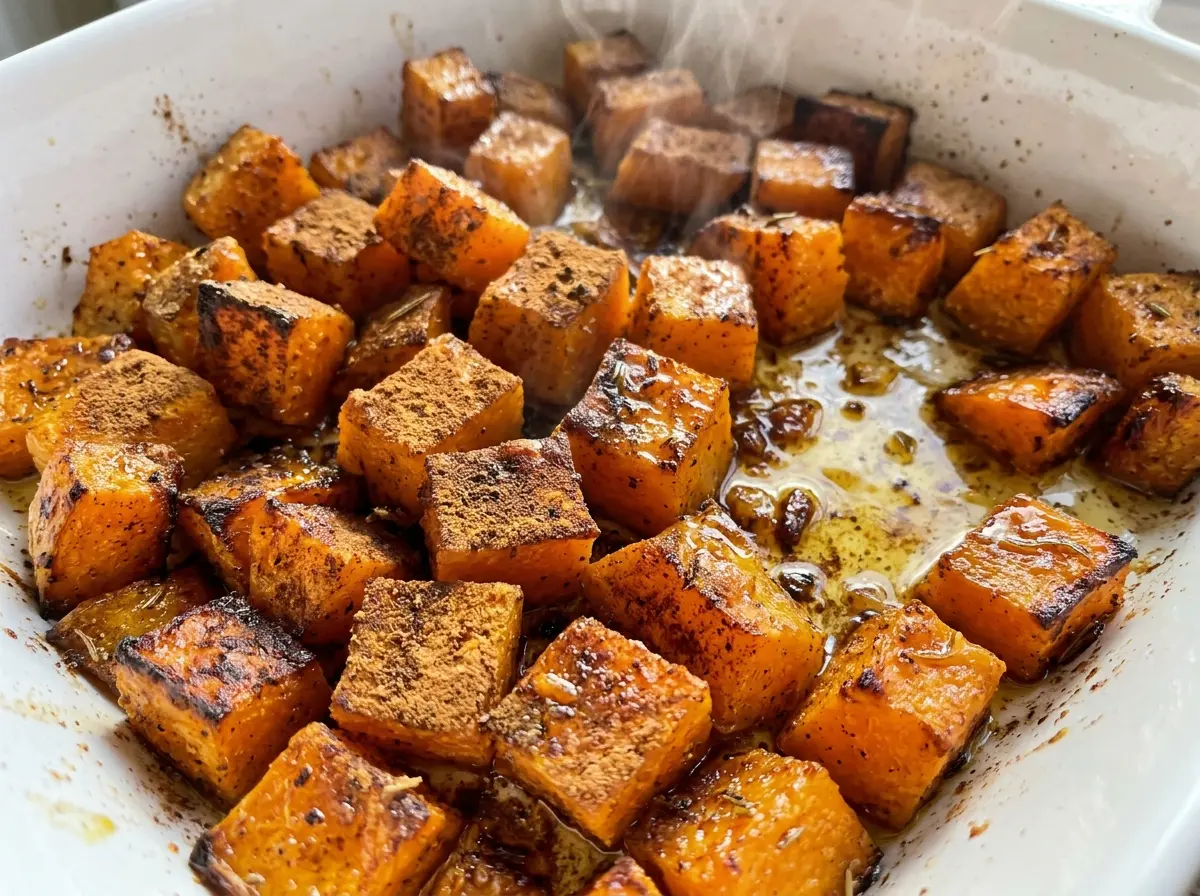
The finished squash is sweet without tasting like dessert, with warm spice in the background and little caramelized spots around the edges. It’s a straightforward side dish, but those browned corners are worth giving the pan a little space.
Kitchen Note
Try to keep the squash cubes close to the same one-inch size. When some pieces are much smaller, they soften before the larger ones are fork-tender, so the pan doesn’t finish evenly.
Save this roasted butternut squash with fall spices for browned edges, tender centers, and a warm cinnamon-maple coating.
Why Crowded Squash Browns Unevenly
Butternut squash releases moisture as it roasts. If the cubes are packed tightly together, that moisture sits between them, and the pieces soften before their surfaces have a chance to brown. A single layer gives the hot air room to move around the squash and lets moisture escape from the pan.
Use the 18×13-inch rimmed baking sheet for the full batch, and spread the cubes so they aren’t piled on one another. A few pieces touching at the edges are fine; a mound in the middle isn’t. The maple syrup makes the exposed surfaces brown nicely, but it can’t make up for a crowded pan. If your baking sheet looks overloaded, roast in batches rather than expecting the center pieces to develop the same browned edges as the ones around the perimeter.
Stirring once halfway through gives the undersides a turn against the hot pan. You don’t need to toss them constantly. Letting the squash sit between turns is what allows those patches of color to form instead of keeping every surface in motion.
What the Squash, Maple, and Spices Each Bring

- Butternut squash — Look for a firm squash without soft spots. Peeling and removing the seeds before cutting gives you clean, even cubes; pre-cut squash is convenient if its pieces are close to the same size. The cut surface can dry out while it sits, so toss the cubes with the coating soon after cutting.
- Olive oil — It carries the seasoning across the squash and helps the cubes roast rather than dry out. A standard olive oil works well here; there’s no need to use an expensive bottle because the cinnamon and maple are the more noticeable flavors.
- Maple syrup — Real maple syrup brings a woodsy sweetness that suits the squash and helps create browned, glossy patches. Pancake syrup has a different thickness and sweetness, so it won’t give quite the same finish. For a less sweet result, leaving the maple out is a better adjustment than reaching for another syrup.
- Cinnamon and nutmeg — Together they give the squash a warm, rounded aroma without covering its own flavor. Freshly opened ground spices smell more vivid than an old jar; if one spice isn’t to your taste, you can leave that one out and keep the other.
- Kosher salt and black pepper — Salt keeps the maple sweetness from tasting one-dimensional, and pepper adds a mild savory edge. If your salt is a fine-grain type rather than kosher salt, use a lighter hand because fine grains pack more tightly in a spoon.
From Even Coating to Browned Edges
Set Up the Oven and Pan
Heat the oven to 425°F and line an 18×13-inch rimmed baking sheet with parchment paper. The rim helps keep the cubes on the pan when you stir them, and parchment makes it easier to lift off the maple-coated pieces. Give the oven time to reach temperature before the squash goes in; a properly heated oven starts browning the surfaces promptly.
Coat Every Cube
Put the cubed squash in a large bowl with the olive oil, maple syrup, cinnamon, nutmeg, salt, and pepper. Toss until the seasoning is distributed and the surfaces look lightly coated, rather than leaving spice gathered at the bottom of the bowl. If a patch of squash looks dry, keep tossing so the oil and syrup reach it. Avoid adding extra oil simply because a little spice remains in the bowl; a thorough toss usually picks it up.
Roast, Turn, and Check
Spread the coated squash in a single layer on the prepared baking sheet and roast for 25 to 35 minutes. Stir once halfway through so the pieces can brown on more than one side. Near the end, look for browned edges and test a cube with a fork: it should go in easily, while the outside still holds its shape. If the squash is tender but pale, give it a little longer in the oven and watch for the edge color rather than relying on the clock alone.
Two Simple Ways to Change the Spice and Sweetness
A Less-Sweet, No-Added-Sweetener Batch
Leave out the maple syrup and keep the other ingredients as listed. The squash will have less gloss and a more straightforward roasted flavor, with cinnamon and nutmeg still providing warmth. This removes the added sweetener, though the squash itself still contains naturally occurring sugars.
A Cinnamon-Only Spice Mix
Skip the nutmeg and use the cinnamon on its own. The result is familiar and gently sweet-smelling, without nutmeg’s deeper, slightly peppery note. This is a useful small adjustment if you enjoy cinnamon but find nutmeg too strong.
Storage and Reheating
- Refrigerator: Keep leftovers in a covered container for 3 to 4 days. The squash will soften as it chills, so the edges won’t stay as crisp as they were fresh from the oven.
- Freezer: Freeze cooled squash in an airtight container for up to 3 months. It freezes safely, though thawed pieces will be softer and are best used where a tender texture is welcome.
- Reheating: Microwave in short intervals, stirring once, until hot throughout; reheat leftovers to 165°F. Don’t heat for one long stretch without checking, since the smaller pieces can turn mushy before the larger ones are warm.
Questions That Come Up While Roasting Butternut Squash
Roasted Butternut Squash with Fall Spices
Ingredients
Equipment
Method
- Heat the oven to 425°F.
- Line an 18x13-inch rimmed baking sheet with parchment paper.
- Toss the squash in a large bowl with the olive oil, maple syrup, cinnamon, nutmeg, salt, and pepper until evenly coated.
- Spread the squash in a single layer on the baking sheet.
- Roast for 25 to 35 minutes, stirring once halfway through, until fork-tender and browned at the edges.